
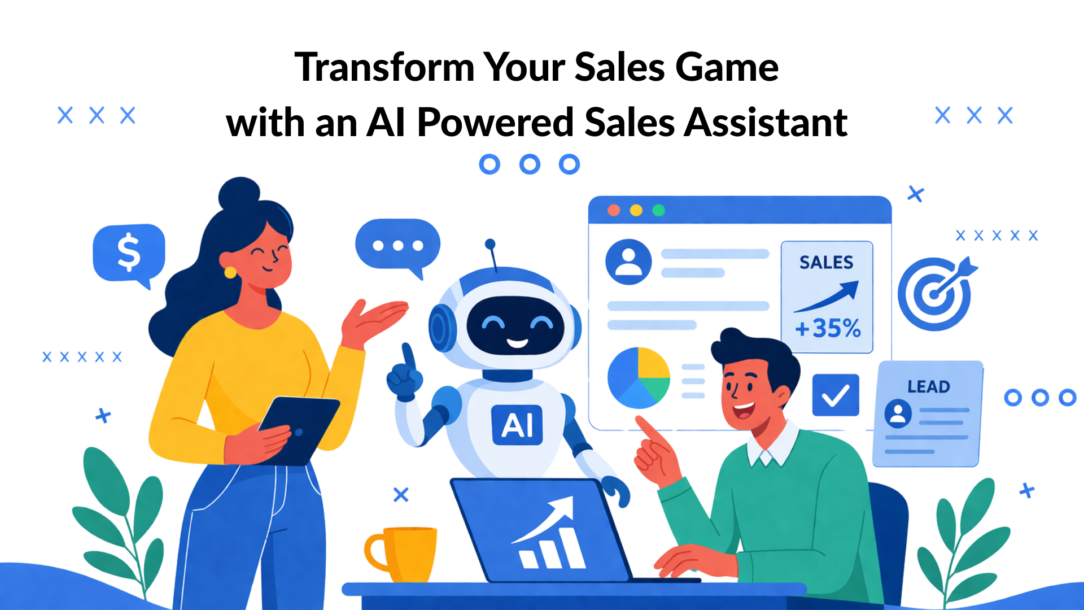
Tired of your sales team being bogged down? An AI-powered sales assistant is your secret weapon. It’s smart software that uses artificial intelligence to automate the repetitive, time-sucking sales tasks that keep your team from actually selling. Think of it as a digital teammate who works around the clock to handle all the grunt work, so your people can focus on closing deals.
Is Your Sales Team Drowning in Busywork?
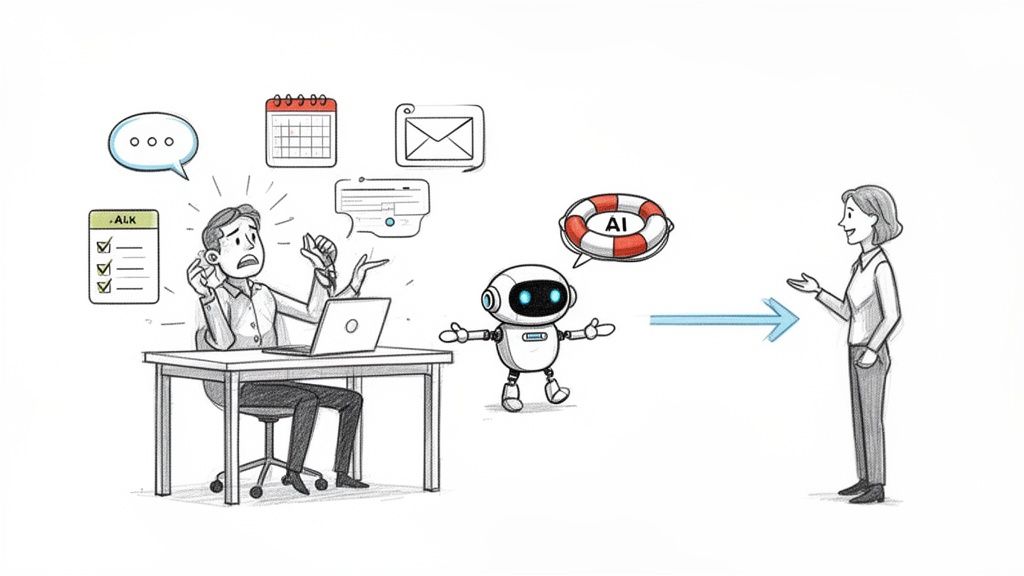
Let’s be real. Your best salespeople are probably wasting hours on tasks that have nothing to do with building relationships or generating revenue. How much time do they lose answering the same five questions, manually vetting new leads, or just trying to schedule a simple meeting? It’s not just inefficient—it’s a recipe for burnout and missed opportunities.
In fact, studies show that sales reps can waste over 11 hours every single week on administrative tasks. That’s a full day and a half of valuable selling time that an automated system could handle in minutes. This constant drag prevents your team from focusing on what they were hired to do: sell.
AI Powered Sales Assistant
A Force Multiplier, Not a Replacement
This is where an AI-powered sales assistant changes the game. It’s not here to replace your talented people. It’s here to act as a force multiplier—the ultimate assistant that handles the mundane work with perfect consistency, 24/7.
Imagine a teammate that can:
- Instantly answer common product questions on your website or social media.
- Engage new leads the second they reach out, even at 3 AM.
- Ask qualifying questions to identify high-intent buyers.
- Schedule meetings directly on your team’s calendar, eliminating back-and-forth emails.
By taking over these routine duties, an AI assistant frees up your human experts to focus exclusively on high-value, strategic work. This is how you scale your sales without scaling your payroll.
The Transformation Starts Now
Getting this kind of advantage is more accessible than you might think. With platforms like Clepher, you can build and launch an AI-powered sales assistant on the channels your customers already use, like Messenger and Instagram. You don’t need a team of developers—just a visual, no-code builder to design the conversations.
This means you can start capturing leads, recovering abandoned carts, and nurturing prospects on autopilot. Instead of letting potential customers fall through the cracks, your AI assistant ensures every interaction is fast and helpful. If you’re ready to win back that lost time, you can learn how to automate repetitive tasks and let your sales team get back to what they were hired to do.
So, What Exactly Is an AI-Powered Sales Assistant?
Forget the sci-fi movie robots. Think of an AI-powered sales assistant as the best intern you’ve ever had—one who works 24/7, never gets tired, and remembers every detail about thousands of leads at once.
It’s not a physical robot, but smart software designed to automate the repetitive, high-volume tasks that clog up your sales process. It’s a digital teammate that handles conversations and workflows at a scale no human can, freeing up your team to focus on closing deals.
From a Cool Idea to a Real-World Asset
At its heart, an AI-powered sales assistant flips your customer interactions from reactive to proactive. Instead of making a lead wait for a human to respond, the assistant jumps in the second they show interest.
Here’s what that actually looks like for your business:
- Instant Lead Capture: Someone comments on your Instagram ad at 2 AM. Your assistant is right there, starting a conversation and grabbing their details before they scroll away. No more leads lost to slow follow-up.
- Answering Repetitive Questions: It can be trained on your products, pricing, and FAQs to instantly handle common questions like “Do you ship to my country?” for the tenth time that day.
- Qualifying Your Leads: The assistant asks smart questions to figure out if someone is a hot prospect or just browsing. It might ask about budget or timeline, automatically sorting serious buyers from window shoppers.
- Guiding Customers to Purchase: Based on a lead’s answers, the AI can recommend the right product, send a relevant case study, or even book a demo directly onto a salesperson’s calendar.
The magic of an AI-powered sales assistant is that it doesn’t just wait for questions. It starts helpful conversations that actively guide customers toward a sale.
Making High-Tech Feel Easy
This kind of automation used to feel like something only massive corporations could afford. Not anymore. To really get a feel for it, you have to see how a dedicated AI assistant chat fits into a real sales process. Modern tools put this power right in your hands.
With a no-code platform like Clepher, for example, you can build these entire conversational flows yourself using a simple drag-and-drop editor. You set the questions, define the logic, and tweak the personality to fit your brand. The AI-powered sales assistant goes from an abstract concept to a practical tool you can build this afternoon to start growing your business.
Core Features That Drive Real Sales Growth
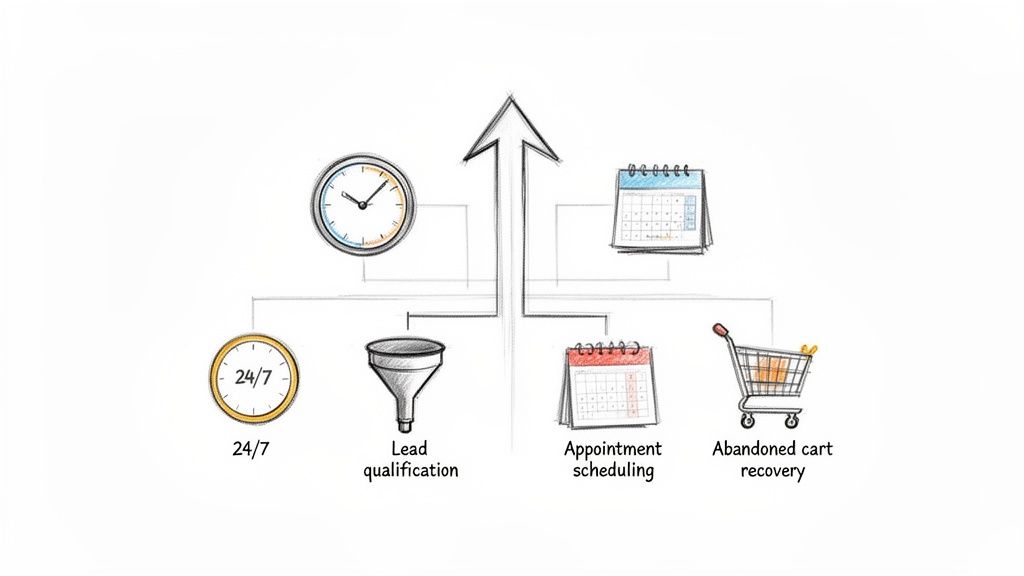
An AI-powered sales assistant isn’t just a clever piece of software. It’s a growth engine. What matters isn’t the tech itself, but what that tech actually does for your bottom line. Let’s break down how each core capability translates directly into more leads, higher conversions, and real revenue.
AI Powered Sales Processes
These assistants often work through smart conversational interfaces, like some of the best live chat apps for Shopify, to engage customers right where they are. Now, let’s get into the features that truly make a difference.
Capture and Engage Leads 24/7
Your website and social media profiles are always on, but your sales team isn’t. An AI assistant is your always-on front line, ensuring you never miss an opportunity, no matter when a potential customer gets curious.
This is huge. Responding within the first five minutes can boost lead conversions by over 300%. Immediate engagement is everything.
- Practical Example: Someone sees your Instagram ad at 1 AM and slides into your DMs with a question. Instead of that lead going cold overnight, your AI-powered sales assistant instantly responds. It answers their question, offers a first-time buyer discount for their email, and pushes their info straight into your CRM as a hot new lead.
Qualify Prospects Instantly and Accurately
Not every lead is a good fit. Your sales team’s time is too valuable to waste on tire-kickers. An AI assistant acts as an intelligent filter, asking the right questions to separate serious buyers from people who are “just looking.”
This means your human reps only get pulled into conversations likely to end in a sale. The AI handles the initial screening by asking pre-set questions about budget, timeline, or company size.
By automating lead qualification, you keep your sales team’s pipeline filled with high-intent prospects. Their efficiency and close rates go up because they can pour all their energy into deals that actually matter.
- Practical Example: A marketing agency builds a Clepher flow for its website. The AI asks visitors about their monthly ad spend. Leads with a budget over a certain threshold are immediately shown a calendar to book a call. Everyone else gets sent helpful content to nurture them along.
Automate Appointment Scheduling
The endless email ping-pong to find a meeting time is a massive productivity killer. An AI sales assistant solves this by plugging directly into your team’s calendars.
Once a lead is qualified, the assistant can show them available time slots and book a demo or consultation right then and there. This cuts down the risk of a hot prospect losing interest while trying to schedule a call.
How It Works:
- The AI qualifies a lead and confirms they’re a good fit.
- It asks, “Want to schedule a quick 15-minute call with our team?”
- When they say yes, it pulls available times from a connected Google Calendar.
- The lead clicks a time, and the meeting is automatically created for both of them. Done.
Recover Abandoned Carts on Autopilot
For e-commerce businesses, abandoned carts are a massive source of lost revenue. Nearly 70% of all online shopping carts are left behind. An AI-powered sales assistant is your secret weapon for clawing back that money.
By connecting to your store, the assistant knows the second a user abandons their cart. It can then automatically trigger a follow-up on Messenger or Instagram—a timely, personal message that is far more powerful than a standard email buried in a crowded inbox.
- Practical Example: A customer adds sneakers to their cart but gets distracted. Twenty minutes later, your Clepher AI assistant hits them up on Instagram: “Hey [First Name]! Looks like you left something behind. To help, here’s a 10% discount, good for the next hour. Ready to finish your order?” This creates urgency and provides a clear reason to buy now.
The Undeniable Business Case for AI in Sales
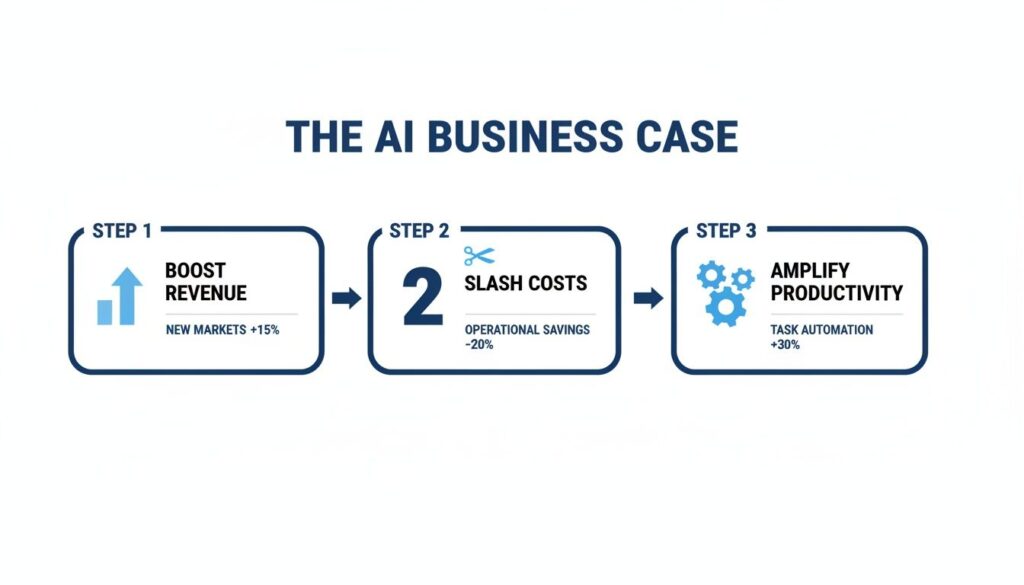
Bringing an AI-powered sales assistant into your business isn’t just about adding tech—it’s a strategic move with a clear return on investment. The case for AI is built on three pillars: boosting revenue, slashing costs, and making your team wildly more productive. Frankly, it’s a competitive must-have in 2026.
Businesses that use these tools are running circles around their competition. Why? They’re just more efficient. They catch leads others miss, follow up in seconds, and let their best people focus on closing deals instead of drowning in busywork.
By automating the repetitive, low-value work that eats up to 11 hours of a salesperson’s week, an AI assistant directly turns wasted time into revenue-generating action. The impact is immediate and measurable.
Boost Your Revenue Streams
Amplify Team Productivity and Morale
Finally, an AI assistant is a massive productivity booster. When your talented salespeople are freed from soul-crushing data entry and scheduling back-and-forth, they can put their energy where it counts: building relationships and closing complex deals.
This shift does wonders for morale. Sales pros want to sell, not get bogged down with admin. When you remove the frustrating, mundane parts of the job, you create a more engaging and rewarding place to work. That leads to happier reps, better performance, and lower turnover. For a deeper dive, explore how to use AI in sales.
The AI Advantage: A Look at the Numbers
The data from industry reports tells a clear story—adopting AI isn’t just a small tweak; it’s a significant performance upgrade across the board.
| Metric | Improvement with AI | Source |
|---|---|---|
| Lead Conversion Rate | Up to 300% increase with 5-minute response times | Various Sales Studies |
| Sales Rep Productivity | Up to a 40% increase in time spent on selling | Harvard Business Review |
| Cost Per Lead | Reduction of over 50% | McKinsey & Company |
| Sales Forecasting Accuracy | Improvement by 10-20% | Gartner |
The evidence is overwhelming. Integrating an AI assistant doesn’t just make things easier; it makes them better, faster, and more profitable.
How to Build Your First AI Sales Assistant with Clepher (No Code Required)
You know what an AI powered sales assistant is, but building one? That sounds like a job for a developer, right?
Wrong. With a no-code, drag-and-drop tool like Clepher, you can get a working assistant live in just a few hours—without touching a single line of code. This isn’t about learning to code; it’s about using an intuitive builder to put your sales strategy on autopilot. Let’s walk through the simple, practical steps.
Step 1: Define Your Primary Goal (Start Small)
Before you drag a single block, you need a mission. What is the one critical job you need this assistant to do right now? If you try to make it do everything at once, you’ll end up with a clunky bot that confuses customers.
Start with a single, high-impact goal. This laser focus makes your design cleaner and delivers measurable wins from day one.
- Goal Idea 1: Qualify Leads: The assistant’s job is to ask a few key questions—budget, timeline, needs—to filter out unqualified leads.
- Goal Idea 2: Set Appointments: The mission is to get qualified leads to book a demo directly on your calendar, killing the email back-and-forth.
- Goal Idea 3: Handle FAQs: The goal is to offload repetitive questions about pricing, features, or shipping.
Actionable Insight: Choose one specific, painful problem to solve first. Success here builds momentum and gives you a clear framework to expand on later. Don’t boil the ocean; just heat one cup of water at a time.
Step 2: Design the Conversation Flow
With your goal locked in, it’s time to map out the chat. Think of this like creating a choose-your-own-adventure for your prospects. Inside Clepher’s visual builder, you’ll just drag and drop blocks that represent messages, questions, and actions.
Always start with a warm welcome. From there, every message should guide the user toward your goal. If you’re qualifying leads, what’s the first question you need an answer to? Based on their response, what’s the logical next step?
Example Lead Qualification Flow:
- Welcome Message: “Hi! Thanks for your interest. I can get you to the right person; I just need to ask two quick questions. Sound good?”
- First Question (Budget): “To start, which of these best describes your monthly budget? (A) Under $500, (B) $500-$2,000, (C) Over $2,000.”
- Conditional Logic: This is where the magic happens. If they choose (C), the flow might instantly offer a link to book a call. If they choose (A), you could send them to a helpful blog post.
Mapping it out visually makes it dead simple to spot any dead ends. For a deeper dive into building more advanced flows, check out our guide on how to create AI agents.
Step 3: Set Up Keyword Triggers
Your assistant needs a signal to jump into action. Keyword triggers are your secret weapon. You simply define specific words or phrases that, when used in a DM or comment, instantly launch your conversation flow.
For example, an e-commerce brand could set up triggers for words like “price,” “shipping,” or “discount.” When a potential customer messages them asking, “What’s the price on this?”, the AI assistant immediately activates, provides the answer, and might even guide them to the checkout page. It’s all about instant, helpful engagement.
The business case for this is crystal clear. AI helps you boost revenue, slash costs, and amplify productivity—all at the same time.
AI Powered Sales Assistant Business Case
As you can see, deploying an AI-powered sales assistant isn’t just a tech upgrade; it’s a core business strategy that hits the bottom line from every angle.
Step 4: Deploy and Integrate with Your Tools
Once your flow is built, it’s go-time. With Clepher, deploying can be as easy as adding a chat widget to your website or connecting it to your Facebook and Instagram DMs. A quick copy-and-paste, and your new assistant is live.
But the final piece is integration. A standalone bot is helpful, but a connected bot is a force multiplier. You’ll want to link your AI assistant to the other tools your business runs on.
- CRM Integration: Automatically push qualified leads into HubSpot or Salesforce.
- Email Marketing Integration: Add subscribers gathered by your bot to your lists in Mailchimp or ActiveCampaign.
- Calendar Integration: Connect to Google Calendar to make automated appointment booking seamless.
This final step transforms your assistant from a simple conversational tool into the central hub of your sales and marketing engine.
AI Sales Assistants in Action: Real-World Examples
Enough theory. Let’s see how an AI-powered sales assistant solves real problems for businesses just like yours. These aren’t futuristic pipe dreams; they are simple, automated solutions working right now.
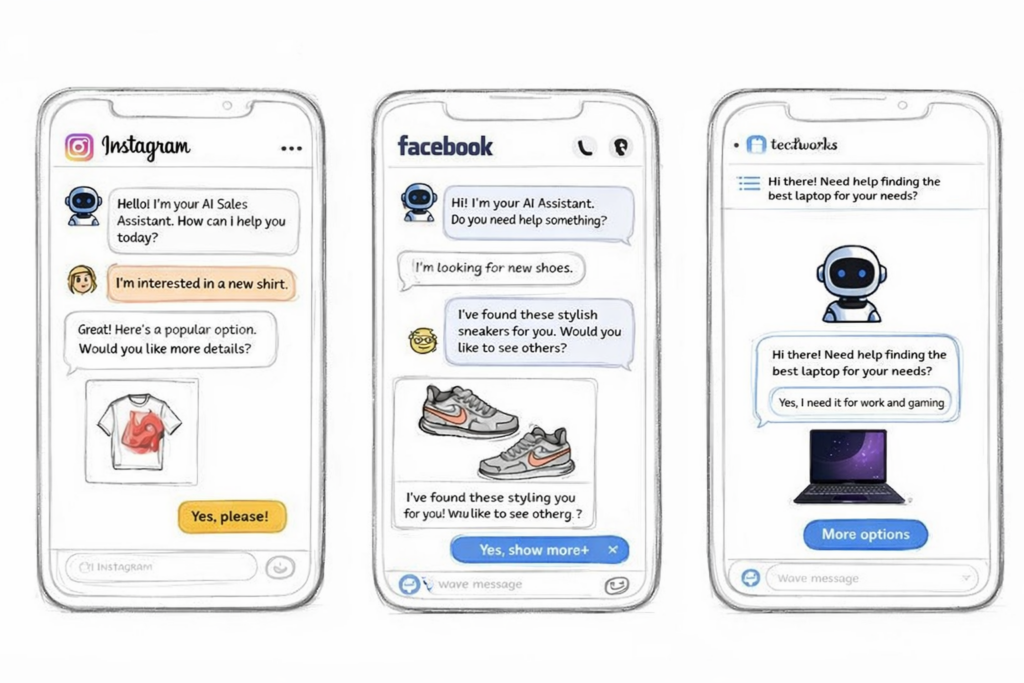
AI Powered Sales Assistant Chatbots
Example 1: The E-commerce Brand Boosting Sales on Instagram
An online apparel store’s DMs are exploding with the same questions: “How much?” “Ship to Canada?” “What’s it made of?” Their small team is drowning. Every minute they spend typing a repetitive answer is a minute a customer loses interest.
The Clepher Solution:
They built an AI sales assistant in Clepher to field these exact questions using keyword triggers.
- When a user asks about “price,” the bot instantly replies with the cost and a direct link to the product page.
- For “shipping” questions, it asks for their country and serves up the right policy in seconds.
- If someone comments “I want this!” on a post, the assistant automatically slides into their DMs to start the buying process.
The Transformation: Response time drops from hours to instant. They start closing sales that would have vanished, and the team is finally free to focus on growing the brand.
Example 2: The Digital Agency Qualifying Leads on Facebook
A marketing agency gets a steady stream of leads, but their top consultants are wasting hours on calls with people who are a bad fit—tiny budgets, wrong service needs, you name it.
The Clepher Solution:
The agency sets up an AI-powered sales assistant on their Facebook Page. When someone clicks “Get a Quote,” the bot starts a friendly, qualifying chat.
- It asks about business goals: “Are you looking for more leads, website traffic, or brand awareness?”
- It gauges their budget: “Which monthly budget range best fits your needs?”
- It schedules the call: If a lead meets their criteria (e.g., budget over $2,000/month), the bot serves up a calendar link to book a strategy session. Leads who don’t qualify are politely sent a helpful eBook.
The Transformation: The agency’s sales pipeline is suddenly filled with pre-vetted, high-intent leads. Their closing rate skyrockets because every sales call is with a prospect who’s a perfect match.
Example 3: The Online Coach Segmenting a Waitlist
A business coach is launching a new course and wants to build a waitlist. In the past, she just used a basic email form, which told her nothing about who was signing up.
The Clepher Solution:
She embeds a Clepher chatbot on her website: “See if the course is right for you.” The AI assistant then asks a few targeted questions:
- “What’s the biggest challenge you’re facing in your business right now?”
- “What’s your current annual revenue?”
- “On a scale of 1-10, how ready are you to invest in a coaching program?”
As people answer, the bot automatically applies tags to each lead inside Clepher (like “startup_challenge” or “ready_to_invest”).
The Transformation: On launch day, she doesn’t just have an email list; she has a rich, segmented audience. She can now send hyper-targeted messages that speak directly to each group’s problems, leading to a massively more successful launch.
Got Questions About AI Sales Assistants? We’ve Got Answers.
Jumping into AI can feel like a big step, so let’s tackle the common questions head-on. This isn’t about adding complicated tech for the sake of it—it’s about getting real results, simply.
The ROI isn’t a long-term dream; it happens almost immediately through:
More leads captured: No opportunity is ever missed, day or night.
Higher conversion rates: Instant engagement stops warm prospects from going cold.
Massive time savings: Your team is freed up to focus on closing deals and hitting sales goals.
For a growing business, it’s one of the most effective investments you can make with the right AI tool.
Ready to see how an AI assistant can genuinely transform your sales process? Clepher makes it easy to build, launch, and manage powerful automations for your website, Messenger, and Instagram.
Related Posts
Transform Your Sales Game with an AI Powered Sales Assistant
April 9, 2026No-Code AI Agent Builder: Your 2026 Growth Playbook
April 8, 2026Your Guide to the Facebook Page URL in 2026
April 7, 2026
Founder Clepher