
Are you juggling Instagram DMs, Facebook comments, and a relentless flood of emails? It’s a constant battle to deliver personal experiences, nurture leads, and prove your marketing is actually working. The pressure to be everywhere at once is real, and older marketing tools just can’t keep up. This is where AI marketing automation tools come in, shifting you from reactive busywork to smart, proactive strategy.
This guide cuts through the hype. We’ve handpicked the best AI-powered platforms that solve these exact problems. Whether it’s automating customer support with a smart chatbot or personalizing a thousand emails instantly, we’ve got you covered. Forget boring feature lists—this is a practical roadmap to help you find the right tool, whether you’re a DTC brand, a digital agency, or a solo entrepreneur.
Inside, you’ll find:
- Detailed breakdowns of top tools like Clepher, HubSpot, and ActiveCampaign.
- Actionable use cases showing how businesses use these tools to get results.
- Honest pros and cons to guide your decision-making.
- Direct links and screenshots to see each platform in action.
Our goal is simple: to help you choose the one AI marketing automation tool that will genuinely streamline your work, boost conversions, and free you up to focus on growing your business. Let’s find the perfect fit for your tech stack.
1. Clepher
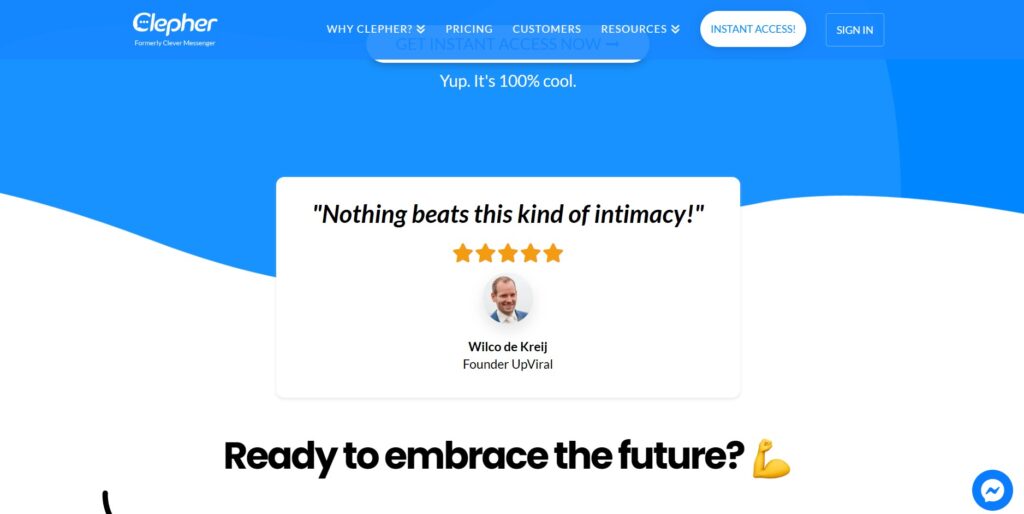
Clepher is a top choice for businesses that want to master sales and support through conversation. It’s a powerful, no-code AI chatbot platform that brings your customer chats from your website, Facebook, Messenger, WhatsApp, and Instagram into one central dashboard. This omnichannel approach is its biggest strength, letting you create a seamless customer experience everywhere.
The platform is built for marketers, not developers. Its intuitive drag-and-drop Flow builder lets you design complex conversations that qualify leads, recover abandoned carts, and onboard new users without writing a single line of code. By combining smart AI Agents with powerful segmentation, Clepher turns simple chats into revenue-generating assets.
Clepher
Key Strengths and Use Cases
Clepher excels at turning passive website visitors and social media followers into engaged subscribers. You can deploy pop-ups and widgets to build your contact list, then use unlimited broadcasts to send targeted promotions—a feature many competitors charge extra for.
- E-commerce & DTC: Imagine a shopper abandons their cart. Clepher can automatically send them a personalized reminder via Instagram DM with a discount code. It can also offer product recommendations or provide instant shipping updates right in the chat.
- Agencies: Manage unlimited client Facebook Pages and Instagram accounts from one hub. You can create and A/B test lead generation flows that capture high-quality leads for a local gym or an online coach, proving your value instantly.
- SaaS & Creators: Build an automated onboarding sequence that guides new users through your software via chat. You can also use AI to answer common support questions 24/7 or promote a new course to a specific audience segment.
Integration and Implementation
Clepher’s deep integration capabilities are a huge advantage. It connects natively with over 50 tools and expands to 5,000+ more through Zapier and Make. This ensures a smooth handoff from your chatbot to your other systems. For example, once a lead is qualified by the bot, their info can automatically be sent to ActiveCampaign to start a nurturing email sequence.
Considerations
The provided materials did not include specific pricing details, which makes it harder to evaluate for businesses on a tight budget. Additionally, independent case studies or verified testimonials were not readily available to confirm performance claims.
- Best For: E-commerce stores, agencies, creators, and SaaS businesses looking for an all-in-one conversational marketing and support solution that gets results.
2. HubSpot Marketing Hub
HubSpot Marketing Hub is an all-in-one platform for businesses that want a single system to manage their entire marketing funnel. It combines a powerful CRM with a full suite of marketing tools, all supercharged with AI. This makes it one of the most complete ai marketing automation tools for small and mid-sized companies aiming for efficient growth. HubSpot’s magic is in unifying data and workflows, so you don’t have to juggle a dozen different apps.
What sets HubSpot apart is how deeply AI is woven into everyday marketing tasks. Its AI Assistants can brainstorm blog post ideas, draft social media copy, write email subject lines, and even build entire landing pages. The AI-powered predictive lead scoring helps your sales team focus on the hottest prospects first. This seamless integration lets you move from content creation to lead nurturing without ever leaving the platform.
Key Features & Use Cases
- AI Content Assistant: Instantly generate a draft for a blog post on “top 10 fitness tips” or create five variations of an ad for a new product.
- Multi-Channel Automation: Build a workflow that sends a follow-up email to someone who visited your pricing page but didn’t sign up, then shows them a retargeting ad on social media.
- Built-in CRM & Reporting: See every interaction a contact has had with your brand and use attribution reports to prove which campaigns are actually driving sales.
- Predictive Lead Scoring: Let the AI analyze lead behavior to tell you who is most likely to buy, so your sales team doesn’t waste time on cold leads.
Pros and Cons
- Pros: Get up and running quickly with a unified platform. Scales from free tools to powerful enterprise plans. Huge support community and template library.
- Cons: Mandatory onboarding fees for higher tiers can be expensive. Pricing is based on the number of marketing contacts, which can get pricey as your list grows.
HubSpot is perfect for teams that value ease of use and having everything in one place. For a deeper dive into strategy, you can learn more about how to use AI in marketing to power your campaigns.
3. Salesforce Marketing Cloud
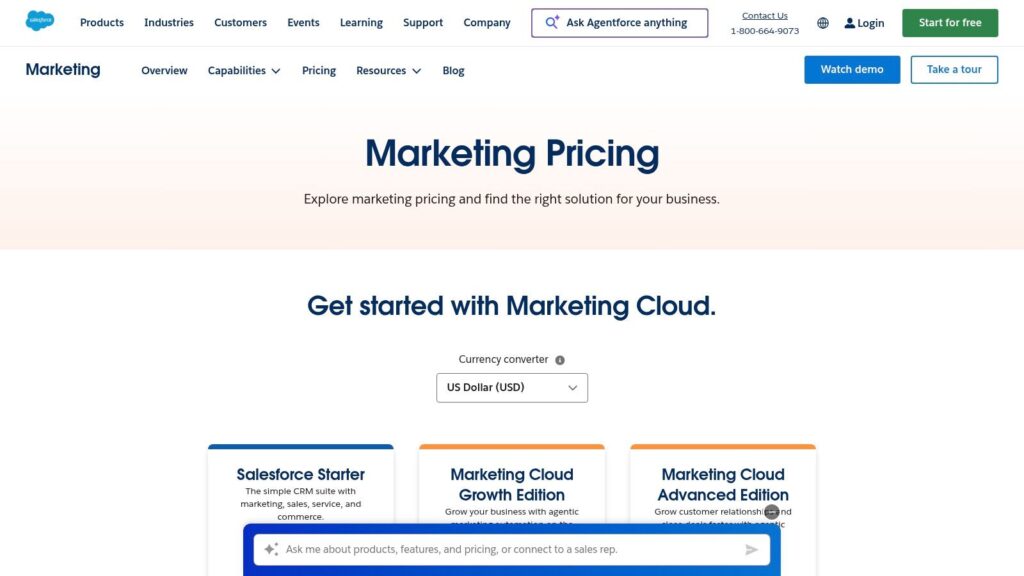
Salesforce Marketing Cloud is an enterprise-level platform built for large companies that need deep personalization and strict control over their marketing. It’s tightly connected to its famous CRM and uses its AI, Einstein, to power sophisticated campaigns and real-time analytics. This makes it one of the most powerful ai marketing automation tools for B2C and B2B enterprises managing massive amounts of customer data across email, mobile, and ads.
Salesforce
Marketing Cloud’s standout feature is its AI-driven personalization. Einstein AI helps marketers design complex customer journeys with “predictive splits,” automatically sending customers down the path they’re most likely to engage with. Its personalization engine can show 1:1 product recommendations on your website in real time. The AI can also analyze campaign data to give you plain-English summaries and optimize your ad spend, connecting marketing actions directly to revenue.
Key Features & Use Cases
- AI Journey Orchestration: A retail brand can create a journey that sends a cart abandonment email, then follows up with an SMS offer 24 hours later if there’s still no purchase, and then shows a social ad a week later—all automated.
- Real-Time Personalization: A travel website can show a visitor from a cold climate real-time offers for beach vacations right on the homepage.
- AI-Powered Analytics: Instead of digging through spreadsheets, the AI can tell you, “Your summer campaign drove 15% more revenue from new customers in the Midwest compared to last year.”
- Two-Way Mobile Messaging: Run an SMS campaign where customers can text back to get a coupon or ask a question, with automated responses handling the conversation.
Pros and Cons
- Pros: Unmatched scalability for massive B2C and B2B operations. Huge ecosystem of integrations and partners. Strong security and data privacy controls.
- Cons: Premium pricing and annual contracts make it inaccessible for most small businesses. It’s complex and requires significant time and expertise to implement correctly.
Salesforce Marketing Cloud is for enterprise teams who need a powerful, all-in-one solution and have the budget and team to manage it.
4. Adobe Marketo Engage
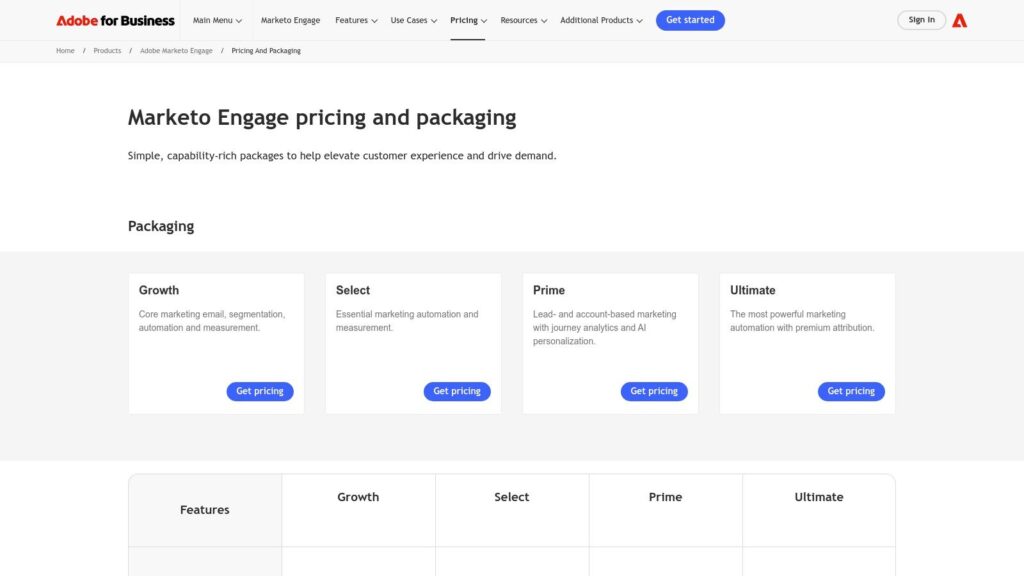
Adobe Marketo Engage is a heavyweight B2B marketing platform designed for complex sales cycles and account-based marketing (ABM). It shines with its powerful lead management and segmentation capabilities, now boosted with AI. This makes it a top choice among ai marketing automation tools for large companies that need to manage long customer journeys and integrate deeply with CRMs like Salesforce or Microsoft Dynamics.
Adobe for Business
Marketo’s real strength lies in its AI-driven personalization and revenue attribution for B2B. The platform uses AI to build predictive audiences, identifying which target accounts are most likely to engage. It also enables dynamic content that changes in real time based on a visitor’s industry or job title. Its multi-touch attribution models show exactly how different marketing efforts—like a webinar, an ebook, and an ad campaign—contribute to closing a deal, giving marketers the data to prove their ROI.
Key Features & Use Cases
- Account-Based Automation: Target an entire buying committee at a key account. The CMO gets high-level case studies, while the technical lead gets detailed whitepapers, all automated within the same campaign.
- Predictive Audiences & Dynamic Content: A software company’s website can automatically show content tailored to visitors from the finance industry, while visitors from healthcare see different case studies and messaging.
- Multi-Touch Attribution: Finally, answer the question, “Was it the blog post or the trade show that generated this lead?” Marketo connects the dots to show you which channels are truly driving revenue.
- Native CRM Integrations: Maintain a single, unified view of every lead and customer with deep, bi-directional syncs with Salesforce and other major CRMs.
Pros and Cons
- Pros: Extremely powerful for segmentation and managing long, complex sales cycles. Enterprise-level security and governance.
- Cons: Pricing is not public and is geared toward large enterprises. It has a very steep learning curve and requires a significant time investment to set up.
Marketo Engage is best for large, established marketing teams in B2B enterprises that need a robust engine to manage complex customer relationships.
5. ActiveCampaign
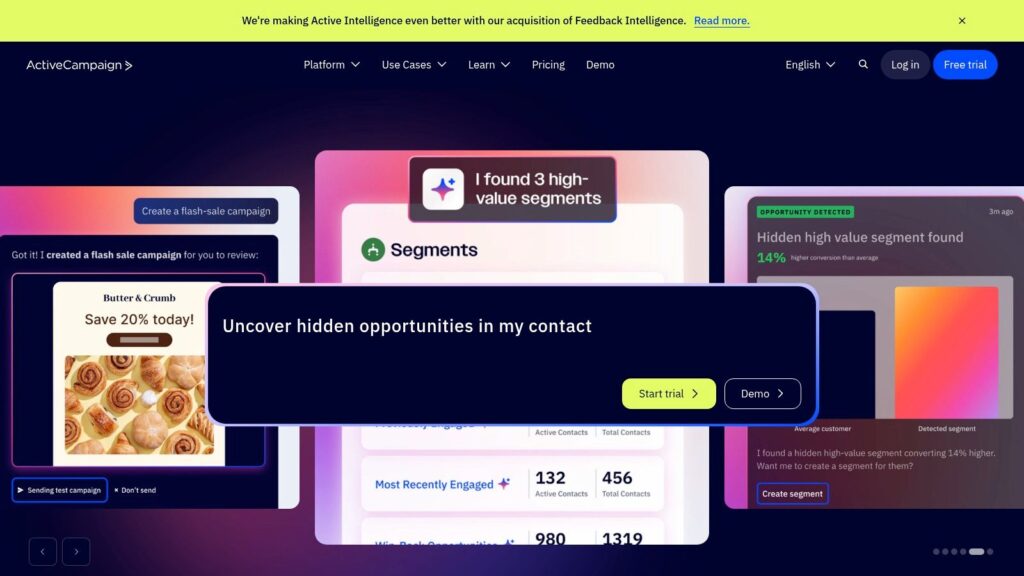
ActiveCampaign is a customer experience platform that expertly blends email marketing, automation, and CRM tools. It’s famous for its powerful yet visual automation builder, making it a favorite for small and mid-sized businesses that want sophisticated workflows without the enterprise price. As one of the most versatile ai marketing automation tools, it helps businesses create highly personalized customer journeys based on almost any trigger you can imagine.
ActiveCampaign
The secret sauce of ActiveCampaign is its combination of granular automation and smart AI. Its Predictive Sending feature analyzes when each individual contact is most likely to open an email and delivers it at that exact moment. Beyond email, its AI features allow for conditional content—meaning parts of an email or landing page can change automatically based on a contact’s location, past purchases, or interests. This enables hyper-personalized marketing at scale.
Key Features & Use Cases
- Visual Automation Builder: Create a workflow that tags a new lead, sends them a welcome email series, waits three days, and then notifies a salesperson to follow up if they’ve clicked a specific link.
- Predictive Sending: Instead of blasting your entire list at 9 AM Tuesday, the AI sends the email to Sarah at 8 PM when she’s browsing her phone and to David at 11 AM when he’s on his lunch break.
- Multi-Channel Messaging: Automate an entire campaign across email, SMS, and on-site messages. For example, send a follow-up text to someone who opened an email but didn’t click.
- Deep Integrations: Connect seamlessly with Shopify or WooCommerce to trigger automations based on purchase behavior, like sending a “how-to” guide for a product someone just bought.
Pros and Cons
- Pros: Incredibly powerful automation at a very competitive price for small businesses. Excellent email deliverability and deep segmentation options.
- Cons: The interface can feel a bit cluttered as you build more complex automations. Pricing can scale quickly as your contact list grows.
ActiveCampaign is perfect for businesses that have outgrown basic email tools like Mailchimp and need advanced automation to nurture leads and customers.
6. Klaviyo
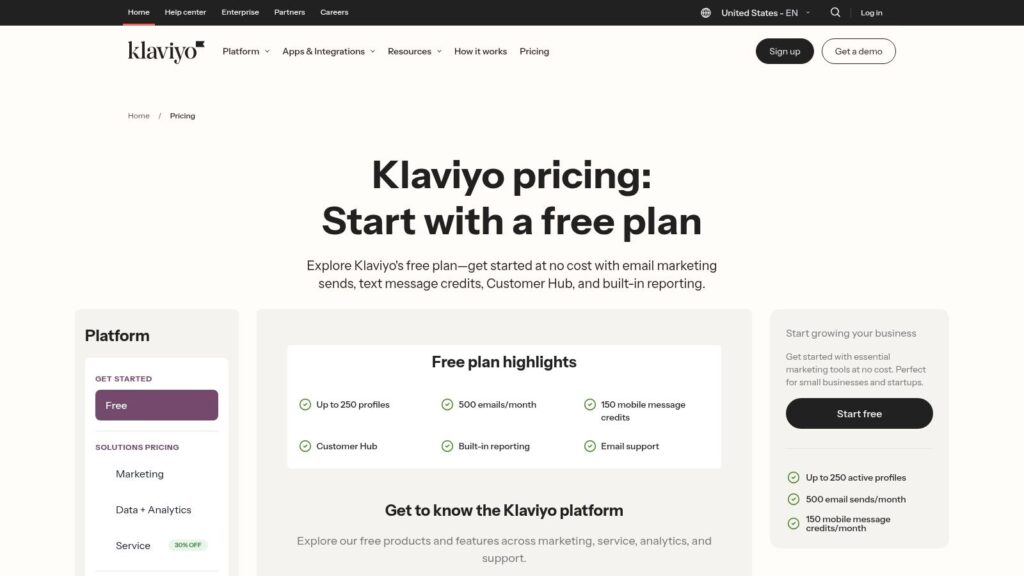
Klaviyo is an e-commerce powerhouse, combining email and SMS marketing with smart AI automation. It was built specifically for direct-to-consumer (DTC) brands, especially those on Shopify or BigCommerce. Its deep integrations pull in rich customer data, allowing for incredibly personalized campaigns. This laser focus makes it one of the most effective ai marketing automation tools for businesses that need to tie every marketing email and text directly to sales.
Klaviyo
What makes Klaviyo a favorite is its data-first approach. The platform’s AI features, like the subject line generator, help with content creation, while its predictive analytics can forecast a customer’s next purchase date or identify who is at risk of churning. This lets e-commerce marketers move beyond generic email blasts and get strategic. You can create a segment of customers who have bought twice but not in the last 90 days, then send them a targeted “we miss you” campaign with a special offer.
Key Features & Use Cases
- Pre-built Ecommerce Flows: Instantly launch proven automations for abandoned carts, browse abandonment (for those who looked but didn’t buy), and customer win-back campaigns.
- AI Content & Segmentation: Use the AI subject line assistant to boost open rates and let the platform’s AI predict which customers have the highest lifetime value so you can treat them like VIPs.
- Deep Data Model: Klaviyo knows what each customer has bought, how much they’ve spent, and what they’ve viewed. Use this data to send highly relevant product recommendations.
- Built-in Revenue Reporting: See exactly how much money each email and SMS campaign has generated, with clear dashboards that prove your marketing ROI.
Pros and Cons
- Pros: Unbeatable integrations with Shopify and other e-commerce platforms. Powerful segmentation and revenue-focused analytics. Strong community with tons of proven templates.
- Cons: Can become expensive as your contact list and SMS sending increase. The more advanced segmentation features have a bit of a learning curve.
Klaviyo is the go-to solution for growth-focused DTC brands that live and breathe data. The key to success is setting up core revenue-driving flows first.
7. Mailchimp
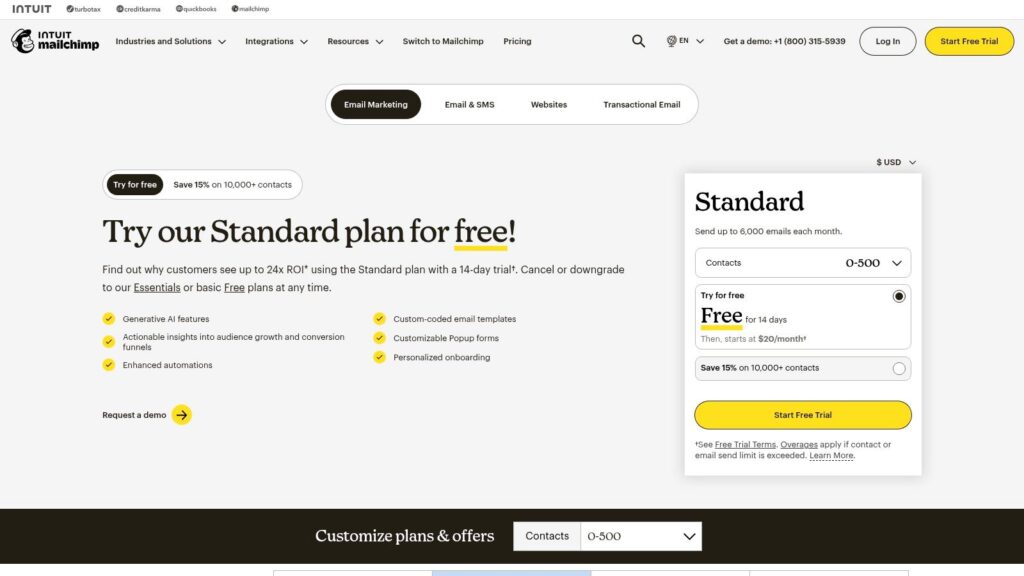
Mailchimp is a well-known name in email marketing that has grown into a marketing automation platform with added generative AI features. It’s designed for startups, creators, and small businesses who need an easy-to-use solution to launch campaigns fast. As one of the most user-friendly ai marketing automation tools, its strength is its simplicity, huge template library, and straightforward approach, making it perfect for those just starting out.
Mailchimp
Mailchimp’s appeal is how it integrates AI into the content creation process. The platform can generate subject lines and email copy for you, and even suggest the best time to send an email based on your audience’s past behavior. Its “Customer Journey Builder” provides visual templates for basic automations like a welcome series for new subscribers or abandoned cart reminders. While not as powerful as enterprise tools, it offers a solid foundation for sending the right message at the right time without a steep learning curve.
Key Features & Use Cases
- Generative AI Content: Stuck on what to write? Ask the AI to draft an email announcing your new summer collection or suggest three engaging subject lines.
- Customer Journey Builder: Easily set up a simple workflow: when someone joins your list, send them a welcome email, wait two days, then send them a 10% off coupon.
- A/B Testing: Test two different subject lines to see which one gets more opens, helping you learn what resonates with your audience.
- Segmentation & Analytics: Group contacts who live in a specific city or who have purchased in the last 30 days, then track your campaign’s open and click rates.
Pros and Cons
- Pros: Very easy to learn and use, with a massive library of templates. Connects with hundreds of other apps and tools. Good enough automation for the most common marketing tasks.
- Cons: Pricing based on contacts and sends can lead to surprise costs if your list grows. The automation features are less flexible than those of more advanced platforms.
Mailchimp is ideal for businesses that are focused on email and need a simple, effective tool to get started and see results quickly.
8. Omnisend
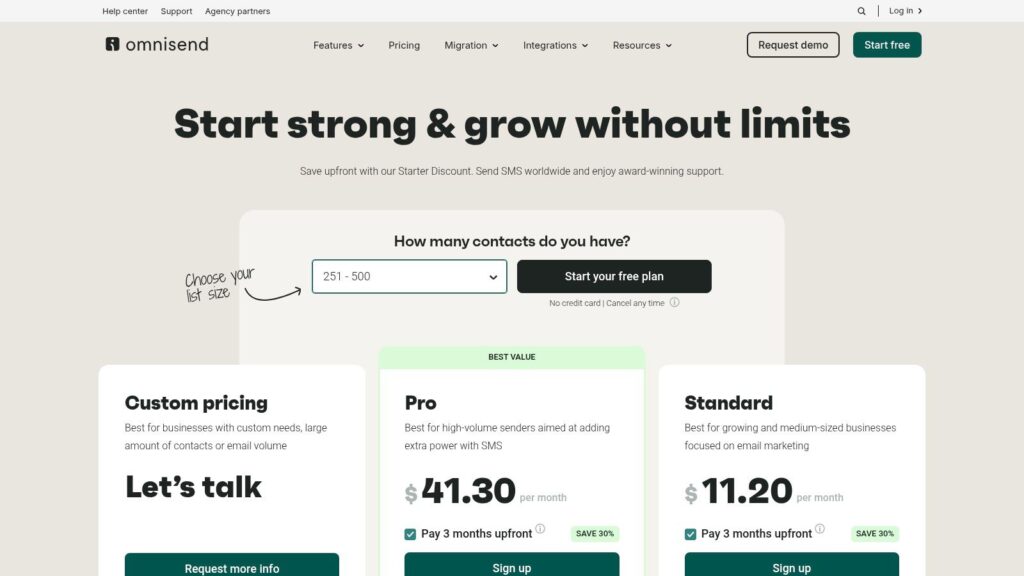
Omnisend is an email, SMS, and web push notification platform built from the ground up for e-commerce stores. It stands out by combining powerful segmentation with ready-to-use automation workflows designed to drive sales, like abandoned cart reminders and customer win-back campaigns. This sharp focus makes it a top contender among AI marketing automation tools for online retailers who need a system that truly understands the e-commerce customer journey.
Omnisend
What makes Omnisend so effective is its mix of simplicity and advanced features. The platform offers AI-driven product recommendations, allowing you to automatically populate an email with items a shopper recently viewed or added to their cart. This dynamic personalization, combined with its clear pricing and multi-channel capabilities (email, SMS, push notifications), gives merchants a complete toolkit for increasing customer lifetime value.
Key Features & Use Cases
- Pre-built E-commerce Automations: Launch a welcome series for new customers, a cart abandonment flow, or a post-purchase follow-up in minutes using proven templates.
- Multi-Channel Messaging: Send an email about a flash sale. If a customer doesn’t open it, automatically send them an SMS reminder two hours before the sale ends.
- AI-Powered Product Recommendations: A customer bought a pair of running shoes last month. Your next email to them can automatically feature matching athletic shorts and socks.
- Advanced Segmentation: Create a segment of VIP customers who have spent over $500 and send them an exclusive early-access offer for a new product line.
Pros and Cons
- Pros: Transparent pricing that’s easy to understand and scales with your business. Dedicated support managers are available on higher-tier plans. Built specifically for the needs of e-commerce.
- Cons: Your billable contact list can include non-subscribed users who enter a workflow, which could increase costs. The platform provides the best value as your list size and sending volume grow.
Omnisend is perfect for e-commerce brands wanting a powerful, user-friendly automation platform without the complexity of an all-in-one suite.
9. Intercom
Intercom is an AI-first customer communication platform that blends proactive marketing with automated support. While many see it as a support tool, its powerful features make it one of the most effective AI marketing automation tools for user lifecycle marketing, especially for SaaS and subscription businesses. The platform is designed to manage interactions through in-app messages, banners, and multi-channel campaigns to drive user activation and keep them coming back.
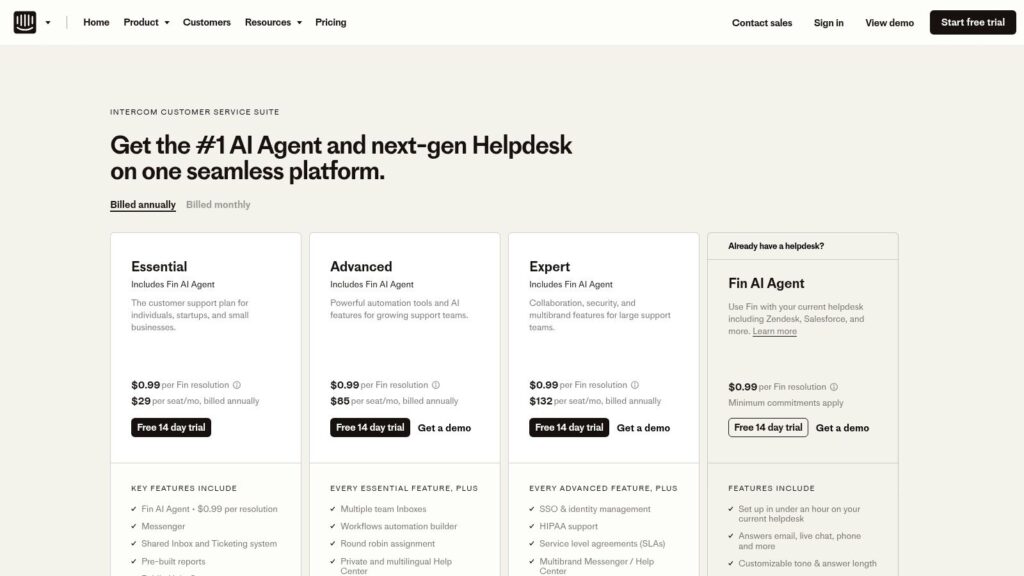
Intercom
Intercom’s unique feature is its AI agent, Fin, which is built to answer customer questions automatically. This frees up your team to focus on more strategic work. The platform’s “Series” campaign builder lets you create sophisticated message sequences triggered by user behavior. For example, you can create a series to guide new users through your app’s key features or to re-engage users who haven’t logged in for a while. This focus on contextual, in-app communication creates a seamless user journey.
Key Features & Use Cases
- Fin AI Agent: A customer has a complex question about your billing policy. Fin can understand the query and provide a detailed, accurate answer instantly, 24/7.
- Series Campaign Builder: Onboard new users by sending them a series of in-app messages that highlight a new feature each day for their first week.
- Proactive Messaging: If a user is spending a lot of time on your pricing page, you can trigger a proactive pop-up chat offering to answer any questions.
- Multichannel Communication: Engage customers through email, SMS, and WhatsApp, all managed from one central hub.
Pros and Cons
- Pros: Excellent for in-app messaging and guiding users to activation. The pay-per-resolution pricing for its AI agent can be very cost-effective for support.
- Cons: Its main focus is support, so some advanced marketing automation features might cost extra. Usage-based fees for SMS and WhatsApp can make pricing complex.
Intercom is perfect for product-led companies that want to automate user onboarding and provide instant, AI-powered support inside their app.
10. Shopify App Store – Marketing & Conversion
The Shopify App Store isn’t a single tool but an entire ecosystem where e-commerce brands can find and integrate specialized AI marketing automation tools. It’s a marketplace for thousands of apps designed to boost marketing and sales, all built to work seamlessly with a Shopify store. For merchants, this takes the guesswork out of compatibility and offers plug-and-play solutions for everything from email automation to AI-powered ad management.
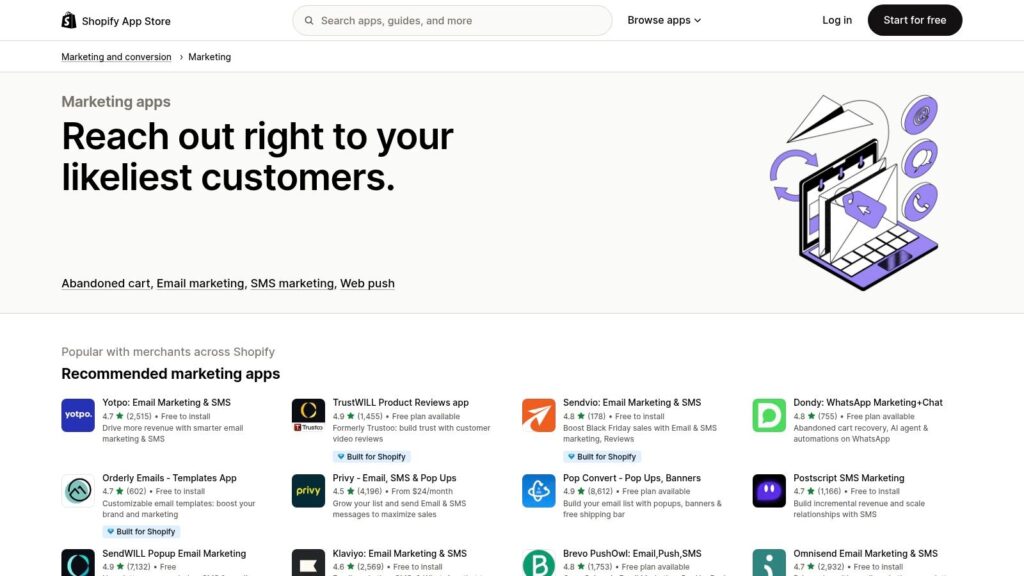
Shopify
What makes the App Store so powerful is its massive selection and the trust that comes with the “Built for Shopify” badge, which guarantees performance and a good user experience. Merchants can find dedicated AI tools for personalized product recommendations, dynamic pricing, or automated customer segmentation based on purchase history. This lets store owners build a custom marketing stack that solves their specific problems, whether that’s reducing abandoned carts or increasing customer loyalty.
Key Features & Use Cases
- Vast App Selection: Need to add customer reviews, a loyalty program, or an SMS marketing tool? There are dozens of vetted apps for each category.
- Plug-and-Play Integration: Most apps offer one-click installation and work directly inside your Shopify admin, so there’s no need for custom coding.
- User-Driven Curation: Rely on thousands of real user reviews and ratings to compare options and find the best app for your budget and needs.
- Unified Billing: Manage all your app subscriptions and payments through your main Shopify account, simplifying your accounting.
Pros and Cons
- Pros: Fast installation and native billing make it easy to manage your tech stack. Rich user reviews help you compare options and make confident decisions.
- Cons: The huge number of options can be overwhelming. It’s easy to install too many apps, which can slow down your store if you’re not careful.
The Shopify App Store is the perfect starting point for any e-commerce brand looking to add marketing automation. A practical approach is to identify one problem (e.g., “we need more email subscribers”) and then search for top-rated pop-up and form-builder apps.
12. G2 – Marketing Automation Software
While not a tool itself, G2 is an essential research platform for anyone choosing ai marketing automation tools. It’s a massive software marketplace and peer-review site that lets you compare dozens of solutions based on real, verified user feedback. Instead of just trusting a vendor’s website, G2 gives you a data-driven look at the entire market, making it invaluable for creating a shortlist of potential platforms.
The platform cuts through the marketing noise. You can filter solutions by specific AI features, read detailed reviews from users in your industry, and see side-by-side feature comparisons. This helps you understand a tool’s real-world performance, setup challenges, and customer support quality before you even book a demo. G2’s Grid Reports provide a quick visual guide to identifying market leaders and up-and-coming innovators.
Key Features & Use Cases
- Category Rankings & Filters: A mid-sized B2B company can filter for marketing automation tools that are highly rated by other mid-sized companies and have strong lead-scoring features.
- Detailed Peer Reviews: Read honest feedback from other marketers about a tool’s ease of use, hidden costs, and the quality of its customer support.
- Feature & Vendor Comparisons: Create a side-by-side comparison of HubSpot, ActiveCampaign, and Marketo to see exactly how their automation builders and pricing stack up.
- Buyer Guides & Reports: Use expert guides to understand the key questions to ask during a sales demo so you can make a smarter purchasing decision.
Pros and Cons
- Pros: Comprehensive, up-to-date coverage of the marketing automation market. Peer reviews help you verify a vendor’s claims. Excellent for research and creating a vendor shortlist.
- Cons: Sponsored placements can sometimes appear high in search results. Pricing information is often an estimate and should always be confirmed with the vendor.
G2 is the best place to start your search for a new marketing platform. Use its comparison feature to pick your top three contenders and export the data to share with your team.
Top 11 AI Marketing Automation Tools Comparison
| Product | Core features | UX / Quality (★) | Price / Value (💰) | Target audience (👥) | Unique selling points (✨) |
|---|---|---|---|---|---|
| Clepher 🏆 | Omnichannel AI Agents; no-code drag‑drop Flow builder; unlimited broadcasts & capture widgets | ★★★★☆ — fast setup; vendor claims high open/CTR | 💰 Not disclosed — scalable; supports unlimited Pages & IG | 👥 DTC/e‑commerce, agencies, creators, SaaS, local businesses, solopreneurs | ✨ Omnichannel chat + AI Agents; 50+ native + 5k via Zapier; A/B testing, personas, GDPR tools |
| HubSpot Marketing Hub | Built‑in CRM, multi‑channel automation, AI content & analytics | ★★★★☆ — unified stack; strong reporting | 💰 Free → Enterprise; costs rise with contacts | 👥 SMB → mid‑market marketing teams | ✨ Native CRM, marketplace, templates & AI optimization |
| Salesforce Marketing Cloud | Journey orchestration, real‑time personalization (Einstein), SMS/WhatsApp | ★★★★★ — enterprise grade; robust governance | 💰 Premium — annual, sales‑driven pricing | 👥 Large enterprises; regulated industries | ✨ Real‑time 1:1 personalization; deep Salesforce integration |
| Adobe Marketo Engage | Lead & account‑based automation, predictive audiences, multi‑touch attribution | ★★★★☆ — powerful, complex | 💰 Enterprise pricing (sales quote) | 👥 Large enterprises; B2B/ABM teams | ✨ Advanced ABM, lifecycle orchestration & analytics |
| ActiveCampaign | Visual automations, CRM, predictive sending, SMS/site messaging | ★★★★☆ — SMB-friendly; strong deliverability | 💰 SMB entry price; scales with contacts | 👥 SMBs and growing businesses | ✨ Robust automations at an SMB‑friendly entry point |
| Klaviyo | Ecommerce flows (cart, winback), AI subject lines, revenue reporting | ★★★★☆ — ecommerce‑optimized; great reporting | 💰 Usage‑based; SMS costs can add up | 👥 DTC merchants (Shopify/BigCommerce) | ✨ Deep ecommerce data model & prebuilt revenue flows |
| Mailchimp | Email templates, generative AI, basic journeys & testing | ★★★☆☆ — easy, fast execution | 💰 Low barrier; contact/send overages possible | 👥 Startups, small businesses, DIY marketers | ✨ Large template library and simple AI helpers |
| Omnisend | Email, SMS, web‑push, prebuilt ecommerce flows, product recommenders | ★★★★☆ — transparent pricing; ecommerce focus | 💰 Clear tiers; better value at scale | 👥 Ecommerce teams wanting clear costs | ✨ SMS credits calculator, product recommendations |
| Intercom | AI agents (Fin), in‑app messages, campaigns, support automation | ★★★★☆ — strong in‑app engagement; resolution pricing | 💰 Usage/add‑ons can add complexity | 👥 SaaS/product teams focused on support & activation | ✨ Resolution‑based AI billing; guided activation tools |
| Shopify App Store – Marketing & Conversion | Marketplace of apps: email/SMS, popups, reviews, ads automations | ★★★★☆ — fast installs; native billing | 💰 App pricing varies; many paid plugins | 👥 Shopify merchants & ecommerce teams | ✨ Thousands of vetted, plug‑and‑play apps built for Shopify |
| G2 – Marketing Automation Software | Review marketplace, rankings, filters, buyer resources | ★★★★☆ — broad vendor coverage; peer insights | 💰 Free to browse; sponsored listings present | 👥 Buyers researching vendors, procurement teams | ✨ Peer reviews, category rankings, buyer resources |
Putting AI to Work: Your Next Steps
We’ve covered a wide range of AI marketing automation tools, from all-in-one giants like HubSpot to specialists like Klaviyo for e-commerce and Clepher for conversational marketing. The number of options can feel like a lot, but the main takeaway is this: the “best” tool isn’t the one with the most features. It’s the one that best solves your specific business problems.
The goal isn’t just to “use AI.” It’s to use automation strategically to save time, create better customer experiences, and make data-driven decisions that grow your revenue. Whether you need to capture more leads, reduce abandoned carts, or improve customer loyalty, there’s a tool on this list that can help. The key is to move from thinking to doing.
Your Action Plan for Choosing the Right Tool
Making the right choice requires a clear plan. Don’t get distracted by flashy features—focus on practical results for your business. Use this simple framework to pick the perfect platform.
- Define Your #1 Marketing Challenge: Before you even look at a pricing page, what’s your single biggest bottleneck? Is it getting new leads? Nurturing them? Converting visitors? Your answer will instantly narrow down your options. For example, a DTC brand losing sales to abandoned carts should look at Klaviyo or Clepher. A B2B company needing better lead scoring should focus on ActiveCampaign or HubSpot.
- Shortlist 2-3 Contenders: Based on your main challenge, pick two or three tools from this list that seem like a good fit. Compare their core strengths. If you need deep CRM integration for your sales team, HubSpot is a strong choice. If your business lives and dies on Instagram and Facebook, Clepher is built for that world.
- Run a Real-World Pilot Test: This is the most important step. Sign up for a free trial or a cheap entry-level plan and build one high-impact workflow. Don’t try to do everything at once.
- For an e-commerce store: Set up an abandoned cart recovery sequence using Clepher’s automated Messenger flows.
- For a service business: Create a simple 3-email welcome series in ActiveCampaign for new subscribers.
- For a content creator: Build a Manychat bot that delivers a free guide and answers common questions via Instagram DM.
This hands-on test will tell you more about a tool’s strengths and weaknesses than any sales demo ever could.
The Future is a Partnership
The era of manual, one-size-fits-all marketing is over. The future belongs to businesses that combine human creativity with AI-driven efficiency. Your strategy, your brand voice, and your understanding of your customer are irreplaceable. The AI marketing automation tools we’ve discussed are what allow you to execute that strategy with speed and precision that was once impossible.
The journey starts with a single, well-chosen automated workflow. Start small, prove it works, and build from there. The power to transform your marketing is right at your fingertips.
Conclusion
After comparing the best AI marketing automation tools, Clepher stands out as the ultimate choice for modern marketing teams. Clepher combines advanced AI models and AI algorithms with intuitive tools that automate marketing and simplify complex marketing workflows. It helps marketing teams implement AI marketing automation across multiple marketing channels, enabling multi-channel marketing that personalizes content, automates marketing copy, and leverages AI writing features to support content marketing and AI for content initiatives.
Clepher’s AI capabilities include machine learning-powered analytics tools and marketing analytics that show how marketing automation works and measure marketing performance—so you can get ahead in 2026. Unlike traditional automation or traditional marketing automation, Clepher brings the use of AI and artificial intelligence into existing marketing workflows to automate routine tasks, personalize content at scale, and improve marketing efficiency. Whether you are choosing the right AI marketing platform, evaluating AI marketing software, or adopting AI platforms to leverage AI for marketing automation, Clepher makes implementing AI marketing automation straightforward. Its automation capabilities and applications of AI in marketing cover common use cases for AI, from audience segmentation to predictive scoring, making it the next best pick for teams seeking to elevate their marketing strategies, drive measurable AI success, and shape the future of AI and the evolution of AI in marketing.
Ready to turn conversations into conversions? Clepher is the AI-powered marketing automation platform designed specifically for businesses that thrive on Facebook and Instagram. Build your first automated lead generation or sales flow in minutes.
Related Posts
How to Create a Survey on Facebook for Maximum Engagement
March 28, 2026Social Media Marketing Automation: Your Ultimate Guide
March 27, 2026
Founder Clepher