
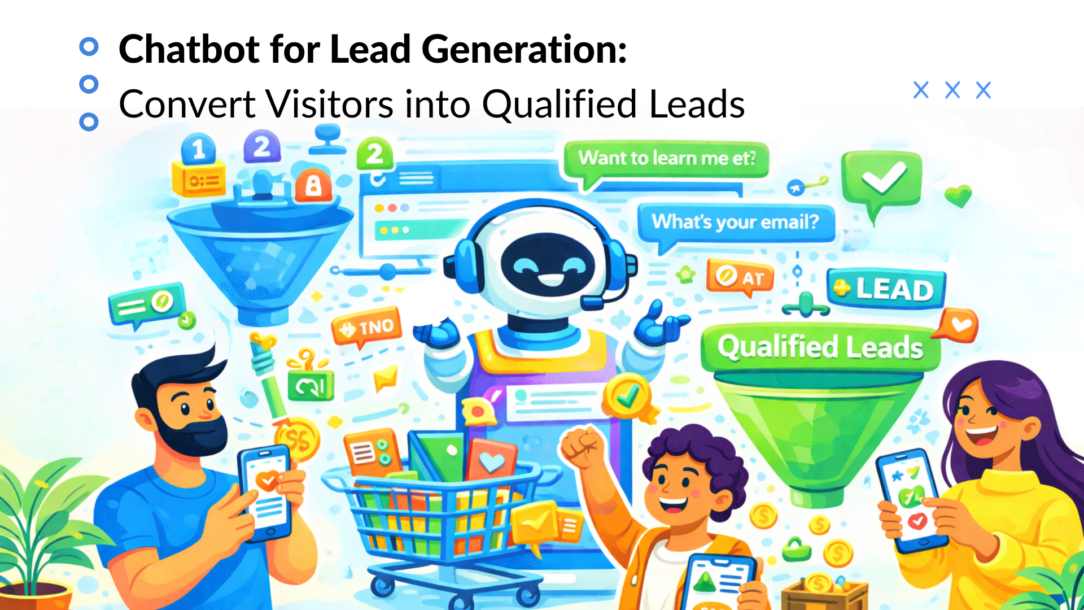
Picture two receptionists at your company’s front desk.
One hands every visitor a clipboard and a pen, points to a form, and walks away. The other greets them with a warm hello, asks what they need, and personally guides them to the right person or department—instantly.
That second one? That’s your chatbot for lead generation. It’s your automated front-line team member, ready to engage, qualify, and nurture potential customers 24/7.
The Shift From Passive Forms to Active Conversations
For years, the gold standard for online lead capture was the static “contact us” form. A visitor lands on your site, types their info into a few boxes, hits submit, and then… they wait. This process is passive, impersonal, and creates a massive gap between their initial interest and your team’s first conversation.
A chatbot for lead generation completely flips that script.
Instead of waiting for someone to fill out a form, a chatbot proactively starts a conversation. It turns a one-way data dump into a helpful, two-way dialogue. This approach doesn’t just collect an email address; it builds immediate rapport and gathers critical context right from the start.
Traditional Forms vs Lead Generation Chatbots
Let’s look at the real-world difference. A quick glance shows why interactive chatbots consistently outperform static forms.
| Feature | Traditional Lead Forms | Chatbot for Lead Generation |
|---|---|---|
| Interaction | Passive (User fills out fields) | Active (Two-way conversation) |
| Response Time | Hours or days | Instant, 24/7 |
| Lead Qualification | None (Done manually later) | Automatic (Asks qualifying questions) |
| Personalization | Generic, one-size-fits-all | Dynamic, adapts to user answers |
| User Experience | Impersonal and transactional | Engaging and helpful |
| Data Collected | Basic contact info | Rich contextual data and user intent |
The takeaway is simple: forms make potential customers do all the work and wait. Chatbots do the work for them, instantly.
Why This Matters for Your Business Now
We live in a world of instant gratification. Customers don’t just want immediate answers—they expect them. Waiting hours for a response is a deal-breaker. A lead generation chatbot closes that gap by engaging visitors the second they show interest.
This directly tackles some of the biggest sales and marketing headaches:
- Slash Your Bounce Rates: An engaging chatbot can stop visitors from leaving your site out of confusion or impatience.
- Capture Leads 24/7: Your business never really closes online. A chatbot is always on, capturing leads from different time zones or long after your team has gone home.
- Boost Sales Efficiency: By asking qualifying questions upfront, a chatbot filters out the tire-kickers, so your sales team can focus their energy exclusively on high-potential prospects.
The Immediate Impact of Conversational AI
The numbers don’t lie. Businesses that adopt chatbots see a clear advantage. In fact, 64% of businesses report a major spike in qualified leads right after putting a chatbot to work.
Speed is critical. Studies show businesses are 7x more likely to qualify leads if they respond in under an hour. Even better? They’re an incredible 21x more likely if that response comes within just five minutes. That’s a standard that only chatbots can consistently meet. You can dig into more of these powerful lead generation statistics and see how they’re reshaping business today.
A chatbot transforms your website from a digital brochure into an active sales assistant. It’s the difference between leaving a business card in an empty office and having a productive conversation with a decision-maker.
Ultimately, using a chatbot for lead generation isn’t about chasing the latest tech trend. It’s about meeting your customers where they are and giving them the instant, personalized experience they now expect.
How a Lead Generation Chatbot Actually Works
So, how does a chatbot turn a casual visitor into a genuinely qualified lead? It’s not magic. It’s a smart, automated conversation designed to guide a user from “just browsing” to “ready to talk.”
Think of it as your best salesperson, working 24/7. The process is a carefully designed dialogue that moves from a friendly greeting to gathering critical information—all without the friction of a boring form.
This conversational approach is precisely why chatbots are so effective at keeping potential customers engaged.
Stage 1: The Initial Engagement
First, you have to start the conversation. A great chatbot for lead generation doesn’t just wait to be noticed. It proactively jumps in with a relevant, contextual greeting. This isn’t your generic, annoying “How can I help you?” pop-up.
Instead, a smart bot triggers based on visitor behavior. For example, if someone is lingering on your pricing page, the chatbot could pop up with, “Exploring our plans? I can help you find the perfect fit in under 60 seconds.”
That kind of immediate, relevant offer feels helpful, not intrusive. It instantly opens the door to a real conversation.
Stage 2: Conversational Qualification
Once the chat starts, the chatbot’s main job is to qualify the lead. This is where it completely outperforms a simple contact form. Instead of just asking for a name and email, the bot asks a series of targeted questions in a natural way.
These questions uncover critical details:
- Needs and Pain Points: What problem is the visitor actually trying to solve?
- Budget and Timeline: Do they have the resources and urgency to make a decision?
- Decision-Making Authority: Are they the right person to talk to?
For a marketing agency, a chatbot might ask, “What’s your current monthly marketing budget?” followed by, “What’s your single biggest growth challenge right now?” This process weeds out unqualified leads, ensuring your sales team only spends time on people who are a great fit.
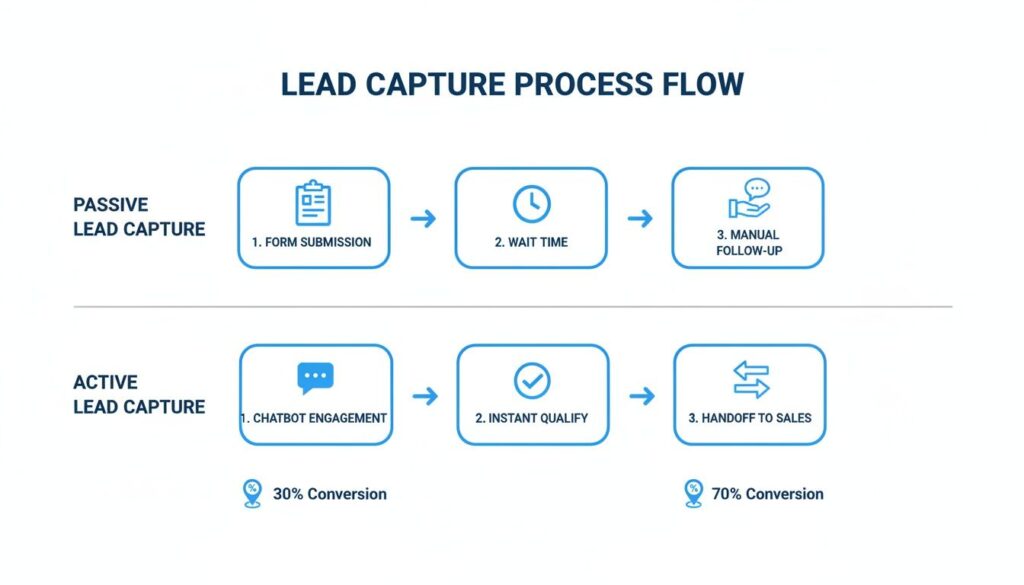
The visual below breaks down how this active, instant qualification process flips the old, passive lead capture model on its head.
Lead Process
The flow is clear: you go from a slow, manual follow-up to an immediate, automated handoff. That closes the gap and drastically cuts the time it takes to connect with a hot lead.
Stage 3: Automated Segmentation
While the chatbot asks questions, it’s also working silently in the background to segment the lead. It’s like a virtual assistant sorting incoming mail into different piles based on importance.
Based on the user’s answers, the bot can automatically apply tags. For instance, a visitor who mentions a high budget and an urgent timeline could get tagged as a “hot lead.” Someone who’s just browsing might get tagged as “needs nurturing.”
This real-time segmentation is a game-changer. It sets you up for hyper-personalized follow-up that speaks directly to each lead’s specific situation and needs.
Stage 4: The Seamless Handoff
The final stage is the handoff. As soon as a lead is qualified, the chatbot routes them to the next logical step—instantly. There’s no “we’ll get back to you in 24 hours.” The momentum is never lost.
This handoff can look a few different ways:
- Book a Meeting: The bot can plug directly into a sales rep’s calendar, letting hot leads book a demo on the spot.
- CRM Integration: The lead’s info and conversation transcript are sent straight to your CRM, creating a detailed contact record automatically.
- Email Nurturing: Leads tagged for nurturing can be added to a specific email sequence that guides them closer to a decision.
By automating these four stages, a chatbot for lead generation turns your website into an intelligent conversion machine that compresses the sales cycle.
Essential Features Your Chatbot Must Have
Choosing a chatbot platform is like hiring a salesperson. You wouldn’t hire someone who can only talk to one type of customer, right? The same goes for your bot. To turn casual chats into actual revenue, your bot needs a specific set of skills.
Without the right tools, it’s just a pop-up. With them, it becomes a 24/7 lead-generating machine. Let’s cover the non-negotiable features you absolutely need.
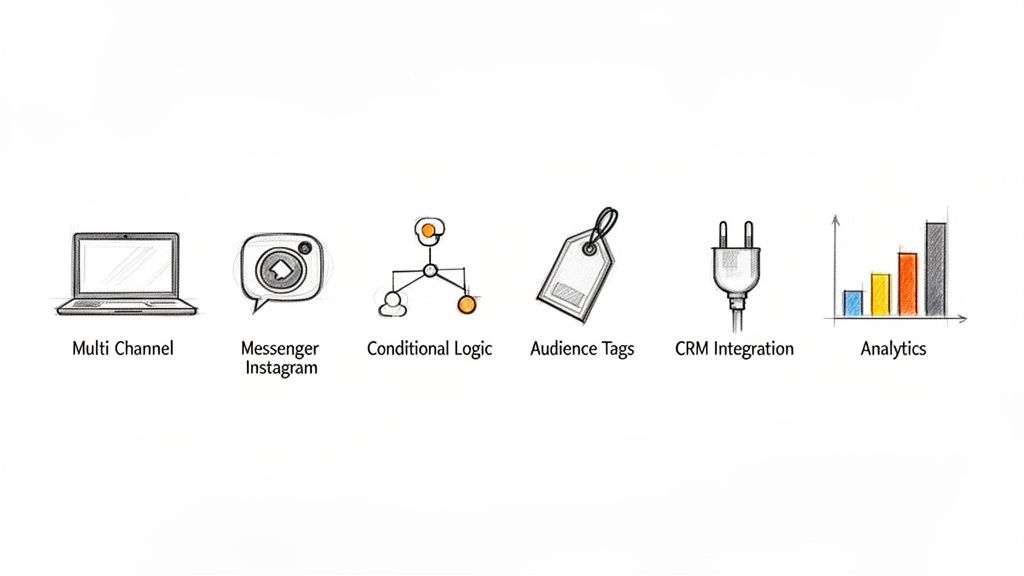
Lead Generation Features
Go Where Your Customers Are with Multi-Channel Capabilities
Your customers aren’t just on your website. They’re scrolling Instagram, checking Messenger, and pinging friends on WhatsApp. An effective chatbot meets them where they are, offering the same smooth experience on any channel.
Sticking your chatbot only on your website is like locking every door to your store but one. You need to capture leads from every entry point. This omni-channel approach ensures you never miss a conversation, whether it’s a curious website visitor or a follower sliding into your DMs.
Design Smarter Conversations with Conditional Logic
Nothing kills a conversation faster than a generic script. The magic of a great chatbot is its ability to listen and adapt. This is thanks to conditional logic, a feature that lets your bot ask smart, relevant follow-up questions based on a user’s previous answer.
It’s basically a “choose your own adventure” for lead gen.
- If someone says they’re a small business, the bot can ask about their team size.
- If they mention a high budget, the bot can pivot straight to booking a demo.
- If they admit they’re “just looking,” it can offer a free guide instead of a hard sell.
This makes the interaction feel like a real conversation, not a robotic interrogation. It’s how you gather the specific details you need to properly qualify each lead.
Conditional logic transforms a simple Q&A into a dynamic qualification process. It ensures every question moves the conversation forward, gathering richer insights and identifying high-intent leads with precision.
Create Hyper-Personalized Campaigns with Audience Segmentation
As your chatbot qualifies leads, it needs a way to sort them. That’s where audience segmentation (or tagging) comes in. This feature lets you automatically apply labels to users based on their answers, interests, or actions.
For example, a user who downloads your e-book gets tagged “content lead.” Someone who asks about pricing plans gets tagged “sales ready.” This simple sorting lets you create hyper-targeted follow-up campaigns that speak directly to what each group cares about. You can send personalized messages, nurture sequences, or relevant offers that skyrocket your conversion rates.
Connect Your Tools with Seamless Integrations
Your chatbot shouldn’t be an island. It has to talk to the other tools you already use, especially your CRM and email marketing software. Solid integration capabilities are essential.
When your bot captures a hot lead, it should automatically:
- Create a new contact in your CRM with all the conversation details.
- Add that person to a specific email list for automated follow-up.
- Notify your sales team in real-time so they can jump on the opportunity.
This automation gets rid of manual data entry, stops leads from slipping through the cracks, and creates a smooth handoff from bot to human.
Optimize Your Strategy with Robust Analytics
You can’t improve what you don’t measure. Your chatbot platform must provide clear analytics that show you what’s working and what’s not. You need to see where people are engaging, where they’re dropping off, and which chat flows are actually converting.
This data is your roadmap for improvement. It tells you how to tweak your questions, polish your scripts, and A/B test different approaches to get better results. Research shows lead generation chatbots convert visitors 3x better than old-school forms and can improve lead qualification by 40%. You can learn more about how chatbots are boosting business conversions and see what the latest industry findings are saying.
Real-World Examples of Chatbots Generating Leads
Theory is great, but seeing a chatbot for lead generation in action is where the lightbulb really goes on. A well-designed chatbot is a precision tool built to solve a specific business problem and deliver measurable results.
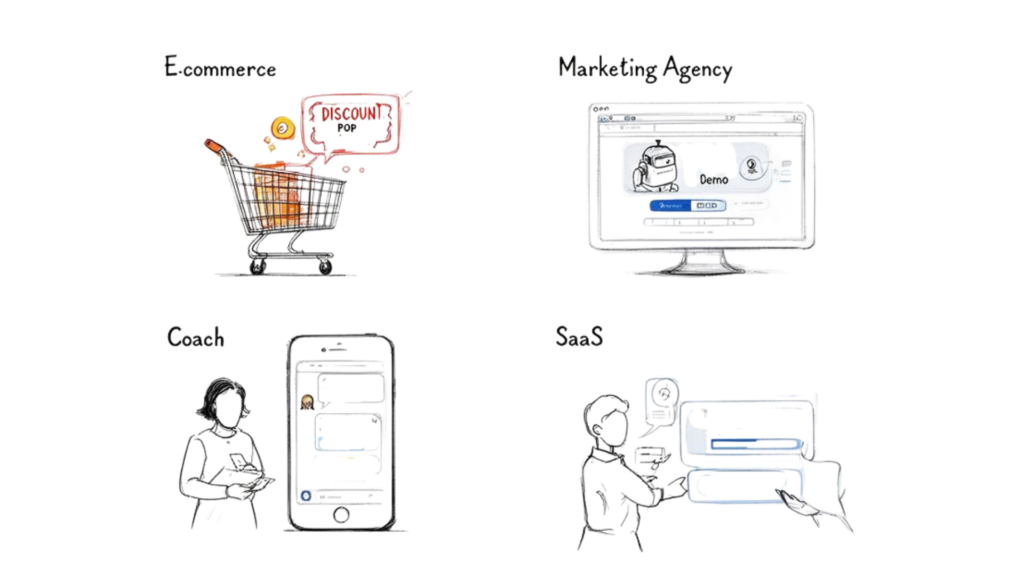
Let’s break down four practical examples to show you what’s possible.
Chatbot Applications
For E-Commerce: Rescuing Abandoned Carts
An online shoe store notices that 70% of shoppers add items to their cart but leave without buying. This is where a cart abandonment bot jumps in.
- The Problem: High cart abandonment means lost revenue every single day.
- The Chatbot Solution: The bot triggers the moment a user with items in their cart moves to close the tab. It pops up with a friendly message: “Leaving so soon? Looks like you left something behind! Would a 10% discount help you finish your order today?”
- The Business Impact: This simple, perfectly timed offer re-engages the shopper at the most critical moment. It recovers a sale that was seconds away from being lost, directly boosting daily revenue.
For Marketing Agencies: Qualifying New Clients
A marketing agency gets tons of inquiries, but many are not a good fit. A website chatbot acts as an expert gatekeeper, ensuring the sales team only talks to high-potential clients.
- The Problem: The sales team wastes hours on calls with prospects who have tiny budgets or need services the agency doesn’t offer.
- The Chatbot Solution: The chatbot on the “Contact Us” page starts a quick conversation. It asks pointed questions like, “What’s your approximate monthly marketing budget?” and “What’s your primary goal?”
- The Business Impact: The bot instantly segments leads. If a prospect’s budget meets the minimum, it offers to book a meeting right on a strategist’s calendar. If not, it politely offers a free resource, saving the sales team from dozens of unproductive calls.
For Coaches: Capturing Webinar Sign-Ups
A business coach uses Instagram to promote their free webinars. An Instagram DM bot turns casual followers into eager attendees on autopilot.
- The Problem: Manually replying to hundreds of DMs about a webinar is slow and inefficient, causing hot leads to go cold.
- The Chatbot Solution: The coach posts an Instagram Story: “DM me ‘WEBINAR’ to save your spot!” When a user sends the keyword, the bot instantly replies, thanks them, and asks for their email to complete the registration.
- The Business Impact: The coach generates hundreds of qualified leads without lifting a finger. The automated process ensures a 100% response rate, capturing every interested follower and building a massive list for the next launch.
This automated workflow transforms a manual, one-by-one process into a scalable lead capture machine that works 24/7, even while you sleep.
For SaaS Companies: Guiding Trial Sign-Ups
A SaaS company finds that potential customers land on their pricing page but get confused by the options and leave without starting a trial.
- The Problem: Analysis paralysis on the pricing page leads to lost trial sign-ups.
- The Chatbot Solution: A bot proactively engages visitors on the pricing page: “Need help choosing a plan? Let me ask a couple of quick questions to find the perfect fit.” It then asks about team size and key features they need.
- The Business Impact: For smaller teams, the bot points them to the self-serve trial. For larger, enterprise-level prospects, it seamlessly transitions to booking a demo with a sales expert. This guided experience boosts trial sign-ups and fills the sales pipeline with high-value leads.
Your Step-By-Step Guide to Building a Lead Gen Chatbot
Ready to build your first chatbot for lead generation? With today’s no-code tools, it’s more about smart strategy than complex code. Think of it less like programming and more like mapping out an effective sales conversation.
Follow this six-step game plan to go from a blank page to a live bot that works for your business while you sleep.
Step 1: Define Your Primary Goal
Before you write a single message, you have to know what winning looks like. A chatbot without a clear, singular goal is just an annoying pop-up.
What is the one critical action you need a user to take? Get specific.
- Bad Goal: “Get more leads.”
- Good Goal: “Book 10 qualified sales demos per week.”
- Good Goal: “Add 100 new subscribers to our newsletter.”
Your entire chatbot conversation—every question, every button, every interaction—is built to steer the user toward this single objective. A laser-focused goal ensures nothing is wasted.
Step 2: Choose Your Key Channel
Where are your best customers already hanging out? Meet people where they are, don’t force them to come to you. Start with the single channel that represents your biggest opportunity.
- For B2B or SaaS? Your website is your best bet. A bot can engage people on pricing or features pages where buying intent is high.
- For E-commerce or Coaching? Instagram and Facebook Messenger are goldmines. An automated DM bot can capture leads directly from your posts, stories, and ads.
Nail the conversation on one channel first. Once you’ve perfected it, expanding to others becomes much easier.
Step 3: Map the Conversation Flow
Now, put on your architect hat. The conversation flow is the blueprint for your chatbot’s entire dialogue. It’s the path you create to guide a user from “Hello” to your end goal.
Grab a whiteboard or a simple flowchart tool and map out the key questions. Think about the non-negotiable information you need to qualify a lead. For an agency, those might be budget, timeline, and company size. The trick is to gather this intel through a natural, friendly chat—not an interrogation.
Step 4: Build the Chatbot Using a No-Code Tool
This is where a platform like Clepher makes all the difference. Modern no-code builders use intuitive drag-and-drop interfaces that let you turn your conversation map into a fully functional bot without needing a developer.
You’ll add your questions, create multiple-choice buttons for easy replies, and set up conditional logic (if they answer ‘A’, show ‘X’; if they answer ‘B’, show ‘Y’). This is where your blueprint comes to life.
Step 5: Integrate With Your Existing Tech Stack
Your chatbot should not be an island. To make it a powerhouse, you have to plug it into the tools you already rely on. A smooth integration means the second your bot captures a lead, that information is sent exactly where it needs to go—instantly.
Connect your bot to your CRM to create new contacts automatically. Hook it up to your email marketing software to add new subscribers to a welcome sequence. This automation eliminates manual data entry and ensures no lead ever falls through the cracks.
Step 6: Launch, Test, and Optimize
It’s time to go live. But hitting “publish” is just the start. The real magic happens when you analyze real-world data to make your chatbot even better.
Dive into your analytics. See where users are most engaged and, more importantly, where they’re dropping off. Are certain questions confusing people? Are your calls-to-action not hitting the mark?
Use this feedback to tweak your script, A/B test different welcome messages, and constantly refine your bot’s performance. A great chatbot is never truly “finished”—it’s always evolving.
Best Practices for Taking Your Chatbot from Good to Great
Launching your chatbot is a massive first step. Now, let’s focus on turning it into a genuine marketing asset. The difference between a decent bot and a great one is constant, obsessive refinement.
Think of your chatbot as a new team member. You’d train them, give them feedback, and help them improve. These strategies will help you level up your approach, focusing on persona, personalization, and performance to get better results over time.
Craft a Distinct Bot Persona
Your chatbot is often the first “voice” a potential customer hears. Does it sound like your brand, or does it sound like every other cookie-cutter bot? Giving your chatbot a clear persona and tone makes every interaction more memorable and less robotic.
Before writing any dialogue, ask yourself: is your brand playful and witty, or professional and straight to the point?
- For a fun e-commerce brand: Use emojis, GIFs, and casual language. “Hey there! Ready to find something awesome?” works wonders.
- For a B2B SaaS company: Be helpful, concise, and professional. “Welcome. I can help you find the right plan or schedule a demo” gets the job done.
A consistent tone builds trust and makes the conversation feel more human, encouraging people to stick around.
Personalize the Experience
Generic conversations get generic results. To see your response rates climb, personalization is key. Instead of blasting every visitor with the same script, use the data you have to make the experience feel unique.
For instance, a chatbot can use a visitor’s location to offer region-specific deals. It can recognize a returning visitor and pick up where they left off. If someone clicks from an ad about “social media marketing,” the bot shouldn’t use a generic greeting. It should say, “Welcome! Looking for help with your social media? Let’s find the right solution for you.”
The goal is to make every visitor feel like the conversation was designed just for them. This small shift in approach can dramatically increase the number of qualified leads your bot generates.
Create a Seamless Human Handoff
Even the smartest chatbot will eventually hit a wall. Some questions are too complex, and some leads are too valuable to risk losing to an automated script. A smooth escape hatch to a live agent is a must-have.
Your bot needs to be smart enough to recognize when it’s out of its depth and offer a clear way to connect with a real person. That handoff must be seamless. The entire chat history should transfer over so the user doesn’t have to repeat themselves. This simple step turns a potential point of frustration into a positive support interaction.
Use Analytics to Hunt Down Drop-Off Points
Your chatbot’s analytics dashboard is a goldmine. It’s a map showing you exactly where your conversational funnel is leaking leads. It’s your job to dive into those reports and find the spots where users are bailing.
Are people consistently leaving after one particular question? It’s probably confusing, too nosy, or poorly worded. Once you identify these drop-off points, start experimenting. A/B test different phrasing, change the order of your questions, or simplify the options. This data-driven approach is how you systematically patch the leaks in your funnel.
Common Questions About Lead Generation Chatbots
Jumping into the world of automated chats can feel like a big step. It’s natural to have questions. Here are straight answers to the most common concerns, so you can move forward with confidence.
Ready to turn your website from a static brochure into a 24/7 lead-generating machine? With Clepher, you can build intelligent, no-code chatbots for your website, Messenger, and Instagram to capture, qualify, and convert visitors while you sleep. Start your journey with Clepher today.
Related Posts
How to Create a Survey on Facebook for Maximum Engagement
March 26, 2026Unlock Growth with Conversational AI for Customer Support
March 26, 2026Your Ultimate Guide to Instagram Chat Bots
March 25, 2026
Founder Clepher