

In a world of crowded inboxes and generic ads, the businesses winning today are the ones having real conversations. However, scaling meaningful dialogue has always been a challenge. After all, how do you talk to thousands of customers at once without losing that personal touch? This is where conversational marketing comes in. Instead of relying on one-way broadcasting, it shifts marketing toward two-way dialogues that guide, help, and sell 24/7. In other words, it’s about meeting customers where they already are, on the channels they prefer, with instant and personalized interactions.
That said, this article isn’t about abstract theory. Rather, it’s a practical playbook. In this guide to conversational marketing, we break down 10 powerful conversational marketing examples you can replicate today. Moreover, understanding how these tactics fit into a broader strategy is essential. When combined with smart marketing automation, these approaches become far more effective and scalable.
As a result, you’ll see the exact strategies, channels, and scripts businesses use to turn passive visitors into engaged leads and loyal customers. Specifically, each example includes a deep dive into bot flows, key metrics, and actionable steps for implementation. Ultimately, this isn’t another collection of generic case studies; instead, it’s a tactical guide designed to help you build automated conversations that drive real business results.
1. Live Chat for Instant Sales & Support
Live chat is the foundation of conversational marketing. It transforms passive website browsing into an active, real-time dialogue. Instead of making potential customers dig through an FAQ or wait for an email, live chat offers immediate help, right on your site. This direct line answers questions, solves problems, and guides users toward a purchase, slashing friction in the customer journey.
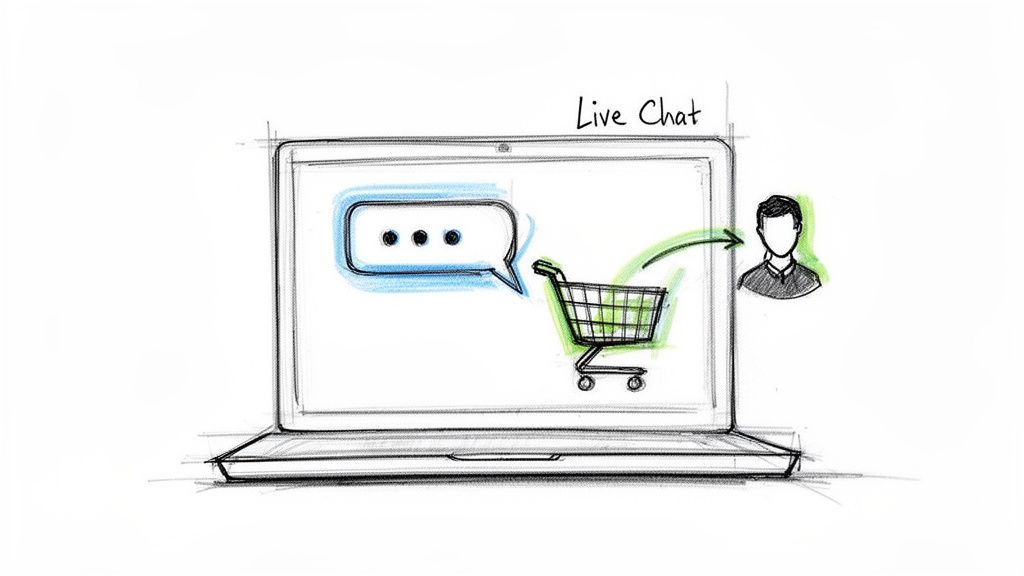
Live Chat
How It’s Used in the Real World
E-commerce brand Sephora uses its website chat as a virtual beauty advisor, helping customers find the right products in real-time. B2B software company Drift pioneered using live chat to proactively engage prospects, qualify leads, and book sales demos without making anyone fill out a form. This approach works because it meets customers exactly where they are, providing instant value and building trust.
Key Takeaway: The goal is simple: be available and helpful the moment a customer has a question. This immediate engagement dramatically boosts conversion rates and customer satisfaction.
How to Implement It
To make live chat a powerful part of your strategy, use a hybrid human-bot approach.
- Triage with Automation: Use a chatbot for the first contact. It can handle common questions, gather basic info, and route the conversation to the right human agent (e.g., sales, support, billing).
- Engage Proactively: Set up automated chat triggers. Engage visitors who linger on a pricing page or have items in their cart for more than 60 seconds.
- Integrate Your Data: Arm your agents with customer history and purchase data. This allows for more personalized and efficient conversations.
To dive deeper into this foundational tactic, explore our guide on what is live chat support.
2. Messenger Bots for Lead Qualification
Messenger bots automate conversations on platforms like Facebook Messenger to qualify leads, capture contact details, and nurture prospects. By meeting potential customers where they already spend their time, you remove the friction of traditional lead forms and create an interactive channel for follow-ups. This strategy turns passive ad viewers into engaged, pre-qualified leads.
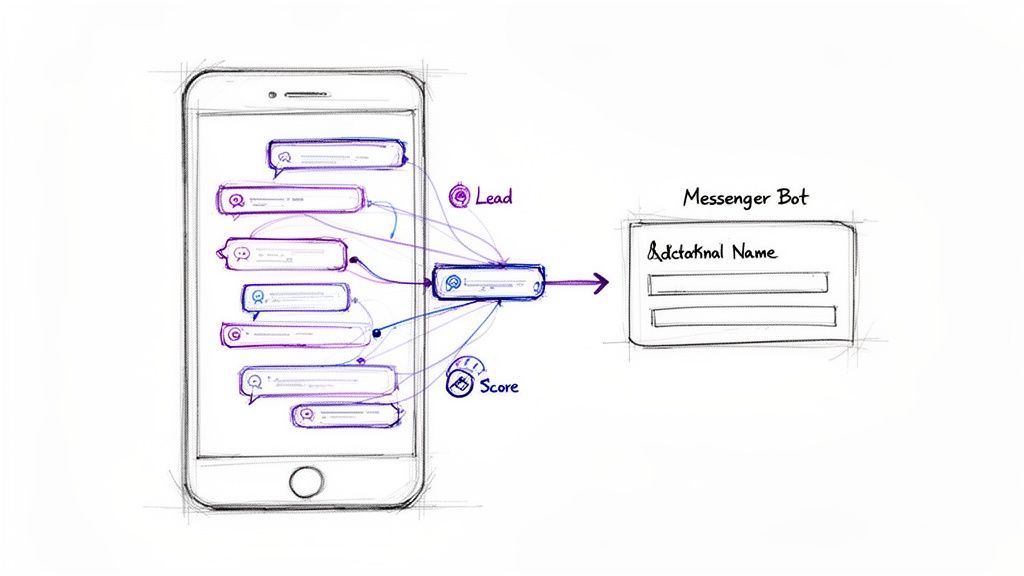
Messenger bot
How It’s Used in the Real World
HubSpot uses Messenger bots to qualify leads for software tours by asking targeted questions to segment users before connecting them with a sales rep. E-commerce brand Fashion Nova uses Messenger bots to generate thousands of qualified leads by engaging users who comment on their Facebook posts. This direct engagement provides an instant, low-effort way for prospects to show interest.
Key Takeaway: The strategy is to use the familiar, informal vibe of Messenger to guide users through a qualification sequence that feels like a natural conversation, not a form. This speeds up the sales cycle by delivering warm leads directly to your sales team.
How to Implement It
To build a powerful Messenger bot, focus on creating a seamless user journey from discovery to qualification.
- Design a Natural Flow: Structure your questions to feel like a real dialogue. Use conditional logic to personalize the path based on user responses.
- Ask for Less, Get More: Start with just 2-3 essential qualifying questions before asking for contact info. This minimizes drop-off.
- Automate the Handoff: Set up alerts to notify your sales team of a qualified lead or integrate with your CRM to trigger follow-ups for prospects who aren’t ready to buy yet.
3. WhatsApp for Customer Retention
WhatsApp has become a powerful direct-to-customer channel for businesses. With near-perfect open rates, it allows brands to send timely updates, personalized offers, and support messages directly into a customer’s most-used app. This direct line is perfect for post-purchase engagement and retention, creating a convenient experience that email often can’t match.
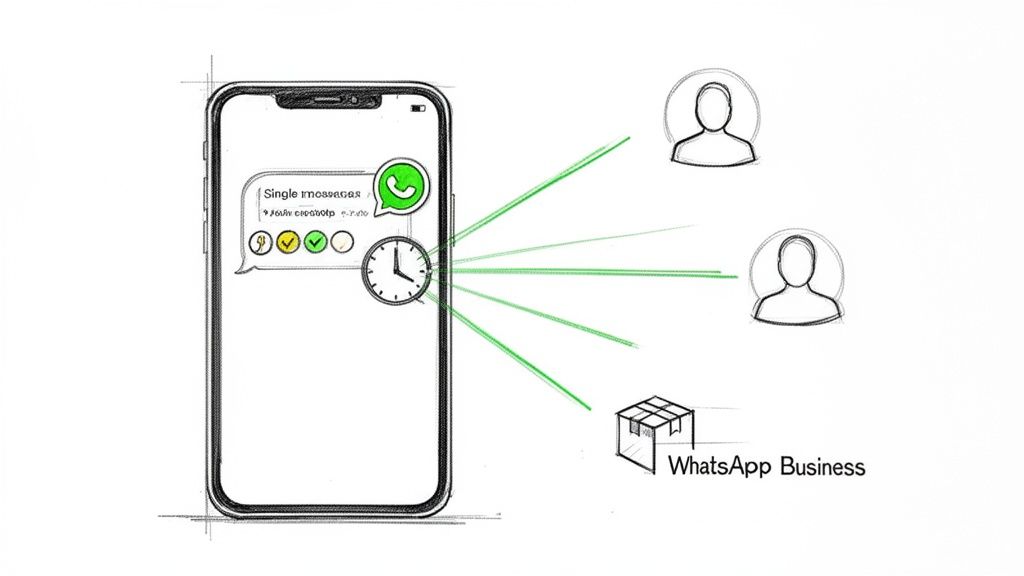
WhatsApp Business
How It’s Used in the Real World
Booking.com uses WhatsApp to send order confirmations and travel itineraries, providing critical info on a highly accessible platform. E-commerce brands use it for exclusive member-only deals and restock alerts, driving repeat purchases through urgency and exclusivity. This approach works because it meets customers on a channel they check constantly, making business messages feel as natural as a chat from a friend.
Key Takeaway: Use WhatsApp’s immediacy for high-value, time-sensitive interactions. This builds loyalty by providing exceptional convenience and personalized value right where customers are most active.
How to Implement It
To maximize WhatsApp’s role in your strategy, focus on relevance and respect for the user’s space.
- Segment Your Audience: Never send generic broadcasts. Use customer data to send relevant promotions, like a flash sale on a previously viewed item.
- Prioritize Urgent Content: Use the channel for messages that need instant delivery, like shipping updates, account alerts, or limited-time offers.
- Make it a Two-Way Street: Don’t just send one-way messages. Use automated flows to handle common replies, answer questions about an order, or route a customer to a live agent.
4. Instagram DM Automation for Instant Engagement
Instagram DM automation turns your brand’s profile into a powerful conversational marketing engine. Instead of manually replying to every story mention, comment, and message, this strategy uses automated flows to engage followers instantly—showing exactly how conversational marketing works in real time. It lets you scale one-to-one conversations, capture leads, and drive sales directly within the Instagram app, making it easy to implement conversational marketing without adding extra tools or manual effort.
How It’s Used in the Real World
Fitness brand Gymshark leverages Instagram DM automation to deliver personalized product recommendations and sale alerts, turning passive followers into active shoppers. Coaches and creators use keyword triggers (e.g., a user comments “GUIDE” on a post), which prompts a bot to automatically send a link to a resource. This frictionless experience provides immediate value, capitalizing on high-intent moments without any manual work.
Key Takeaway: The goal is to create automated yet personal dialogues that provide instant gratification and guide users toward a conversion. This approach dramatically boosts engagement and lead generation on a platform built for connection.
How to Implement It
To make this a killer part of your strategy, focus on creating natural, value-driven interactions.
- Use Keyword & Story Triggers: Set up automations that respond when a user messages a specific keyword or mentions your brand in their Story. This creates a natural entry point for a conversation.
- Keep it Visual: Use product images, carousels, and quick reply buttons to maintain the visual, interactive feel of Instagram.
- Nurture, Don’t Pounce: Design flows that provide value first, like a style quiz or a free resource, before asking for a purchase or sign-up.
For a comprehensive guide on setting up these powerful flows, learn more about mastering Instagram DM Automation.
5. AI Chatbots for Personalized Recommendations
AI-powered chatbots are a huge leap forward from simple, scripted flows. These advanced bots use natural language processing (NLP) to understand customer intent, qualify leads, and segment users in real-time. By analyzing user behavior, they deliver highly personalized product recommendations that can significantly increase your average order value.
How It’s Used in the Real World
Stitch Fix uses this tech to send personalized style recommendations via SMS, acting as a virtual personal shopper. E-commerce brands leverage AI to recommend complementary products directly in the chat, just like an expert in-store associate would. This approach guides customers through complex decisions, providing tailored suggestions that feel helpful, not pushy. To learn more, explore how to boost sales with an AI chatbot for e-commerce.
Key Takeaway: The goal is to use AI to replicate the personalized, consultative experience of a top-tier sales expert at scale. This makes every customer feel understood and uniquely valued.
How to Implement It
To make this one of the most powerful conversational marketing examples in your arsenal, gradually infuse AI into your existing automations.
- Train Your AI: Start by training an AI agent on your website content, product catalog, and past support chats to handle common questions accurately.
- Combine AI & Personalization: Use AI to ask qualifying questions, then apply tags based on the answers to trigger targeted follow-up sequences.
- Provide an Escape Hatch: Always ensure a customer can easily ask to speak with a human if the AI can’t solve their issue.
6. Cart Abandonment Recovery Flows
Cart abandonment flows are automated messaging sequences that re-engage customers who add items to their cart but leave without buying. Instead of letting that potential revenue vanish, this tactic uses timely, personalized messages via SMS, Messenger, or WhatsApp to remind shoppers of their items and entice them back. It turns a lost opportunity into a direct conversation aimed at conversion.
How It’s Used in the Real World
E-commerce giants like Bonobos and ASOS use these flows to recover a huge percentage of would-be lost sales. They send a friendly reminder showing the exact product left behind, often followed by an incentive like free shipping or a small discount. This strategy is highly effective because it reconnects with high-intent buyers at a critical moment, directly addressing whatever stopped them and guiding them back to checkout.
Key Takeaway: The goal is to reopen the conversation with a warm lead, making it incredibly easy for them to complete their purchase. This simple, automated interaction is one of the highest ROI activities in e-commerce.
How to Implement It
To make this a powerhouse in your strategy, focus on a timely, multi-channel, and value-driven approach.
- Act Fast: Send the first message within 30-60 minutes of abandonment to catch the user while the purchase is still top-of-mind.
- Show, Don’t Just Tell: Always include an image of the abandoned product with a direct link back to the cart.
- Create Urgency: Test time-limited offers, like a 10% discount that expires in 24 hours, to encourage immediate action.
- Use Multiple Channels: Start with a high-engagement channel like SMS or Messenger, then follow up with email if they don’t convert.
7. Flash Sale Broadcasts via Messaging
This strategy uses the high-engagement nature of messaging apps to deliver time-sensitive promotional campaigns. Unlike traditional email marketing, which often gets lost in crowded inboxes, broadcasts sent via Messenger, WhatsApp, and SMS achieve near-instant visibility. This direct line to the customer is perfect for driving immediate action during flash sales or limited-edition product drops.
How It’s Used in the Real World
Beauty brand Glossier expertly uses Instagram DM broadcasts to announce limited-edition product drops, often selling out new items in hours. Subscription box service Birchbox uses Messenger to send exclusive deals to its loyal members, fostering community and driving repeat purchases. The power of this tactic lies in its ability to cut through the noise and land a compelling offer directly in a user’s personal space, leading to rapid conversions.
Key Takeaway: The goal is to create a “can’t miss” event that prompts immediate action. The high open rates of messaging channels make them the ideal medium for time-sensitive offers that boost short-term revenue.
How to Implement It
To make this one of the most profitable conversational marketing examples in your toolkit, focus on strategic timing and segmentation.
- Segment Your Audience: Don’t blast your entire list. Send flash sale announcements to your most engaged segments first, or give early access to VIP customers.
- Create Scarcity: Include countdown timers or dynamic inventory counts (e.g., “Only 5 left!”) directly in the message to amplify urgency.
- Schedule for Peak Times: Use automation to schedule broadcasts for times when your audience is most active, like evenings and weekends, to maximize open rates.
8. Automated Onboarding Sequences
Onboarding sequences are automated, multi-step conversational journeys designed to guide new customers toward success. Instead of leaving users to figure things out alone, these sequences deliver timely, educational messages that drive product adoption and showcase key features. This proactive guidance is crucial for turning initial interest into long-term loyalty and reducing churn.
How It’s Used in the Real World
SaaS companies like Slack and Duolingo are masters of this. Slack’s bot-guided onboarding helps new teams set up channels and send their first messages. Duolingo uses daily reminders via push notifications to build a consistent learning habit. These approaches work because they break down complex setup processes into simple, manageable steps delivered over time.
Key Takeaway: The goal is to eliminate the initial friction for new users and guide them to their first “aha!” moment as quickly as possible. This builds early momentum and significantly increases the likelihood they’ll stick around.
How to Implement It
To build a powerful onboarding flow, map out the critical actions a user must take to see value in your product.
- Map the “First Win”: Identify the single most important action a new user should take (e.g., create a project, import a contact) and build your first message around guiding them to it.
- Use Conditional Logic: Adapt the sequence based on user behavior. If a user completes a step, send the next one. If they get stuck, send a helpful tip.
- Mix Your Channels: Use in-app messages for immediate guidance, and leverage email or SMS for follow-ups and deeper educational content.
9. Automated Customer Service & Escalation
Using conversational AI to manage customer service is a powerful way to boost efficiency and satisfaction. This approach uses chatbots to handle common, repetitive questions instantly, 24/7. When an issue is too complex, the conversation is seamlessly escalated to a human agent, who receives the full context. This hybrid model resolves most queries automatically while ensuring tough problems get expert attention.
How It’s Used in the Real World
Companies like Amazon and Apple use this strategy to manage huge support volumes. Their bots handle everything from order tracking to basic troubleshooting, only escalating to human agents for nuanced problems. This frees up support teams to focus on high-value interactions, cutting operational costs and customer wait times.
Key Takeaway: The goal is to create a tiered support system that provides instant, automated solutions for common issues and intelligent escalation for complex ones. This optimizes resources and improves the customer experience.
How to Implement It
To build this into your support workflow, start by identifying your most frequent inquiries.
- Automate the 80%: Analyze your support tickets to find the most common questions and build automated chatbot flows to answer them.
- Use Smart Escalation Triggers: Use keywords (e.g., “speak to agent,” “frustrated”) or sentiment analysis to automatically flag conversations that require a human.
- Ensure a Seamless Handoff: Pass the full chat history to the human agent so the customer doesn’t have to repeat themselves.
This is one of the most impactful conversational marketing examples for scaling support. To get started, learn more about how to automate customer service.
10. Community Building Through Messaging
Conversational marketing isn’t just for sales or support; it’s a powerful tool for building loyal communities. By using messaging channels like Messenger or WhatsApp, brands can create exclusive spaces where customers connect, share experiences, and receive unique content. This transforms passive followers into an engaged group, fostering a sense of belonging that traditional marketing can’t replicate.
How It’s Used in the Real World
Beauty brand Glossier built a massive community on Messenger, giving members early access to products and a direct line to the brand. Creators like MrBeast use messaging groups to share behind-the-scenes content and early video links, making fans feel like true insiders. This strategy drives incredible engagement and organic advocacy because it makes the customer relationship feel personal and reciprocal.
Key Takeaway: The goal is to create a high-value, exclusive experience that makes members feel seen and appreciated. This direct engagement significantly boosts customer lifetime value and retention.
How to Implement It
To build a community that drives long-term growth, focus on creating genuine value for your members.
- Start with Your Superfans: Invite your most engaged customers first to build a strong, positive culture.
- Deliver Exclusive Value: Use your messaging channel to share unique content, early product access, or special offers that aren’t available anywhere else.
- Encourage Peer Interaction: Post weekly discussion prompts or member spotlights to facilitate conversations and strengthen bonds between members.
For a deeper dive, learn how to use automated messaging to nurture and grow your online community.
10 Conversational Marketing Examples — Side-by-Side Comparison
| Tactic | Implementation Complexity (🔄) | Resource Requirements | Expected Outcomes (⭐📊) | Ideal Use Cases (💡) | Key Advantages (⚡) |
|---|---|---|---|---|---|
| Live Chat Support & Sales Assistance | 🔄🔄 | Dedicated agents, chat platform, training | ⭐⭐⭐ Improves CSAT & conversions; 📊 +20–40% conv | E‑commerce & SaaS at purchase moments | ⚡ Real‑time responses; proactive outreach; human touch |
| Messenger Bots for Lead Generation & Qualification | 🔄🔄 | Bot builder, conversation design, CRM integration | ⭐⭐ High engagement; 📊 5–10x better vs cold outreach | DTC, agencies, FB lead capture | ⚡ Automated 24/7 qualification; lower CAC |
| WhatsApp Business Messaging for Customer Retention | 🔄🔄 | API setup, template approvals, opt‑ins | ⭐⭐⭐ Extremely fast opens; 📊 ~98% open rate; strong retention | Global DTC, time‑sensitive order updates | ⚡ Instant engagement; rich media; high open rate |
| Instagram Direct Message Automation | 🔄🔄 | DM automation tools, visual assets, community mgmt | ⭐⭐ Good visual engagement; 📊 higher IG conversions | Creators, fashion/beauty, visual e‑commerce | ⚡ Visual, cost‑effective social conversions |
| AI‑Powered Chatbots for Qualification, Segmentation & Recommendations | 🔄🔄🔄 | Training data, product data, ML ops, ongoing optimization | ⭐⭐⭐ Scales personalization; 📊 handles ~80% routine; +15–30% AOV | High‑volume SaaS & e‑commerce | ⚡ Scales 24/7; learns over time; personalized upsells |
| Cart Abandonment Recovery Flows | 🔄 | E‑comm integration, messaging channels, simple creatives | ⭐⭐ Effective recovery; 📊 recovers 10–30% of cart value | Online stores with frequent abandonment | ⚡ Automated multi‑channel recovery; high ROI |
| Promotional Campaigns & Flash Sale Broadcasts | 🔄🔄 | Segmentation, creative assets, compliance, scheduling | ⭐⭐⭐ Immediate revenue spikes; 📊 40–60% of flash sale revenue | Inventory events, seasonal promotions, DTC brands | ⚡ Very high open rates; rapid conversions; low CPA |
| Onboarding & Subscription Nurture Sequences | 🔄🔄 | Content sequences, behavioral triggers, analytics | ⭐⭐⭐ Reduces churn; 📊 −20–40% churn; higher activation | SaaS, subscription trials, new users | ⚡ Scales onboarding; improves activation & retention |
| Customer Service & Support Escalation | 🔄🔄🔄 | Knowledge base, agent routing, integrations, training | ⭐⭐⭐ Efficiency gains; 📊 handles ~80% routine; −50% tickets | High‑support SaaS & e‑commerce | ⚡ Faster resolutions; prioritized escalations; less burnout |
| Community Building & Engagement Through Messaging | 🔄🔄 | Community managers, moderation, content & rewards | ⭐⭐⭐ Strong LTV uplift; 📊 +40–60% LTV for members | Creators, coaches, DTC brands seeking advocacy | ⚡ Organic advocacy; peer support; long‑term retention |
Your Turn: Start Your First Conversation Today
The conversational marketing examples we’ve explored all share a common thread: they meet customers on their own terms. This isn’t about adding another marketing channel; it’s about shifting from broadcasting messages to building genuine, one-to-one dialogues at scale. The power lies in being present, personal, and helpful in the moments that matter most.
These strategies are no longer a luxury for massive corporations. Whether you’re a local business using Instagram DMs to book appointments or a DTC brand using a Messenger bot to recover abandoned carts, the tools are more accessible than ever. The key is to move from theory to action.
From Inspiration to Implementation
The biggest barrier isn’t technology or budget; it’s inertia. The path to success starts not with a complex strategy, but with a single, focused experiment. Your first step is to identify one high-impact friction point in your customer journey.
- Is lead quality a problem? Start with a simple Messenger lead qualification bot.
- Losing sales to abandoned carts? Implement an automated recovery flow on your website chat or Instagram.
- Overwhelmed with repetitive support questions? Build a basic FAQ bot to handle common inquiries.
The goal is to get a quick win that delivers tangible results and provides invaluable data from real customer interactions. Each conversation is a learning opportunity, revealing your customers’ pain points and buying triggers in their own words. This direct feedback is a goldmine for refining your messaging and building a more customer-centric business.
The True Value of a Conversation
Mastering these approaches is about more than just boosting conversion rates. It’s about forging stronger customer relationships. In a crowded digital world, the brands that win are the ones that feel human and responsive. By opening these direct lines of communication, you aren’t just selling a product; you’re building a loyal community that feels seen and heard.
The journey starts now. Pick one example from this list that solves your biggest business challenge, map out a simple conversational flow, and launch it. Don’t aim for perfection. Aim for connection. The insights you gain and the loyalty you build will become the cornerstone of your brand’s future growth.
Ready to build your first automated conversation without writing a single line of code? Clepher is the all-in-one platform designed to help you implement the exact conversational marketing examples covered in this article. Start your free trial of Clepher today and turn your audience into engaged customers.
Related Posts
Your Ultimate Guide to Instagram Chat Bots
March 25, 2026How to Create a Killer Poll Game on Instagram to Boost Engagement and Leads
March 24, 202612 Fresh Social Media Content Ideas That Convert in 2026
March 23, 2026
Founder Clepher