
In the crowded direct-to-consumer landscape, rising ad costs and savvy consumers demand more than just a great product. The difference between stalling and scaling lies in your marketing execution—specifically, your ability to build genuine relationships and personalize experiences at every turn.
Generic email blasts and one-size-fits-all funnels are a thing of the past. Today’s winning DTC marketing strategies are agile, conversational, and deeply integrated into the platforms where your customers live and shop. Success isn’t just about being present; it’s about creating meaningful, automated interactions that feel one-on-one, even at scale.
This guide provides a practical, actionable playbook. We’ll break down 10 proven strategies that leverage automation to drive acquisition, conversion, and retention. For each tactic, you’ll get concrete steps, key performance indicators (KPIs) to track, and real-world examples. To keep pace with the evolving landscape, consider these 10 Proven DTC Marketing Strategies as a foundational starting point. This article builds on those fundamentals, providing a roadmap to build a resilient, customer-centric brand that thrives.
1. Conversational Marketing & AI Chatbots
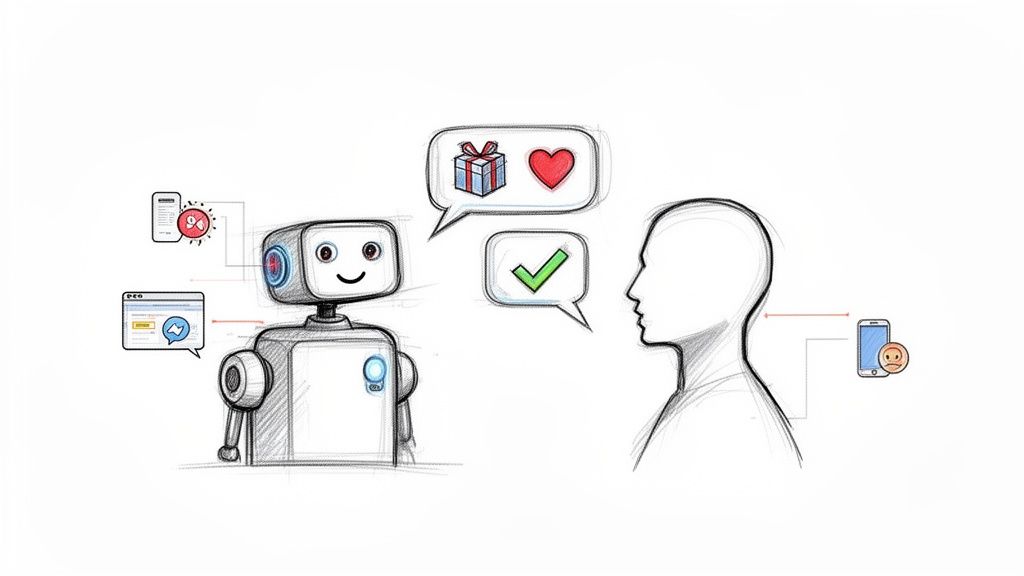
Conversational marketing shifts your brand from one-way broadcasting to real-time, one-on-one dialogues. It uses AI chatbots and live chat to engage customers instantly on platforms they already use, like Messenger and Instagram DMs, creating a more personal and immediate buying experience.
AI Marketing
Unlike static forms or delayed emails, this approach provides instant answers. It automates crucial tasks like answering FAQs, qualifying leads, and guiding users to the right products, 24/7. To understand the fundamentals, you can learn more about conversational marketing and how it builds customer relationships.
Why This Strategy Delivers Results
DTC brands thrive on direct customer relationships, and conversational AI is the ultimate tool for scaling intimacy. It reduces friction by providing immediate answers and personalized assistance, which directly boosts conversion rates. By meeting customers where they are, you create an interactive storefront inside their favorite messaging apps.
How to Implement Conversational Marketing:
- Start with a Quick Win: Begin with a high-impact, low-effort automation. A simple abandoned cart recovery bot on Messenger that sends a reminder and a discount code can deliver an immediate ROI.
- Segment with Questions: Use your chatbot to ask qualifying questions and automatically tag users based on their interests or purchase history. This enables hyper-personalized follow-up messages.
- Build Visually, Not with Code: Use a no-code platform like Clepher to design, test, and launch conversation flows. This allows you to rapidly build and improve your strategy without needing a developer.
- Plan for a Human Handoff: Ensure a seamless transition from bot to human for complex queries. The goal is to assist, not frustrate, so a clear “talk to a human” option is essential.
2. Social Commerce on Messenger, WhatsApp & Instagram DM
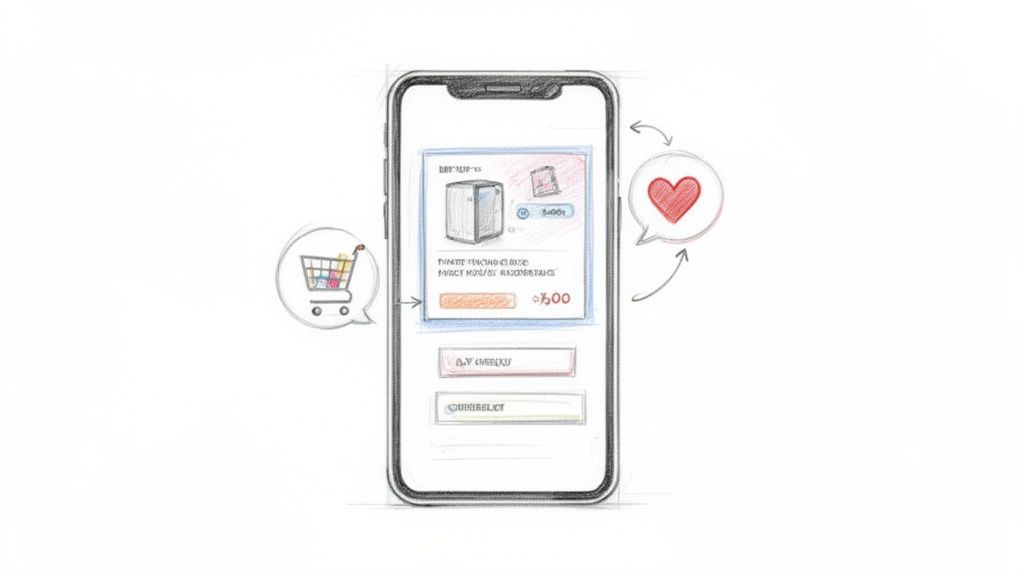
Social commerce transforms messaging apps into powerful, interactive sales channels. Instead of redirecting users to an external website, this strategy allows customers to discover, ask questions about, and purchase products entirely within a chat conversation. It removes clicks and friction from the buying process by meeting customers where they already spend their time.
Mobile App
Use Case: A fashion brand announces a limited-edition drop via an Instagram Story, prompting users to “DM ‘SNEAKER’ to buy.” An automated flow then guides them through size selection and payment, all within Instagram DMs. This approach capitalizes on high engagement to create a seamless shopping experience.
Why This Strategy Delivers Results
DTC brands are built on community and direct engagement. Social commerce on messaging apps turns passive followers into active buyers by dramatically shortening the sales cycle. This immediacy boosts conversion rates, captures impulse buys, and fosters a feeling of exclusive, VIP service that builds strong brand loyalty.
How to Implement Social Commerce in Chat:
- Launch Products via Broadcasts: Announce new arrivals or flash sales to your subscribers on Messenger or WhatsApp. Include a direct “Buy Now” button within the message to drive immediate action.
- Automate Product Discovery: Use quick-reply buttons and carousels to let users browse your product catalog in chat. For instance, a prompt could ask, “What are you shopping for today? [Tops] [Bottoms] [Accessories]”.
- Integrate Payments: Connect your chatbot to a payment processor like Stripe to enable secure, in-chat transactions. This creates a truly frictionless checkout experience.
- Provide Post-Purchase Support: Automate order confirmations and shipping notifications directly through the messaging app where the purchase was made, keeping the entire customer journey in one place.
3. Audience Segmentation & Behavioral Targeting
Audience segmentation is the practice of dividing your customer base into distinct groups based on shared characteristics. This DTC marketing strategy moves beyond generic, one-size-fits-all messaging to deliver hyper-relevant content. You can organize contacts by their purchase history, on-site behavior, and engagement levels.
Instead of sending the same promotion to everyone, you can create tailored experiences. For example, a VIP customer who buys frequently receives an exclusive early access offer, while a dormant user gets a special “we miss you” discount. For a complete guide, you can explore the fundamentals of audience segmentation.
Why This Strategy Delivers Results
Relevance is the currency of direct-to-consumer marketing. Segmentation allows you to speak directly to the specific needs and lifecycle stage of each customer group. This personalized approach makes customers feel understood, which dramatically increases open rates, click-through rates, and conversions while reducing ad spend waste.
How to Implement Audience Segmentation:
- Start with Value-Based Segments: Don’t overcomplicate it. Begin by creating 3-5 core segments, such as “First-Time Buyers,” “High-Value Customers (VIPs),” “Engaged Non-Buyers,” and “Inactive Subscribers.”
- Use Behavioral Tagging: Apply tags automatically based on key actions. For instance, tag users who click on a specific product category, complete a quiz, or abandon their cart for immediate follow-up.
- Create Segment-Specific Flows: Build unique conversational or email sequences for each segment. Your welcome series for a first-time buyer should be different from a re-engagement campaign for an inactive subscriber.
- Test and Refine: Continuously run A/B tests on your messaging and offers across different segments to see what resonates most. Regularly audit your segments to ensure they remain effective.
4. Broadcast Campaigns & Flash Sales
Broadcast campaigns are a core DTC marketing strategy that involves sending a single, targeted message to a large audience segment simultaneously. When combined with urgency-driven tactics like flash sales, this approach uses FOMO (fear of missing out) to trigger immediate purchasing decisions and convert attention into revenue, fast.
This strategy uses channels with high open rates, like SMS and Messenger, to announce time-sensitive offers or limited-edition product drops. Unlike a standard promotional email that might sit unread, a broadcast creates an immediacy that is difficult to ignore.
Why This Strategy Delivers Results
DTC brands succeed by creating excitement and direct lines of communication. Broadcasts paired with flash sales are the perfect mechanism for this, transforming a passive audience into urgent buyers. This tactic is powerful for clearing inventory, launching a new product, or hitting quarterly sales targets.
How to Implement Broadcast Campaigns & Flash Sales:
- Build Your Broadcast List: Use opt-in tools like website pop-ups, QR codes, and click-to-Messenger ads to grow your SMS and Messenger subscriber lists. An engaged audience is essential for a successful launch.
- Create Anticipation: Tease the event 24-48 hours in advance with “coming soon” messages to build hype. Create a VIP segment and give them early access as a loyalty reward.
- Craft a Multi-Touch Sequence: Plan your broadcast cadence. A typical sequence includes an initial announcement, a mid-sale reminder (“12 hours left!”), and a final call (“Last chance, sale ends in 1 hour!”).
- Inject Scarcity: Use clear, compelling language like “Only 50 available,” “24-hour sale,” or “Ends at midnight.” For added impact, include a real-time countdown timer in your messages.
5. Lead Qualification & Nurturing Automation
This DTC marketing strategy uses AI chatbots to systematically identify high-potential leads and guide them toward a purchase. It automates the process of asking key questions, scoring prospects based on their answers, and delivering personalized content to keep them engaged until they are ready to buy.
This automated process moves beyond simple lead capture. For instance, a high-ticket coaching platform can use a chatbot to filter serious students by asking about their goals and budget, while a B2B SaaS company can qualify enterprise prospects based on team size, all before a human ever gets involved.
Why This Strategy Delivers Results
Efficiency is paramount for growing DTC brands. Instead of manually sifting through every form submission, automation separates casual browsers from serious buyers. This allows you to focus resources on converting high-value leads and automatically nurture cooler prospects, maximizing both sales velocity and marketing ROI.
How to Implement Lead Qualification & Nurturing:
- Define Your Ideal Lead: Before building, clearly define your Ideal Customer Profile (ICP). What criteria separate a hot lead from a cold one? Identify 3-5 key questions (e.g., budget, timeline, specific need).
- Build a Scoring System: Assign points to different answers within your chatbot flow. A lead who confirms they have the budget and an urgent need should receive a higher score than someone just browsing.
- Create Segmented Nurture Paths: Based on a lead’s score, trigger different automated follow-ups. High-scoring leads might get a direct link to book a demo, while lower-scoring leads could receive an educational email series.
- Integrate with Your CRM: Use a tool like Clepher with Zapier or Make integrations to automatically create and update records in your CRM (like HubSpot or Pipedrive) once a lead is qualified.
6. Abandoned Cart & Browse Recovery
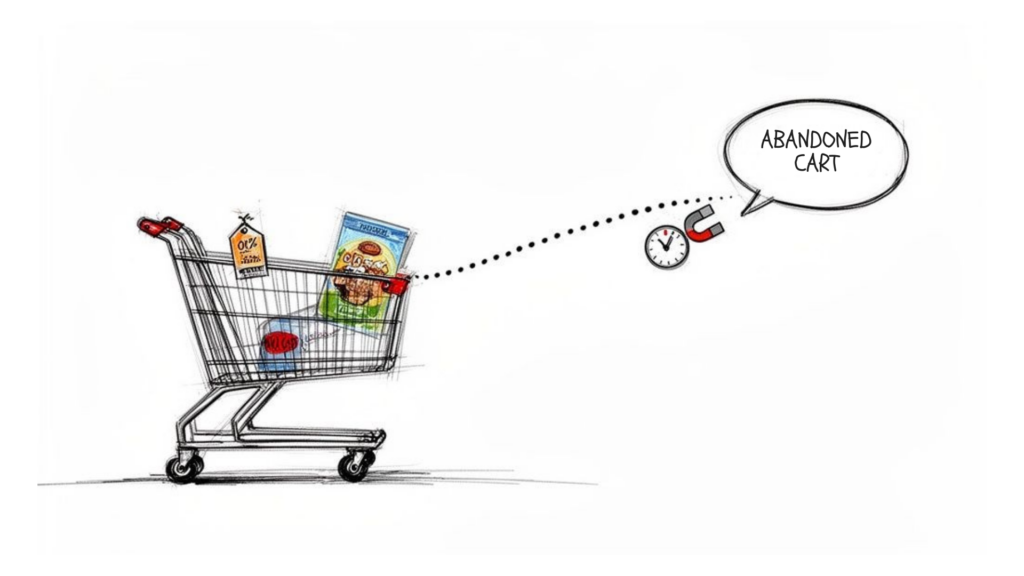
Abandoned cart and browse recovery is a high-leverage DTC marketing strategy designed to re-engage shoppers who show strong purchase intent but leave without buying. It uses automated messaging sequences across channels like email, SMS, and Messenger to remind customers about items they left behind and guide them back to complete their purchase.
Abandoned Cart
Unlike generic marketing blasts, these recovery sequences are hyper-relevant and timely. Use Case: A beauty brand sends a Messenger reminder one hour after cart abandonment with a link back to the cart. If the user doesn’t convert, a follow-up email arrives the next day with a 10% discount code to overcome price objections.
Why This Strategy Delivers Results
The average cart abandonment rate is around 70%, representing a massive pool of lost revenue. DTC brands can reclaim a significant portion of this by implementing a robust recovery strategy. These automated flows work 24/7 to re-engage high-intent customers, turning near-misses into confirmed sales without additional ad spend.
How to Implement Abandoned Cart & Browse Recovery:
- Deploy a Multi-Channel Sequence: Don’t rely on one channel. Set up a multi-touch flow that starts with an immediate channel like Messenger, followed by an email a few hours later.
- Personalize the Message: Go beyond using the customer’s name. Include images of the exact products they abandoned in your messages to create a powerful visual reminder.
- Test Strategic Incentives: Experiment with different offers. A small discount, free shipping, or a free gift with purchase can be the final push a customer needs.
- Focus on a One-Click Return: Your recovery messages must include a clear call-to-action button that takes the user directly back to their pre-populated cart, allowing them to complete the purchase in a single click.
7. Personalization & Dynamic Content Based on User Data
Personalization is a DTC marketing strategy that tailors messaging and recommendations to individual customers based on their unique data. By leveraging details like purchase history, browsing behavior, and demographics, you can shift from generic broadcasts to highly relevant, one-to-one conversations at scale.
This goes beyond using a customer’s first name. True personalization uses dynamic content to display the right products at the right time. For example, a message like, “Hi [FirstName], we just restocked the [BrandColor] [ProductType] you viewed!” is far more compelling than a generic announcement.
Why This Strategy Delivers Results
DTC brands win by owning the customer relationship. Personalization directly addresses consumer expectations for tailored experiences, making marketing feel less like an interruption and more like a helpful service. This relevance boosts engagement, increases conversion rates, and fosters long-term loyalty.
How to Implement Personalization:
- Collect Actionable Data: Gather key data points during sign-up, purchase, or through chatbot interactions. Essential fields include name, email, purchase history, and interests.
- Segment Dynamically: Create customer segments that automatically update based on real-time data. For example, a “VIP Customer” segment could be built from users with more than three purchases.
- Use Personalization Tags: Incorporate dynamic tags like
{{FirstName}}or{{LastViewedProduct}}into your email, SMS, and chatbot messages to make every communication feel personal. - Recommend Complementary Products: Analyze purchase history to build effective cross-sell campaigns. If a customer buys a specific coffee blend, automate a follow-up a week later recommending a matching mug.
8. A/B Testing & Conversion Rate Optimization
A/B testing is the methodical process of comparing two versions of a marketing asset—like a Messenger broadcast or landing page—to determine which one performs better. By changing a single variable, you can gather data on what resonates most with your audience, allowing you to systematically improve performance.
This data-driven approach removes guesswork from your marketing. Whether you’re testing “Last Chance!” vs. “Free Shipping!” or a 15% discount vs. a $10 discount, this strategy provides clear winners backed by user behavior. To dive deeper, explore more conversion rate optimization techniques.
Why This Strategy Delivers Results
DTC marketing strategies are all about maximizing ROI. A/B testing is the engine that drives this efficiency. It allows you to make small improvements that compound into significant gains in conversion rates and customer lifetime value. For high-end brands, a defined conversion rate optimization strategy for luxury brands can be the difference between a good campaign and a great one.
How to Implement A/B Testing:
- Test One Variable at a Time: To get clean data, isolate a single element. Test your headline, your CTA button color, your offer, or your message timing, but never test them all at once.
- Establish a Control: Always test your new version (the “variant”) against your current best-performer (the “control”) to validate whether your change resulted in an improvement.
- Ensure Statistical Significance: Don’t end a test prematurely. Wait until you have a large enough sample size to be confident in the results, typically aiming for 95% statistical significance.
- Test Natively in Your Tools: Use the built-in A/B testing features in platforms like Clepher to easily split-test conversational flows and see what drives more engagement and sales directly within your automations.
9. Community Building & Brand Loyalty Programs
Community building is a DTC marketing strategy focused on creating an engaged group of customers united by a shared affinity for your brand. It moves beyond transactions to foster an emotional connection, turning one-time buyers into lifelong advocates. This is often powered by loyalty programs that reward repeat business with exclusive perks.
Automating loyalty communications is key to scaling these programs. Brands can use automated messaging to handle VIP recognition, grant exclusive access to sales, and manage referral programs. This builds a sense of belonging and significantly increases customer lifetime value (LTV).
Why This Strategy Delivers Results
A strong community creates a powerful defensive moat against competitors. When customers feel like part of an exclusive group, they are far more likely to remain loyal, refer others, and provide invaluable feedback. Loyalty programs institutionalize this feeling, making repeat purchases a rewarding experience.
How to Implement Community & Loyalty Programs:
- Define Simple, Clear Tiers: Structure your loyalty program with a maximum of three tiers (e.g., Bronze, Silver, Gold) to avoid confusion. Clearly communicate the benefits of each level.
- Automate Tier Recognition: Use a platform like Clepher to send instant, personalized messages when a customer reaches a new status. A simple “Congratulations! You’ve unlocked Silver status…” makes customers feel instantly valued.
- Focus on Experiences, Not Just Discounts: Offer VIPs early access to new collections, invitations to exclusive digital events, or a direct line to your support team.
- Automate Birthday and Anniversary Rewards: Trigger automated messages to send special offers on a customer’s birthday or the anniversary of their first purchase. This small, personal touch drives significant goodwill and sales.
10. Omnichannel Marketing & Unified Customer Experience
Omnichannel marketing creates a single, unified customer experience across all your channels. This DTC marketing strategy ensures that whether a customer interacts with your brand on your website, via email, SMS, or Instagram DMs, the conversation is seamless, contextual, and consistent.
Unlike a multichannel approach, where channels operate in silos, an omnichannel strategy integrates them. For example, a customer might browse products on your website, receive an abandoned cart reminder via Messenger, and get a final discount offer through SMS. Centralizing this data ensures each message builds on the last.
Why This Strategy Delivers Results
DTC brands build their reputation on a superior customer experience. An omnichannel approach is the pinnacle of this, as it respects the customer’s time and preferences by meeting them wherever they are. This unified experience removes friction, builds trust, and significantly increases lifetime value by making every interaction feel personal and intelligent.
How to Implement Omnichannel Marketing:
- Map the Customer Journey: Whiteboard the ideal path a customer takes from discovery to purchase. Identify key touchpoints and decide which channel is best for each communication type.
- Centralize Your Inbox: Use a tool with a unified inbox to manage conversations from all channels (Messenger, Instagram, Email, SMS) in one place. This gives your support team full context.
- Let Customers Choose: Give customers control over how they hear from you. Use a chatbot to ask for their preferred communication channel for different updates like shipping or promotions.
- Sync Your Data: Integrate your various platforms using tools like Zapier. Ensure that a purchase in your e-commerce store updates the customer’s profile in your communication platform, and vice versa.
- Implement Fallback Channels: Set up automations with built-in logic. For instance, if a message sent via Messenger isn’t seen within an hour, a backup SMS can be triggered automatically.
DTC Marketing Strategies — 10-Point Comparison
| Item | Implementation Complexity 🔄 | Resource Requirements ⚡ | Expected Outcomes ⭐📊 | Ideal Use Cases 💡 | Key Advantages ⭐ |
|---|---|---|---|---|---|
| Conversational Marketing & AI Chatbots | Medium — no-code possible but strong conversation design required 🔄 | Moderate — chatbot platform, training data, monitoring staff ⚡ | High ⭐⭐⭐⭐ — better engagement, faster responses, qualified leads 📊 | Real-time support, lead qualification, onboarding, cart recovery 💡 | 24/7 personalized engagement; lowers CAC; omnichannel integration ⭐ |
| Social Commerce (Messenger, WhatsApp, Instagram DM) | Low–Medium — platform-specific setup and payment flow work 🔄 | Low–Moderate — messaging platform, payment gateway, product cards ⚡ | High ⭐⭐⭐⭐ — higher conversion and impulse purchases; reduced friction 📊 | DTC brands, limited drops, impulse/flash sales, product consults 💡 | Sells where users spend time; minimal friction; higher conversion ⭐ |
| Audience Segmentation & Behavioral Targeting | Medium — requires rules, tagging, dynamic segments 🔄 | Moderate — clean data, CRM/analytics integration, tagging systems ⚡ | Very High ⭐⭐⭐⭐⭐ — improved relevance, engagement, ROAS uplift 📊 | Lifecycle campaigns, VIP targeting, retention and ad optimization 💡 | Increases message relevance and ROI; reduces churn; precise targeting ⭐ |
| Broadcast Campaigns & Flash Sales | Low–Medium — scheduling and coordination; compliance controls 🔄 | Moderate — list building, inventory sync, creative + timing resources ⚡ | High ⭐⭐⭐⭐ — immediate revenue spikes; elevated open/conversion rates during windows 📊 | Time-limited promotions, clearance, product launches, Black Friday-style events 💡 | Drives urgency/FOMO; clears inventory; predictable sale windows ⭐ |
| Lead Qualification & Nurturing Automation | Medium — needs ICP definition and flow design 🔄 | Moderate — CRM integration, chatbot/scoring rules, nurture content ⚡ | High ⭐⭐⭐⭐ — faster sales cycles, higher qualified lead conversion 📊 | B2B SaaS, coaching, service businesses needing lead triage 💡 | Automates scoring/routing; frees sales to close; 24/7 qualification ⭐ |
| Abandoned Cart & Browse Recovery | Low — trigger-based flows are straightforward to implement 🔄 | Low — e‑commerce integration, messaging channels, template content ⚡ | Very High ⭐⭐⭐⭐⭐ — recovers 10–30% of carts; excellent ROI 📊 | E‑commerce stores with measurable carts and browse behavior 💡 | Targets high-intent shoppers; automated high-ROI revenue recovery ⭐ |
| Personalization & Dynamic Content | Medium–High — needs robust data model and templates 🔄 | High — clean real-time data, dynamic content engine, testing resources ⚡ | Very High ⭐⭐⭐⭐⭐ — lift in open/conv rates; higher LTV and repeat purchases 📊 | Product recommendations, lifecycle messaging, VIP experiences 💡 | Scales 1:1 relevance; boosts conversions and retention ⭐ |
| A/B Testing & Conversion Rate Optimization | Medium — methodical setup and statistical discipline 🔄 | Moderate — testing tools, sufficient traffic, analytics support ⚡ | High ⭐⭐⭐⭐ — incremental gains compound into significant revenue uplift 📊 | Messaging, subject lines, offers, CTAs, timing optimization 💡 | Data-driven decisions; reduces waste; builds proven messaging library ⭐ |
| Community Building & Brand Loyalty Programs | Medium–High — ongoing program management and creative work 🔄 | Moderate–High — rewards budget, community ops, content and tooling ⚡ | High ⭐⭐⭐⭐ — increased LTV, repeat purchases, advocacy over time 📊 | Subscription brands, beauty/fashion, creators, membership models 💡 | Strengthens emotional connection; drives referrals and premium pricing ⭐ |
| Omnichannel Marketing & Unified CX | High — integrations, data sync, and orchestration required 🔄 | High — multiple platform integrations, CRM, analytics, engineering ⚡ | Very High ⭐⭐⭐⭐⭐ — seamless experience, higher satisfaction and conversion 📊 | Complex customer journeys across web, email, SMS, Messenger, apps 💡 | Unified customer view; consistent context across channels; better analytics ⭐ |
From Strategy to Action: Your Next Move
We’ve explored a playbook of high-impact DTC marketing strategies, from social commerce to brand loyalty. Success is no longer measured by one-off campaigns but by the ability to create a cohesive, customer-centric journey that feels personal, immediate, and valuable. The common thread weaving these strategies together is the power of conversation. Customers crave interaction, support, and a genuine connection with the brands they choose.
The Shift from Broadcasting to Conversing
The most crucial takeaway is the fundamental shift from a one-to-many broadcasting model to a one-to-one conversational approach. Traditional marketing shouts a single message, hoping it resonates. The strategies outlined here listen first, then respond with a perfectly tailored message delivered at the exact moment of need.
- Acquisition is Conversational: Engage potential customers directly in Messenger or Instagram DM, qualifying them and guiding them toward their first purchase.
- Conversion is Conversational: When a user abandons a cart, instantly start a conversation on their preferred messaging app, answer their questions, and recover the sale.
- Retention is Conversational: Building a community isn’t about a static forum. It’s about ongoing, interactive engagement and loyalty programs that make customers feel seen.
This conversational layer, powered by intelligent automation, is what transforms a good strategy into an unbeatable one. It allows you to implement these tactics at scale without sacrificing the personal touch that defines a great DTC brand.
Your Actionable Blueprint for Growth
The key is not to implement all ten strategies overnight but to start with the one that addresses your most significant bottleneck right now.
- Identify Your Biggest Opportunity: Is it cart abandonment? Low lead quality? Pinpoint the area where an immediate improvement would have the most significant impact.
- Choose Your Starting Strategy: If cart abandonment is the issue, begin by setting up an automated recovery flow. If you need better leads, focus on a conversational lead qualification sequence.
- Implement and Measure: Launch your first automated conversational flow. Pay close attention to key performance indicators like recovery rate, conversion rate, or customer lifetime value.
- Iterate and Expand: Once you see results, build on that success. Add a browse abandonment flow. Launch a segmented broadcast campaign. Each new layer reinforces the others, creating a powerful, compounding effect.
Mastering these DTC marketing strategies is about building a resilient, future-proof brand that thrives on genuine customer relationships. By embracing automation and putting conversation at the heart of your marketing, you create a system that not only attracts new customers but turns them into passionate, lifelong advocates.
Frequently Asked Questions — DTC Marketing Strategies
Ready to turn these DTC marketing strategies from theory into reality? Clepher provides the conversational automation platform to implement everything discussed, from AI-powered chatbots to abandoned cart recovery and personalized broadcasts. Start building smarter, more profitable customer conversations today with Clepher.
Related Posts
Website Facebook Messenger: Setup & AI for Sales in 2026
April 1, 2026How an API Chat Bot Transforms Your Business (And How to Build One)
March 31, 2026
Founder Clepher