
To truly improve customer engagement, you have to create interactions that are consistent, personalized, and seamless—no matter where your customers are. It’s about moving beyond generic announcements and actually building relationships through effective customer engagement strategies that focus on real value instead of noise. This happens through valuable, context-aware conversations that make people feel seen and understood, while actively listening to customer feedback to refine every touchpoint and continuously increase customer engagement over time.
Why Old Engagement Tactics No Longer Work with Customer Experience
Let’s be real: the days of blasting out generic emails and offering slow, disconnected customer support are long gone. Today’s customers expect immediate, personal interactions on their own terms. If they don’t get it, they’re quick to walk away. The old playbook just creates friction and loses sales.
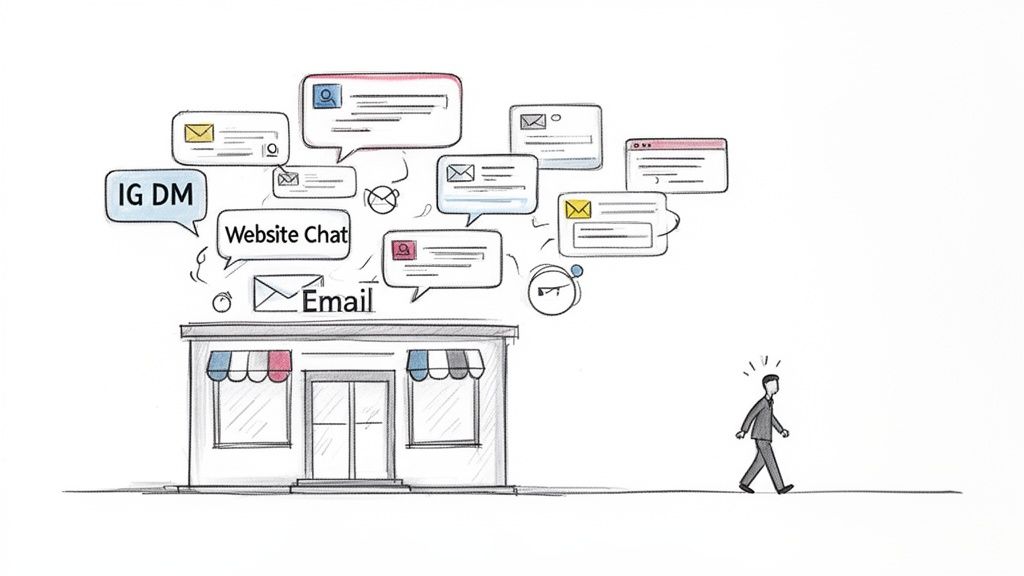
Customer Communication
Picture a growing e-commerce brand. It’s completely swamped. Questions are pouring in through Instagram DMs, the website’s live chat, and a never-ending flood of emails. The problem? Each of these channels is its own little island, creating a totally broken experience for the customer—usually because there’s no clear customer engagement plan tying everything together.
This is exactly where engagement falls apart. A customer might ask about their order status on Instagram, then follow up with an email the next day, only to have to explain the entire situation all over again. It’s a frustrating loop that makes them feel like just another ticket number, and it’s the opposite of a winning customer engagement strategy. Brands that rely on proven customer engagement strategies focus on unified communication, shared context, and continuity across channels so every interaction feels connected instead of repetitive.
The Real Cost of Disconnected Communication
When your communication is scattered, your team loses critical context. They can’t see a customer’s full interaction history, which leads to generic replies and totally missed opportunities to build a real connection.
This creates a few all-too-common friction points that are guaranteed to drive customers away:
- Forcing them to repeat the issue: Making a customer explain their problem over and over to different agents on different platforms.
- Sending irrelevant messages: Blasting a promotional email for a product they just complained about on your live chat.
- Making them wait for answers: Leaving a simple question on social media unanswered for hours—or even days.
The core problem is this: traditional tactics treat every single interaction as a separate event. Real engagement, however, views the entire customer journey as one continuous conversation, no matter which channel it happens on.
Adapting isn’t just a good idea anymore—it’s a matter of survival. Businesses that fail to create a unified, responsive experience will lose to competitors who make their customers feel heard and remembered. It’s time for a smarter, more connected strategy.
Deliver Personalization to Improve Customer Experience
Let’s be honest: personalization is way more than just dropping a customer’s first name into an email template. That trick is old news. Real personalization is about crafting experiences that feel like they were made for one person, and one person only. It’s how you show customers you’re actually paying attention.
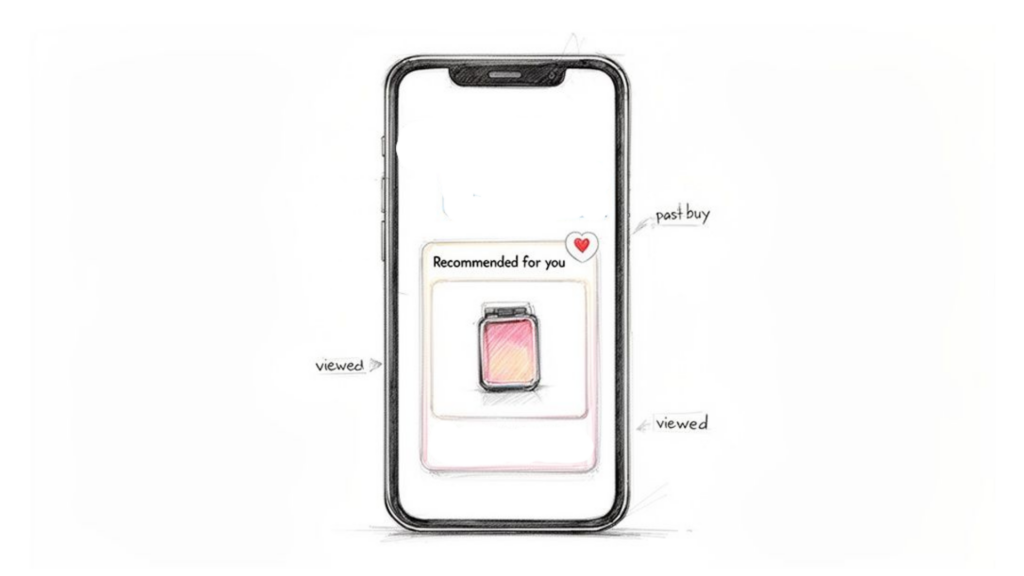
Personalized Recommendation
When you use customer data—like purchase history, browsing behavior, and past chat conversations—you can deliver recommendations and support that are hyper-relevant. This shifts a generic interaction into a genuinely helpful, one-to-one moment that builds serious trust.
The data backs this up. It’s not just a nice-to-have; it’s a core expectation. A huge 76% of customers now expect personalization from the brands they shop with. And it works—personalized emails can hit a 29% open rate and a 41% click-through rate, proving just how much relevance matters.
Actionable Tip: Put Personalization Into Practice
So, how do you get from theory to action? It all starts with using smart automation and AI to deliver these tailored moments at scale, without burning out your team. This is the foundation of implementing a customer engagement strategy that actually works in real environments, not just slide decks.
Here are two practical use cases within a broader client engagement strategy:
E-commerce Product Discovery: Instead of making customers scroll through endless product pages, an automated chatbot can act like a personal shopper. Whether it’s on your website or in Messenger, it can ask a few quick questions about their needs or style and then instantly suggest the perfect items—an approach that can later feed naturally into a customer loyalty program by remembering preferences and rewarding repeat interactions.
SaaS Onboarding via WhatsApp: A new user just signed up. Forget the generic welcome email. Send targeted onboarding tips through WhatsApp based on the specific features they’ve used (or haven’t used). This proactive guidance helps them get to that “aha!” moment much faster while strengthening long-term retention.
The goal is to make every interaction feel like a continuation of a single, intelligent conversation. It’s about remembering what the customer told you last time and using that context to make the current conversation better, turning engagement into an ongoing relationship rather than a one-off exchange.
From Casual Browser to Loyal Advocate
This level of detail transforms a casual browser into a loyal advocate. By focusing on personalization in digital marketing, you’re not just selling something; you’re building a relationship.
When an online store remembers a customer’s size preferences or a SaaS platform offers help based on their specific workflow, it sends a clear message: you value them beyond the transaction. This is how you create memorable experiences that drive repeat business and get people talking.
Create a Seamless Omnichannel Customer Journey
Your customers don’t think in channels. They just see one brand. Whether they’re scrolling your website, tapping through Instagram stories, or sending a message on Facebook Messenger, they expect a single, continuous conversation. If you’re treating these platforms like separate islands, you’re delivering a broken experience.
An effective engagement strategy builds a unified journey across every touchpoint.
This means a customer can ask a question in your website’s live chat during their lunch break and seamlessly pick it up on Messenger hours later from their phone—without ever having to repeat themselves.
This shift isn’t just a “nice-to-have.” The data is clear: 61% of customers prefer contacting brands via digital channels, and 52% are more likely to stay loyal to companies that offer live chat. Modern shoppers don’t just appreciate seamless transitions; they demand them.
Actionable Tip: Unify the Conversation to Increase Customer Engagement
So, how do you make this happen? The secret is a centralized inbox.
Instead of having one team member glued to Instagram DMs and another managing the website chat, a unified platform pulls every conversation into one place. This preserves context and empowers your team to deliver a consistently great experience, no matter where the customer reaches out.
The real transformation happens when you stop managing channels and start managing relationships. A centralized inbox gives your team a complete history of every interaction, turning disjointed messages into one ongoing conversation.
Think about this real-world scenario: a customer uses your website chat to ask about sizing for a new pair of jeans. An hour later, they send a DM on Instagram asking about shipping times for that same item. With an omnichannel setup, your team member sees both messages in a single thread. They can instantly answer, “I see you were asking about sizing earlier—did you find the perfect fit? Shipping for that item is 2-3 days.”
This small touch makes the customer feel seen and understood.
Key Channels for Modern Customer Engagement Plan
To truly nail this, you need to understand which channels your audience uses and why. Each platform serves a different purpose in their journey.
| Channel | Primary Use Case | Key Engagement Tactic |
|---|---|---|
| Website Live Chat | Immediate, high-intent questions about products or services. | Proactive pop-ups on product pages or at checkout to assist with purchases. |
| Facebook Messenger | Casual inquiries, order updates, and conversational marketing. | Automated welcome messages, abandoned cart reminders, and interactive quizzes. |
| Instagram DMs | Visual product questions, story replies, and influencer collaborations. | Quick replies for common questions, sharing user-generated content, and exclusive offers. |
| Detailed support requests, order confirmations, and newsletters. | Personalized follow-ups, feedback requests, and targeted promotional campaigns. | |
| Personal notifications, shipping alerts, and direct customer support. | Order status notifications, appointment reminders, and direct, one-on-one support. |
By connecting these channels into a single view, you move from just answering questions to building a comprehensive customer profile.
Practical Steps to Personalize Omnichannel Experience
Building this unified view is more accessible than you might think. It’s not about wrestling with complex code but about choosing the right tools that connect the dots for you. You can get a better handle on this by exploring what an omnichannel customer experience truly means.
This is how you eliminate the friction that kills brand trust. When customers feel remembered and understood—no matter how they choose to connect—you build the kind of loyalty that turns one-time buyers into lifelong fans. It’s a fundamental shift from reactive support to proactive relationship-building.
Use Automation to Build Real Connections
Forget the old idea of cold, robotic automation. Modern conversational AI isn’t about replacing your team; it’s about making them smarter while delighting your customers. Think of a well-designed chatbot as your most efficient team member—one that never sleeps.
This isn’t just about cutting costs. It’s about instantly handling common, repetitive questions that bog down your support staff. A good bot can qualify new leads, recover abandoned carts with a timely nudge, and provide 24/7 support for basic inquiries.
This frees up your team to focus on what humans do best: solving complex problems and building genuine relationships.
The flow below shows how automation can connect the customer journey across your most important digital storefronts, creating one seamless conversation.
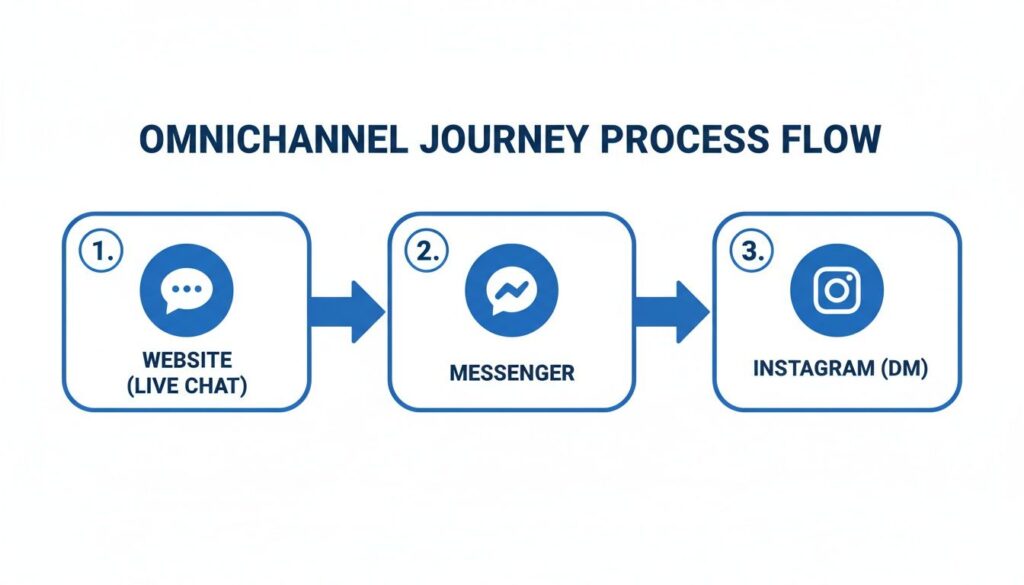
Omnichannel Flow
As you can see, a single conversation can move effortlessly from a website chat to Messenger and Instagram DMs, all powered by a unified automation strategy. It’s a cohesive experience for the customer, not a series of disjointed chats.
Actionable Tip: Design Chatbot Conversations That Help
The key is to design automated flows that feel genuinely helpful, not like hitting a brick wall. The goal is to provide immediate, accurate answers to simple problems. This creates a better experience for your customers and frees up your human agents for high-empathy conversations where they truly shine.
Here are a few practical examples that deliver immediate value:
- Instant Order Status: A bot that instantly answers, “Where’s my order?” without making a customer wait in a queue for a live agent.
- Proactive Shipping Updates: An automated message sent via Messenger or WhatsApp the moment a customer’s package is out for delivery. They get the info before they even have to ask.
- Smart Lead Qualification: A chatbot on your website that asks a few initial questions to see if a visitor is a good fit, then routes high-value leads directly to your sales team.
The golden rule of automation? Always provide a clear and easy path to a human. If a customer’s issue is complex or they just want to talk to a person, the handoff needs to be completely seamless.
By handling the basics flawlessly, automation lets your team focus on building deeper relationships. To see how this works in practice, you can dig deeper into automated customer engagement and see how it transforms workflows.
Ultimately, smart automation doesn’t replace the human touch—it enhances it by making sure it’s applied where it matters most.
Measure and Refine Your Engagement Strategy
If you aren’t measuring your efforts, you’re just guessing. A strong customer engagement strategy is built on data, not assumptions. This means moving beyond vanity metrics like page views and focusing on the customer engagement metrics that actually impact your bottom line and help reduce customer churn instead of just generating surface-level activity.
This data-driven approach is how you learn what truly works. By tracking the right numbers, you can see exactly which messages resonate with your audience and which ones fall flat. It’s the only way to double down on your most effective tactics with confidence and continuously refine engagement based on real performance rather than intuition.
Actionable Tip: Track Key Engagement Metrics
To get a clear picture of your performance, focus on metrics that reveal the quality of your customer interactions. These KPIs give you actionable insights into both team efficiency and customer happiness—two sides of the same coin when it comes to improving engagement.
Here are the essential metrics to start with:
- First Response Time: How quickly does your team respond to a new inquiry? In an on-demand world, speed is a massive driver of customer satisfaction.
- Customer Satisfaction (CSAT) Scores: After an interaction, ask customers to rate their experience. This direct feedback is the purest signal you can get about whether your strategy is working.
- Conversation-to-Conversion Rate: Track how many conversations (like a chatbot interaction or live chat) lead to a desired action, like a purchase or a sign-up.
The most successful brands treat engagement as a science. They constantly test, measure, and refine their approach, ensuring every interaction is more effective than the last. This iterative process is what separates good engagement from great engagement.
Optimize Your Approach with A/B Testing
One of the most powerful tools in your refinement toolkit is A/B testing. It allows you to test different approaches in real time to see what performs best, taking the guesswork out of the equation and uncovering practical ways to improve customer engagement using real customer data instead of opinions.
Imagine an e-commerce store testing two different welcome messages on its Instagram bot. Message A is friendly and open-ended, while Message B is more direct, guiding users straight to a product quiz. By tracking which version drives more qualified leads, the brand can adopt the winning message and immediately improve your customer experience while moving prospects closer to customer success.
This ensures your strategy is constantly evolving and contributing directly to real business goals, helping you nurture a more loyal customer base through continuous optimization rather than one-time decisions.
Still Have Questions About Winning Customer Engagement Strategy?
Even with the best strategy laid out, a few common questions always pop up when it’s time to put these ideas into practice. Let’s tackle the ones I hear most often from brands and entrepreneurs just getting started.
Ready to turn these ideas into action? With Clepher, you can build AI-powered chatbots for your website, Messenger, and Instagram without any coding. Start creating those seamless, personalized customer journeys today. Learn more about Clepher and see just how easy it is to boost your customer engagement.
Related Posts
Unlock Growth with Conversational AI for Customer Support
March 26, 2026Your Ultimate Guide to Instagram Chat Bots
March 25, 2026How to Create a Killer Poll Game on Instagram to Boost Engagement and Leads
March 24, 2026
Founder Clepher