
Stop thinking about one-off sales. The real way to increase customer lifetime value is to shift your mindset—from chasing the next transaction to building profitable, long-lasting relationships with people who’ve already chosen you.
This means you need to know your customers, personalize their experience, and deliver so much value they wouldn’t dream of going anywhere else. Real growth isn’t built on acquisition; it’s built on retention.
Why Customer Lifetime Value Is Your Most Important Metric
Let’s get practical. Customer Lifetime Value (CLV) isn’t just another metric for your dashboard. It’s the core of a smarter business strategy. Instead of pouring all your resources into the expensive hunt for new customers, you focus on the goldmine you’re already sitting on: your existing ones.

Customer Lifetime Value Growth Progress
Here’s a hard truth: acquiring a new customer can cost 5 to 25 times more than keeping an existing one. A high CLV is proof that your retention strategy works and that you have the right systems in place to improve customer lifetime value. It paints a more accurate picture of your company’s long-term health than a monthly sales report ever could. Ultimately, it answers the most important question: “How much is a customer really worth to my business over the long haul?”
The Strategic Advantage of a High CLV
When CLV becomes your north star, you gain a massive strategic advantage. You suddenly have the clarity to make smarter, data-backed decisions about where to invest. Once you know which customer segments are most profitable, you can stop guessing and focus on efforts that increase your customer lifetime value.
A business with a high CLV thrives on predictable, recurring income. By investing in customer success, you ensure that users achieve their desired outcomes, which naturally helps reduce customer churn. If a subscription box company knows their average customer stays for 18 months, they can confidently forecast revenue and plan for growth.
A rising CLV is more than a metric—it’s a vital sign for a healthy business. It tells you that you’re building trust and creating an experience that keeps people coming back. Prioritizing CLV helps you do three things exceptionally well:
- Allocate Marketing Budgets Wisely: You can justify spending more to acquire new customers who look like your most loyal segments.
- Improve Your Products and Services: By understanding customer behaviour, you uncover insights to make your offerings better for everyone.
- Create Sustainable Growth: Your business becomes less dependent on the constant grind for new leads and more focused on maximizing existing relationships.
Master Customer Segmentation for Personalized Impact
To increase your customer lifetime value, you must accept one truth: not all customers are the same. Blasting everyone with generic messaging is a surefire way to be ignored.
The real transformation happens when you group your audience into smaller buckets via customer segmentation. This isn’t just about demographics; the biggest wins come from analyzing customer behaviour to group people based on what they actually do. By digging into your data, you can uncover who your most valuable customers are and exactly what keeps them engaged.
Moving Beyond Basic Demographics
The goal is to understand the why and how behind every purchase. It’s the difference between knowing a customer is 35 and knowing they buy every two months, prefer premium products, and haven’t purchased in 90 days. That level of detail lets you create hyper-relevant experiences.
Start by identifying these key behavioral segments:
- Your VIPs (High-Value Customers): These are the top 10-20% of your customers who spend the most and purchase frequently. They are your best advocates and deserve special treatment.
- High-Potential Customers: This group is promising. Maybe they made a big first purchase but vanished. With a little nurturing, they can become your next VIPs.
- At-Risk or Dormant Customers: These folks haven’t bought anything in a while. They’re on the verge of churning, but a well-timed win-back campaign can often bring them back.
Segmentation turns raw data into a strategic roadmap. It tells you exactly who to talk to, what to say, and when to say it for the greatest impact on your CLV.
Getting this wrong is costly. The telecommunications industry, for example, is only realizing 60% of its potential customer value. They’re leaving a staggering 40% on the table by not nurturing relationships effectively.
Turning Segments into Action
Once you have your segments defined, it’s time to act. Craft targeted campaigns that speak directly to each group’s unique behaviors.
For your VIPs, don’t just send another discount. Offer an exclusive preview of a new product or invite them to a private online event. Make them feel seen.
For your at-risk customers, a simple “We miss you!” campaign with a special offer can work wonders. It’s often all it takes to reignite their interest. For more in-depth approaches, check out our complete guide on customer segmentation strategies.
By personalizing your approach, you’re not just sending emails—you’re building stronger relationships that translate directly to a higher lifetime value.
Building Loyalty Programs That Create True Brand Advocates
A great loyalty program isn’t about tossing discounts at people; it’s a powerful way to build real, lasting relationships. It shifts the dynamic from a simple transaction to an emotional connection, which is a huge part of learning how to increase customer lifetime value.
The goal is to make customers feel seen, appreciated, and part of an exclusive community. That emotional connection is what separates a flimsy rewards system from one that creates passionate brand advocates.
Beyond Points and Discounts
While point-based systems are common, they rarely create deep loyalty on their own. True advocacy is built on value that goes beyond a price cut. Think about offering exclusive perks that money can’t buy.
Here are a few actionable ideas:
- Early Access: Give your loyal members the first crack at new products or upcoming sales. This creates a powerful sense of exclusivity.
- Tiered Programs: Create membership levels (think Silver, Gold, Platinum). As customers spend more, they unlock better perks like free shipping or anniversary gifts. It gives them something to strive for.
- Experiential Rewards: Go beyond digital and offer invitations to members-only events or workshops. These are the kinds of experiences that build a true community.
Sephora’s Beauty Insider program is a masterclass in this. Members don’t just rack up points; they get access to a community, exclusive product launches, and birthday gifts, making them feel like genuine insiders. You can explore the core benefits of customer loyalty programs to get a solid framework.
This visual shows how you can group customers to offer more targeted loyalty benefits—VIPs get the exclusive perks, while you might send a special “we miss you” offer to bring at-risk customers back.
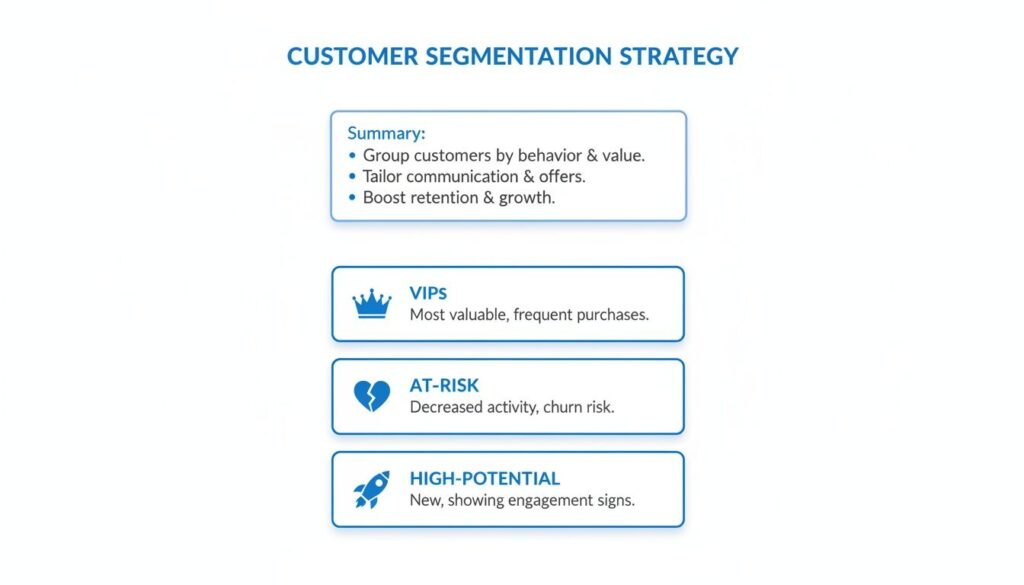
Customer Segmentation Strategy
By tailoring your program to these different segments, you can deliver the most impactful rewards to the right people at the right time.
Choosing the Right Loyalty Program Model
Not all loyalty programs are created equal. The right model depends on your customers, products, and goals. A coffee shop will benefit from a different structure than a high-end fashion brand. Here’s a quick comparison.
| Loyalty Program Models Comparison | |||
|---|---|---|---|
| Program Type | How It Works | Best For | Example |
| Points-Based | Customers earn points for purchases, which can be redeemed for rewards. Simple and easy to understand. | Businesses with frequent, low-cost purchases (e.g., coffee shops, fast-food chains). | Starbucks Rewards |
| Tiered Program | Customers unlock new levels of perks as their spending increases. Creates a sense of achievement. | Airlines, hotels, and retail brands with a wide range of customer spending habits. | Sephora’s Beauty Insider |
| Paid (VIP) Program | Customers pay a recurring fee for instant access to premium benefits, like free shipping or exclusive content. | E-commerce brands where frequent shipping costs are a pain point for customers. | Amazon Prime |
| Value-Based Program | The brand donates a portion of the customer’s purchase to a charity. Connects on shared values. | Socially conscious brands and businesses targeting younger demographics. | TOMS Shoes |
The best programs often mix elements from different models. The key is to create a system that feels generous, achievable, and aligned with what your customers truly value.
The Psychology of True Loyalty
A well-designed program taps into a core human desire: to feel special and recognized. It’s often less about the monetary value of a reward and more about the feeling of appreciation it creates.
The financial impact is massive. Research shows repeat customers spend 67% more in their third year with a brand than in their first six months. Even better, your most loyal customers can be worth up to 10 times their initial purchase value.
A loyalty program is your most direct way of saying, “We appreciate you, and we want you to stick around.” When customers feel that appreciation, they’re not just buying a product; they’re investing in a relationship.
This focus on relationship-building turns one-time buyers into repeat customers and, eventually, into vocal advocates who do your marketing for you. It transforms the customer journey into a continuous cycle of engagement and reward.
Using AI and Automation to Scale Customer Relationships
Let’s be honest: manually personalizing every customer interaction is impossible as you grow. This is where AI and automation become your most valuable assets for scaling relationships and boosting customer lifetime value.
Think of these tools as force multipliers. They take over the repetitive, data-heavy lifting, freeing your team to focus on strategy and genuine human connections. For instance, AI can sift through data to flag customers who are about to churn, letting you swoop in with a retention campaign before they’re gone.
Powering Personalization at Scale
Automation isn’t about being robotic; it’s about delivering timely, relevant interactions that strengthen customer bonds. Instead of blasting generic emails, you can set up smart sequences that respond directly to specific behaviors.
Here are some powerful automations you can start with:
- Abandoned Cart Sequences: A gentle series of reminders about items left behind can be a game-changer. Add a small discount to nudge them over the finish line.
- Post-Purchase Check-Ins: A week after a product arrives, an automated message can ask how they’re enjoying it or offer tips. This small gesture builds incredible goodwill.
- Personalized Milestone Messages: Automatically celebrate a customer’s first anniversary or their birthday with a special offer. It’s a simple touch that makes people feel valued.
The magic of automation isn’t just saving time. It’s creating consistent, positive touchpoints that make every customer feel understood, even as you scale to thousands.
Leveraging AI for Smarter Interactions
Going beyond simple sequences, AI-powered tools are where things get interesting. Adopting AI-driven marketing is a core driver for increasing CLV. The numbers don’t lie: research shows 71% of companies using AI in their marketing see a noticeable jump in CLV. The impact is so real that Salesforce reported a 25% increase in customer lifetime value after implementing its AI platform.
AI-powered chatbots, for example, can offer instant 24/7 support, handling common questions on the spot. But it gets better. Advanced AI can deliver hyper-personalized product recommendations based on a user’s browsing history, much like Netflix figures out what you’ll want to do next. This doesn’t just create a slicker experience—it directly boosts your average order value.
To see what’s out there, you should explore our guide on the top AI marketing automation tools available today.
When you bring these technologies into your workflow, you build a system that nurtures customer relationships with precision and efficiency, turning one-time buyers into loyal advocates.
Turning Customer Service into a Retention Powerhouse
Exceptional customer service is the bedrock of high customer lifetime value. Every support ticket, social media comment, and live chat is a moment of truth—a fork in the road where you either build trust or send a customer to your competitors.
To move the needle on CLV, you have to shift your thinking beyond just reactive problem-solving.

Customer Lifetime Value User Protection
It’s about turning your service team from a cost center into a powerful retention engine. When a customer knows they can count on you for fast, empathetic support, their confidence in your brand skyrockets.
Meet Customers Where They Are with Omnichannel Support
Today’s customers expect to connect with you on their terms. They might start a conversation on Instagram DMs, follow up via email, and then jump on a live chat. If they have to repeat their story at every step, the experience becomes a frustrating mess.
An omnichannel support strategy is the answer. It ensures a seamless, consistent experience across all channels. The conversation history follows the customer, allowing any team member to pick up right where the last one left off.
For example, a retail brand could let a customer start a return using a website chatbot. They get the shipping label by email and then track the status through Facebook Messenger. This frictionless process shows you respect their time, making them far more likely to shop with you again.
The goal is to make getting help effortless. When support is easy to access and consistent everywhere, you eliminate friction and build the kind of trust that fuels a high CLV.
Empower Your Team for First-Contact Resolution
Nothing sours a customer relationship faster than being passed from agent to agent. The key to avoiding this is empowering your support team to achieve first-contact resolution (FCR). This metric tracks the percentage of issues you solve during the very first interaction.
A high FCR rate boosts customer satisfaction and signals an efficient support team. To get there, you need to:
- Provide Comprehensive Training: Your team needs deep product knowledge and the authority to make decisions, like issuing a refund without five levels of approval.
- Create a Robust Knowledge Base: Give agents instant access to clear docs, FAQs, and troubleshooting guides so they can find answers fast.
- Foster a Supportive Culture: Encourage agents to take ownership of problems and celebrate them when they turn a frustrated customer into a happy one.
When your team is empowered, they can transform negative situations into loyalty-building moments. Implementing effective review management strategies is also crucial for maintaining a positive brand image.
Shift from Reactive to Proactive Service
The best brands don’t wait for problems to happen. They practice proactive customer service, anticipating needs and offering help before the customer asks. This simple shift shows you’re invested in their success.
Imagine an e-commerce store sending a follow-up email a week after a purchase with a link to a helpful “how-to” video. Or a SaaS company noticing a user is struggling with a new feature and reaching out with an offer for a personalized demo.
These thoughtful gestures show you care about the entire customer experience, not just the sale. By actively gathering feedback and providing helpful resources, you build a relationship grounded in real value. This proactive stance is a powerful driver for increasing customer lifetime value.
Got Questions About CLV? We’ve Got Answers.
Jumping into customer lifetime value can feel overwhelming. Whether you’re figuring out where to start or looking for smart ways to boost your numbers, we’ve got you covered. Let’s tackle some of the most common questions.
Conclusion
To maximize your results, improving customer lifetime value requires a data-driven commitment to delivering consistent value. Start by building a rich customer profile from customer data and customer insights to target customer groups with tailored offers that meet specific customer needs and drive customer purchases. By measuring customer behavior and customer lifetime value, your marketing efforts and customer service team can act on customer feedback to deliver a better customer experience and monitor customer sentiment.
Focus on customer retention through excellent customer service, outstanding customer support, and a customer community that fosters long-term customer relationships. By identifying what adds added value throughout the customer lifecycle, you can increase customer revenue and improve customer satisfaction. Calculating average customer lifespan and average customer lifetime value allows you to prioritize actions that maximize customer value.
Implementing proven tactics to increase customer lifetime value—like segmenting customer groups and creating meaningful customer interactions—will help you build a strong customer base and ensure customer success. When you monitor customer behavior and refine your approach based on customer preferences, you drive higher customer loyalty. Ultimately, a customer-centric strategy backed by customer metrics builds customer trust and ensures long-term customer growth.
Ready to turn conversations into conversions and scale your customer relationships? Clepher gives you the AI-powered tools to automate support, personalize marketing, and drive loyalty across Messenger, Instagram, and WhatsApp. Start building stronger customer connections today!
Related Posts
How to Create a Killer Poll Game on Instagram to Boost Engagement and Leads
March 24, 202612 Fresh Social Media Content Ideas That Convert in 2026
March 23, 2026Elevate Your Customer Experience with Conversational AI for Customer Engagement
March 22, 2026
Founder Clepher