
To reduce customer churn, you have to get ahead of the problem. It’s about figuring out why customers are leaving, making their first experience with your brand seamless, and offering support that’s both instant and genuinely helpful. This means shifting from a reactive “damage control” mindset to a proactive obsession with delivering value from day one.
Why Customer Churn Is a Silent Growth Killer
Losing a customer stings, but the real damage goes much deeper than one lost sale. Customer churn is a silent leak in your revenue engine that quietly torpedoes your growth plans. For every dollar you spend on marketing to bring in a new customer, churn works in the background to make that investment worthless.
This creates a frustrating cycle. You end up celebrating new sign-ups while constantly trying to refill a leaky bucket. If your churn rate is high, you’re not actually growing; you’re just treading water. This constant churn-and-burn slowly erodes profitability and makes sustainable scaling feel impossible.
The Real-World Impact of Churn
Let’s make this tangible. High churn directly inflates your Customer Acquisition Cost (CAC). If you spend $300 to acquire a customer who only stays for two months, you’ve likely lost money on that relationship. Multiply that by hundreds of customers, and the financial drain becomes massive.
But the damage doesn’t stop at your bank account. Churn poisons your brand reputation. Unhappy customers who leave are far more likely to share their negative experiences online. This creates negative social proof that makes it even harder—and more expensive—to attract good customers in the future.
The Hidden Costs of Customer Churn
Here’s a quick look at the direct and indirect impacts of customer churn on your business.
| Impact Area | Direct Cost | Indirect Cost |
|---|---|---|
| Revenue | Lost subscription fees and future purchases. | Reduced Customer Lifetime Value (CLV) across the board. |
| Acquisition | Wasted marketing and sales spend on customers who don’t stay. | Increased future CAC due to negative brand perception. |
| Team Morale | Time spent on offboarding and handling cancellations. | Demoralized customer success and support teams. |
| Brand Reputation | None. | Negative reviews and poor word-of-mouth marketing. |
| Growth | Slower overall revenue growth. | Depressed company valuation and investor confidence. |
As you can see, the ripple effects extend far beyond a single lost account. It’s a systemic issue impacting everything from your marketing budget to team morale.
Churn is more than a metric; it’s a direct reflection of the value and experience you deliver. A rising churn rate is the ultimate signal that there’s a fundamental disconnect between what you promised and what your customers are actually experiencing.
A Small Leak Sinks a Big Ship
The math behind churn is deceptively brutal. A seemingly small monthly churn rate can decimate your customer base over a year. While budget concerns often top the charts as the leading cause of voluntary churn at 33%, this is frequently a mask for deeper issues like poor service or unmet expectations.
Even a modest 5% monthly churn erodes 46% of your customer base annually. This skyrockets to over 70% at a 10% monthly rate—a catastrophic scenario for most businesses. For more on these trends, you can explore the full retention report.
This reframes the problem entirely. Learning how to reduce customer churn isn’t just about damage control; it’s about unlocking your single most powerful lever for sustainable growth.
Becoming a Churn Detective to Pinpoint Why Customers Leave
You can’t fix a problem you don’t understand. To meaningfully reduce churn, you have to move beyond guesswork and become a detective, uncovering the real reasons customers walk away.
This means blending the hard numbers—your quantitative data—with the human stories behind them—the qualitative feedback. This is the only way to stop just seeing that customers are leaving and start understanding the precise friction points pushing them out the door.
Combining Quantitative and Qualitative Clues
Think of quantitative data as the scene of the crime. It tells you what happened, but not the motive. Use these numbers to find your first clues.
Start digging into:
- Product Usage Data: Are canceling customers abandoning a specific feature? Did their login frequency drop off a cliff 30 days before they churned? A sudden dip in engagement is a classic red flag.
- Support Ticket History: Look for patterns. Are multiple churned customers complaining about the same bug, a confusing billing issue, or slow response times? Your support logs are a goldmine of frustrations.
- Onboarding Completion Rates: If a huge chunk of your churned users never finished your onboarding sequence, it’s a massive signal that your first impression is failing to show them value.
While this data is critical for spotting trends, it’s missing the emotional context. That’s where qualitative feedback comes in—your chance to hear directly from the source.
The most dangerous assumption in business is believing you know why customers leave without ever asking them. Their direct feedback is the most valuable consulting you will ever get, and it’s free.
The Power of Automated Exit Surveys
The moment a customer cancels is a golden opportunity for feedback. But a generic “Why are you leaving?” multiple-choice form rarely gets you useful insights. Customers often pick the easiest option, like “It’s too expensive,” which can hide the real reason.
An automated chatbot flow is your secret weapon. Instead of a static form, you can create a dynamic, conversational exit survey that digs deeper.
Imagine this for a SaaS company using Clepher:
- Trigger: A user clicks “Cancel Subscription.”
- Initial Question: A Messenger chat immediately pops up: “So sorry to see you go, [First Name]! To help us improve, could you share the main reason you’re canceling?” It offers options like Price, Missing Features, or Technical Issues.
- Conditional Follow-Up: This is the magic. If the user selects “Missing Features,” the bot asks a follow-up: “Thanks for sharing. Could you tell me which specific feature you were looking for?”
This simple, conversational approach turns a generic data point into a rich insight. You learn not just that features were missing, but which ones mattered most. For a complete guide, check out our article on how to collect customer feedback.
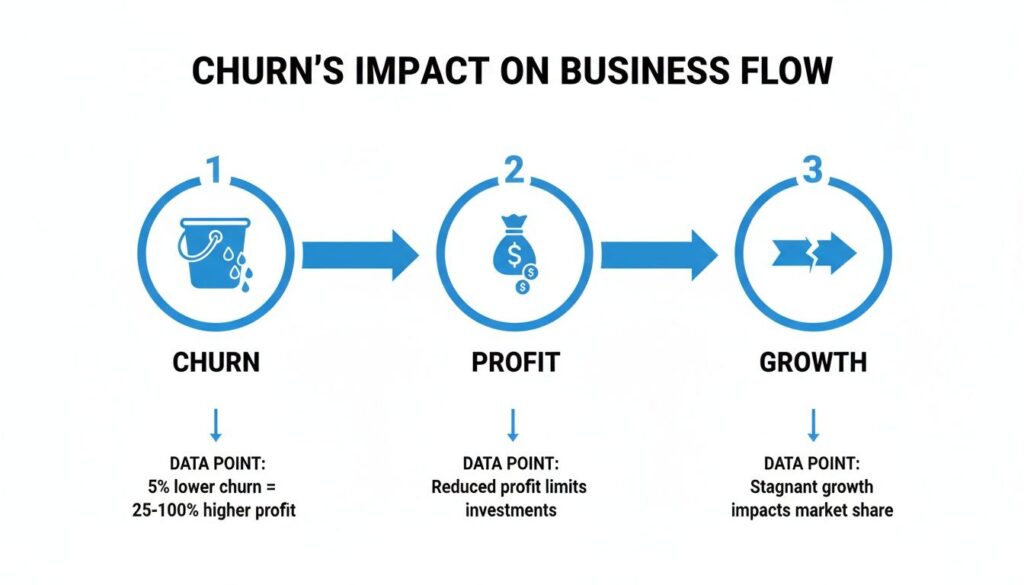
This diagram shows how unchecked churn poisons your company’s financial health.
Churn Impact
By becoming a churn detective, you can finally start patching the holes in your bucket instead of just pouring more water in.
A Powerful First Impression Starts with Automated Onboarding
The first few days with your product are everything. It’s the make-or-break window where a new customer decides if they’re in for the long haul. A clunky, confusing, or silent start is the fastest way to lose someone you just worked hard to win.
In fact, a bad onboarding experience is responsible for a shocking 23% of all customer losses. Think about that: nearly a quarter of your new sign-ups might leave simply because they get stuck or don’t see the value right away. The flip side is just as powerful—companies that nail the first interaction can slash churn by up to 67%.
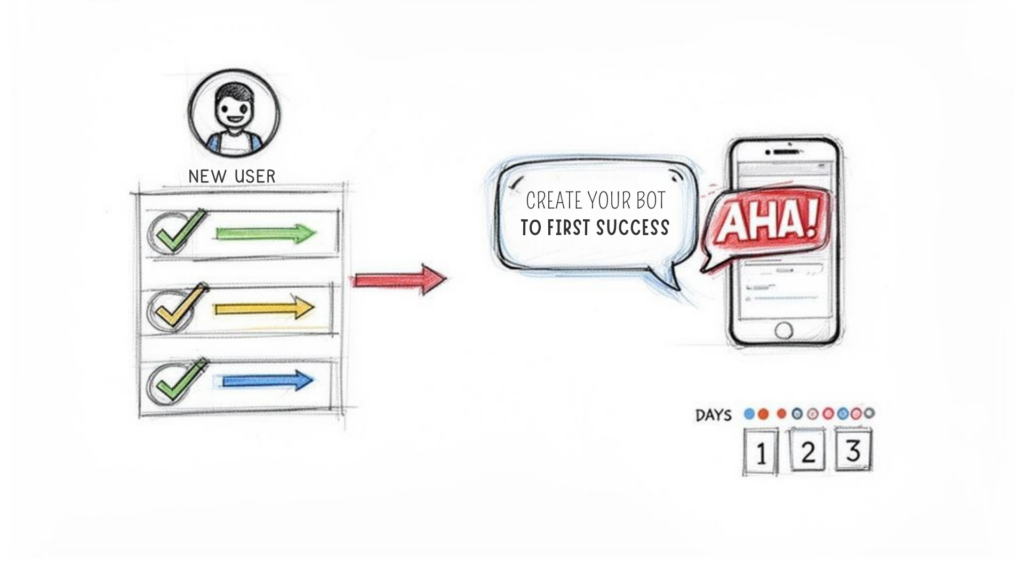
The goal is simple: get new users to their first “aha moment” as fast as you can. This is the magic point where they experience your product’s core value firsthand, making them far less likely to leave.
Designing an Onboarding Flow That Just Works
A great automated onboarding experience is more than a single welcome email. It’s a guided journey that helps new users feel successful from the moment they sign up. With a tool like Clepher, you can build these conversational flows visually, without touching a line of code.
You can map out every step of the customer’s first week, anticipating their needs and offering proactive support before they even have to ask.
Onboarding Success
The key is to ditch the one-size-fits-all approach. Your onboarding should adapt based on who your customer is and what they’re trying to accomplish. Let’s look at two practical examples.
Onboarding in Action: The E-commerce Playbook
For an e-commerce brand, the “aha moment” is finding the perfect product and making that first purchase with confidence. An unanswered question about shipping can kill that momentum instantly.
An automated chatbot flow can transform this experience:
- The Instant Welcome: As soon as someone signs up, a chatbot can greet them with a warm welcome and a small discount on their first purchase to build goodwill.
- Guided Shopping: The bot can act like a personal shopper, asking, “What brings you here today?” to guide them straight to the right category.
- On-Demand Answers: An AI-powered bot provides instant answers 24/7 to questions about shipping, returns, or sizing, preventing cart abandonment.
Don’t make new customers hunt for value. Deliver it straight to them. A killer onboarding flow proactively answers questions and guides people to success before they even have a chance to feel lost.
Onboarding in Action: The SaaS Playbook
For a SaaS company, the “aha moment” hits when a user completes a key action that shows off your product’s power—like launching their first campaign or creating their first project.
A multi-day automated sequence works beautifully here. Instead of bombarding new users with every feature at once, you can drip out useful information over their first week.
Here’s a practical SaaS onboarding flow:
- Day 1: Welcome & The First Win: An initial message introduces the single most important feature and guides them to complete one simple task, like importing their first contacts.
- Day 3: The Next Big Thing: A follow-up message introduces a secondary, high-value feature with a short video tutorial.
- Day 5: The Gentle Nudge: The automation checks their progress. If they haven’t completed those key tasks, it sends a friendly nudge: “Hey [First Name], looks like you haven’t created your first campaign yet. Need a hand?”
This proactive, supportive communication is a fundamental part of automated customer engagement that builds loyalty from day one.
Winning Customers for Life with Proactive Support
Waiting for customers to complain is a losing game. If you’re only ever putting out fires, you’re already behind. Lasting loyalty comes from getting ahead of problems—anticipating a customer’s needs and solving issues before they get frustrated.
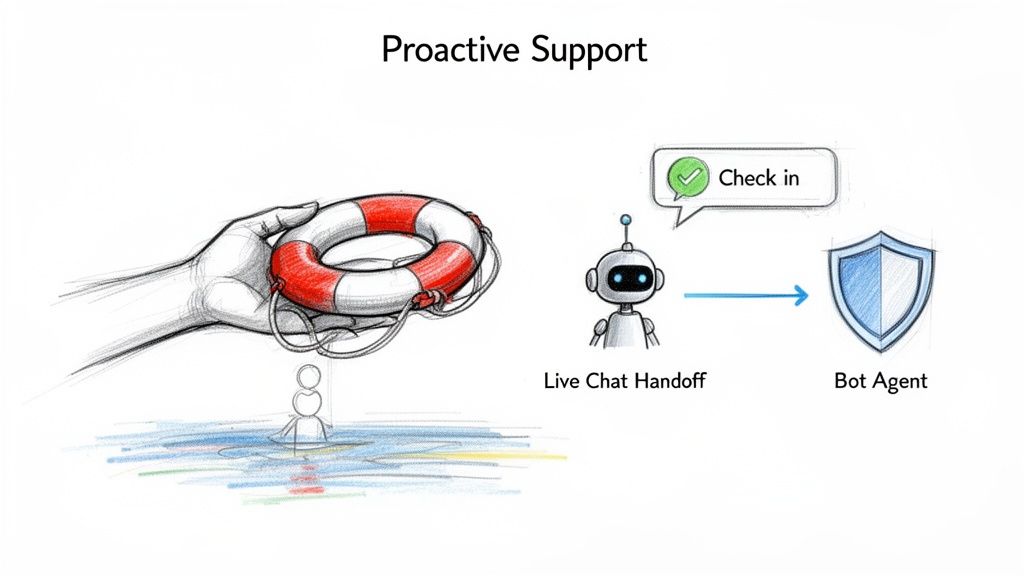
It’s about flipping the script from reactive to proactive. Stop waiting for the support ticket and start creating positive moments that remind customers why they chose you. Be there right when they feel a little lost and guide them back.
Proactive Support
From Reactive to Proactive with Automation
Trying to be proactive with every customer manually would burn out your team in a week. This is where automation becomes your secret weapon, allowing you to deliver timely, helpful check-ins at scale.
Forget generic email blasts. We’re talking about smart, automated flows that kick in based on what a customer actually does (or doesn’t do).
Here are a couple of real-world examples:
- The Inactivity Nudge: Have your chatbot automatically ping a user who hasn’t logged into your SaaS platform in 14 days. A simple, “Hey [First Name], just checking in! Anything we can help with?” can pull them back in.
- The Post-Purchase Tip: For an e-commerce brand, trigger a message three days after a product is delivered. Sold a coffee maker? The bot can send a quick video showing them how to pull the perfect first shot.
Lightning-fast responses aren’t just polite—they’re a churn-killer. Brands that engage well see customers spend 20-40% more, while those who lag suffer 15% higher churn rates. And with 66% of consumers ready to leave after just one bad service interaction, being proactive is essential. You can discover more insights on these customer retention statistics to see the full impact.
Providing Instant Support Around the Clock
One of the biggest drivers of churn is making customers wait. They expect solutions now, not tomorrow morning.
This is where AI chatbots and live chat handoffs become an unbeatable combo. You can build a bot that instantly handles 80% of common questions, from “How do I reset my password?” to “What’s your return policy?”
Your customers’ problems don’t stick to a 9-to-5 schedule, and neither should your support. Instant, 24/7 answers to common questions prevent the small frustrations that quietly build up and lead to churn.
This frees up your human agents to tackle complex issues that need a human touch. When the bot hits its limit, it can seamlessly pass the conversation—along with the full chat history—to a live agent. This is a core part of creating a strong omnichannel customer experience, turning customer service from a cost center into an engine for loyalty.
Winning Back Customers and Keeping Them for Good
Even with a killer product and top-notch support, some customers will inevitably drift away. This is where a smart, automated approach to retention and win-back campaigns makes all the difference. It’s about knowing exactly when to step in and what to say.
Treat at-risk and already-churned customers as two different groups. One needs a gentle nudge to stick around; the other needs a compelling reason to come back.
Stop Churn Before It Starts: Keeping At-Risk Customers
The best way to fight churn is to prevent it. Customers who are thinking about leaving often drop hints long before they cancel. Your job is to spot these signals and act fast.
Behavioral triggers are your secret weapon. These are specific actions—or a lack of them—that indicate disinterest.
Here are some common red flags:
- Usage Drops: A user who logged in daily now only pops in once a week.
- Key Feature Neglect: They’ve stopped using a core feature.
- Radio Silence: A once-engaged customer suddenly goes quiet.
- Lingering Problems: They have an open support ticket that’s been unresolved for too long.
When a trigger is tripped, an automated retention flow should kick in. For example, if a user hasn’t logged into your SaaS for 15 days, a Clepher flow can automatically send a friendly message: “Hey [First Name], we’ve missed you! Anything we can do to help you get back on track?”
If that doesn’t work, it’s time for a targeted retention offer. This isn’t a generic discount; it’s a strategic incentive.
- A temporary discount on their next bill.
- A free 30-day upgrade to a higher-tier plan.
- An invitation to a one-on-one session to help them succeed with your tool.
The goal is to give them a solid reason to re-engage and remind them of the value they’re missing.
Designing a Smart Win-Back Campaign
When a customer has already left, your strategy needs to change. Begging them to return won’t cut it. A successful win-back campaign comes down to timing, value, and a great offer.
Give them some space. A 30- or 60-day cooling-off period usually works best.
Your message should acknowledge their departure and immediately pivot to what’s new and improved. This shows you’re evolving and that their original reason for leaving might no longer be an issue.
Here’s a simple but powerful win-back message: “Hi [First Name], it’s been a while! A lot has changed since you’ve been gone. We just launched [New Feature] that we think you’ll love. Want to give it another try with 25% off your first three months?”
This approach works because you’re not just asking for their business back—you’re offering them new value. And to make sure these messages land, it’s vital to use good email list cleaning strategies to keep your lists healthy.
A great win-back campaign isn’t about making a customer feel guilty. It’s about proving you listened, made your product better, and are now offering them a solution that’s even more valuable than the one they left.
Before we dive into testing, let’s compare these two core approaches.
Churn Prevention Tactics Comparison
| Tactic | Type | Best For | Clepher Implementation Example |
|---|---|---|---|
| Usage-Based Nudges | Proactive | Customers showing early signs of disengagement (e.g., infrequent logins). | Trigger a flow when a user’s last_seen date is over 15 days ago, sending a “We miss you!” message. |
| Proactive Support | Proactive | Customers who have encountered a known bug or have an unresolved support ticket. | Segment users with open tickets and send a broadcast checking in on their status. |
| Strategic Discounts | Reactive | Customers who have clicked the “cancel subscription” button but haven’t confirmed yet. | Create a flow that triggers on the cancellation page, offering a 1-month discount to stay. |
| New Feature Announcements | Reactive | Customers who have already churned and have been inactive for 30-60 days. | Broadcast a message to a “Churned Customers” segment highlighting a major new feature. |
Understanding when to use a proactive nudge versus a reactive offer is key. Proactive tactics build loyalty, while reactive ones serve as a powerful last line of defense.
The Power of A/B Testing Your Messages
How do you know if a 15% discount is more compelling than a free upgrade? You don’t guess—you test. A/B testing is a must for both retention and win-back campaigns.
With a platform like Clepher, you can easily split-test different components:
- The Offer: Pit a percentage discount against a free trial extension.
- The Messaging: Test a direct, offer-focused message against a softer, “we miss you” approach.
- The Timing: Send the first win-back message after 30 days to one group and after 60 days to another.
By measuring which approach brings more customers back, you shift from guesswork to a data-driven strategy. Over time, these optimizations will dramatically improve your ability to reduce churn.
Frequently Asked Questions About Reducing Churn
Let’s tackle some of the most common questions about churn with straightforward, actionable answers.
Conclusion
Reducing customer churn requires a holistic approach that combines customer satisfaction, strong customer relationship management, and proactive customer support to prevent churn. By focusing on customer onboarding, understanding customer needs and customer behavior, and measuring customer churn with customer health scores, companies can identify early warning signs of churn and act before customers stop doing business.
Addressing both voluntary and involuntary churn—such as reducing billing errors to reduce involuntary churn—helps lower churn rates and revenue churn while increasing customer retention rate and overall customer satisfaction. Implementing strategies to reduce churn, empowering customer success teams and customer success managers, improving customer service and saas customer onboarding, and treating every customer as a potential high-value customer will make customers less likely to churn.
Regularly calculate customer churn, analyze the percentage of customers affected and types of churn, and prioritize fixes for the causes of customer churn and reasons why customers churn. These combined efforts contribute to churn reduction, improve customer loyalty, and increase customer lifetime value, ultimately lowering customer attrition and helping you effectively reduce customer churn and improve business outcomes.
Ready to turn these churn-fighting strategies into reality? With Clepher, you can build the automated onboarding flows, proactive support bots, and targeted win-back campaigns we’ve discussed—all in a simple, no-code builder. Start turning at-risk customers into lifelong fans today. Get started with Clepher.
Related Posts
Unlock Growth with Conversational AI for Customer Support
March 26, 2026Your Ultimate Guide to Instagram Chat Bots
March 25, 2026How to Create a Killer Poll Game on Instagram to Boost Engagement and Leads
March 24, 2026
Founder Clepher