
In the fast-paced SaaS world, we’re often obsessed with acquisition—the thrill of landing a new logo. But what if the real key to exponential growth isn’t chasing more, but keeping more? Acquiring a new customer is anywhere from 5 to 25 times more expensive than retaining an existing one. A mere 5% increase in customer retention can boost profits by 25% to 95%. This isn’t just theory; it’s the fundamental economics of sustainable growth. The most successful SaaS companies aren’t just selling software; they’re building relationships and delivering continuous value that makes customers want to stay.
It’s time to shift your focus from a leaky bucket to a fortified moat. By implementing these tactics, you can protect your revenue, improve your bottom line, and turn your existing customers into your most powerful growth engine. Let’s dive in.
This guide moves beyond generic advice to provide a prioritized, actionable roundup of the most effective SaaS customer retention strategies. We will break down 10 proven methods you can implement today, focusing on practical execution rather than high-level theory. Each strategy includes:
- Why It Matters: The core business impact of each tactic.
- How to Implement It: Step-by-step instructions to get you started.
- Key Metrics to Track: The data points that measure success.
- Real-World Examples: See how these strategies work in practice, including conversational AI use cases.
- Quick Wins vs. Long-Term Plays: Differentiate between immediate-impact actions and foundational initiatives.
1. Proactive Customer Onboarding & Success Programs
The single most critical moment in the customer lifecycle is the beginning. A proactive onboarding program is one of the most effective SaaS customer retention strategies because it guides new users to their “aha moment” as quickly as possible. This structured approach prevents initial frustration and demonstrates your product’s value from day one, setting the foundation for a long-term relationship.
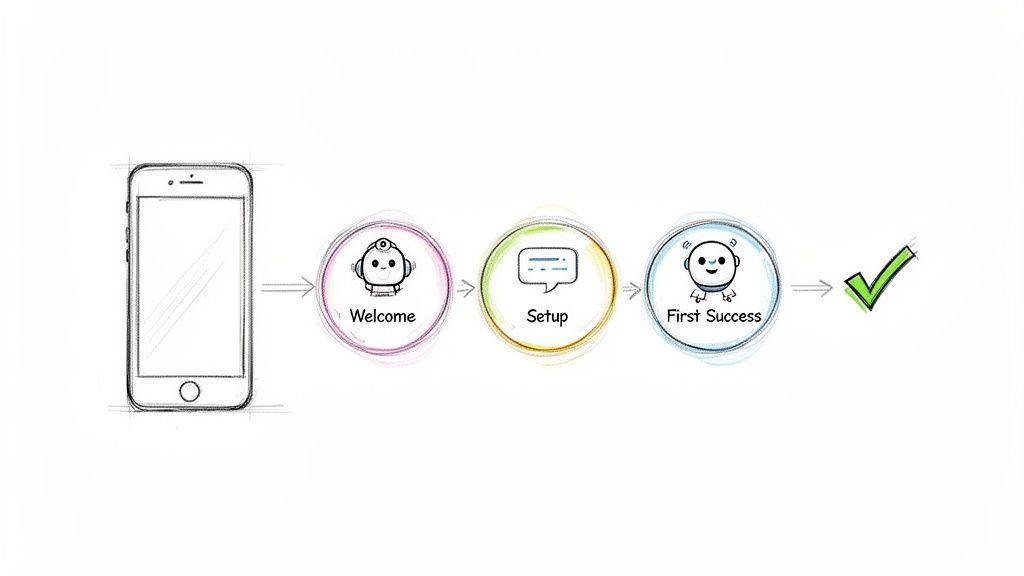
Onboarding Flow
This strategy involves more than a simple welcome email. It’s a series of automated flows, personalized guidance, and milestone tracking designed to ensure customers achieve their primary goal with your software. For platforms like Clepher, this could mean automating welcome chatbot sequences on Instagram for a new e-commerce client or guiding a digital agency through setting up their first lead-gen flow.
How to Implement Proactive Onboarding
A strong onboarding program anticipates user needs and removes friction before it occurs.
- Segment Your Users: Don’t use a one-size-fits-all approach. Create distinct onboarding paths for different user personas or business types (e.g., e-commerce vs. SaaS vs. agency). Intercom excels at this by offering personalized product tours based on a new user’s stated role and goals.
- Utilize In-App Guidance: Integrate tooltips, checklists, and interactive guides directly into your UI. Slack’s onboarding is a masterclass in this, providing real-time tips and suggestions as you explore the platform.
- Automate Check-ins: Use email and conversational bots to schedule automated follow-ups at key milestones (Day 1, Day 7, Day 30). Ask users if they’ve accomplished a key task and offer help if they’re stuck.
Key Insight: The goal of onboarding isn’t to show users every feature. It’s to guide them to the one or two key actions that deliver immediate value and prove your product’s worth.
Key Metrics to Track
- Time to First Value (TTFV): How long does it take a new user to achieve their first success?
- Feature Adoption Rate: Are new users engaging with the core features essential for long-term success?
- Onboarding Completion Rate: What percentage of users complete your key setup steps?
2. AI-Powered Personalization & Segmentation
Generic, one-size-fits-all communication is a primary driver of customer churn. AI-powered personalization is a powerful SaaS customer retention strategy that uses behavioral data to segment users and deliver highly relevant experiences. By understanding how different customer groups use your product, you can tailor your messaging, support, and feature recommendations to meet their specific needs, making them feel understood and valued.
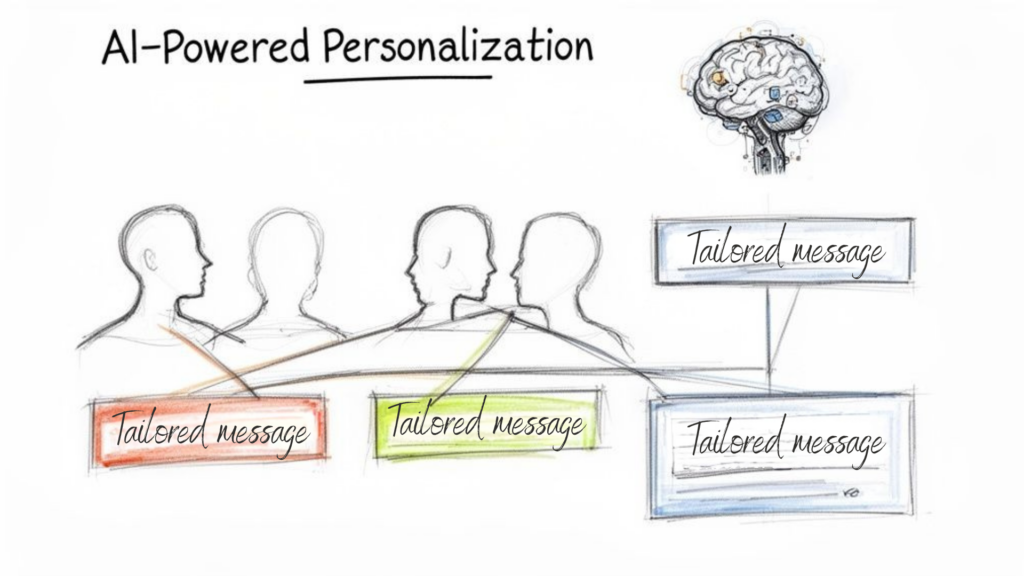
AI personalization
This approach goes beyond using a customer’s first name in an email. It leverages machine learning to analyze usage patterns, lifecycle stage, and user attributes to create dynamic segments. For a platform like HubSpot, this means automatically sending advanced content to power users while offering foundational tips to new sign-ups. Similarly, a tool like Clepher can use AI-driven keyword triggers and segmentation tags to deliver hyper-personalized chatbot responses that address specific customer intent in real-time.
How to Implement AI & Personalization
Effective personalization requires a solid data foundation and a clear segmentation strategy.
- Segment by Lifecycle Stage: Group users based on where they are in their journey: new, active, at-risk, or churned. Each group requires a different communication style and set of goals.
- Create Data-Driven Personas: Go beyond basic demographics. Analyze feature usage, login frequency, and support ticket history to build personas that reflect actual user behavior. Map these personas to specific messaging tracks.
- Automate Tailored Messaging: Use your segments to trigger automated, personalized messages. For example, send an email showcasing an advanced feature only to users who have mastered the basics, or use a chatbot to offer help to a user who repeatedly visits the help docs for a specific topic.
Key Insight: Personalization isn’t just about marketing. It’s about making the entire product experience feel like it was designed for the individual user, which dramatically increases stickiness and reduces churn.
Key Metrics to Track
- Segment Engagement Rate: Are specific user segments opening emails, clicking links, and using features more than others?
- Churn Rate by Segment: Which user groups are most likely to churn? This helps identify at-risk customers proactively.
- Feature Adoption by Persona: Do certain personas adopt and value different features? This informs your product roadmap and messaging.
3. Win-Back & Churn Prevention Campaigns
Even with the best product, some customers will drift away. A proactive win-back strategy is essential for identifying these at-risk users before they officially churn and re-engaging them with targeted, value-driven campaigns. This approach turns a reactive problem (cancellation) into a proactive opportunity to remind users of your value and address their concerns.
This strategy goes beyond sending a generic “we miss you” email. It involves setting up automated workflows that trigger based on specific behavioral signals of disengagement, like a prolonged period of inactivity or a drop in feature usage. For platforms like Clepher, this could mean deploying an AI-triggered Messenger campaign to a user who hasn’t created a new chatbot flow in 45 days, offering a template or a quick tutorial to get them re-engaged.
How to Implement Win-Back Campaigns
An effective churn prevention program is data-driven and personalized, addressing the likely reasons for disengagement.
- Set Up Behavior-Based Triggers: Identify your “at-risk” signals. This could be no login for 30 days, a sudden drop in core feature usage, or ignoring critical update notifications. Use these signals to automatically enroll users into a win-back sequence.
- Create a Tiered Outreach Sequence: Don’t lead with a discount. Start by reminding them of the value they’ve received, then offer helpful educational content or product tips. Save your best incentive (a discount, a temporary feature unlock) for the final touchpoint.
- Use Exit Surveys to Learn: When a customer does decide to cancel, use an exit survey to understand why. Use this valuable data to refine your product, onboarding, and future win-back campaigns. Netflix does this well, learning from churn reasons to improve its content recommendations and offers.
Key Insight: The best win-back campaigns don’t just beg a customer to stay; they diagnose the reason for disengagement and offer a relevant solution, whether it’s education, a feature reminder, or a tailored incentive.
Key Metrics to Track
- Churn Rate: The ultimate measure of success. Are your campaigns reducing the overall percentage of customers who cancel?
- Win-Back Rate: What percentage of at-risk customers who enter a campaign are successfully re-engaged?
- Customer Engagement Score: Monitor the activity levels of rescued customers to ensure they remain active long-term.
4. Exceptional Customer Support & Responsive Communication
Exceptional customer support is no longer a “nice-to-have”; it’s a core pillar of any successful SaaS customer retention strategy. When users encounter a problem or have a question, a fast, empathetic, and effective response can turn a moment of frustration into a loyalty-building experience. Neglecting support is a direct path to churn, as customers will quickly abandon a tool they can’t get help with.
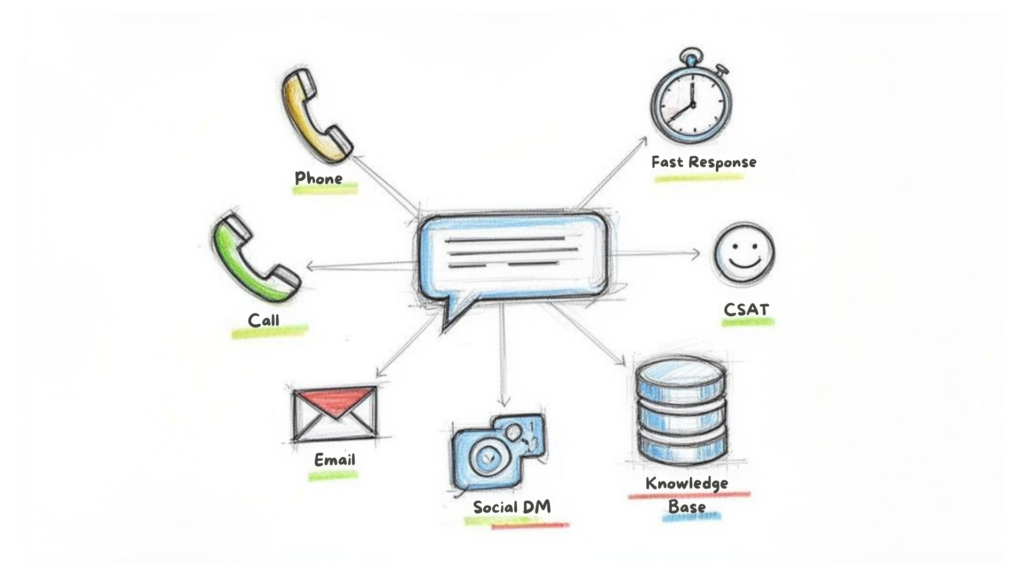
Customer Support
This strategy involves creating an accessible, multi-channel support system that meets customers where they are. For a platform like Clepher, this means leveraging AI Agents and live chat to provide instant answers on Instagram, Facebook Messenger, and WhatsApp. For more technical products like Stripe, it means offering comprehensive API documentation alongside expert live support to help developers succeed.
How to Implement Exceptional Customer Support
A modern support strategy blends automation for speed with human expertise for complex issues.
- Implement a Multi-Channel Approach: Don’t force users into a single support channel. Offer a mix of live chat, email, a searchable knowledge base, and even community forums. Zapier excels here, providing a vast knowledge base for self-service alongside community and ticket-based support.
- Leverage AI and Automation: Use AI-powered chatbots to handle 70-80% of common, repetitive questions instantly. This frees up human agents to focus on high-value, complex problems that require a personal touch. You can learn more about how to automate customer service to improve efficiency.
- Establish Clear Service Level Agreements (SLAs): Set and communicate clear targets for response and resolution times. For example, aim for a first response time of under two hours for paying customers to set clear expectations and demonstrate your commitment.
Key Insight: Great support isn’t just about solving problems. It’s about making customers feel heard, valued, and confident in their decision to use your product.
Key Metrics to Track
- First Response Time (FRT): How quickly does a customer receive an initial reply to their inquiry?
- Customer Satisfaction Score (CSAT): How satisfied are customers with the support they received?
- Ticket Resolution Rate: What percentage of support tickets are successfully resolved?
5. Value-Based Product Education & Best Practices Content
Onboarding gets customers started, but ongoing education turns them into power users who can’t imagine their workflow without you. A value-based education strategy focuses on teaching customers not just how to use your product, but how to succeed with it. This approach transforms your SaaS from a simple tool into an indispensable growth partner, making it a cornerstone of your SaaS customer retention strategies.
This strategy goes beyond basic tutorials. It involves creating a rich library of resources like webinars, advanced strategy guides, templates, and case studies that help users master your platform and their broader business goals. For a platform like HubSpot, their HubSpot Academy provides entire certification courses that increase user expertise and loyalty, making customers less likely to churn because they’ve invested time in becoming experts.
How to Implement Value-Based Education
Effective product education anticipates customer goals and provides a clear path to achieving them.
- Create Content for All Skill Levels: Develop distinct learning tracks for beginner, intermediate, and advanced users. A new user needs a “Getting Started” guide, while a veteran user might benefit from a webinar on advanced automation tactics.
- Build Actionable Templates & Playbooks: Don’t just tell users what to do; give them the tools to do it. Provide pre-built templates for common use cases, like lead qualification chatbot flows or abandoned cart recovery sequences, that they can implement immediately.
- Host Live Learning Events: Run monthly webinars or Q&A sessions focused on new features, customer success stories, or industry best practices. This creates a sense of community and provides a direct line for users to engage with your team.
Key Insight: Retention isn’t just about preventing dissatisfaction. It’s about continuously increasing your product’s value in the eyes of the customer, and education is the most direct way to do that.
Key Metrics to Track
- Content Engagement Rate: Are customers watching your videos, downloading your templates, and attending your webinars?
- Advanced Feature Adoption: What percentage of your user base is adopting the features highlighted in your educational content?
- Product Usage Depth: Are educated users interacting with a wider range of your product’s capabilities compared to unengaged users?
6. Community Building & User Engagement Programs
Beyond your product’s features, customers stay for the connections they build and the sense of belonging they feel. Creating a dedicated community is a powerful SaaS customer retention strategy because it transforms your user base from a collection of individual accounts into a valuable, self-sustaining network. This fosters loyalty, provides social proof, and creates a moat that competitors can’t easily replicate.
A thriving community gives users a space to share wins, troubleshoot problems, and learn from their peers, reducing the burden on your support team. For a platform like Notion, this has manifested in massive, user-run communities on Reddit and Discord where people share templates and advanced workflows, deepening their engagement with the product far beyond its basic functions.
How to Implement Community Programs
Building a community is about facilitating connections, not just broadcasting messages.
- Choose the Right Platform: Start with a low-friction hub like a private Slack workspace, a Discord server, or a dedicated Facebook Group. Platforms like Circle and Mighty Networks offer more robust, white-labeled solutions for mature communities.
- Empower Community Champions: Identify your most active and knowledgeable users and empower them as moderators or “champions.” This validates their expertise and helps scale your community management efforts.
- Host Regular, Value-Driven Events: Schedule consistent virtual events like expert Q&A sessions, customer-led workshops, or “ask me anything” (AMA) sessions with your product team. This creates recurring touchpoints that keep users engaged.
- Create Exclusive Content & Perks: Offer community-only benefits such as early access to new features, exclusive templates, or special discounts to reward participation and make membership feel valuable.
Key Insight: A community isn’t just a support channel. It’s an ecosystem where your most successful customers teach and inspire others, creating a powerful, scalable engine for customer success and retention.
Key Metrics to Track
- Community Engagement Rate: What percentage of users are active (posting, commenting, reacting) on a weekly or monthly basis?
- User-Generated Content (UGC) Volume: How many tips, templates, or best practices are users sharing with each other?
- Support Ticket Deflection: Is there a correlation between community growth and a reduction in common support queries?
7. Data-Driven Usage Analytics & Monitoring
Guessing which customers are happy and which are about to churn is a recipe for failure. A data-driven approach to usage analytics is one of the most powerful SaaS customer retention strategies because it replaces guesswork with evidence. By continuously monitoring how customers interact with your product, you can spot early warning signs of churn and identify opportunities for proactive engagement.
This strategy involves tracking key actions, engagement frequency, and feature adoption to build a holistic view of each customer’s health. For a platform like Clepher, this means looking beyond simple login counts to see how many chatbot flows a user has built, the open rates of their campaigns, and their lead conversion metrics. Tools like Amplitude and Mixpanel are built for this, allowing you to slice and dice user behavior to find patterns that correlate with long-term retention.
How to Implement Usage Analytics
A strong analytics program turns raw data into actionable alerts and insights for your customer success team.
- Define Your Key Engagement Metrics: Identify the core actions that a successful customer performs. This could be daily logins, creating a new project, or sending a broadcast. These are the vital signs of a healthy account.
- Build a Customer Health Score: Combine several data points (e.g., product usage, support ticket volume, survey responses, payment history) into a single, dynamic score. Platforms like Gainsight and ChartMogul specialize in creating these predictive scores.
- Set Up Automated Alerts: Create triggers that notify your team when a customer’s health score drops below a certain threshold or when they haven’t used a key feature in over 30 days. This allows for timely, targeted outreach.
- Analyze User Cohorts: Group users by sign-up month, plan type, or industry to identify which segments have the best (and worst) retention rates. This helps focus your efforts where they’ll have the most impact. For robust data, it’s vital to have a clear view of traffic sources, including understanding GA4’s reporting on ChatGPT traffic, to accurately assess engagement.
Key Insight: Don’t just track what customers do; track what they don’t do. A sudden drop in the usage of a previously popular feature is often a stronger churn signal than a slight dip in overall logins.
Key Metrics to Track
- Customer Health Score: A composite score that predicts the likelihood of retention or churn.
- Product Adoption Rate: The percentage of users actively using key features.
- Engagement Frequency: How often users log in and perform meaningful actions (daily, weekly, monthly).
- User Retention Cohorts: The percentage of users from a specific sign-up period who are still active over time.
8. Loyalty & Rewards Programs for Upsells and Expansion
One of the most effective SaaS customer retention strategies involves turning loyal users into brand advocates and high-value accounts. A loyalty program actively rewards customers for engagement, upgrades, and referrals, creating a powerful incentive to stay and grow with your platform. It transforms the customer relationship from a simple transaction into a mutually beneficial partnership.
This strategy goes beyond just preventing churn; it’s about systematically increasing customer lifetime value. By offering tangible benefits for desired behaviors like adopting new features or referring new users, you build a powerful growth loop fueled by your happiest customers. For a platform like Clepher, this could involve offering bonus features or service credits to agencies that create a high volume of successful client chatbot flows.
How to Implement a Loyalty & Rewards Program
An effective loyalty program makes customers feel valued and gives them clear reasons to deepen their investment in your product.
- Tie Rewards to High-Value Actions: Don’t just reward logins. Offer points or perks for activities that correlate with retention, such as creating a marketing flow, sending a broadcast, or integrating a new tool. This encourages healthy product usage.
- Create Clear Tiers: Structure your program with escalating benefits (e.g., Bronze, Silver, Gold). As customers become more engaged or upgrade their plans, they unlock exclusive perks like priority support, early access to new features, or dedicated strategy sessions.
- Incentivize Referrals and Expansion: Make it incredibly easy and rewarding for customers to refer others or add new team members. Shopify’s affiliate program is a prime example, providing a strong financial incentive for users to promote the platform and drive new sign-ups.
Key Insight: A loyalty program shouldn’t be a secret. Promote it actively during onboarding, in newsletters, and through in-app messages to ensure customers know exactly how to earn and redeem their rewards.
Key Metrics to Track
- Expansion MRR (Monthly Recurring Revenue): Is the program driving upsells and cross-sells from your existing customer base?
- Customer Lifetime Value (LTV): Are members of the loyalty program staying longer and spending more? Learn more about how to implement customer loyalty programs to boost these metrics.
- Referral Rate: What percentage of your new customers are coming from existing user referrals?
9. Regular Communication & Product Roadmap Transparency
Keeping customers in the dark is a direct path to churn. A core pillar of effective SaaS customer retention strategies is maintaining a consistent, open line of communication about your product’s evolution. When customers feel like insiders who are part of the journey, they develop a sense of co-ownership and are far more likely to remain loyal, even through inevitable bumps in the road.
This strategy involves more than just announcing new features. It’s about creating a predictable rhythm of communication that shares wins, explains the “why” behind decisions, and provides a clear view of the future. For a platform like Superhuman, this is a core part of their brand, with weekly emails sharing tips that keep power users engaged. Similarly, Notion publishes detailed monthly updates that rally their community around new releases.
How to Implement Transparent Communication
Building trust through transparency requires consistency and a commitment to openness.
- Schedule Predictable Updates: Don’t communicate sporadically. Establish a regular cadence, whether it’s a bi-weekly product update email or a monthly “what’s new” blog post. This sets expectations and builds a reliable channel for information.
- Share Your Public Roadmap: Use tools like Canny or ProductBoard to create a public-facing roadmap. This not only shows customers what you’re working on but also gives them a formal channel to submit and vote on feature requests, making them feel heard.
- Be Honest About Delays: Transparency isn’t just for good news. If a feature launch is delayed or a bug fix is taking longer than expected, communicate this proactively. Explain the reason and provide a revised timeline. Customers appreciate honesty far more than silence.
Key Insight: Customers don’t just buy your product as it is today; they invest in its future potential. A transparent roadmap is proof that you’re committed to delivering on that potential, which justifies their continued investment.
Key Metrics to Track
- Email Open/Click-Through Rates: Are customers engaging with your update communications?
- Feature Request Submissions/Votes: How many users are actively participating in your roadmap feedback loop?
- Customer Sentiment Score (CSAT/NPS): Monitor how sentiment trends correlate with major product announcements or roadmap updates.
10. Strategic Pricing & Flexible Packaging Models
Your pricing model is not just a revenue tool; it’s a powerful retention lever. Strategic pricing and flexible packaging ensure your product’s cost aligns with the value customers receive as they grow. This strategy minimizes churn by offering clear upgrade paths and preventing customers from feeling trapped or overcharged by a rigid, one-size-fits-all plan.
This approach adapts to your customer’s evolving needs, whether they are a small business just starting out or a large enterprise scaling its operations. For a platform like Clepher, this could mean offering different tiers based on the number of conversations, connected social media pages, or advanced features like AI-powered analytics. This ensures a small e-commerce brand isn’t paying the same as a large digital agency, making the value proposition clear at every stage.
How to Implement Strategic Pricing
A well-designed pricing structure feels fair and encourages long-term commitment.
- Align Tiers with Customer Segments: Structure your packages around the distinct needs and goals of your user personas. Slack’s tiered pricing (Free, Pro, Business+) is a prime example, with each plan offering features relevant to teams of increasing size and complexity.
- Offer Annual Discounts: Provide a significant discount (typically 20-30%) for customers who commit to an annual plan. This locks in revenue and drastically reduces the monthly decision to churn. You can use chatbots to automate renewal reminders and broadcast special annual upgrade offers to existing monthly subscribers.
- Implement Usage-Based Models: For certain features, consider a pay-as-you-go model. Zapier’s pricing, based on the number of “Tasks” a user runs, directly ties cost to the value and utility the customer extracts from the service.
Key Insight: The best pricing models grow with the customer. Make it seamless for users to upgrade (or even downgrade) so your solution always fits their current needs and budget, eliminating price as a reason for churn.
Key Metrics to Track
- Net Revenue Retention (NRR): Is your existing customer base spending more over time through upgrades and expansion?
- Customer Lifetime Value (LTV): How does flexible pricing impact the total revenue generated from a single customer?
- Churn Rate by Pricing Tier: Are certain plans experiencing higher churn, indicating a potential value-to-price mismatch?
SaaS Customer Retention: 10-Point Comparison
| Strategy | 🔄 Implementation Complexity | ⚡ Resource & Speed | 📊 Expected Outcomes ⭐ | Ideal Use Cases | 💡 Key Advantages / Tips |
|---|---|---|---|---|---|
| Proactive Customer Onboarding & Success Programs | High — content, flows, segmentation | High upfront resources; ⚡ fast time-to-value once live | ⭐⭐⭐⭐ Reduces time-to-value; cuts early churn 23–50% | New customers, complex SaaS, high-churn cohorts | Build segment-specific paths; use AI chatbots; track milestone→retention |
| AI-Powered Personalization & Segmentation | High — data infra, models, privacy | High data & compliance needs; ⚡ engagement improves over time | ⭐⭐⭐⭐⭐ Large engagement uplift (70–80%); higher conversion | High-volume e‑commerce, DTC, lifecycle personalization | Segment by lifecycle/persona; A/B test; ensure GDPR/CCPA compliance |
| Win-Back & Churn Prevention Campaigns | Medium–High — prediction + workflows | Medium resources; ⚡ rapid recovery when triggered | ⭐⭐⭐⭐ Prevents revenue loss; 10–30% recovery rates typical | Lapsed subscribers, at-risk cohorts, subscription businesses | Use behavior triggers; tiered sequences (value→offer); balance incentives |
| Exceptional Customer Support & Responsive Communication | Medium — omnichannel + routing | High staffing or AI investment; ⚡ immediate satisfaction gains | ⭐⭐⭐⭐⭐ High retention impact (service is top switching factor) | Support-heavy products, enterprise, mission-critical apps | Deploy AI Agents for FAQs; set SLAs; track sentiment and CSAT |
| Value-Based Product Education & Best Practices Content | Medium–High — content production & updates | Ongoing content investment; ⚡ slower ROI but compounding | ⭐⭐⭐⭐ Increases adoption; lowers support volume; builds authority | Complex features, power users, feature discovery | Create tiered learning tracks; webinars; certifications; update regularly |
| Community Building & User Engagement Programs | Medium — moderation & program design | Ongoing community mgmt; ⚡ slow to mature but durable effects | ⭐⭐⭐⭐ Builds emotional loyalty; peer support reduces support load | Network-effect products, creators, agency ecosystems | Start low-friction hubs (Slack/Discord); appoint moderators; host events |
| Data-Driven Usage Analytics & Monitoring | High — tracking, models, dashboards | High setup; ⚡ enables early-warning interventions | ⭐⭐⭐⭐⭐ Predictive insights; identifies retention drivers; measures ROI | Mature SaaS, subscription services, product-led growth | Define key metrics; build health scores; set automated alerts |
| Loyalty & Rewards Programs for Upsells and Expansion | Medium — program rules + fulfillment | Medium cost for rewards; ⚡ steady habit formation | ⭐⭐⭐⭐ Increases LTV and referrals; aids upsell/expansion | B2C, e‑commerce, frequent‑purchase businesses | Clear tiering; tie rewards to engagement; monitor margin impact |
| Regular Communication & Product Roadmap Transparency | Low–Medium — process discipline | Low ongoing resources; ⚡ quickly restores trust with cadence | ⭐⭐⭐–⭐⭐⭐ Builds trust; reduces surprise; improves feedback loops | Products with frequent releases, developer tools, power users | Publish predictable updates; allow feature voting; segment announcements |
| Strategic Pricing & Flexible Packaging Models | Medium–High — pricing design + billing systems | Medium setup complexity; ⚡ annual/usage models boost retention | ⭐⭐⭐⭐ Reduces friction; annual billing improves retention; supports expansion | Products with diverse customer sizes and usage patterns | Align tiers to outcomes; offer annual discounts; test changes on cohorts |
From Retention Tactics to a Retention Culture
Navigating the landscape of SaaS growth requires a fundamental shift in perspective. It’s easy to view customer retention as a series of isolated actions: an onboarding email here, a win-back campaign there. While each of the ten strategies detailed in this guide, from AI-powered personalization to strategic pricing models, can deliver a measurable impact on its own, their true power is only unlocked when they become part of a unified, company-wide philosophy. The ultimate goal isn’t just to implement tactics; it’s to build a culture of retention.
This cultural shift means moving beyond reactive problem-solving and embracing proactive partnership. It’s the difference between merely offering customer support and creating a comprehensive customer success program that anticipates needs. It’s the transition from broadcasting product updates to fostering a vibrant user community where customers help each other succeed. True retention is not a checklist item for the marketing department; it is the shared responsibility of every team, from product development and engineering to sales and support.
Synthesizing Your SaaS Customer Retention Strategies
Reflecting on the strategies we’ve covered, several core themes emerge that form the foundation of this customer-centric culture:
- Proactive Engagement is Paramount: Don’t wait for a customer to signal they’re unhappy or at risk of churning. The most effective saas customer retention strategies are proactive. This includes everything from a meticulously planned onboarding process that demonstrates immediate value to using data-driven analytics to identify users whose engagement is dipping before they even consider leaving.
- Personalization Drives Connection: In a crowded market, generic interactions fall flat. Leveraging AI for deep segmentation, providing value-based content tailored to specific use cases, and communicating with transparency about your product roadmap makes customers feel seen and valued. They aren’t just a number in your ARR; they are a partner in your journey.
- Value is a Continuous Conversation: Retention is earned every single day. A customer’s initial decision to buy is just the beginning. Your ongoing commitment to providing exceptional support, offering continuous product education, and evolving your pricing to match their growth ensures that the value they receive consistently outweighs the cost.
Your Actionable Path Forward
Transforming your approach can feel overwhelming, but progress is made through focused, incremental steps. You don’t need to implement all ten strategies overnight. Instead, identify your single biggest point of leverage right now.
- Conduct a Retention Audit: Where is your “leakiest bucket”? Is it within the first 30 days post-signup? Is it with long-term customers who have stopped adopting new features? Use the metrics we discussed, like Net Revenue Retention (NRR) and Customer Health Score, to pinpoint your most urgent opportunity.
- Select Your First Initiative: Based on your audit, choose one or two strategies to prioritize. If early-stage churn is high, focus on revamping your proactive customer onboarding. If you’re struggling with engagement, perhaps launching a community building program or a series of best-practice webinars is the right move.
- Implement, Measure, Iterate: Launch your initiative with clear goals and KPIs. Track the results closely. Did your new onboarding flow improve feature adoption rates? Did your win-back campaign successfully reactivate a target percentage of churned users? Use this data to refine your approach and inform your next strategic move.
Ultimately, mastering these saas customer retention strategies is about more than just reducing churn. It’s about building a resilient, efficient, and profitable business. It’s about creating a powerful growth engine fueled by happy, successful customers who become your most effective advocates. By weaving these principles into the fabric of your company, you move from simply selling a product to building lasting relationships that are the bedrock of sustainable success.
Conclusion
In conclusion, strong SaaS strategies center on delivering a better customer experience to improve customer retention and reduce customer churn rate. Proven SaaS customer retention strategies—such as collecting customer feedback, monitoring customer retention metrics and net promoter score, and using actionable methods to increase customer engagement—help SaaS companies sustain high retention rates over time. When customer acquisition and customer retention are aligned, SaaS businesses can lower customer acquisition costs, increase customer lifetime value, and grow the total revenue a customer delivers, reinforcing gross revenue retention while making new customer acquisition more efficient.
For SaaS product teams, the most effective customer retention approach combines thoughtful retention strategies with excellent customer service, product-led growth, and lifecycle management. Regularly measuring SaaS retention metrics, tracking customer satisfaction, and applying strategies to reduce churn enable SaaS companies to continuously improve their retention rates.
Ready to automate and personalize your retention efforts? Many of the conversational strategies discussed, from proactive support bots to automated win-back campaigns, can be built and managed with Clepher. Explore how our platform can help you implement these powerful saas customer retention strategies and build stronger customer relationships today at Clepher.
Related Posts
Unlock Growth with Conversational AI for Customer Support
March 26, 2026Your Ultimate Guide to Instagram Chat Bots
March 25, 2026How to Create a Killer Poll Game on Instagram to Boost Engagement and Leads
March 24, 2026
Founder Clepher