
Defining Customer Experience Management Beyond The Buzzwords
“Customer experience management,” or CXM, sounds like just another corporate buzzword, but it’s a powerful, practical idea. At its core, CXM is the process of designing, managing, and improving every single interaction a customer has with your brand. It’s a shift from just solving problems to proactively creating a positive, memorable journey from start to finish.
Think of it like being a great host. Anyone can throw a party. A decent host will clean up a spilled drink if a guest points it out (that’s reactive customer service). But an exceptional host anticipates needs, creates a welcoming atmosphere, and ensures every moment—from the invitation to the farewell—adds up to a fantastic experience. That’s CXM in action.
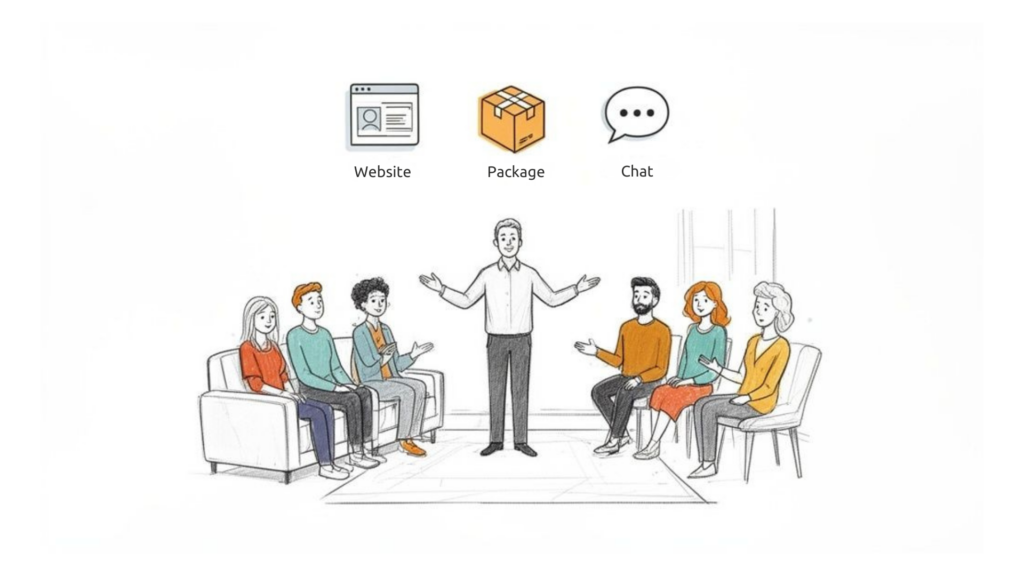
Group Discussion
This is the heart of what customer experience management is: the strategic work of shaping how customers feel at every touchpoint. It covers their first ad impression, the checkout flow on your site, the unboxing of their order, and any support they need afterward.
The Shift From Reactive Service To Proactive Design
For years, businesses operated in damage control mode. A customer had a problem, they called a support line, and the goal was to fix it. End of story. But smart brands realized that these interactions, or “moments of truth,” could be systematically designed and improved across the entire journey.
Today, while 45% of enterprises rank improving customer experience as a top goal, many still struggle to turn that intention into results. Saying you care about the customer journey is easy; building the systems to manage it effectively is the hard part. You can discover more insights about the evolution of experience management to see why this shift makes omnichannel automation so critical.
This strategic pivot is crucial for e-commerce and direct-to-consumer (DTC) brands. In a crowded market where products are often similar, the experience itself becomes the real competitive advantage.
The goal of CXM isn’t just to make customers happy in the moment. It’s to build a cumulative experience so positive that it fosters loyalty and turns customers into your best marketers.
A strong CXM strategy is a deliberate framework built to understand and serve the whole customer, not just the transaction. To get it right, you need to focus on four foundational pillars.
The Four Pillars Of Modern Customer Experience Management
A solid CXM strategy is built on these four core components. Each one addresses a different aspect of how a customer perceives your brand, working together to create a cohesive experience that builds trust and drives growth.
| Pillar | Core Focus | Business Goal |
|---|---|---|
| Journey-Centric View | Analyzing and optimizing the entire customer journey, not just isolated interactions. | Find and fix friction points while amplifying moments of delight to create a smooth, intuitive path for customers. |
| Data-Driven Empathy | Using data to understand customer intent, pain points, and motivations on a deeper level. | Move beyond basic analytics to personalize interactions at scale, making customers feel truly seen and understood. |
| Omnichannel Consistency | Ensuring a seamless brand voice and experience across all channels (website, social, email, chat). | Create a connected experience where customers can switch channels without losing context or having to repeat themselves. |
| Proactive Engagement | Anticipating customer needs and offering help or relevant information before they even have to ask. | Reduce customer effort, build trust, and show that your brand is actively looking out for their best interests. |
Getting these pillars right is what separates brands that just talk about customer experience from those that actually deliver it. It’s about managing the complete story your customers tell themselves about your business—turning a one-time purchase into a long-term, loyal relationship.
Building The Blueprint For A Winning CXM Strategy
Knowing what customer experience management is gets you started, but turning that idea into real results requires a plan. A winning CXM strategy is built on actionable pillars that lock together to create a customer journey that just feels right. Moving from theory to practice means focusing on the fundamentals that let you listen, understand, and respond to your customers in a way that actually matters.
Here, we’ll break down the four essential components that form this blueprint. When you combine them, they create a powerful framework for systematically making every interaction with your brand better and building the operational muscle to deliver on your promise of a great experience.
Uncovering The Why With Customer Journey Mapping
The first step in managing an experience is to understand it from the customer’s point of view. Customer Journey Mapping is the process of creating a visual story of a customer’s interactions with your company. Think of it like drawing a map of a road trip, marking every stop, potential detour, and scenic viewpoint.
This map helps you identify every touchpoint—from the first ad someone sees to the moment they unbox a product and look for help. The goal is to pinpoint moments of friction (where people get frustrated) and moments of delight (where you exceed expectations).
For example, an e-commerce brand might map its journey and discover that while its checkout process is smooth, customers are consistently confused by post-purchase shipping notifications. That single insight, found through mapping, gives them a clear, high-impact problem to solve that will immediately boost satisfaction and cut down on support tickets.
A customer journey map isn’t just a flowchart; it’s an empathy-building tool. It forces you to step out of your internal mindset and see your business through your customers’ eyes, often revealing pain points you never knew existed.
Tuning Into The Voice Of The Customer
Once you’ve mapped the journey, you need to understand how customers feel at each stage. This is where Voice of the Customer (VoC) programs come in. A VoC program is a systematic way of collecting, analyzing, and acting on all types of customer feedback.
This goes way beyond an annual survey. A strong VoC strategy uses multiple listening posts:
- Direct Feedback: This includes Net Promoter Score (NPS) or Customer Satisfaction (CSAT) surveys sent at key moments, like after a purchase or a support chat.
- Indirect Feedback: This involves digging into unstructured data from online reviews, social media comments, and support transcripts to understand what people are really saying and spot trends before they become major problems.
For instance, a software company might notice a recurring theme in support tickets about a confusing feature. This “voice” from the customer gives the product team a clear directive, ensuring improvements are based on what users actually need, not just what the company assumes they need.
Making Every Customer Feel Seen Through Personalization
In a world overflowing with options, generic experiences fall flat. Personalization at Scale is about using customer data to tailor interactions to individual needs. It’s the difference between a generic “Dear Customer” email and one that recommends products based on past purchases and browsing history.
Modern tools make this happen automatically. An online retailer can use a customer’s browsing data to show them relevant products on the homepage. An AI-powered chatbot can pull up a customer’s order history to give instant, personalized updates without making them repeat themselves. When 70% of consumers see a clear gap between companies that use AI well and those that don’t, personalization is no longer optional.
Delivering A Unified Brand Story With Omnichannel Consistency
Finally, a customer’s experience should feel connected, no matter where it happens. Omnichannel Consistency ensures a seamless and unified brand experience across every channel—your website, mobile app, social media DMs, and even in-person interactions. This means your brand’s tone, messaging, and service quality feel the same everywhere.
Imagine a customer starts a chat on your website, then switches to Instagram DMs. A true omnichannel approach ensures the conversation picks up right where it left off, with the full context intact. This avoids frustration and makes the entire interaction feel like one continuous dialogue. For a deeper dive, learn how to create a winning what is omnichannel customer experience that builds trust and eliminates friction.
Measuring The Real Business Impact Of Your CXM Efforts
A great customer experience isn’t just about making people feel good; it’s a hard-nosed business strategy that delivers real, bottom-line results. But if you can’t measure it, you can’t manage it. Without the right metrics, your CXM efforts are pure guesswork.
To prove the value of your work, you have to translate happy customers into tangible Key Performance Indicators (KPIs). This is how you demonstrate a clear return on investment and show stakeholders how a better customer journey boosts revenue and cuts costs. When you can do that, CXM stops being a “nice-to-have” and becomes an essential engine for growth.
The stakes are enormous. By 2026, poor customer service is projected to put a staggering $3.8 trillion in global revenue at risk. The data is clear: 93% of customers are more likely to buy again from companies with exceptional service, while 65% have ditched a brand after just one bad experience. It’s no wonder that 85% of leaders agree that CX needs to be a shared responsibility across their entire organization.
Perception Metrics: What Your Customers Think And Feel
The first layer of measurement is all about perception. These metrics are your window into how customers feel about their interactions with your brand. They are the leading indicators that tell you if your CXM strategy is actually connecting with people.
There are three key metrics every business should be tracking:
- Net Promoter Score (NPS): This measures long-term loyalty by asking one simple question: “On a scale of 0-10, how likely are you to recommend us?” It gives you a high-level view of your brand’s health by separating customers into Promoters, Passives, and Detractors.
- Customer Satisfaction (CSAT): This measures short-term happiness with a specific interaction, like a chat with support or a recent purchase. It’s perfect for pinpointing moments of friction or delight in the journey.
- Customer Effort Score (CES): This metric gets straight to the point: how easy was it for a customer to get something done? A low-effort experience is one of the strongest predictors of repeat business. If you make things difficult, customers will find someone who makes it easy.
Knowing these numbers is the first step. The real magic happens when you act on the insights they provide.
This diagram shows how all the pieces of a strong CXM strategy fit together. Journey mapping, personalization, and omnichannel support all feed into the outcomes you’re trying to measure.
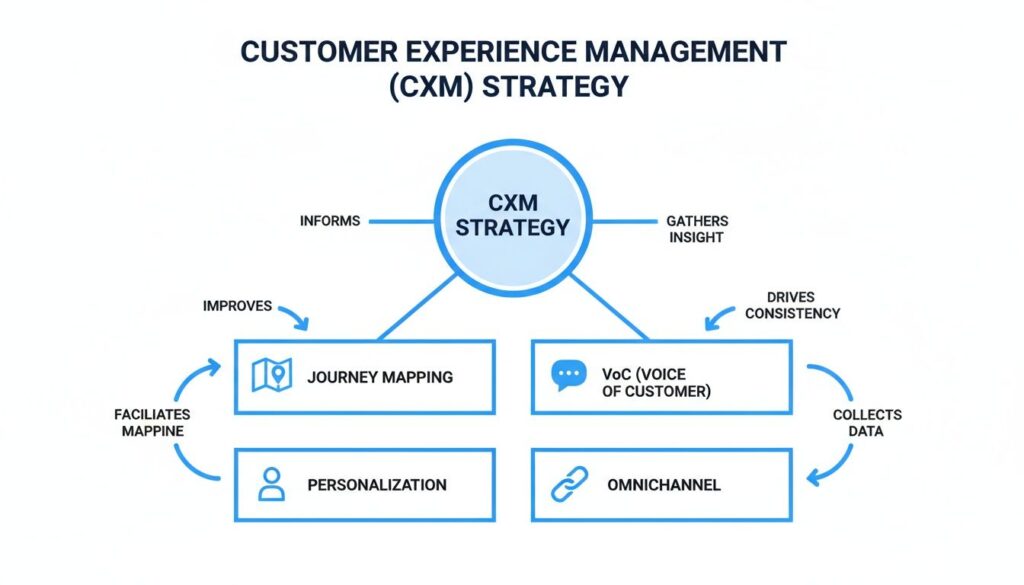
Customer Experience Management Strategy
As you can see, a complete strategy connects every interaction, from proactive personalization to consistent support, all guided by what your customers are telling you.
Connecting CX To Hard Business Outcomes
Perception metrics are your pulse check, but to get real buy-in from leadership, you have to tie them to the numbers that run the business. This is where you prove that happy customers are profitable customers.
The ultimate goal is to build a CXM dashboard that tells a clear story linking customer sentiment to financial performance. When NPS goes up, you should be able to show that churn goes down.
Here are the key financial metrics to link back to your CXM efforts:
- Customer Lifetime Value (CLV): This is the total profit you expect from a single customer over their entire relationship with you. A better experience creates loyalty and encourages repeat purchases, which directly increases CLV.
- Churn Rate: This is the percentage of customers who stop doing business with you. A high churn rate is a flashing red light signaling a poor experience and a massive drain on revenue.
- Support Cost Reduction: A smooth, intuitive journey means fewer confused customers and fewer support tickets. By fixing the friction points you identify with CES or CSAT scores, you can dramatically lower operational costs.
When you track perception and financial metrics side-by-side, you create a powerful narrative. You can prove that improving one part of the journey didn’t just increase CSAT by 15%—it also cut related support tickets by 30%, saving thousands each month. That’s how you make the undeniable business case for CXM.
How Winning Brands Put Customer Experience Into Practice
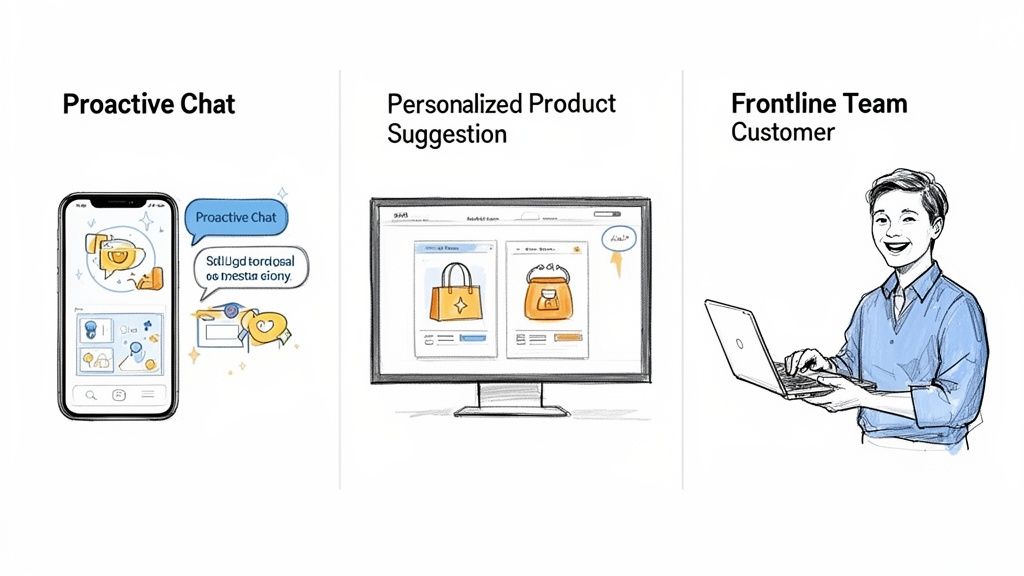
Customer Experience
Theory is one thing, but seeing customer experience management in action is where it gets real. The best brands don’t just say they’re “customer-centric”—they wire it into their DNA. For them, CXM isn’t a department; it’s a company-wide obsession.
Let’s break down the actual strategies that separate the leaders from the laggards, digging into the tactical moves that turn a simple transaction into a memorable experience—the kind that builds unshakable loyalty.
Zappos: Empowering Employees to Create Legendary Service
Zappos built its empire on a simple idea: great customer service is the best marketing you can buy. Their entire CXM strategy is built on giving their frontline team the freedom to do whatever it takes to make a customer happy.
Instead of handcuffing agents with rigid scripts and call-time limits, Zappos encourages them to connect with people on a human level. Their longest-ever customer service call was 10 hours and 51 minutes. While not the norm, it perfectly illustrates their philosophy: the goal isn’t just to fix a problem, but to forge a relationship.
This isn’t an accident; it’s baked into their culture. New hires go through intensive training focused on the company’s core values, and the support team is treated as a vital part of the business, not a cost center.
By giving employees the autonomy to go off-script and solve problems creatively, Zappos ensures its customer experience feels authentic and personal, not robotic. This trust in their team is the secret to their legendary service.
Chewy: Building Community Through Proactive Empathy
Chewy, the online pet supply retailer, is a masterclass in understanding the emotional currents of the customer journey. They get that their customers aren’t just buying products; they’re caring for a family member. That single insight drives their entire CXM playbook.
What truly sets Chewy apart is their execution of proactive empathy. They’re famous for sending hand-painted pet portraits, holiday cards, and even flowers when a customer’s pet passes away. These aren’t automated, generic gestures. They’re triggered by real, human conversations their support team has with customers.
And all that empathy is backed by rock-solid operations:
- 24/7 Support: A pet parent’s needs don’t run 9-to-5, so neither does Chewy’s support. They’re always on, across every channel.
- Fast, Free Shipping: They eliminate a huge friction point by making it ridiculously easy and reliable to get essentials delivered quickly.
- Hassle-Free Returns: They understand that sometimes a product doesn’t work out, and their painless return process builds immense trust.
For smaller brands looking to replicate this level of service, specialized call center software for small business can be a game-changer, helping to centralize interactions and empower their own teams to create those memorable moments.
Actionable Takeaways From The CXM Leaders
The stories of Zappos and Chewy are the result of deliberate business models that generate incredible loyalty and word-of-mouth marketing. The good news is that any business, no matter its size, can borrow from their playbook.
Here are the key lessons to put into practice:
- Empower Your Frontline: Give your support team the training, tools, and—most importantly—trust to solve problems without being chained to a script. Your employees are your single greatest CXM asset.
- Map the Emotional Journey: Don’t just map out clicks and transactions. Dig deeper to understand how your customers feel at each step and pinpoint where you can create a positive emotional connection.
- Invest in Proactive Gestures: Don’t wait for something to go wrong to show you care. Use customer conversations to anticipate needs and deliver unexpected, personalized touches that forge a genuine connection.
Ultimately, winning at CXM means treating every interaction as a chance to reinforce your brand’s values and prove to your customers that they’re more than just another order number.
Using Automation to Scale Your CXM Strategy
Trying to deliver a world-class, personalized experience to every customer manually is impossible. As your business grows, the number of interactions explodes, and your team can get buried in repetitive questions.
This is where AI and automation become essential. They are the tools that let you execute a modern customer experience management strategy at scale, ensuring no customer feels ignored, even when you’re serving thousands at once.
The idea is simple but powerful: automate the predictable so your team can humanize the exceptional. By letting smart tools handle common questions, you free up your people to focus on the complex, high-value conversations that build real relationships and loyalty.
Putting AI Chatbots to Work
One of the most effective tools for scaling CXM is an AI-powered chatbot. These aren’t the clunky bots of the past. Today’s chatbots can manage sophisticated, personalized conversations that genuinely add value. Think of them as your 24/7 frontline team, always ready to help.
This diagram shows how intuitive it can be to design these conversational flows on a no-code automation platform.
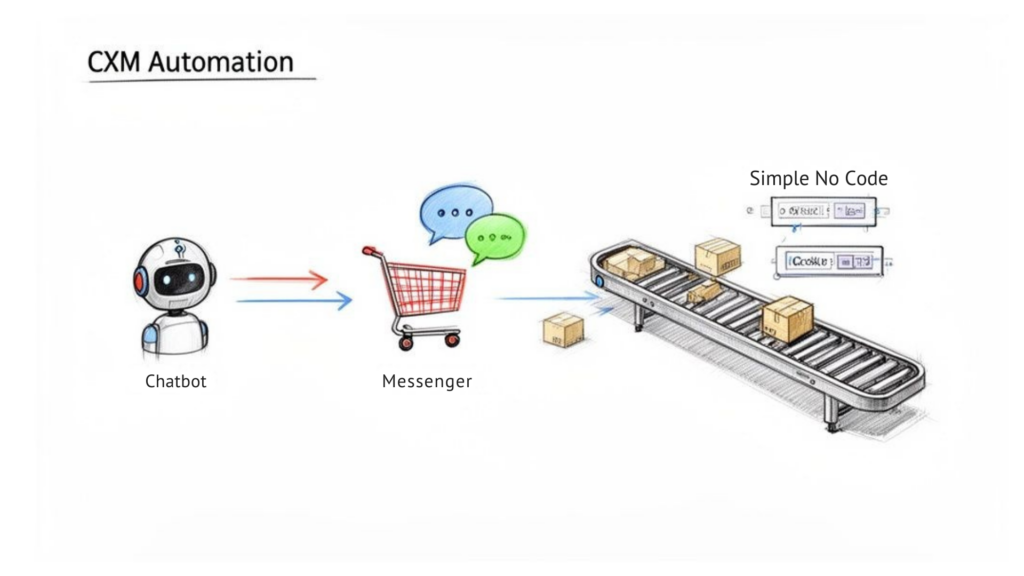
Customer Experience Management Automation Flow
Tools like this let businesses build complex logic for platforms like Messenger and Instagram without touching a line of code, making powerful automation accessible to everyone.
For e-commerce and DTC brands, the benefits are immediate. Imagine offering instant support on Messenger and Instagram, answering questions about shipping or sizing at 2 AM. This isn’t just about convenience; it’s about meeting customers where they already are.
Automation isn’t about replacing humans; it’s about amplifying them. It ensures every customer gets an instant answer for common questions, while routing the most critical conversations to a live agent with all the context they need.
Practical Automation Plays for E-Commerce Growth
Let’s look at concrete ways automation can improve the customer experience and boost your revenue. These are proven strategies that smart businesses are using right now.
Here are a few high-impact automation use cases you can implement today:
- Abandoned Cart Recovery: Instead of a generic email, an AI chatbot can start a personal conversation on Messenger. It can ask if the customer had a question about shipping, offer a small discount, or just give a friendly reminder. This one flow alone can recover a significant percentage of otherwise lost sales.
- 24/7 Instant Support: Over 70% of consumers see a clear difference between companies that use AI well in customer service and those that don’t. An AI agent can instantly handle the most common questions—like “Where is my order?” or “What’s your return policy?”—slashing support ticket volume and making customers happier.
- Automated Lead Qualification: A chatbot can engage website visitors, ask a few qualifying questions, and segment them based on their needs. By the time a lead gets to your sales team, they’re already warmed up and vetted, making the sales process far more efficient.
Modern platforms like Clepher are built with no-code, drag-and-drop interfaces, meaning you don’t need a team of developers to build these powerful automated experiences. Your marketing or support team can design and deploy a sophisticated conversational flow in hours, not months. You can learn more about how to automate customer service and see how these tools can transform your operations.
Ultimately, automation is the engine that makes a scalable customer experience management strategy run. It delivers the speed, consistency, and personalization that modern customers demand, while giving your human team the space to do what they do best: create genuine connections.
Avoiding Common CXM Pitfalls and Implementation Hurdles
Launching a customer experience program is one thing; making it stick is another. Even the best-laid plans can get derailed by a few predictable, totally avoidable roadblocks.
Knowing these hurdles ahead of time is your best defense. By tackling these common issues head-on, you can build a CXM program that actually delivers results instead of becoming another forgotten initiative.
Let’s break down the most common traps and how to sidestep them.
Pitfall #1: The Disconnected Experience of Departmental Silos
This is the fastest way to kill your CXM strategy. When marketing, sales, and support operate in their own worlds, the customer pays the price. They are forced to repeat their story to different people and get conflicting information, creating a chaotic and disjointed journey.
Here’s a classic example: a customer gets a promotional email from marketing for a product they just spent an hour complaining about to your support team. That doesn’t just create frustration; it actively destroys trust.
The Fix: Create cross-functional “CX teams” with people from different departments. Have them share insights, walk through customer journey maps together, and agree on the same goals. This forces everyone to see the customer through a single, unified lens.
Pitfall #2: Investing in Technology Without a Strategy
It’s tempting to throw money at a problem. Companies drop thousands on sophisticated CXM software, assuming the tech itself is the magic bullet. But a tool is only as good as the plan behind it. Without a clear strategy, that expensive software just becomes a fancy dashboard nobody looks at.
Your technology must always serve your strategy—not the other way around.
- Before you buy: Get crystal clear on the one problem you’re trying to solve. Is it reducing support ticket volume? Improving your NPS score? Fixing a specific friction point in the customer journey?
- Start small: Don’t try to do everything at once. Implement one piece of tech to solve one specific, measurable problem. Get a clear win, show the ROI, and then expand its use.
This approach guarantees you get a tangible return on your investment and builds the momentum you need to keep the program going.
Your Customer Experience Management Questions Answered
When you’re ready to get serious about customer experience management, a few practical questions always pop up. Getting these sorted out early gives you the confidence to move forward and focus on building better customer journeys.
Let’s tackle some of the most common ones.
Conclusion
Effective customer experience management connects every customer touchpoint into a seamless experience that boosts customer engagement and increases customer loyalty. By implementing a CXM strategy and using customer experience management software or a management platform, organizations can gather customer feedback, track customer interactions across channels, and analyze customer behavior to build customer personas and a holistic view of the customer.
This view of customer interactions and the voice of the customer yields insights into customer expectations and customer information, helping teams prioritize customer needs throughout the entire customer journey. Successful customer experience management strategies reduce customer churn, enhance customer retention, foster customer trust, and cultivate brand loyalty and a loyal customer base.
When customer experience management is integrated with customer relationship management and a customer service platform, companies can manage the customer lifecycle more effectively, improve customer support, and deliver a positive customer experience that turns every interaction into an opportunity to increase customer lifetime value and create exceptional customer relationships.
Ready to use AI to automate and scale your customer experience? With Clepher, you can build intelligent chatbots for your website, Messenger, and Instagram in minutes—no code required. Start your free trial today and turn conversations into conversions.

Related Posts
Social Media Marketing Automation: Your Ultimate Guide
March 27, 2026Unlock Growth with Conversational AI for Customer Support
March 26, 2026Your Ultimate Guide to Instagram Chat Bots
March 25, 2026
Founder Clepher