
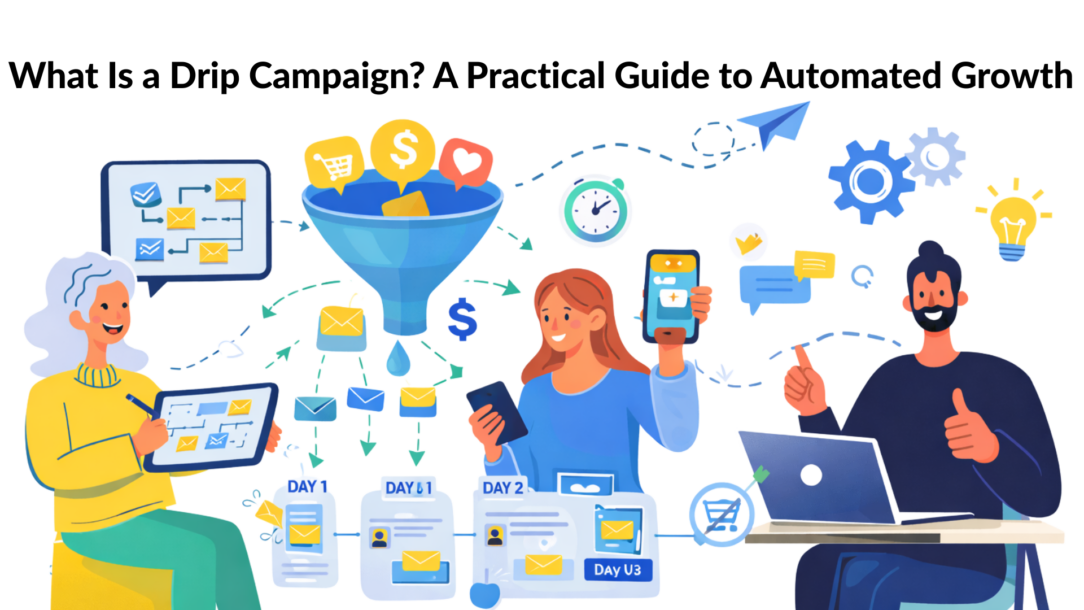
A drip campaign is your secret weapon for scalable, automated marketing. Instead of one-off blasts, it’s one of the most effective marketing campaigns you can run—a pre-built sequence of targeted messages sent automatically based on specific actions your audience takes. These structured email campaigns, often referred to as drip email campaigns, are designed to nurture relationships over time, guiding potential customers from curious visitors to loyal fans—all without you having to manually follow up every single step of the way.
What Is a Drip Campaign at Its Core?
Imagine you’re tending to a new plant. You wouldn’t drown it with a bucket of water all at once. Instead, you’d give it a little “drip” at regular intervals to help it grow strong. That’s exactly how a drip email campaign works for your customer relationships.
Rather than overwhelming a new subscriber with everything at once, a well-designed email marketing campaign delivers relevant, bite-sized messages over time. These drip email campaigns are fully automated and begin the moment a user takes a specific action—such as signing up, downloading a resource, or creating an account.
For example, when someone subscribes to your newsletter, you can set up a drip campaign that automatically sends:
- Instantly: A warm welcome or onboarding email that sets expectations
- Two days later: Your most popular blog post or a helpful guide
- One week later: A special offer or an invitation to a webinar
This automated approach ensures every new contact receives a consistent, timely, and valuable experience. By nurturing trust and engagement on autopilot, drip campaigns help your brand stay helpful—not pushy. Before we dive deeper, let’s look at the essential parts of any drip campaign.
Core Components of a Drip Campaign
| Component | What It Is | Practical Example |
|---|---|---|
| Trigger | The specific user action that starts the campaign. | A customer adds an item to their cart but doesn’t check out. |
| Sequence | The pre-written series of messages (emails, SMS, etc.). | A series of three emails designed to recover the abandoned cart. |
| Timing/Delays | The scheduled intervals between each message. | Email 1 is sent after 1 hour; Email 2 after 24 hours; Email 3 after 48 hours. |
| Goal | The desired outcome you want the user to achieve. | The customer completes the purchase. |
Understanding these pieces is the first step to building a system that drives results.
The Growing Importance of Automated Nurturing
This shift toward automation isn’t just a trend; it’s a fundamental change in how businesses connect with their audience.
The global drip email marketing market is projected to hit $12,500 million by 2025, growing at a 15% compound annual rate. This isn’t just noise—it’s a clear signal that businesses are seeing real results from automated engagement. You can dig into the numbers in this market expansion report from Data Insights Market Research.
The system works because it aligns perfectly with the customer’s journey, delivering helpful information that moves them from initial awareness to making a purchase.
A drip campaign transforms your marketing from a one-time announcement into an ongoing, personalized conversation. It’s the difference between shouting with a megaphone and having a thoughtful, one-on-one discussion that builds lasting loyalty.
Why Drip Campaigns Are a Game Changer for Your Business
Let’s move past the textbook definitions. The real magic of a drip campaign isn’t just what it is, but what it does. It transforms your customer interactions from manual, repetitive tasks into an automated system that works for you 24/7.
Think about all the hours your team spends on follow-ups. Drip campaigns give you that time back, freeing you up to focus on strategy instead of being stuck in administrative quicksand.
The core benefit here is automated lead nurturing. Instead of leaving potential customers to figure things out on their own, a drip sequence delivers the right message at the right moment, every single time. This steady, timely communication builds trust and guides leads through the buying process without anyone on your team having to hit “send.”
Scale Your Personalization Efforts
Drip campaigns allow you to create a personalized experience for every person who interacts with your brand, at a scale that’s impossible to manage manually. They guarantee that every new subscriber, lead, or customer gets the same high-quality, on-brand welcome and onboarding. That consistency is gold for building a rock-solid brand reputation.
Here are a few real-world use cases:
- E-commerce: A shopper abandons their cart. A drip campaign automatically sends a sequence of emails to recover that sale, often using a small discount as a final nudge. This turns a lost sale into a completed purchase.
- SaaS Companies: A new user signs up for a trial. An onboarding drip campaign immediately kicks in, guiding them through key features with short tutorials. This boosts product adoption and reduces churn from day one.
- Coaches and Creators: Someone downloads your free ebook. A drip sequence nurtures them with valuable tips and insights related to the ebook’s topic, building your authority long before you pitch a paid course.
This kind of automation lets even small teams achieve big results. Our guide on automated marketing for small business dives into even more strategies you can use to drive growth.
From Engagement to Revenue
Ultimately, the goal is business growth. Well-built drip campaigns are proven to deliver by directly impacting your bottom line. Nurtured leads make 47% larger purchases than leads that are ignored. Why? Because you’ve spent time building a relationship and providing value first.
A drip campaign isn’t just a marketing tactic; it’s a customer relationship engine. It ensures no lead falls through the cracks and every customer feels seen, understood, and valued at each step of their journey.
By sending relevant content based on user behavior, you keep them engaged and move them closer to a purchase. When a lead is ready to buy, your brand is the first one they think of. This naturally leads to higher conversion rates and a greater customer lifetime value.
Powerful Drip Campaign Examples You Can Use Today
Theory is one thing, but seeing drip campaigns in action is where it all clicks. Let’s look at some real-world blueprints you can adapt for your own business.
These aren’t just one-off email blasts. They’re smart, automated flows that work just as well in Messenger or Instagram DMs as they do in an inbox. Each one is built to turn a single user action into a relationship-building journey.
The Welcome Series for New Subscribers
The moment someone signs up is your golden opportunity to make a great first impression. A welcome drip automates that introduction, making every new contact feel valued from day one. The goal is to confirm their subscription, deliver what they signed up for, and introduce your brand’s personality.
Here’s a simple but effective 3-message welcome sequence:
- Message 1 (Instantly): Send an immediate confirmation. Deliver the lead magnet (e.g., your free guide) and let them know you’re genuinely excited to have them. Keep it short, sweet, and focused on value.
- Message 2 (Day 2): Share your greatest hit. This could be your most popular blog post, a helpful video tutorial, or a customer success story. You’re building trust by being helpful, not salesy.
- Message 3 (Day 4): Invite them to join the community. Nudge them to connect with you on social media or in a private group. This deepens the relationship beyond their inbox.
The Abandoned Cart Recovery Sequence
For any e-commerce store, abandoned carts are a silent revenue killer. A cart recovery drip is your secret weapon for bringing shoppers back to finish what they started. This sequence is triggered the moment a user adds items to their cart but leaves without paying.
This works because it gently addresses common reasons for cart abandonment—distractions, unexpected shipping costs, or second thoughts.
- Message 1 (1 Hour Later): Start with a simple nudge. A “Did you forget something?” message is surprisingly effective at catching people who just got sidetracked.
- Message 2 (24 Hours Later): Remind them of the value. Reiterate the benefits of the products they left behind and include customer reviews to build confidence.
- Message 3 (48 Hours Later): Create a little urgency. A small, time-sensitive discount or a free shipping offer can be the final push they need to click “buy.”
The Re-Engagement Campaign for Inactive Users
It’s natural for some subscribers to go quiet. A re-engagement (or “win-back”) campaign is your automated attempt to reignite their interest. If it doesn’t work, it helps you clean your list, which improves your overall deliverability rates.
A re-engagement drip is an automated way to say, “Hey, we miss you!” It reminds quiet subscribers of the value you offer before they tune you out for good.
This sequence can be triggered after a user has been inactive—no opens or clicks—for a set period, like 90 days:
- Message 1 (Day 90): The friendly check-in. Ask if they still want to hear from you and remind them why they signed up. A subject line like “Is this goodbye?” can work wonders.
- Message 2 (Day 93): The last-chance offer. Show them what they’ve been missing by sending your best piece of content or a special offer exclusive to them.
- Message 3 (Day 97): The final notice. Let them know you’ll be removing them from your list unless they click a link to stay subscribed. This keeps your audience engaged and your list healthy.
These blueprints are just a starting point. For more ideas, check out our complete list of powerful drip campaign examples you can use for lead nurturing, new customer onboarding, and a whole lot more.
How to Build Your First Drip Campaign
Jumping into your first drip campaign can feel overwhelming, but it’s just a series of small, logical steps. By breaking it down, you can go from a blank slate to a fully automated machine that drives engagement.
1. Define Your Goal and Audience
Before writing a single word, define your goal. What are you trying to accomplish? Is it to welcome new subscribers? Recover abandoned carts? Onboard new customers? Your goal dictates every other choice you make.
Next, get specific about who this campaign is for. Is it for new leads who grabbed a free ebook? Or for customers who haven’t bought anything in 90 days? Pinpointing your audience allows you to tailor your content so it connects instead of feeling generic.
The secret to a killer drip campaign isn’t complicated automation; it’s a deep understanding of one person’s problem and a clear goal to help them solve it. Get that right, and the tech just handles the delivery.
2. Choose the Right Trigger
The trigger is the specific action a user takes that adds them to your drip campaign. It’s the starting pistol for your automated sequence, so it has to align perfectly with your goal.
Common triggers include:
- Subscribing to a newsletter: Perfect for a welcome or educational series.
- Downloading a resource: Kicks off a nurturing sequence related to that resource’s topic.
- Abandoning a shopping cart: Deploys a recovery sequence to bring them back.
- Making a first purchase: Starts a customer onboarding or thank-you series.
Picking the right trigger ensures your messages are timely and relevant to what the user just did. That context is everything. This is how you unlock the incredible returns that automated messaging can provide—email marketing alone generates an average ROI of 4,200%. With 4.73 billion users expected to rely on email by 2026, it remains a powerhouse channel for your drips. Find more email marketing trends and insights from VerticalResponse.
3. Map Your Messages and Timing
Now for the fun part: mapping out the journey. Don’t just start writing emails. Outline the entire sequence first. A simple flowchart on a whiteboard or a text document is all you need to decide how many messages to send and the time delay between each one.
For a welcome series, a solid starting point looks like this:
- Message 1 (Immediate): Welcome and deliver the lead magnet.
- Message 2 (2 Days Later): Share your most popular blog post or a quick tip.
- Message 3 (4 Days Later): Introduce your product with a compelling customer story.
- Message 4 (7 Days Later): Make a soft call-to-action (CTA), like asking them to check out a demo.
This structure gives new subscribers breathing room while keeping your brand top-of-mind. The whole point is to add value before you ask for the sale. Each message should build on the last, guiding the user logically toward your end goal.
Best Practices for High-Converting Drip Campaigns
A good drip campaign keeps you top-of-mind. A great one becomes a predictable engine for business growth. The jump from “good” to “great” comes from a relentless focus on a few key principles that turn generic automation into something that feels personal and converts.
The whole point is to deliver the right message to the right person at exactly the right time. This simple visual breaks down how to structure that process.
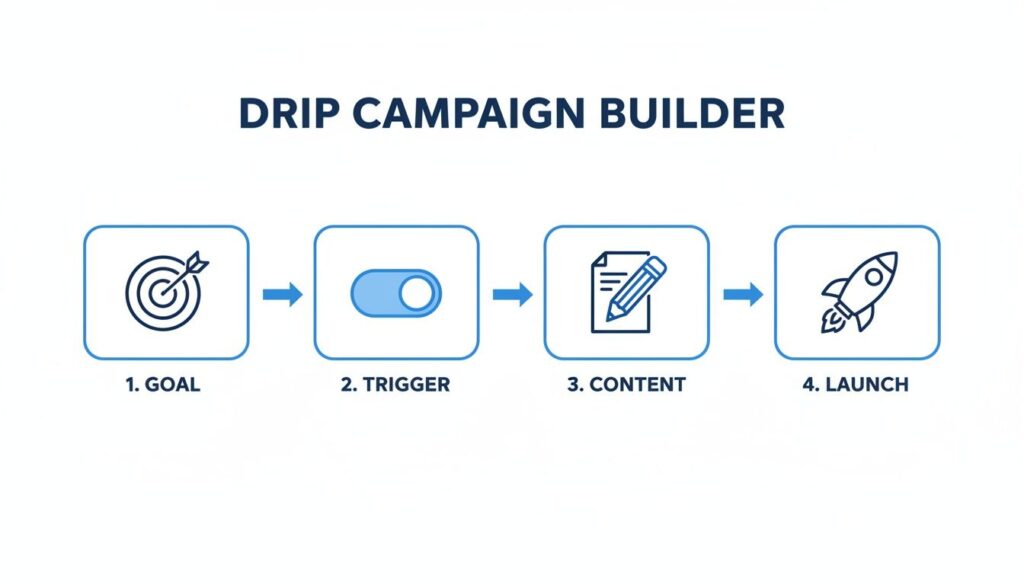
Drip Campaign Builder
As you can see, a killer campaign starts with a clear goal and a specific trigger. Only then do you move on to the content.
Segment Your Audience for Maximum Relevance
Blasting the same message to everyone is the fastest way to get ignored. The real power of a drip campaign is unlocked through segmentation—dividing your audience into smaller groups based on what they have in common. This is how you make every message feel like it was written just for them.
You can segment your audience based on:
- Actions Taken: Group people who downloaded a specific guide versus those who attended a webinar.
- Demographics: Target users by their location, industry, or job title.
- Purchase History: Create different sequences for first-time buyers and loyal, repeat customers.
For example, a SaaS company could send a drip campaign with advanced tips to its power users, while a brand-new trial sign-up gets a separate sequence covering the basics.
Personalize Every Message
Personalization is more than just plugging in a {{first_name}} tag. Real personalization uses data to make the content deeply relevant to a user’s specific situation. It proves you’re paying attention.
A personalized drip campaign makes the user feel like you’re speaking directly to them, not just broadcasting to a list. It’s the digital equivalent of a helpful shopkeeper remembering your preferences.
Use dynamic content to swap out parts of your message based on user data. An e-commerce store could showcase products related to a customer’s past purchases. A real estate agent could send listings that match a lead’s stated budget.
Optimize Your Timing and Frequency
How often you send messages—and when—is just as important as what you say. Hit a new lead with daily messages, and they’ll unsubscribe. Wait too long between messages, and they’ll forget why they signed up.
There’s no magic number. Start with a logical delay (like 2-3 days between messages) and test everything. Keep a close eye on your engagement rates. If you see a massive drop-off after the third message, it may be time to add another day’s delay or rethink that message’s content.
Finally, make sure every message has a clear, compelling call-to-action (CTA). Tell people exactly what you want them to do next, whether that’s “Read the full post,” “Book a demo,” or “Shop the sale.”
How to Measure Drip Campaign Success
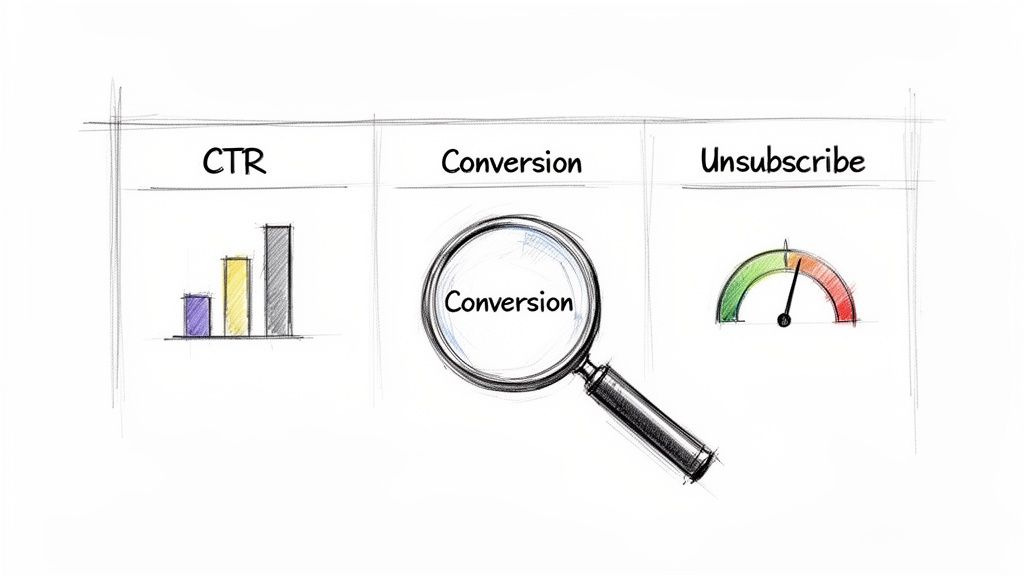
Drip Campaign Marketing Metrics
If you can’t measure your drip campaigns, you can’t improve them. Tracking the right key performance indicators (KPIs) is the only way to know if your automated sequences are actually working or just making noise in someone’s inbox.
While open rates are a nice start, they don’t tell the whole story. To get a clear picture of success, you have to look at metrics that show genuine engagement and, more importantly, action.
Key Metrics That Truly Matter
Focusing on the right data helps you understand what people are actually doing with your messages. This lets you make smart decisions to refine your content, timing, and calls-to-action for better results over time.
Instead of getting lost in a sea of data, zoom in on these core metrics to see what’s really driving results.
Key Drip Campaign Metrics to Track
| Metric | What It Measures | Why It’s Important |
|---|---|---|
| Click-Through Rate (CTR) | The percentage of people who clicked a link in your message. | A high CTR shows your content is compelling enough to inspire action. It’s a strong sign your message is resonating. |
| Conversion Rate | The percentage of users who completed your campaign’s ultimate goal (e.g., made a purchase, booked a demo). | This is your bottom-line metric. It directly measures how well your campaign is achieving its business objective. |
| Unsubscribe Rate | The percentage of people who opted out after receiving a message. | A sudden spike is a red flag, telling you that your content isn’t relevant or your message frequency is off. |
These metrics transform your drip campaign from a “set it and forget it” tool into a dynamic system you can constantly tweak and optimize for better performance.
For a deeper dive, our guide on the top email marketing KPIs you should track for success offers more valuable insights.
Your Drip Campaign Questions, Answered
If you’re still piecing things together, you’re not alone. Here are answers to some of the most common questions people have when getting started.
Conclusion
In conclusion, a successful drip campaign starts with clear goals and the right marketing automation tools. An effective drip strategy uses an email list and email list segmentation to deliver targeted messages that improve email marketing engagement. Whether you’re running an email drip campaign for onboarding email sequences, welcome emails, or follow-up marketing emails, using email templates and personalized email content ensures every message feels relevant to the subscriber.
For marketers, asking what a drip campaign is and its benefits is clear: it delivers consistent communication that nurtures leads, supports onboarding and retention, and guides subscribers toward a product or service. From common examples of drip, such as a welcome email, the first email in a sequence, or a targeted drip for different subscriber types, success comes from aligning email content with your target audience and overall email marketing strategy.
Ready to stop talking at your audience and start building relationships? Clepher gives you the no-code tools to design, launch, and automate powerful drip sequences on Messenger and Instagram that turn followers into loyal customers. Start your free trial and see how it works today.

Related Posts
Conversational AI for Sales: Your 2026 Guide to Boosting Revenue
April 10, 2026Transform Your Sales Game with an AI Powered Sales Assistant
April 9, 2026No-Code AI Agent Builder: Your 2026 Growth Playbook
April 8, 2026
Founder Clepher