
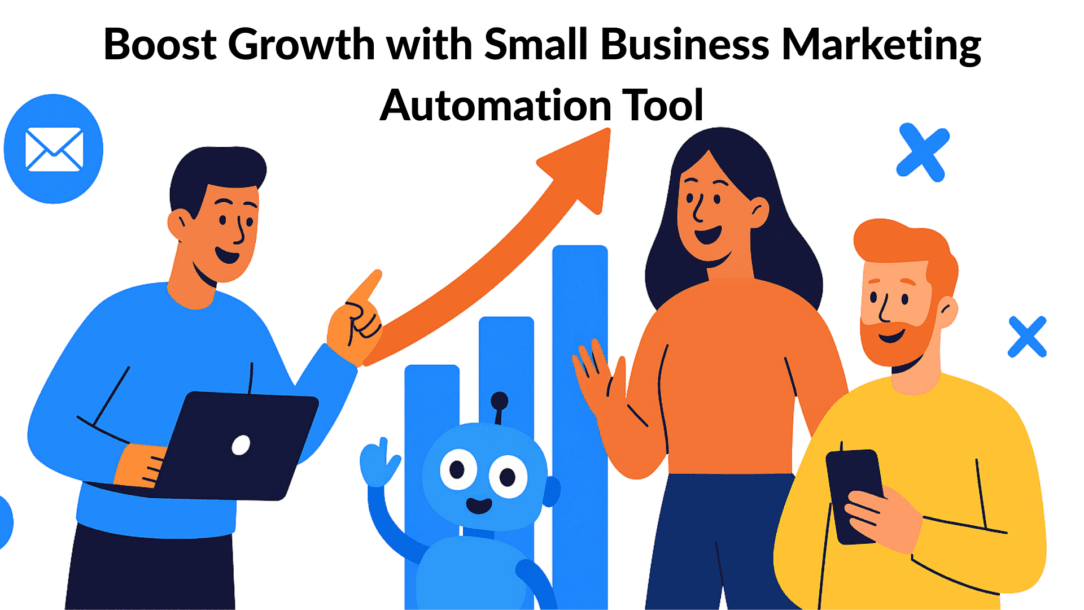
Forget the tech-speak and jargon. Let’s talk about what small business marketing automation actually does for you.
Imagine a digital assistant who works 24/7. This assistant welcomes new subscribers the moment they sign up, follows up with leads while they’re still warm, and gently reminds customers about the items they left in their shopping cart. It handles the repetitive, time-consuming tasks so you can focus on what really matters: growing your business.
That’s where the right marketing automation software comes in. It’s not about being robotic; it’s about being smart, timely, and personal on a scale you could never manage manually. A well-chosen marketing automation tool helps you stay connected with customers, nurture leads, and keep your business running efficiently—even when you’re not online.
What Small Business Marketing Automation Really Means

automation
At its core, marketing automation is about getting the right message to the right person at the right time—without you lifting a finger for each interaction. It’s a system that nurtures relationships and guides customers on their journey with your brand.
This frees you up from the daily grind so you and your marketing team can focus on strategy, innovation, and genuine connection.
And this isn’t just for giant corporations anymore. Modern platforms offering the best marketing automation have made powerful tools accessible and affordable for small businesses. If you want a solid primer, check out Your Guide to Small Business Marketing Automation.
The proof is in the results. A staggering 91% of company decision-makers see more requests for automation. Why? Because businesses are pulling in an average of $5.44 in revenue for every $1 invested. That’s a return you can’t ignore.
Breaking Down the Core Functions
So, what does this digital assistant actually do? It runs specific, triggered actions based on customer behavior. This is how you transform generic broadcasts into personal, timely conversations.
Here are a few real-world examples:
- Lead Capture and Nurturing: A visitor fills out a form on your website. Instantly, automation sends them the requested guide, adds them to your “new leads” list, and kicks off an email marketing automation sequence. All hands-free.
- Customer Onboarding: A new customer signs up. The system automatically triggers a series of helpful emails walking them through your product, ensuring they get value from day one.
- E-commerce Recovery: A shopper adds items to their cart but leaves. A few hours later, an automated message reminds them about their cart—maybe with a small discount to seal the deal. You can learn to master this with an effective automated message text.
The goal isn’t to replace the human touch; it’s to automate the mechanics so you have more time for it. By handling the repetitive work, automation frees you up for the meaningful conversations that build real relationships.
Ultimately, marketing automation levels the playing field. It gives small businesses—and their marketing teams—the power to build sophisticated, responsive email marketing automation systems that were once completely out of reach, helping you compete, grow, and serve your customers better.
How Automation Transforms Your Business Operations

automation transformation
Implementing marketing automation isn’t just about adding new software. It’s a fundamental shift from manual, reactive work to a proactive system that drives growth around the clock. The result is a business that runs leaner, faster, and smarter.
This isn’t just theory—you’ll see the transformation in your schedule, your sales, and your customer loyalty. Let’s look at the real-world benefits of marketing automation and how the best marketing automation software can help you achieve them.
Reclaim Your Most Valuable Asset: Time
Before automation, your day was a blur of manual tasks: sending welcome emails, posting on social media, and following up with leads one by one. This busywork eats up hours that should be spent on strategy. Your growth hits a ceiling because you’re trapped in the day-to-day grind.
After automation, these processes run on their own. A new subscriber gets a welcome series instantly. Social media content is scheduled weeks in advance. Lead follow-ups are triggered automatically based on user actions.
Suddenly, you’re no longer just working in your business—you have the breathing room to work on it. This reclaimed time allows you to focus on big-picture goals, like developing new products or landing key partnerships. That’s one of the biggest benefits of marketing automation—giving you back control of your time while maintaining momentum.
Turn Missed Opportunities into Revenue
Without automation, leads inevitably fall through the cracks. Someone downloads a guide but never hears from you again because you got swamped. This inconsistent, manual approach leaves money on the table.
With the best marketing automation tool, every prospect gets consistent, personalized communication. It ensures that no matter how busy you get, your leads are nurtured thoughtfully toward a sale.
Here’s the difference:
Before: A lead downloads an ebook. Maybe they get a single follow-up email a week later—if you remember. Engagement plummets.
After: A lead downloads an ebook and is immediately entered into an automated nurturing sequence. They receive a series of targeted emails over several weeks, each adding value and solving their problems. The chance of conversion skyrockets.
Research shows that nurtured leads make 47% larger purchases than non-nurtured leads. This single operational change can directly lift your revenue without needing more traffic or a bigger team. That’s the measurable ROI the best marketing automation software delivers.
Build Lasting Customer Relationships at Scale
Building genuine loyalty requires consistent, relevant communication—but doing that manually for hundreds of customers is impossible. As your business grows, that personal touch you started with begins to fade.
A powerful marketing software for small businesses or a B2B marketing automation platform helps you maintain that connection at scale. By segmenting your audience based on behavior, you can send messages that feel like they were written just for them.
For instance, you can set up automated workflows to:
- Send a happy birthday message with a special discount.
- Ask for a review a week after a product is delivered.
- Offer tips on how to get the most out of a recent purchase.
This consistent, thoughtful engagement strengthens relationships, boosts retention, and turns one-time buyers into loyal fans. You’re not just selling—you’re building a community. And with the best marketing automation software, you have the tools to do it efficiently and effectively.
Putting Marketing Automation into Action
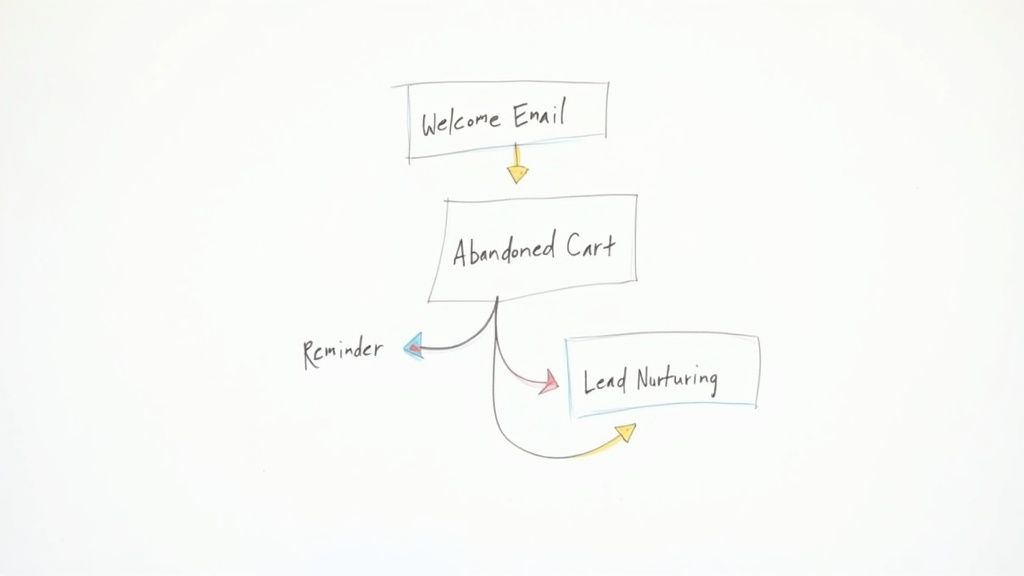
marketing automation
Theory is great, but results come from doing. The real power of small business marketing automation is unlocked when you build practical workflows that save time and generate revenue.
Let’s move from “what is it?” to “how do I use it?”
Here are four high-impact automation workflows you can set up right away. These are designed to deliver immediate value, whether you’re selling products, offering services, or building an audience.
Onboard New Subscribers with a Welcome Email Series
First impressions matter. When someone gives you their email, you have a golden opportunity to build a relationship. A welcome series automates this crucial first touchpoint, making every new subscriber feel seen and valued from the start.
The goal is to do more than just say “thanks.” It’s your chance to introduce your brand, set expectations, and provide instant value. This simple sequence can dramatically boost long-term engagement.
Your Welcome Series Workflow:
- Trigger: A visitor signs up for your newsletter or downloads a lead magnet.
- Email 1 (Immediate): Deliver what they asked for (e.g., an ebook or discount code) along with a warm welcome. Briefly introduce your brand’s mission.
- Email 2 (2 Days Later): Share one of your best blog posts, a helpful tutorial, or a compelling customer story. Provide value without asking for a sale.
- Email 3 (4 Days Later): Gently introduce a core product or service, framing it as the solution to a problem your audience faces.
Recapture Lost Sales with Abandoned Cart Reminders
If you run an e-commerce store, abandoned carts are a constant frustration. An automated abandoned cart sequence is one of the most profitable workflows you can build. It works in the background to bring shoppers back to complete their purchase.
By sending a timely, helpful reminder, you can recover a significant percentage of otherwise lost revenue. This single automation can often pay for your entire software subscription.
This is also a great place to use messaging apps. For instance, you can automate sales with Facebook Messenger chatbots to send cart reminders that feel like a friendly nudge instead of a generic email.
Nurture Leads from Interest to Purchase
Not every lead is ready to buy immediately. A lead nurturing campaign is an automated sequence that builds trust and educates prospects over time. It guides them from initial awareness to the point where they are confident and ready to become a customer.
Of course, this requires a steady stream of prospects. That means focusing on strategies for mastering outbound lead generation to keep your pipeline full.
A Simple Lead Nurturing Campaign:
- Week 1: Send an email that addresses a common pain point and offers a practical solution.
- Week 2: Share a case study or testimonial showing how you’ve helped others like them.
- Week 3: Host a webinar or share a detailed guide that demonstrates your expertise.
- Week 4: Make a clear, direct offer for your product or service. By now, you’ve earned their trust.
Maintain a Consistent Social Media Presence
Consistency is key on social media, but who has time to post manually every day? Automation tools let you schedule content weeks or months in advance. This ensures you maintain an active, engaging presence, even when you’re busy with other tasks.
Small businesses are catching on. By 2025, marketing automation will reshape strategies globally, with nearly 49% of small businesses planning to increase their marketing budgets. This trend is tied directly to automation’s power to make marketing more efficient, especially with the rise of platforms like TikTok and Instagram.
Choosing the Right Automation Tool for Your Budget
Navigating automation software can be overwhelming, especially when you’re on a budget. The key is to ignore the noise and focus on what you actually need. Don’t get distracted by enterprise-level features you’ll never use.
The goal isn’t to find the cheapest option; it’s to find the best value. A great small business marketing automation platform should feel like a reliable team member, not another piece of complex tech.
This infographic breaks the decision down into three simple steps.

choosing right automation tool
As you can see, the process starts with your needs, moves to the type of tool, and ends with practical questions about cost and usability.
Identify Your Must-Have Features
Before comparing pricing pages, list your non-negotiables. What do you need the tool to accomplish? For most small businesses, the checklist looks like this:
- An Intuitive Workflow Builder: You shouldn’t need a developer to set up a welcome series. Look for a visual, drag-and-drop editor that makes creating and understanding your automations simple.
- Seamless Email and Message Marketing: The platform must handle email broadcasts, triggered campaigns (like abandoned cart reminders), and audience segmentation without friction.
- CRM Integration: Your automation tool and customer relationship management (CRM) system need to communicate. This is crucial for a complete view of every customer interaction.
- Clear and Simple Analytics: If you can’t measure it, you can’t improve it. The tool must offer straightforward reports on open rates, clicks, and conversions so you know what’s working.
Decide Between All-in-One vs. Specialized Tools
Automation platforms generally come in two flavors. Choosing the right one depends on your business model and tech comfort level.
All-in-One Platforms aim to be the central hub for all your marketing. They bundle everything—email, CRM, landing pages, and automation—into one package. While powerful, they can be more expensive and include features you don’t need.
Specialized Tools, on the other hand, do one thing exceptionally well. A tool like Clepher, for example, is laser-focused on conversational automation for Messenger, Instagram, and WhatsApp. These tools integrate smoothly with other software, letting you build a custom “stack” of best-in-class solutions. For a broader look, check out this guide to the top multi-channel marketing tools for 2025.
The best automation tool is the one you’ll actually use. Prioritize usability and value over a long list of functions you may never touch.
Ask the Right Questions Before You Commit
Once you have a shortlist, it’s time to dig deeper. Don’t just look at the monthly price—understand the true cost and what you’re signing up for. Whether you’re exploring top marketing automation platforms or a simple automation software for small businesses, these questions help you choose wisely.
Here’s a quick checklist:
- Does the pricing scale fairly? Look for a plan that grows with you. Will costs jump unexpectedly when you hit a certain number of contacts?
- How good is the customer support? When something goes wrong, can you get help? Check for live chat, email support, and a solid knowledge base.
- Is there a free trial? Never commit without a test drive. Use the trial to build a real workflow and see if the platform feels right.
- Does it integrate with your existing tools? Confirm that it connects seamlessly with the software you already use—like Shopify, Mailchimp, or your CRM.
Launching Your First Automation Workflow
Diving into marketing automation can feel intimidating. You know the view from the top is great, but the climb looks steep.
The secret? Start with a single, high-impact workflow that delivers an immediate win—like sending out a lead magnet.
This is the perfect starting point. It builds your confidence, provides instant value to new subscribers, and creates a solid foundation for more complex marketing automation strategies later.
Let’s walk through this process in five clear, actionable steps.
Step 1: Define Your Goal
Before touching any software, clarify why you’re building this automation. A clear goal acts as your North Star. A vague goal like “get more leads” isn’t enough.
Let’s get specific. A great objective would be:
“Instantly deliver our free ebook to new subscribers, then send two follow-up emails to build trust and introduce our brand.”
This goal is effective because it’s:
- Specific: It names the lead magnet (the ebook) and states the exact number of follow-ups.
- Measurable: You can easily track downloads and open rates to see if it’s working.
- Actionable: It provides a clear roadmap for building your workflow.
This kind of clarity helps you use the best marketing automation software tool to its fullest potential.
Step 2: Map the Customer Journey
Next, sketch out the ideal path for a new subscriber. Think of it as drawing a map with a start, a few key stops, and a destination. It doesn’t need to be fancy.
Your map for the lead magnet workflow might look like this:
- Entry Point: A visitor fills out the sign-up form on your website.
- Immediate Action: The system automatically sends an email with the download link.
- Follow-Up 1 (2 days later): A second email arrives offering a related tip or linking to a popular blog post.
- Follow-Up 2 (4 days later): A final email shares a customer story or introduces a relevant service.
This simple map is the blueprint you’ll replicate in your automation tool. It’s an example of basic automation done right—structured, simple, and scalable.
Step 3: Build the Automation
With your goal and map ready, it’s time to build the workflow in your software. Most modern platforms—like Clepher, or other top marketing automation tools—use a visual, drag-and-drop builder, making this step surprisingly easy. You’ll be setting up triggers (what starts the automation) and actions (what the system does next).
A trigger is the “if this happens” part. An action is the “then do that” part. For example: If a person subscribes (trigger), then send the welcome email (action).
This is why automation is becoming essential. By 2025, 79% of marketers are expected to automate parts of their customer journey—using the best marketing automation software tool for tasks like customer profiling, reporting, and social media tracking. They’re working smarter, not harder. You can explore more marketing automation statistics if you’re curious.
Step 4: Craft Your Content
Your automation is the delivery system; the content is the valuable package. The emails in your workflow need to be personal, helpful, and compelling. This is your first real chance to connect and run meaningful email marketing campaigns using your chosen tools for email marketing.
A few tips for writing great automation emails:
- Write Like a Human: Ditch the corporate jargon. Use a friendly, conversational tone.
- Keep It Focused: Each email should have one clear purpose. The first delivers the goods. The second provides more value. The third introduces your solution.
- Personalize It: Use the subscriber’s first name and mention the specific lead magnet they requested. Small touches make a huge difference.
Step 5: Test and Go Live
The final step is to test everything. Sign up for your own lead magnet with a test email and experience the entire journey as a new subscriber would.
Check for the details:
- Did the first email arrive instantly?
- Did the download link work correctly?
- Are there any typos or broken images?
- Did the follow-up emails arrive on schedule?
A few minutes of testing can prevent headaches later and ensure every new subscriber has a flawless first impression. Once everything checks out, it’s time to go live—and officially put your automation software for small businesses to work.
Got Questions? Let’s Talk.
Adopting small business marketing automation is a powerful move, but it’s normal to have questions. Is it too expensive? Too complicated? Will my customers think they’re talking to a robot?
Let’s clear the air with some straight answers to common concerns.
Is This Going to Be Too Expensive for My Business?
This is the biggest myth holding small businesses back. The idea that automation is only for large corporations is outdated. Today, the market is filled with affordable tools designed specifically for businesses like yours.
Many platforms offer free or low-cost starting plans. But the real mindset shift is seeing automation as an investment, not an expense.
What’s the value of the hours you’ll save? The leads you’ll nurture effectively? The sales you’ll recover from abandoned carts? The ROI often makes automation one of the most cost-effective tools you have. It’s like hiring a marketing assistant for a fraction of the cost.
A single abandoned cart workflow that recovers just a handful of sales each month can easily pay for the software subscription by itself.
Will Automation Make My Marketing Feel… Robotic?
It’s a valid concern, but good automation does the exact opposite. It’s the secret to creating personalization at a scale you could never manage manually. The goal isn’t to send generic blasts; it’s to use customer data to send the perfect message at the perfect time.
Automation uses simple data points—a customer’s name, their purchase history, or pages they’ve viewed—to deliver relevant communication that feels personal.
Here’s how that works in the real world:
- For an Ecommerce Store: A customer buys a camera. A week later, an automated email sends them a link to your blog post, “5 Tips for Getting the Most Out of Your New Camera.” It’s helpful, timely, and builds loyalty.
- For a Service Business: A potential client downloads your guide on “How to Prep Your Home for Sale.” Your system can automatically send follow-up emails with more tips and a success story, warming them up for a consultation.
Automation handles the delivery. You craft the thoughtful, human messages that build lasting relationships.
How Tech-Savvy Do I Really Need to Be?
You don’t need to be a coder. The best modern automation platforms are built for entrepreneurs and marketers, not developers. They are designed to be intuitive.
Most great tools include:
- Visual Drag-and-Drop Builders: If you can move boxes on a screen and connect them with lines, you can build a workflow.
- Pre-Built Templates: Most platforms offer ready-to-go templates for common campaigns like welcome series or cart reminders.
- Intuitive Dashboards: If you’ve used an email marketing tool, you already have the skills you need.
Plus, any good company provides plenty of support through video tutorials, help articles, and real humans. You can genuinely get your first automation running in a single afternoon.
Conclusion
I hold the opinion that investing in marketing automation is essential for small businesses that want to enhance their marketing efforts and achieve business growth. By utilizing a marketing platform that includes powerful automation features, business needs can be met effectively. Automation solutions streamline marketing processes, allowing sales and marketing teams to focus on creating personalized marketing campaigns across various marketing channels.
With tools to help automate repetitive marketing tasks, such as email and SMS marketing, small teams can maximize their productivity.
In today’s digital marketing landscape, examples of marketing automation demonstrate its effectiveness, making it a critical component for any marketing strategy. Embracing these automation capabilities not only improves the efficiency of marketing and sales but also leads to better engagement with potential customers.
Ready to see how simple and powerful this can be? With Clepher, you can build smart, conversational workflows for Messenger, Instagram, and more using an intuitive, no-code builder. Start turning visitors into subscribers and sales into relationships today.
Related Posts
Facebook Messenger on Web: A 2026 Business Guide
April 12, 2026What Is an Open Domain Chatbot?
April 11, 2026
Founder Clepher