
Generating leads online isn’t about casting a wider net anymore. It’s about combining high-value content with immediate, automated conversations that feel human. Instead of just funneling traffic to a static contact form and hoping for the best, the real goal is to engage visitors the moment they land on your site or social media. That’s how you turn anonymous clicks into qualified prospects, instantly.
Rethinking Lead Generation for Today’s Audience
Welcome to the only guide you’ll need on generating leads online, built for how customers actually behave in 2026 and beyond. The old model is broken. Driving traffic to a form and waiting for a submission is a slow, leaky process. Today’s buyers expect immediate, personalized conversations. If you can’t deliver, you’re already losing.
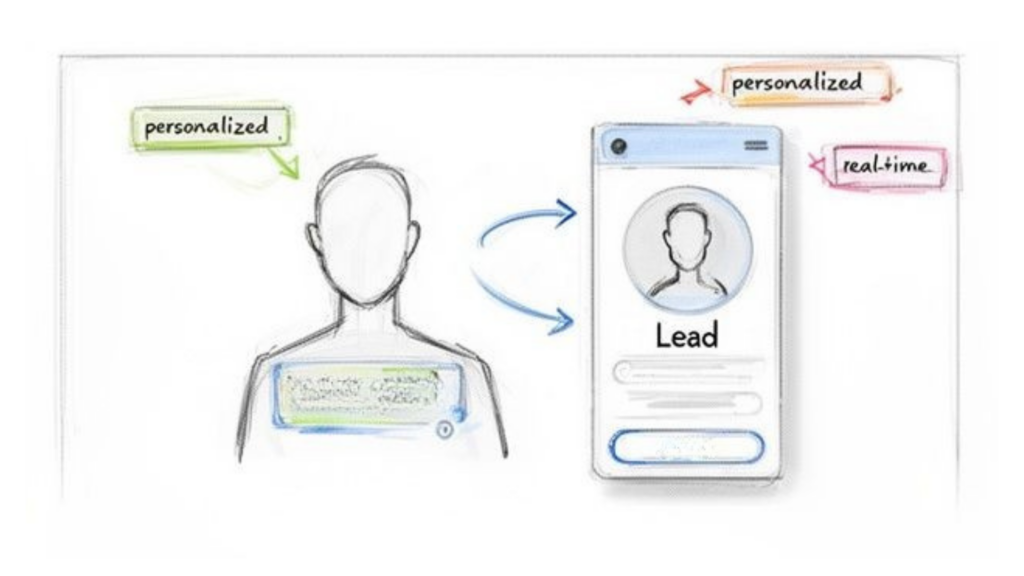
Online Lead Profile
This playbook is all about practical systems, not abstract theories. It’s designed for results-driven e-commerce brands, digital agencies, and entrepreneurs who need a repeatable process. We’re going to dive deep into a modern strategy centered on conversational AI and show you how to turn anonymous traffic into qualified leads at scale.
The Shift from Passive to Active Engagement
Here’s the problem most businesses face: 61% of marketers say lead generation is their biggest challenge. It’s no wonder when you consider that old-school tactics like cold calls have a staggering 97% failure rate.
The market is screaming for a smarter way to connect. The lead generation market is on track to nearly triple by 2028, fueled by AI-powered tools. In fact, 80% of marketers already report that chatbots boost their leads and conversions. Discover more insights about these lead generation key stats.
This guide focuses on the “how,” not just the “what.” We’ll show you how to create repeatable systems that automate initial engagement, so you can spend your time building actual customer relationships.
Key Takeaway: The game has changed. We’re moving away from passive data collection (like forms) and into active, real-time conversations that guide and qualify potential customers for you, automatically.
Before you can do any of this effectively, you must know exactly who you’re talking to. If you haven’t nailed this down, stop and read our guide on how to create detailed buyer personas to understand your ideal customer. Once you have that clarity, you’ll be ready to pick your channels.
For those looking to dominate the online space, a deep dive into Mastering Social Media Lead Generation can seriously boost your conversion rates.
Choosing Your Channels for Maximum Impact
Your audience isn’t everywhere, so your lead generation efforts shouldn’t be either.
Real success comes from focusing your resources on the channels where your ideal customers are most active and receptive to a conversation. Spreading yourself too thin is a recipe for burnout, not results.
For most businesses, this means mastering a smart mix of owned and rented digital real estate. Your website is your home base, while social media platforms like Facebook and Instagram are the bustling town squares where you meet new people. Each requires a different approach to spark a genuine connection.
Your Website: The Organic Lead Magnet
Think of your website as more than a digital brochure; it’s your single most powerful lead-capturing asset. The name of the game is attracting organic traffic with high purchase intent through value-packed content and solid Search Engine Optimization (SEO).
When someone Googles a solution you provide, you want to be the first answer they find.
This is where creating genuinely helpful blog posts, in-depth guides, or free tools comes into play. Each piece of content is like a salesperson working for you 24/7. Its job is to pull in visitors who are actively looking for help. Your website’s job is to make it incredibly easy for them to start a conversation the moment they land.
A massive mistake is treating every website visitor the same. The hard truth is that 96.45% of website visitors aren’t ready to buy on their first visit. Instead of shoving a generic “Contact Us” form in their face, a well-placed conversational AI can offer instant value—a discount code, a helpful checklist, or a quick quiz—all in exchange for starting a dialogue.
You can dive deeper into making this work in our detailed guide on how a winning multi-channel marketing strategy works.
Social Media: The Conversation Starter
While your website is perfect for capturing high-intent traffic, social media is where you proactively create demand and build a community. Platforms like Facebook and Instagram were built for interaction, making them a goldmine for conversational lead generation.
The goal isn’t just to post content; it’s to pull people from their public feeds into private, one-on-one DMs.
Here’s how you can do it:
- Instagram Stories: Run a poll and set up an automation to instantly DM everyone who votes. For example, a fitness coach could ask, “What’s your biggest workout challenge? A) Time B) Motivation.” Then, automatically DM a relevant tip to each voter.
- Facebook Posts: Ask a question in your caption and tell followers to comment with a specific keyword to get a special offer via Messenger. A local restaurant could post, “Comment ‘DEAL’ below to get a secret 2-for-1 pizza coupon!”
- Direct Ads: Use “Click-to-Messenger” or “Click-to-DM” ad objectives to send interested people straight into an automated conversational flow that qualifies them.
These tactics remove all the friction. Instead of asking people to leave the app they love, you bring the entire conversion experience directly to them.
Key Takeaway: Social media isn’t just for brand awareness. It’s a powerful entry point into your lead funnel. By encouraging DMs and comments, you turn passive scrollers into active, engaged leads right where they’re most comfortable.
Choosing the Right Platform Mix
So, where should you actually start?
While B2B companies often crush it on LinkedIn, which powers an incredible 80% of their social media prospects, the conversational marketing revolution is booming on platforms like Facebook and Instagram.
When you consider that a shocking 80% of new leads never convert into sales with traditional methods, it’s clear a new approach is needed. This is where lead nurturing via automation becomes a game-changer, helping 73% of marketers generate warmer, more qualified leads. You can discover more insights about these compelling lead generation statistics here.
For most direct-to-consumer brands, coaches, and local businesses, the combination of a well-optimized website and a strong presence on Facebook and Instagram provides the perfect balance. Use your website to capture valuable search-driven intent, and use your social channels to build your community and spark conversations that lead to sales.
Designing High-Converting Conversational Flows
Once you’ve picked your channels, it’s time to bring your lead generation strategy to life. The static ‘contact us’ form is dead. The future of online lead gen is interactive, personal, and conversational. This is where you stop just being online and start actively engaging every single person who visits.
The goal isn’t to build a robot that sounds like a robot. It’s to design an automated conversation that feels genuinely helpful. With a tool like Clepher, you can map out and launch sophisticated chatbot flows that guide users, qualify them, and turn casual browsers into hot leads—all without you lifting a finger.
The Anatomy of a Winning Flow
A great conversational flow is more than a string of questions. It’s a carefully planned experience designed to give value first and ask for contact info second. Every message, every button, and every pause is intentional, working together to build trust and keep momentum.
Think about it like a great salesperson. They wouldn’t just walk up to someone and demand their email address. They’d start with a warm hello, ask a smart question to understand the person’s needs, and then offer something useful. Your automated flows should do exactly that.
Here’s a visual of how your different channels can funnel visitors into your automated flows, creating one cohesive system.
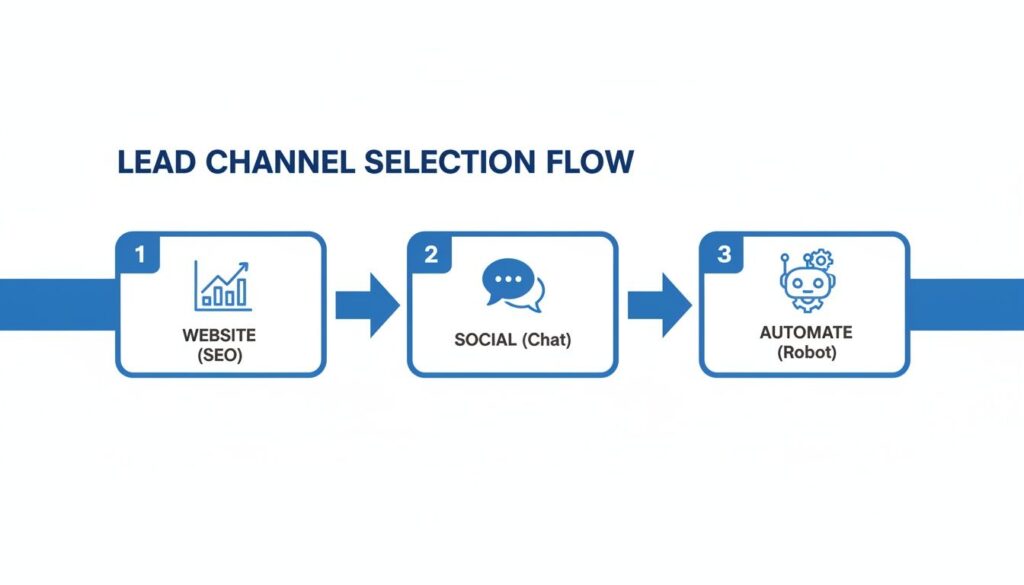
Lead Channel Selection Flow
This map shows how traffic from your website and social media can be streamlined into your automated engine, making lead capture a hands-off process.
Each stage of the conversation has a specific job. Here’s a breakdown.
| Flow Component | Purpose | Example Implementation |
|---|---|---|
| The Hook | Grab attention immediately and provide a compelling reason to engage. | A visitor is on a product page, and a chat widget pops up: “Hey! See something you like? I’ve got a 15% off code for you.” |
| The Qualifier | Understand the user’s needs and segment them for a personalized path. | Ask 1-2 simple, multiple-choice questions. “What’s your biggest business goal right now?” (e.g., More leads, Better SEO). |
| The Value Exchange | Offer something genuinely useful in return for their contact information. | “Awesome. I have a free PDF guide on boosting SEO. Just let me know the best email to send it to.” |
| The Capture & CTA | Collect the lead’s information and provide a clear next step. | The bot captures the email, delivers the PDF, and adds, “Want to book a quick 15-min strategy call to discuss this?” |
By following this structure, you’re not just asking for data; you’re creating a valuable, two-way interaction that feels natural and rewarding for the user.
Crafting a Magnetic Welcome Message
That first message is everything. It’s your one shot to hook someone and convince them to talk back. A lazy “How can I help you?” gets ignored. A killer welcome message, on the other hand, is personal, relevant, and makes an instant promise.
Here’s how to nail it:
- Acknowledge Context: Show the bot is smart. “Hey! Noticed you were checking out our pricing page. Have any questions I can answer right now?”
- Get Personal: If you have their name (common on Facebook Messenger), use it. “Hi, Alex! Welcome back. Ready to pick up where you left off?”
- State the Value—Clearly: Tell them exactly what’s in it for them. “Welcome! To grab your 20% off discount code, just tap the button below.”
This initial hook is what pulls people into the conversation. Without a strong start, even the most brilliant flow will fall flat.
Pro Tip: Keep your opening short and sweet, with a single, unmissable call to action. Throwing too many options at them right away is the fastest way to get ghosted.
Using Strategic Questions to Qualify Leads
You’ve got their attention. Now it’s time to figure out who they are and what they really need. This is the qualification phase, and the trick is to make it feel like a helpful discovery call, not an interrogation. You have to earn the right to ask for their contact information.
Instead of a blunt question like, “What’s your budget?” try something more insightful: “What’s your biggest priority with [your service] right now?” This gets to their motivation and helps you segment them on the fly.
Here are a few more examples of smart qualifying questions:
- For a B2B Service: “To make sure I get you to the right person, are you a founder, a marketer, or on the sales team?”
- For an eCommerce Brand: “Are you shopping for yourself, or is this a gift for someone special?”
- For a Real Estate Agent: “Are you looking to buy your first home, or are you selling your current one?”
Each answer is a chance to tag the user in a system like Clepher, which lets you customize the rest of the conversation to be hyper-relevant. It’s about delivering a truly personal experience.
Real-World Conversational Flow Examples
Theory is one thing; seeing it in action is another. Here are three proven flow templates you can adapt for your business.
- The eCommerce “Discount for Email” Flow:
- Trigger: A user comments on an Instagram post with the keyword “SAVE”.
- Welcome Message: “Hey [First Name]! Thanks for commenting. We’ve got a 15% discount code with your name on it. Where should we send it?”
- Action: The bot shows a button that says, “Send to My Email.”
- Capture: The user provides their email, which gets saved to a custom field. The discount code appears instantly in the chat, and the email is automatically pushed to your email marketing list.
- The B2B “Schedule a Demo” Flow:
- Trigger: A visitor clicks the “Request a Demo” button on your website.
- Welcome Message: “Awesome! Let’s get you booked. To make sure you meet with the right expert, what’s the number one challenge you’re trying to solve?”
- Qualification: The bot asks 2-3 quick multiple-choice questions (e.g., team size, main challenge).
- Action: Based on their answers, the bot serves up a direct link to the right person’s calendar. All lead data is instantly synced to your CRM.
- The “Content Upgrade” Flow:
- Trigger: Someone is reading your blog, and a small chat widget slides into view.
- Welcome Message: “Enjoying the article? I have a free PDF checklist that goes with it. Want me to send it over?”
- Action: The user clicks, “Yes, please!”
- Capture: “Perfect! What’s the best email to send that to?” The bot grabs the email, delivers the PDF, and adds the user to a relevant email nurture sequence.
In every case, the interaction is smooth, value-driven, and incredibly efficient. You’re swapping a clunky form for an engaging experience that gives people what they want, instantly. To make these funnels work, you also need to build high-converting landing pages that feed your conversational strategy.
Driving Targeted Traffic to Your Automated Funnels
A beautifully designed conversational flow is like a high-performance engine—powerful but useless without fuel. For your lead generation machine, that fuel is targeted traffic.
This is where we get into the nitty-gritty of driving the right people to your website and social channels. Once they’re there, your automated funnels are ready to turn a simple click into a qualified lead. We’ll cover a potent mix of organic and paid tactics that work together.
Think of it this way: organic efforts build your brand’s foundation for a long-term, sustainable flow of leads. Paid campaigns are the turbo boost, delivering immediate results and incredibly valuable data.
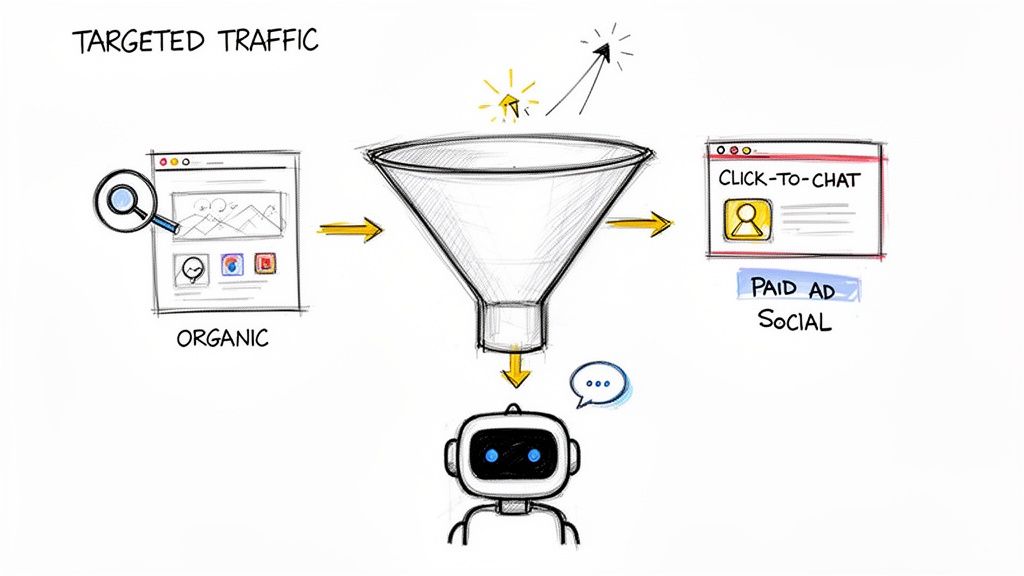
Online Marketing Funnel
Attracting Organic Traffic That Converts
Organic growth is playing the long game. It’s about creating valuable assets that attract your ideal customers at the exact moment they’re actively searching for solutions. The two pillars of this strategy are content marketing and social media engagement.
Your blog is one of the most powerful tools in your arsenal. By creating content optimized for search engines (SEO), you can capture traffic from people typing their problems directly into Google. Each blog post should be a magnet, pulling in prospects and then seamlessly guiding them into a conversation with a chatbot that offers a “content upgrade”—like a checklist or a template—related to the post.
On social media, organic reach comes from sparking direct conversations, not just posting.
- Instagram Stories: Run a simple poll asking a question tied to your audience’s pain points. Then, use a tool like Clepher to automatically send a DM to everyone who votes, kicking off a personalized conversation.
- Facebook Groups: Participate in relevant communities (without spamming) and offer to send helpful resources via Messenger to anyone who shows interest.
This approach transforms your content from a one-way broadcast into a two-way engagement starter.
Launching Paid Campaigns for Immediate Lead Flow
When you need to generate leads online right now, paid advertising is your best friend. The secret is to use ad formats specifically designed for conversational marketing. These cut out the friction of a traditional landing page and form, which is where most people drop off.
Facebook and Instagram offer powerful “Click-to-Messenger” and “Click-to-DM” ad objectives. These campaigns do one thing exceptionally well: funnel interested users directly from their news feed into an automated chat with your business. This is where your pre-built conversational flow takes over, qualifying the lead instantly.
Real-World Example: An e-commerce store selling custom pet portraits could run a “Click-to-DM” ad on Instagram targeting users interested in dog breeds. The ad creative might show a finished portrait with a headline like, “Turn Your Pet Into a Masterpiece!” When a user clicks, a chatbot in their DMs immediately asks, “Awesome! Are you interested in a portrait for a dog or a cat?” That single click starts the entire qualification process.
The Power of Irresistible Lead Magnets
Whether your traffic is organic or paid, you need to give people a compelling reason to start a conversation. This is where a lead magnet comes in. It’s a high-value offer you give away for free in exchange for their engagement and, eventually, their contact information.
Effective lead magnets are simple and solve a specific problem:
- Checklists or Cheatsheets: A one-page PDF that helps your audience achieve a quick win.
- Exclusive Discounts: A special offer available only to people who engage with your chatbot.
- Webinar Registrations: Use a chatbot to handle registrations and send reminders, all within Messenger or DMs.
- Free Quizzes: A short, interactive quiz that provides personalized results at the end.
The magic happens when you promote these lead magnets across all your channels. It’s a strategy that acknowledges a hard truth: while 90.7% of marketers rely on their website for leads, a staggering 98% of B2B visitors leave without converting. To capture this otherwise lost traffic, smart marketers focus on blogs (89.2%), email (69.2%), and organic social (65.9%).
Tools that engage this traffic are critical, which is why 80% of marketing automation users report a significant increase in the number of leads they generate. Read more on the B2B lead generation trends that work.
Integrating Your Leads with Sales and Nurturing Workflows
Grabbing a new lead is a great feeling, but it’s just the starting line. The real money—and the real customer relationships—are built in the follow-up. This is where you connect the dots, turning a fresh contact into a long-term customer with a slick, automated system that nurtures them right into your sales process. If you skip this backend work, even your best lead generation efforts will fizzle out.
The endgame here is a closed-loop system that works for you 24/7. No more leads going cold. It’s all about taking the rich data you collected in the initial chat and using it to power smart, personalized marketing that feels like a one-on-one conversation.
Use Tags and Segments to Understand Your Leads
Not all leads are the same. A person asking for a discount on a single product is worlds away from a potential partner asking about wholesale pricing. The first step to smart follow-up is to sort your leads based on what they tell you inside your conversational flow.
This is where a tool like Clepher becomes your mission control. As someone chats with your bot, you can automatically apply tags based on their answers, interests, or the buttons they click. That’s incredibly powerful.
Consider these real-world scenarios:
- E-commerce Brand: A user mentions they’re shopping for a gift. Boom. Tag them as
[Gift Shopper]. That can instantly trigger a follow-up offering gift wrapping or highlighting last-minute shipping deals. - B2B Service: A prospect says they’re a “small business owner” with under 10 employees. You tag them
[SMB]. Now you can send them case studies and pricing that actually make sense for them, instead of hitting them with enterprise-level stuff they don’t care about. - Real Estate Agent: A lead reveals they’re a “first-time homebuyer.” That
[First-Time Buyer]tag is gold. You can add them to an email series that walks them through the mortgage process and helps them avoid common mistakes.
This one simple step—tagging—changes everything. You go from a generic, faceless email list to a collection of distinct, well-defined groups you can talk to with precision.
Trigger Automated Follow-Up Sequences
Once your leads are tagged, you can build out automated workflows that feel anything but robotic. This is where you bridge the gap between that first chat and your long-term nurturing strategy by connecting your conversational tool to the rest of your marketing stack.
The most reliable follow-ups are email and SMS campaigns. Your chatbot simply acts as the trigger that kicks everything off.
For example, when a new lead gets the tag
[Downloaded SEO Checklist]in Clepher, you can set a rule that automatically zaps them over to a specific list in your email platform, like ActiveCampaign or Mailchimp. That list then fires off a 5-day email course that dives deeper into SEO, building your authority and keeping your brand top of mind.
You’ve just created a powerful, multi-channel experience. The conversation might have started in a chat window, but it continues in their inbox, creating multiple touchpoints that build trust over time.
Sync Lead Data Directly to Your CRM
For any business with a sales team, the handoff from marketing to sales is a critical moment. If it’s clumsy and context gets lost, you’ve just killed a warm lead. That’s why pushing lead data directly into your Customer Relationship Management (CRM) platform isn’t just a nice-to-have; it’s non-negotiable.
When your chatbot qualifies a new lead, all their details—name, email, and most importantly, their entire conversation history—should be instantly sent to your CRM, whether it’s HubSpot or Salesforce.
This gives your sales team an almost unfair advantage. Instead of a cold call, they can open the lead’s profile and see:
- The exact questions the lead asked.
- Which specific products or services they were interested in.
- The pain points they mentioned.
This context is a total game-changer. The sales rep can kick off the call with, “Hey John, I see you were chatting with our bot about the Shopify integration. I can definitely walk you through how that works.” It’s a warm, relevant, and helpful conversation that dramatically boosts the odds of closing the deal.
To wire this all together, you can use a tool like Zapier to connect Clepher to pretty much any CRM or email platform out there.
This screenshot just scratches the surface of what’s possible, allowing you to plug your conversational leads into your entire sales and marketing ecosystem. This is what transforms a simple chatbot into the central hub of a powerful, automated lead management machine that drives real growth.
Measuring and Optimizing Your Lead Generation Engine
You can’t improve what you don’t measure. Simple as that.
Launching your conversational flows is a huge first step, but the real growth happens when you start looking at the data. It’s time to build a feedback loop that lets you constantly refine and improve your lead generation machine. This means moving beyond feel-good metrics and focusing on the numbers that actually move the needle for your business.
When you really get good at generating leads online, you track everything.
Focus on Metrics That Matter
To get a clear picture of what’s working (and what’s not), you only need to zero in on a few key metrics. These numbers will be your North Star, guiding every optimization decision you make.
- Conversation Start Rate: What percentage of people who see your chatbot widget or click your ad actually start a conversation? This tells you how effective your initial hook is. If it’s low, your opener isn’t compelling enough.
- Lead Qualification Rate (LQR): Of all the conversations that get started, how many turn into a qualified lead? A “qualified lead” is whatever you define it as—someone who provides their email, books a call, or answers a key question. This metric is a direct measure of your flow’s quality.
- Cost Per Qualified Lead (CPQL): How much are you actually spending in ad dollars to get one genuinely qualified lead? Forget Cost Per Click; this is your true acquisition cost and one of the most important numbers for your bottom line.
- Lead-to-Customer Conversion Rate: This is the big one. What percentage of your qualified leads eventually become paying customers? This tells you about the health of your entire funnel, from first touch to final sale.
Key Takeaway: Tracking these core metrics transforms lead generation from a guessing game into a predictable, scalable engine for business growth.
A Simple Framework for A/B Testing
With your key metrics in hand, you can start experimenting. A/B testing lets you pit different elements of your conversational flows against each other to see what resonates most with your audience.
For example, does offering a free trial get more people to start a conversation than a 20% discount? The only way to know for sure is to test it.
Use your platform’s built-in A/B testing features to run two versions of your flow at the same time. Let the test run long enough to gather meaningful data, then confidently declare a winner and make that high-performing version your new control. This iterative cycle—test, learn, optimize, repeat—is the secret to building an unstoppable lead gen engine.
Frequently Asked Questions About Generating Leads Online
You’ve got the playbook, but questions always pop up when you start putting a strategy into action. Here are some straight answers to the things we hear most often.
Conclusion
Effective online lead generation combines proven lead generation strategies with practical lead generation techniques to generate high-quality leads and drive leads through your sales funnel. By integrating content marketing, SEO (search engine optimization), email marketing, Google Ads, LinkedIn, and online networking, you can generate leads online, nurture prospects, and convert potential customers into quality leads for your sales team. A strong marketing strategy that aligns sales and marketing, uses a clear lead magnet, and maps out the lead generation process will help b2b businesses and b2c brands generate new leads, build a sales pipeline, and improve conversion rate.
Focus on ways to generate leads online that automate repetitive tasks, score and qualify leads, and provide value through content so your sales representatives spend time on warm leads rather than chasing cold leads. Whether you pursue b2b lead generation with LinkedIn Sales Navigator, scale marketing campaigns with Google Ads, or rely on organic SEO and content marketing, combining multiple marketing channels and best practices will produce quality leads online and proven online lead generation results. Keep measuring leads generated, optimize your funnel, and continually refine your marketing efforts to generate more leads, generate qualified leads, and grow your business in the digital age.
Ready to stop chasing leads and start building an automated engine that brings them directly to you? Clepher gives you the no-code tools to design, launch, and optimize high-converting conversational flows on your website, Messenger, and Instagram. Get started with Clepher today and turn more conversations into customers.
Related Posts
How to Create a Survey on Facebook for Maximum Engagement
March 28, 2026Social Media Marketing Automation: Your Ultimate Guide
March 27, 2026
Founder Clepher