
Instagram direct message marketing is more than just sliding into DMs. It’s about turning your private message inbox into a full-blown conversational sales funnel. This is where you connect with customers, warm up leads, and close sales—all inside the app they’re already scrolling through every day.
Why The Real Action Is In The Instagram Inbox
Let’s be honest. Your polished Instagram feed is just the storefront. The real business happens in the back room—the Direct Message inbox. This is where smart brands are building real relationships and driving sales, not with ads, but with genuine, one-on-one conversations.
The whole “link in bio” strategy is dying a slow death. Why? It’s clunky. You’re asking someone to stop what they’re doing, navigate to your profile, hunt for a link, and then get booted off the app to a landing page. That’s a recipe for massive drop-off rates. People want instant gratification.
Keeping Customers Where They Are Comfortable
This is where DM marketing changes the game entirely. Instead of pushing people away from the app, you bring the entire experience—the conversation and the conversion—right into their DMs. The results are immediate and powerful.
- Sky-High Engagement: A personal message in your inbox just hits differently than a generic ad. It’s direct, it feels personal, and people are far more likely to respond.
- Zero Friction: You’re removing all the extra steps. By keeping the journey inside Instagram, you eliminate distractions and make it dead simple for someone to take the next step.
- Instant Lead Capture: When someone comments on your Reel or replies to your Story, you can instantly fire off an automated DM. This grabs high-intent leads the second they show interest, not hours or days later when the trail has gone cold.
Here’s the bottom line: Recent data shows that Instagram Direct Messages are the fastest path to conversion for lead generation today. It’s a fundamental shift. By keeping the entire process within Instagram’s ecosystem, you slash friction and capture interest at its peak.
Let’s quickly compare this to the old way of doing things.
DM Marketing vs Traditional Funnels
| Metric | Instagram DM Funnel | Traditional Landing Page Funnel |
|---|---|---|
| User Friction | Low (Stays in app) | High (Leaves app, new page loads) |
| Speed to Lead | Instant | Delayed (Requires form fill) |
| Engagement Rate | Very High | Low to Medium |
| Personalization | High (Based on user action) | Low (Generic page for all) |
| Conversion Point | Inside the conversation | External checkout page |
See the difference? One is a smooth conversation, the other is a series of hurdles.
From Engagement to Sales
This strategy is incredibly versatile. An e-commerce brand can set up a “Comment to DM” trigger on a product post, automatically sending anyone who comments a direct link to buy. A coach can use an automated DM flow to ask a few qualifying questions and pre-sell leads for a high-ticket program.
And it gets even better. Learning how to create a shop on Instagram can supercharge this whole process. When your shop is integrated, users can browse products and then slide into your DMs with specific questions. These are some of the warmest, most purchase-ready leads you can get. With the right DM automation, you can answer their questions and guide them to a sale automatically.
If you want to go deeper on the technical setup, our guide on Instagram direct message automation breaks it all down.
This isn’t just another marketing tactic to add to your list. It represents a fundamental shift. You stop broadcasting at your audience and start having valuable conversations with them—conversations that lead directly to real business results.
Building Your First Automated DM Campaign
Alright, enough with the theory. Let’s get our hands dirty and build something that actually works. This is where you move from strategy to a real, automated DM campaign that pulls in leads and sales—even when you’re not online. And you don’t need to be a developer. With a no-code tool like Clepher, you can build powerful conversational experiences in minutes.
Before you build anything, you need to answer one question: What is the one thing this campaign must achieve? Seriously, just one. Are you trying to get webinar registrations? Drive sales with a discount code? Or maybe qualify leads for your high-ticket service? Trying to do it all at once creates a confusing mess for your audience and kills your results. Pick one clear goal and stick to it.
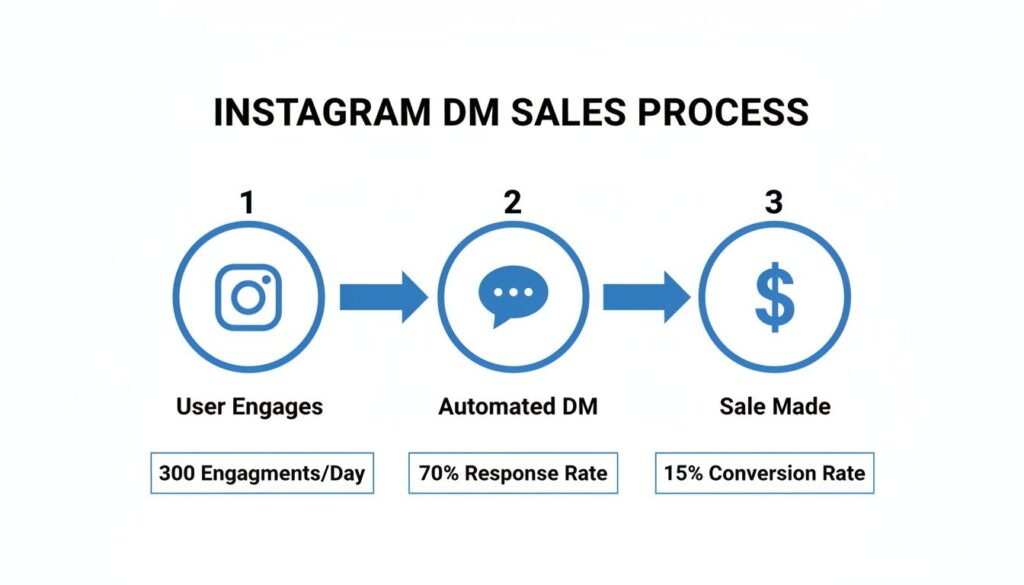
Once that goal is locked in, you can start building. The entire journey, from a user engaging with your content to a sale being made, is a simple, repeatable flow.
This visual breaks down how you turn simple audience engagement into actual sales, all through automated DMs.
Instagram DM Sales Process
This simple Engage > Automate > Convert model is the foundation of smart Instagram DM marketing. It’s effective because it keeps the entire interaction inside the app, which means less friction for the user.
Choosing Your Campaign Trigger
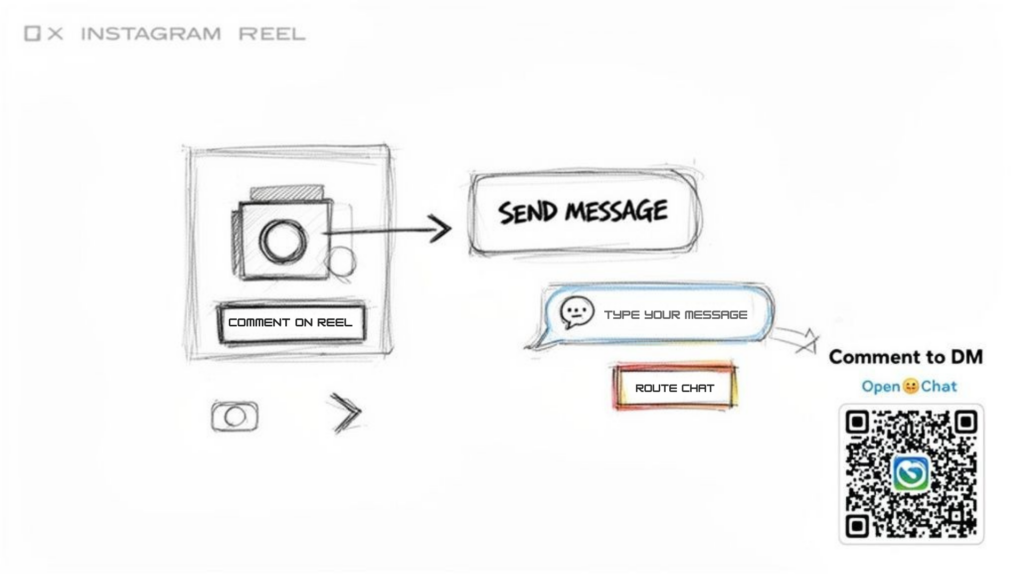
A trigger is the specific action a user takes that kicks off your automated message sequence. Think of it as the front door to your DM funnel. For a first campaign, nothing beats the “Comment to DM” trigger. It’s incredibly effective and dead simple to set up.
Here’s how it looks in the real world:
- You’re a Fitness Coach: You post a Reel showing a “5-Minute Ab Workout.” Your caption includes a call-to-action: “Comment ‘PLAN’ and I’ll DM you my free 7-day workout plan!”
- You’re a Skincare Brand: You post a carousel about the benefits of Vitamin C. Your CTA is: “Want to try it yourself? Comment ‘GLOW’ for a special 15% discount on our new serum.”
In both scenarios, a specific keyword comment starts the conversation. Inside a platform like Clepher, you just connect this trigger to your Instagram post and tell the system which keyword to watch for.
Pro Tip: Don’t use a generic keyword like “yes” or “info.” It’s a recipe for disaster. Pick a unique, relevant word for each campaign (‘PLAN’, ‘GLOW’, ‘WEBINAR’). This stops you from accidentally triggering automations on unrelated comments and makes your campaign tracking much cleaner.
Crafting Messages That Don’t Sound Like a Robot
Now for the fun part—writing the messages. The single biggest mistake brands make is sounding robotic. Your goal is to be helpful and conversational. Ditch the stiff, salesy language.
Let’s use the fitness coach example. Here’s a simple, effective message flow:
- The Instant Confirmation: “Hey [First Name]! Saw you’re interested in the 7-day workout plan. Happy to send it over. To make sure I get you the right one, are you a beginner or have you been working out for a while?”
- Why it works: It uses their name (
[First Name]), confirms their request, and immediately asks a simple qualifying question with quick-reply buttons. It feels personal, not automated.
- Why it works: It uses their name (
- The Segmented Delivery: Based on their answer (“Beginner” or “Advanced”), you send the right link. “Awesome! Here is the beginner-friendly plan as promised: [Link]. Let me know what you think after your first workout!”
- Why it works: You deliver on the promise instantly while giving them content tailored to what they just told you. This small touch makes the interaction feel incredibly valuable.
That simple, two-step exchange is a complete automated “Flow.” It confirms interest, segments the user, and delivers value. All without you lifting a finger.
Mapping a Simple Flow with Logic
Once you’re comfortable, you can start adding some branching logic. Think of it as a “choose your own adventure” for your customers. This is where you can get really strategic.
Let’s go back to our skincare brand example:
- Trigger: User comments “GLOW” on a post about a Vitamin C serum.
- Message 1 (Automated DM): “Hey! So glad you’re interested in getting that glow. Here’s your 15% discount code: GLOW15. You can use it on our Vitamin C serum here: [Product Link]. By the way, are you dealing with any other skin concerns, like dryness or acne?”
- Branching Logic:
- If they tap “Dryness”: “Got it! Our Hyaluronic Acid Booster works wonders for dryness and pairs perfectly with the Vitamin C serum. You can check it out here: [Link].”
- If they tap “Acne”: “Thanks for sharing! A lot of our customers find that our Salicylic Acid Cleanser helps keep breakouts at bay. Here’s the link if you want to learn more: [Link].”
With just a few clicks in a visual flow builder, you’ve just built a personalized recommendation engine. You gave them the discount they came for and immediately offered a relevant upsell based on their specific needs. This is the power of a well-planned DM campaign—it’s not just about sending messages; it’s about starting valuable conversations.
Fueling Your DM Funnel With High-Converting Triggers
So you’ve built a brilliant automated DM flow. Now what? That sophisticated sequence won’t do you any good if no one ever sees it. Your automation is the engine, but you still need to get people in the door.
That’s where triggers come in. These are the strategic entry points that stop a passive scroller in their tracks and invite them into a conversation. A solid Instagram direct message marketing plan isn’t about waiting for DMs to trickle in; it’s about proactively creating compelling reasons for people to message you first.
Let’s get into the practical, high-converting triggers that will keep your DM inbox buzzing with qualified leads.
Instagram DM Workflow
Turn Paid Ads into Personal Conversations
Running Instagram ads is a proven way to reach new, targeted audiences. But instead of sending that expensive traffic to an off-platform landing page where they can get distracted and drop off, why not start the conversation right in the DMs?
The “Send Message” call-to-action (CTA) is your secret weapon here. It turns your ad spend into immediate, one-on-one conversations where you can qualify leads, crush objections, and guide users toward a sale in a personal setting.
Advertisers are pouring money into this for a reason. Instagram’s US ad revenue is on track to hit $37.13 billion in 2025, with global figures projected to reach $75 billion by 2026. This isn’t just random growth; it’s a sign of confidence in the platform’s ability to drive real business results, especially through DM-focused campaigns.
To make this work, your ad needs to give people a powerful reason to message you.
- For a DTC Brand: Forget the tired “Shop Now” button. Run a Reel ad showcasing your new collection and use this CTA: “DM for an exclusive 20% Off launch discount!” When they message you, your automation instantly fires back the code and a direct link to the shop.
- For a Coach or Consultant: Create a Carousel ad that debunks three common myths in your niche. On the last slide, tell them: “Message me ‘WORKSHOP’ to claim your free seat at my next live training.”
If you want to really dial in your targeting and creative, working with professional Instagram Ads services can help you maximize your return on every conversation started.
Weaponize Your Organic Content with Comment Triggers
Your best-performing organic content—especially your Reels—can be transformed into automated lead-generation machines. One of the most effective tools in the entire Instagram marketing playbook is the “Comment to DM” trigger. It leverages engagement the second it happens.
The idea is simple: Offer something valuable in your caption and tell people to comment with a specific keyword to get it. This action instantly triggers an automated message, delivering the goods straight to their inbox. It’s a seamless value exchange that converts viewers into leads without any friction.
Think about it. A real estate agent posts a stunning Reel tour of a new listing with the caption: “This one will go fast! Comment ‘TOUR’ below, and I’ll send you the full gallery and virtual walkthrough link.”
Every single person who comments “TOUR” is a warm lead delivered directly to the agent’s DMs, ready to be nurtured.
Get Creative with Story Stickers and Offline Triggers
Your entry points aren’t just limited to the main feed and paid ads. Instagram Stories—and even the real world—offer some of the most underrated opportunities for starting DM conversations.
- Story Replies: This is low-hanging fruit. Use the question or poll sticker in your Stories to drive action. A simple overlay that says, “Reply ‘GUIDE’ to get my free checklist!” is incredibly effective. People are already in a hyper-engaged state when tapping through Stories, so replying is a tiny, easy step for them to take. For more ideas on this, check out our full guide on how to leverage Instagram Story Replies.
- QR Codes: Bridge the gap between your offline and online worlds. If you’re speaking at a conference, have a slide with a QR code. If you own a cafe, put one on the menu. The code can open a pre-filled message directly in your Instagram DMs. For instance, a restaurant could have a sign at the register: “Scan here and send us a message to get a free appetizer on your next visit!”
By building out these different entry points, you create a robust, multi-pronged system that constantly feeds new leads into your funnel from every direction.
Personalization And Segmentation At Scale
Automation doesn’t have to feel automated. In fact, the real power of Instagram Direct Message marketing is making personalized, one-on-one conversations happen at a scale you could never manage manually. This is how you stop blasting generic messages and start having hyper-relevant interactions that actually drive results.
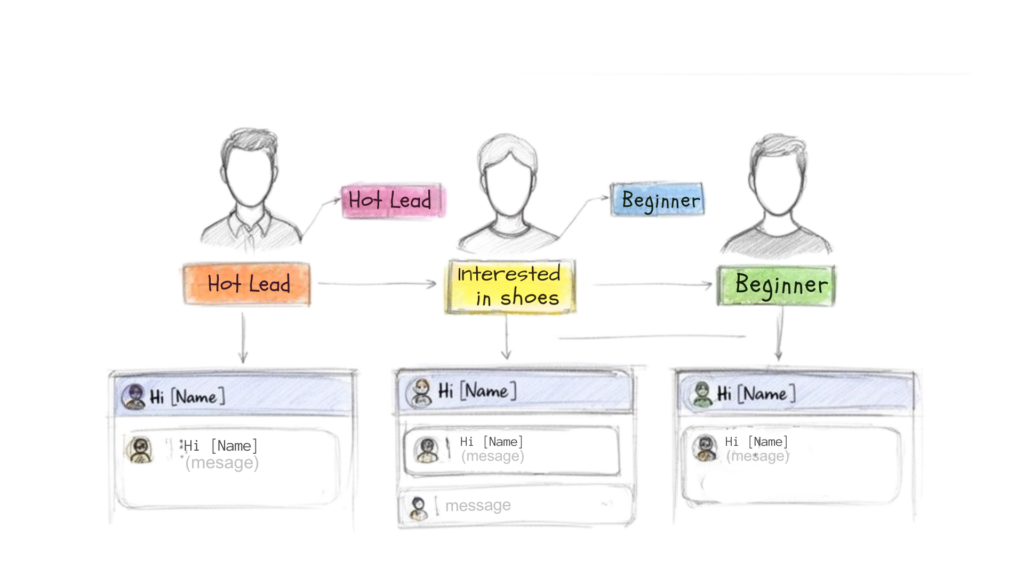
The easiest win is using a person’s first name, like [First Name]. It’s a small touch, but it instantly makes your DM feel less like a mass email and more like a real conversation. But the real magic happens when you go beyond names and start segmenting your audience based on their actual behavior and interests.
Instagram DM Customer Segmentation
From Simple Answers To Powerful Segments
Segmentation is all about labeling or “tagging” subscribers so you can send them the right message at the right time. Instead of pushing the same promotion to everyone, you create distinct groups and speak directly to their needs—all done automatically inside your DM automation tool.
Let’s say you’re a real estate agent who posts a Reel of a new luxury condo. Your “Comment to DM” trigger is the word “INFO”. When someone comments, your first automated message could ask:
“Hey [First Name]! Happy to send over the details on that stunning condo. To help me get you the right info, what’s your approximate budget for a new home?”
Then, you give them quick-reply buttons to choose from:
- Under $500k
- $500k – $1M
- Over $1M
The moment someone taps “Over $1M,” your automation instantly applies a tag like ‘Hot Lead’. Just like that, you’ve built a powerful segment of high-intent buyers. Now you know exactly who to follow up with personally or send exclusive listings to later. This is how you stop guessing and start knowing who your most valuable prospects are.
Real-World Use Case: A Course Creator
Here’s another practical example. An online course creator specializing in digital art wants to sell their new “Procreate for Beginners” course. They use a Story Reply trigger, asking followers to reply with “ART” to get a free mini-tutorial.
The first DM they send asks a simple qualifying question: “Awesome, [First Name]! So excited you want the tutorial. Just so I can send the best one, how would you rate your Procreate skills right now?”
They provide quick-reply options like “Total Beginner,” “I know the basics,” or “Pretty Advanced.” Based on that tap, the user gets tagged (Beginner, Intermediate, Advanced).
Now, the creator has cleanly segmented their audience. They can send a special launch discount for the beginner course only to the ‘Beginner’ segment, making the offer perfectly relevant. Down the line, they can pitch a complex masterclass to the ‘Advanced’ segment.
This is the key transformation. You move from shouting one message at a large, faceless crowd to having thousands of individual, context-aware conversations. It’s the difference between a billboard and a personal consultation.
Custom Fields For Deeper Personalization
Tags are for grouping people. Custom Fields are for storing specific, individual information about them. Think of them as unique data points you can use to make your messages feel incredibly personal.
For instance, a fashion e-commerce brand could ask, “What’s your favorite style to rock? (e.g., Casual, Streetwear, Formal).” When a user replies “Streetwear,” you save that answer to a custom field called [Style_Preference].
Weeks later, you launch a new line of hoodies. You can send a broadcast message exclusively to users whose Style Preference is “Streetwear,” saying something like:
“Yo [First Name]! Our new hoodie collection just dropped, and it has your name all over it. Since you love streetwear, we thought you should get first dibs. Check it out here: [Link]”
This level of detail makes your audience feel seen and understood, which dramatically boosts click-through rates and sales. If you’re ready to build these kinds of sophisticated conversations, exploring the full capabilities of a chatbot for Instagram like Clepher can unlock even more advanced segmentation strategies.
Staying Compliant And Building Trust
Let’s be real: sending thousands of automated DMs is powerful. But with that power comes a huge responsibility. If you get it wrong, you’re on a fast track to getting your account flagged and, worse, destroying the trust you’ve built with your audience.
The goal is to play the long game. That means using DM automation ethically and in a way that actually helps people.
Think about how personal the DM inbox is. Every single minute, people are sending 694,000 Reels to each other. Your messages are landing in a space reserved for friends, memes, and private chats. To earn your spot there, you have to provide value, not just noise. You can get a better sense of how people use the platform from recent Instagram business statistics.
Your entire strategy has to be built on trust. And that starts with playing by Instagram’s rules.
Understanding Instagram’s 24-Hour Rule
This is the big one. The single most important policy you need to know is the 24-hour messaging window.
When a user messages you—or does something that kicks off a DM, like using a keyword in a comment—a 24-hour timer starts. Within that window, you have a green light. You can send promotional content, links, special offers, you name it.
But once that 24-hour window slams shut, so does your opportunity to send marketing messages. Trying to push a sale or a promo after this period is a direct violation of Meta’s policy, and it’s one of the fastest ways to get your account restricted.
So, how do you talk to them again after the window closes? You have to get their permission.
Re-Engaging Subscribers The Right Way
The only approved method to re-engage a user for a specific purpose is by using a One-Time Notification (OTN) request. You have to send this request within the initial 24-hour window.
It’s basically asking for permission to send them one more message about a specific topic later on.
Here’s how it looks in practice for an e-commerce brand:
- User: Asks if a sold-out product is coming back in stock.
- Your Automated Reply (within 24 hours): “Great question! We’re expecting a restock soon. Want me to send you a one-time message the moment it’s available?”
- The OTN Button: Below your message, the user sees a button that says something like “Notify Me.”
When they tap that button, you’ve earned the right to send them one single message about that restock, even if it happens weeks from now. It’s the compliant, non-spammy way to follow up.
Building Trust With Clear Opt-Outs and Human Handoffs
Every automated flow needs two non-negotiable safety nets. These aren’t just for compliance; they’re for building real trust and maintaining a healthy relationship with your audience.
- A Clear Opt-Out: Always give people an easy way out. A simple “Reply STOP to unsubscribe” at the end of your first automated message is standard practice. It shows respect for their inbox and is a must-have for compliant messaging.
- An Easy Path to a Human: Automation is great, but it can’t solve every problem. Your flows must include an option like “Talk to a Human” or “Chat with Support.” This ensures anyone with a more complex issue can get real help, which prevents frustration and shows you’re actually there for them.
Tracking Success And Optimizing For Better Results
If you don’t measure it, you can’t improve it. It’s an old saying, but it’s the golden rule of marketing. Launching an Instagram DM campaign is just the starting line. The real growth—the kind that impacts your bottom line—comes from getting your hands dirty with the data.
You need to know what’s working, what’s falling flat, and how to tweak your strategy for a better ROI. That means moving past vanity metrics like post likes or follower counts. In DM automation, success is measured by hard data, not just eyeballs.
The Metrics That Actually Matter
When you’re looking at your DM Flow performance, it’s easy to get lost in the noise. You need to zero in on the data points that tell the real story of how people are interacting with your messages.
Here are the key metrics you should live and breathe:
-
Message Open Rates: This tells you exactly how many people who received your automated DM actually opened it. If your open rate is low, it’s a red flag. It could mean your initial Story reply trigger or ad promise wasn’t compelling enough to make them check their inbox.
-
Click-Through Rates (CTR): This is the percentage of people who clicked a link inside your DMs. A high open rate paired with a low CTR is a classic sign that your message copy is off. They opened it, but your offer or call to action wasn’t persuasive enough to earn the click.
-
Conversion Rates: This is the ultimate test. It tracks how many people completed the goal you set, whether that’s making a purchase, signing up for your webinar, or booking a call. This is the number that translates directly to revenue.
Tracking these numbers inside an automation tool like Clepher gives you a crystal-clear, data-driven picture of your entire funnel’s health from start to finish.
Optimizing Your Flows with A/B Testing
Once you have your baseline numbers, it’s time to start optimizing. The most powerful way to do this is with A/B testing. It’s simple: you create two versions of a single message (an ‘A’ and a ‘B’) and send them to different segments of your audience to see which one performs better.
Don’t overcomplicate it. You can test just about anything, but always start with the elements that will have the highest impact on your results.
For example, you could test:
- Opening Hooks: Try two completely different first sentences. See which one grabs more attention and gets a better response rate.
- Calls to Action: Pit a button that says “Shop Now” against one that says “Get My Discount.” A tiny change in wording can make a huge difference in clicks.
- Message Tone: Test a casual, emoji-heavy message against a more direct, professional one. Find out what your audience actually prefers.
By testing one element at a time and consistently picking the winner, you can make small, incremental changes that lead to massive gains over time.
Mini-Case Study: An e-commerce store noticed a major drop-off in their discount code Flow. They dug into their analytics and saw a whopping 70% of users abandoned the conversation after the second message. They rewrote that one message, making the offer clearer and the link more prominent. The result? They boosted their overall DM sales by 25% in a single month.
This is what data-driven marketing is all about. It’s not about guessing what your audience wants; it’s about testing, measuring, and refining your way to a better ROI. This continuous improvement loop is what separates the campaigns that thrive from the ones that fizzle out.
Your Top Instagram DM Questions, Answered
Got questions about using DMs for your marketing? You’re not alone. Let’s tackle the most common ones we hear from marketers so you can get started with confidence.
Ready to turn your Instagram engagement into a real, lead-generating machine? With Clepher, you can build powerful, automated DM funnels in minutes—no coding required. Start turning comments and story replies into sales today.
Related Posts
How to Create a Survey on Facebook for Maximum Engagement
March 28, 2026Social Media Marketing Automation: Your Ultimate Guide
March 27, 2026
Founder Clepher