
With Instagram DM campaigns reaching 80-100% open rates compared with email’s 21-43%, and delivering 12-18% CTRs against email’s 2-3% according to CreatorFlow’s Instagram DM metrics roundup, treating Instagram Direct as a side inbox is expensive. Brands that still reply manually leave leads sitting, carts cooling off, and launch interest fading while someone on the team tries to catch up.
That is the significant shift in 2026. Instagram DMs are no longer just a support channel. They are a sales channel, a qualification channel, and a retention channel. But only if you stop handling them one by one.
Many Instagram direct message templates online are too shallow to help. They give you a nice message, then ignore the part that determines results: segmentation, timing, trigger logic, follow-up paths, and handoff rules. A decent script without workflow design still creates a messy inbox.
That is why this guide focuses on deployment, not just copy. You will get eight templates you can use, plus the logic behind when to send them, who should receive them, and how to automate them with a platform like Clepher so the process scales.
The practical upside is simple. Better speed, cleaner qualification, more recoveries, and fewer dropped conversations.
1. Product Launch Announcement DM Template
Your most engaged Instagram audience should hear about a launch before the public feed does. That is how you turn attention into immediate buying intent instead of passive likes.
When the audience already knows your brand, DM performs especially well. LeadResponse’s Instagram DM statistics report 90% open rates, up to 60% reply rates, and 15-20% DM-to-sale conversion rates for targeted campaigns. That makes launch announcements a strong fit for a segmented DM list, especially for e-commerce brands, creators, and DTC operators.
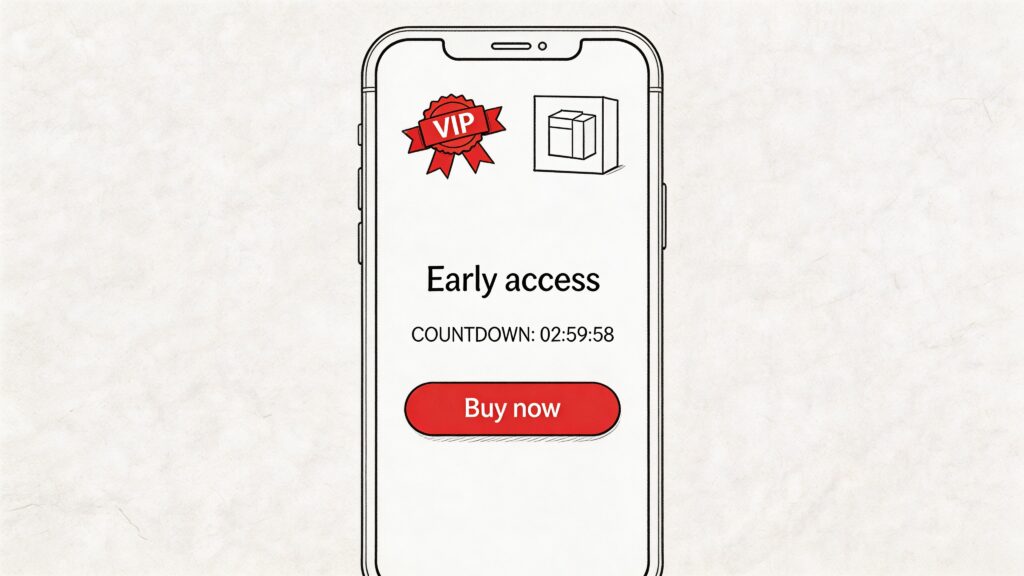
Instagram Direct Message Templates – Early Access
The template
Hi [First Name], giving you early access before we post this publicly.
Our new [Product Name] drops on [Day/Time]. Since you’ve been engaging with [brand/category], you can shop it first here: [Link]
If you want help picking the best option, reply with:
- “recommend” for a quick match
- “details” for specs
- “notify” and we’ll remind you when it goes live
Bonus for VIPs: [offer or early access perk]
What works here is specificity. “New drop tomorrow” is weaker than “you liked our last collection, so we thought you’d want first access to the matching release.”
How to automate it properly
Build the launch around behavior, not follower count.
- Segment by intent: Send first to past buyers, recent commenters, Story engagers, and people who asked about similar products.
- Trigger recommendation paths: If someone replies “recommend,” route them into an AI keyword flow that asks one or two questions before serving the best fit.
- Add visible urgency: A countdown timer inside the DM flow raises action without sounding pushy.
- Track by segment: Use unique codes or tagged links per audience so you can see whether VIPs, repeat customers, or warm leads drove the launch.
For the build side, Clepher’s guide to mastering Instagram DM automation is useful if you want the message, trigger, and follow-up in one flow.
Launch DMs work best when they feel selective. If the message reads like a blast to everyone, the exclusivity disappears.
Real-world use cases are straightforward. A beauty brand can message previous buyers of a serum before a moisturizer launch. A sneaker label can alert a VIP list about a limited drop. A SaaS company can send feature-preview access to users who asked for that exact capability in prior conversations.
The mistake is overexplaining. One short DM, one clear perk, one obvious action.
2. Customer Support & Issue Resolution DM Template
A support DM should reduce friction fast. It should not force people to repeat themselves, wait for a human to notice the message, then restart the conversation from scratch.
Instagram itself is already an active business messaging channel. InfluenceFlow’s roundup notes that 150 million users message businesses monthly and 89% of consumers want brand DMs, based on the research cited in its guide. If your support flow is slow or inconsistent, that volume becomes operational drag.
The template
Hi [First Name], sorry you’re dealing with that.
I can help with [issue type]. Reply with one of these so we can get you to the right solution fast:
- Order issue
- Return or refund
- Shipping update
- Product question
- Something else
If you already have an order number, send it in your next message and we’ll use that to speed things up.
Once they choose a path:
Thanks. I’ve got your request under [category].
Here’s the fastest next step:
- [specific action]
- [document or link if needed]
- [human handoff option if required]
If this is urgent, reply “urgent” and we’ll prioritize the handoff.
Where support templates break
The bad version of this template sounds robotic and stalls the user with broad prompts like “please explain your issue in detail.” That creates longer messages, slower triage, and more frustration.
The better version narrows the path immediately.
Automation setup that saves your team time
Use conditions and keyword routing to classify support requests before a person touches the thread.
- Keyword routing: Detect terms like return, refund, broken, missing, login, and cancel.
- Decision trees: Ask only the next required question, not every possible one.
- Handoff rules: Escalate high-friction cases to a human with full context attached.
- Purchase personalization: Pull in product or order details so the response feels informed.
Clepher can support this kind of branching with an AI chatbot for customer support setup that routes common requests, tags conversations, and escalates exceptions.
A few examples where this matters:
- E-commerce: Refund, exchange, and delivery issues
- SaaS: Access problems, onboarding questions, and account changes
- Course creators: Login help, lesson access, and billing questions
- Local businesses: Booking issues and service complaints
The best support DM is not the friendliest one. It is the one that gets the customer to the right answer with the fewest messages.
If you run multiple Instagram accounts, consistency matters even more. A template keeps tone and process stable without making every interaction feel canned.
3. Lead Qualification & Sales Discovery DM Template
A lot of brands answer inbound DMs too early with a pitch. That is backwards. First qualify. Then sell.
Warm outreach on Instagram performs far better than cold. Benchmarks show warm outreach on Instagram often performs significantly better than cold. The gap is a reminder to prioritize people who have already engaged with your content instead of messaging broad audiences with the same sales line.
Here is the video if you want a visual on lead-gen flow design before building your own.
The template
Hi [First Name], thanks for reaching out.
Quick question, so I can point you in the right direction. What are you trying to solve right now?
Then follow with one focused qualifier:
- “Need more leads.”
- “Need better conversion.”
- “Need help with retention.”
- “Not sure yet.”
Second message after their choice:
Got it. And which best describes you?
- Solo business
- Small team
- Agency
- Established brand
If they fit:
You sound like a good match for [offer/service]. Want me to send the short version here, or would you prefer a booking link?
If they are not ready:
No problem. I can still send a useful resource based on your goal. Which would help more, [option A] or [option B]?
What a good discovery looks like
The point is not to collect every detail in DM. The point is to identify fit, urgency, and the next step.
A coach can use this to separate casual interest from serious buyers. A B2B SaaS brand can sort enterprise inquiries from smaller self-serve leads. An agency can identify whether the prospect wants ad management, content, or a full-funnel strategy.
How to build this in a flow
Use branching logic instead of free-text chaos.
- Open with one easy question: This earns the reply.
- Branch by persona: Coaches, SaaS, agencies, and creators need different follow-ups.
- Tag high-intent leads: Anyone who names a clear problem and asks for pricing or timing should trigger a faster handoff.
- Sync to CRM: Push qualified leads into your sales pipeline automatically.
Clepher supports this style with a chatbot for lead generation flow that can branch by need, persona, and handoff condition.
One tactical note. Add a “not interested right now” path. Pushing every contact toward a call creates avoidable resistance. A softer nurture path keeps the relationship alive without turning the DM into a dead end.
4. Abandoned Cart Recovery DM Template
Abandoned cart DMs win when they feel helpful, not desperate.
A direct message can reopen a buying decision while the product is still fresh in the customer’s mind. Data indicates high open rates and click-through rates for businesses using DM templates in revenue-focused workflows. Email recovery still has a place, but DM is often the faster second chance.
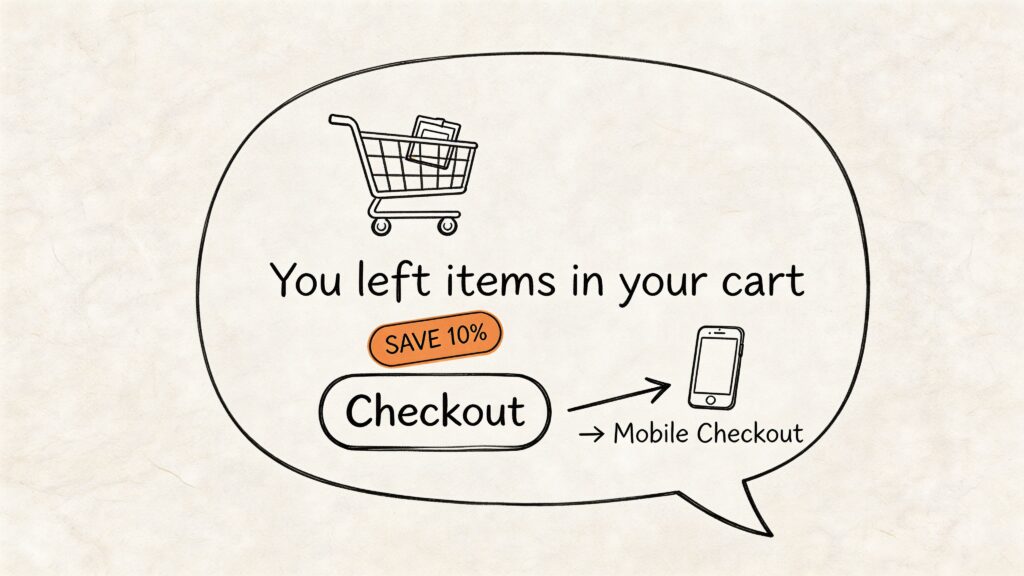
Instagram Direct Message Templates – Mobile Checkout
The template
Hey [First Name], you left something behind.
Your [Product Name] is still in your cart: [Link]
Want me to help with anything before you check out?
- sizing
- ingredients/materials
- shipping
- payment issue
Optional second message if they do not convert:
Still want it? I can hold your shortcut here: [Link]
If the issue is fit, budget, or timing, reply, and I’ll point you to the best option.
The key is restraint. You are not trying to scare them into buying. You are removing friction.
A better recovery sequence
One message rarely covers every objection. Build a short sequence around likely blockers.
- Message one: Simple reminder with product-specific link
- Message two: Help-based follow-up with objection prompts
- Message three: Limited incentive only if the margin allows
This works well for fashion, beauty, home goods, and subscriptions. If someone abandoned a skincare bundle, ask whether they want help choosing the right routine. If they left a higher-ticket furniture item, address shipping, dimensions, or setup concerns.
What to automate
Connect your store to your DM platform so the flow can use real cart data.
- Insert the exact product abandoned
- Branch by cart value
- Swap the follow-up based on category
- Handoff edge cases to live chat or support
A common mistake is using fake scarcity. Don’t write “only 2 left” unless your system can verify it. Shoppers spot manipulation quickly.
Another mistake is blasting a discount immediately. Sometimes the reason was confusion, not price. Start with clarity, then test incentives after that.
If you want a stronger recovery from Instagram direct message templates, product visibility matters too. Use carousel images or a single product visual so the customer instantly recognizes what they are considering buying. The DM should reconnect memory to action in seconds.
5. Exclusive Offer & Flash Sale DM Template
Flash sale DMs are profitable when they are selective. Send them too often, and you train your audience to wait for discounts. Use them at the right moments, and they create clean revenue spikes.
This channel is especially useful because Instagram users are already primed for product discovery. Data indicates many users follow businesses, discover products on Instagram, and grow interest via Stories. A flash sale message works best when it reaches people who have already seen the product in content.
The template
VIP heads-up, [First Name].
We’re opening a private flash sale for [product/category] before we announce it publicly.
Offer: [deal]Starts: [time]Ends: [time]Shop here: [link]
Reply with “pick for me” if you want the fastest recommendation.
Reminder template:
Your VIP offer on [product/category] ends soon. If you were waiting, this is the best time to grab it: [link]
Last chance template:
Last call. The private offer closes at [time]. If you want [benefit/product], this is the final DM reminder: [link]
How to keep it from looking cheap
A good flash sale message still protects the brand.
- Lead with access, not discount
- Limit the sale to relevant products
- Use clean timing and a clear endpoint
- Avoid constant repetition
Fashion brands can use this for end-of-season inventory. Beauty brands can use it on bundles. Subscription businesses can use it for a short-term annual plan upgrade. Local service brands can use it to fill openings for a specific week.
Automation choices that matter
Flash sales need tight timing more than complex copy.
Use a flow that can:
- Launch to tagged VIP segments first
- Send reminders based on who clicked but didn’t buy
- Test alternate hooks with random path distribution
- Trigger recommendation support for undecided buyers
The copy should be short because urgency loses force when the buyer has to read a paragraph. One perk, one deadline, one action.
If every promotion is “exclusive,” none of them are. Reserve this template for moments where speed matters and the audience can feel the difference.
One more trade-off. Heavier urgency can raise short-term conversions but increase support load if your checkout, inventory, or fulfillment is shaky. Do not launch a DM flash sale flow if the back end cannot handle the surge.
6. Event Promotion & Registration DM Template
Event DMs work best when registration feels like a continuation of the conversation, not an interruption.
The strongest opening is usually a question or response-driven prompt. DM Tracker examples show a notable reply rate for Story CTAs, with a portion responding in that example set. That is a useful cue for event promotion. If someone is already engaged with a Story about the topic, a DM invitation is far more natural than a cold registration ask.
The template
Hey [First Name], I saw your interest in [topic].
We’re hosting [event name] on [date], focused on [specific outcome]. Want the invite link?
If they reply yes:
Perfect. Here’s your registration link: [link]
You’ll learn:
- [benefit]
- [benefit]
- [benefit]
If you want, I can also send a reminder before we go live.
Reminder DM:
We start soon. Here’s your access link again: [link]
If you can’t make it live, reply “replay” and I’ll send the follow-up option if available.
Better event flows
A lot of event messages fail because they describe the event instead of selling attendance.
Strong event DMs answer three things immediately:
- Why this matters
- Who it is for
- What action to take now
That applies whether you run a webinar, workshop, product demo, creator training, or in-person pop-up.
Deployment tips for real campaigns
For events, timing matters as much as message quality.
- Invite engaged viewers first: Story engagers and past attendees usually respond better than broad lists.
- Segment by interest: Someone who interacted with your SaaS onboarding content should not get the same pitch as someone interested in advanced strategy.
- Use reminders carefully: One confirmation and one timely reminder are usually enough.
- Follow up after the event: Send a replay, next step, or offer based on attendance status.
This template fits creators promoting workshops, agencies hosting strategy sessions, and SaaS companies booking product demos. It also works for local businesses running tastings, classes, and limited-capacity events.
The practical edge of DM is speed. If someone asks a question about the event, you can answer inside the same thread and keep the momentum. That is much harder when the invite lives only in email.
7. Referral Program Recruitment & Incentive DM Template
Referral campaigns fail when the reward is confusing or the ask is too broad.
The best advocates are usually the people already interacting with your brand. That lines up with the benchmark, indicating engaged audiences often achieve higher reply rates than passive followers. Referral recruitment should start with customers and followers who already show that warmth.
The template
Hey [First Name], quick one.
Since you’ve been a supporter of [brand], we wanted to invite you into our referral program.
Here’s how it works:
- Share your personal link
- Your friend gets [benefit]
- You get [reward] when they join or buy
Your link: [personal referral link]
Want a ready-to-send message for Stories or DMs? Reply “share” and I’ll send one.
Follow-up for inactive advocates:
You’ve still got your referral link ready here: [link]
If you want, I can send two short message options you can copy into Instagram and text.
Why this works
A good referral DM removes two forms of friction at once.
First, it makes the reward clear. Second, it makes sharing easy.
That second part gets ignored constantly. People may be willing to refer, but they do not want to figure out the wording. Give them a prewritten message, a Story-friendly version, and a simple explanation of what their friend receives.
If you need ideas on audience-facing promotion tactics beyond the DM itself, this guide on promoting your referral program gives useful distribution angles.
Smart automation for referral campaigns
Build the flow around status, not one-time sends.
- New advocates: Send a welcome message plus a personal link
- No-share users: Trigger a nudge with copy-ready share text
- Active referrers: Send progress updates and reward reminders
- Top advocates: Move them into a VIP or ambassador path
This works especially well for subscription brands, SaaS products, and e-commerce stores with repeat buyers. It also fits coaching businesses where trust matters and referrals often come from client satisfaction rather than impulse.
One important trade-off. Overcomplicating the reward ladder and participation drops. If someone has to study the program to understand it, the DM has already failed.
8. Personalized Product Recommendation DM Template
Recommendation: DMs outperform generic promotions because they answer a simple question for the buyer: what should I get next?
That is where conversational tone matters. CreatorFlow reports higher reply rates for conversational messages sent to engaged audiences compared with robotic messages. A recommendation DM should sound like a helpful sales associate, not a feed ad copied into the inbox.
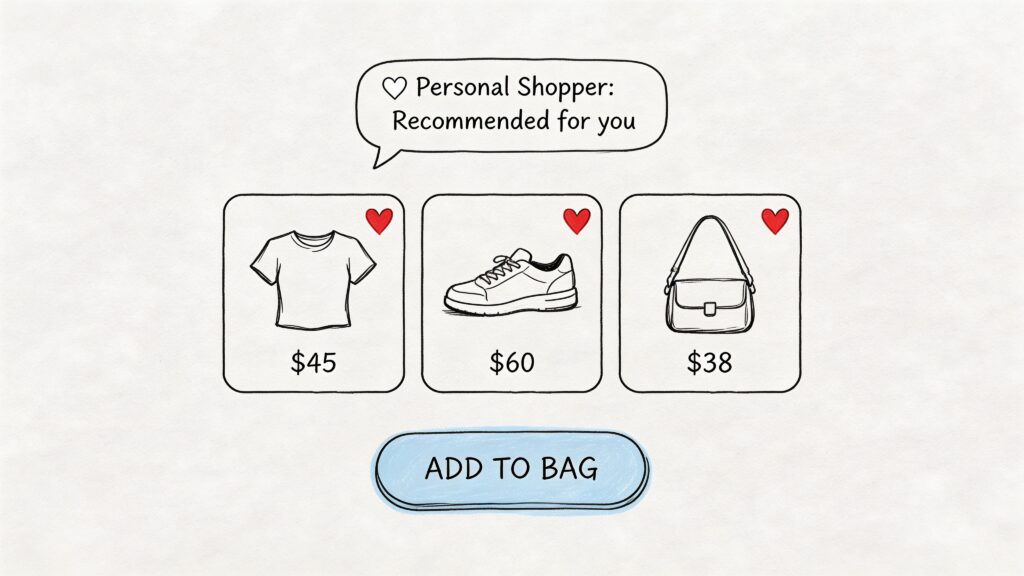
Instagram Direct Message Templates – Shopping Recommendations
The template
Hey [First Name], based on your interest in [previous product/category], I picked a few options that fit really well.
Best match:
- [Product A] for [reason]
- [Product B] for [reason]
- [Product C] for [reason]
Want me to narrow this down by budget, style, or use case?
Follow-up after they reply:
Perfect. Based on that, I’d go with [product].
It fits because [specific reason]. Want the link, or do you want one lower-priced alternative too?
What separates useful from annoying
Good recommendations are constrained. Bad ones are broad.
Do not send ten products. Send a short set with a clear rationale.
This format works well for:
- Fashion: matching shoes, bags, or layering pieces
- Beauty: regimen add-ons based on skin concern
- Home goods: complementary items by room or style
- Sportswear: accessories tied to the activity they already shop for
How to automate recommendations
Use customer data carefully and visibly.
- Capture preferences: size, color, budget, style, use case
- Trigger by purchase or inquiry: if they bought running shoes, offer socks or recovery gear
- Adjust for stock and season: recommend what is relevant and available
- Track conversion by category: see which pairings people buy.
This is one of the best uses of Instagram direct message templates because the conversation can branch naturally. If the buyer says “lower budget,” the system can swap options. If they say “gift,” the flow can redirect to giftable bundles.
A practical warning. Personalization that feels fake hurts more than generic messaging. If the recommendation references old behavior inaccurately, trust drops fast. Only personalize with fields and events that your system can verify.
Instagram DM Templates – 8-Point Comparison
| Template | Implementation Complexity 🔄 | Resource Requirements ⚡ | Expected Outcomes 📊 | Ideal Use Cases | Key Advantages ⭐ | Quick Tip 💡 |
|---|---|---|---|---|---|---|
| Product Launch Announcement DM Template | Medium 🔄: segmentation, timed sends, personalization | Low-Medium ⚡: copy, images, discount codes, basic CRM links | High 📊: early sales, VIP engagement, pre-orders | E-commerce, DTC brands launching products | High ⭐: strong conversion from engaged followers | Send 24-48h before public launch; segment by purchase history |
| Customer Support & Issue Resolution DM Template | Medium-High 🔄: automation, routing, escalation paths | Medium ⚡: KB content, agents, ticketing integrations | High 📊: faster first response, higher satisfaction | All businesses with high message volume (e-commerce, SaaS) | High ⭐: consistent, scalable support and data capture | Use keyword routing and human handoff; keep templates updated |
| Lead Qualification & Sales Discovery DM Template | High 🔄: branching logic, lead scoring, CRM handoff | Medium ⚡: scheduling links, CRM integration, question design | High 📊: better lead quality, higher close rates | Coaches, course creators, B2B SaaS, agencies | High ⭐: 24/7 qualification and context-rich handoffs | Start with 1-2 questions; include a booking link for qualified leads |
| Abandoned Cart Recovery DM Template | High 🔄: real-time triggers, cart & inventory sync | Medium-High ⚡: e-commerce integration, images, incentives | High 📊: significant recovery; immediate revenue uplift | E-commerce and DTC businesses with cart abandonment | High ⭐: higher recovery & open rates vs. email | Trigger 1-2 hours after abandonment; show product images and clear CTA |
| Exclusive Offer & Flash Sale DM Template | Medium 🔄: countdowns, segmented waves, tracking codes | Medium ⚡: discount codes, inventory planning, creative assets | High 📊: rapid sales spikes; inventory clearance | Seasonal retailers, DTC brands, inventory-heavy businesses | High ⭐: quick revenue and VIP engagement | Reserve for strategic moments; limit frequency to avoid devaluation |
| Event Promotion & Registration DM Template | Medium 🔄: reminders, calendar invites, attendee segmentation | Low-Medium ⚡: event assets, links, reminder schedules | Medium-High 📊: higher registrations, reduced no-shows | Coaches, creators, agencies, SaaS webinars, local events | High ⭐: targeted invites and automated reminders | Announce 10-14 days prior; send reminders 3 days and 24h before the event |
| Referral Program Recruitment & Incentive DM Template | High 🔄: referral tracking, reward fulfillment, fraud controls | Medium-High ⚡: tracking dashboard, incentives, integrations | High 📊: lower CAC, high-quality referred customers | Growth-focused startups, SaaS, subscription services, DTC | High ⭐: cost-effective acquisition and measurable ROI | Keep incentives simple; show referral progress and provide share templates |
| Personalized Product Recommendation DM Template | High 🔄: AI recommendations, real-time data sync, personalization | High ⚡: extensive data, integrations, algorithm tuning, visuals | High 📊: increased AOV, higher conversions, repeat purchases | E-commerce, fashion, beauty, any catalog-driven business | High ⭐: customized cross-sells and improved customer satisfaction | Limit to 3-5 recommendations; A/B test angles (style vs. price) |
From Templates to Transformation
Templates are useful. Systems are what change revenue.
That is the difference many teams miss when they start using Instagram DMs seriously. They collect a few saved replies, maybe build one welcome sequence, and then stop. The inbox gets busier, but the process stays manual. Sales questions still wait. Support is still a bottleneck. Cart recovery still depends on whether someone on the team remembers to follow up.
The better approach is operational. Pick one business problem and build one DM flow that solves it cleanly.
If your store leaks revenue after checkout starts, launch the abandoned cart sequence first. If your team spends too much time answering repetitive questions, build a support triage. If inbound DMs are coming in but few turn into calls or demos, implement qualification before sales takes over. You do not need eight flows live at once. You need one that removes a real bottleneck.
That first flow should do four things well:
- Identify who should receive the message
- Send the right template at the right moment
- Route replies based on intent
- Track what happened after the DM
Once that works, stack the next one.
Automation provides an advantage here. A launch DM can notify engaged followers while your team sleeps. A support flow can collect order details before a human joins. A qualification bot can sort casual curiosity from high-intent leads. A recommendation sequence can upsell based on what the customer already bought or asked about. Each of those flows acts like a repeatable process, not a one-off campaign.
There are trade-offs, and they matter.
More automation is not always better. If the message feels generic, reply rates drop. If the branching logic is sloppy, buyers get trapped in irrelevant paths. If the handoff to a human is slow, automation just adds friction. The goal is not to automate everything. The goal is to automate the predictable parts, so your team can step in where judgment matters.
That is also why testing matters. Small changes in opener, timing, and segmentation can shift results materially. Question-led messages often outperform direct pitches. Warm audiences tend to respond better than broad cold lists. Product-specific follow-ups usually beat generic reminders. None of that requires guesswork if you build flows with tags, conditions, reply tracking, and A/B testing from the start.
A platform like Clepher can help if you want these Instagram direct message templates to function as workflows instead of static scripts. The no-code builder, segmentation, AI keyword triggers, conditions, broadcasts, and integrations make it practical to connect your DM strategy to the rest of your stack without turning the process into a manual chore.
The next step is simple. Choose the one template tied to your biggest revenue or support problem. Build the shortest workable version. Launch it. Watch replies, clicks, and conversions. Then improve the flow based on what real customers do, not what you assume they will do.
That is how Instagram DMs stop being a notification pile and start acting like a business channel.
If you want to turn these templates into live Instagram DM workflows, Clepher gives you a no-code way to build flows, segment audiences, trigger replies with keywords, and connect DMs to the rest of your marketing and support stack.
Related Posts
Facebook Messenger on Web: A 2026 Business Guide
April 12, 2026What Is an Open Domain Chatbot?
April 11, 2026
Founder Clepher