
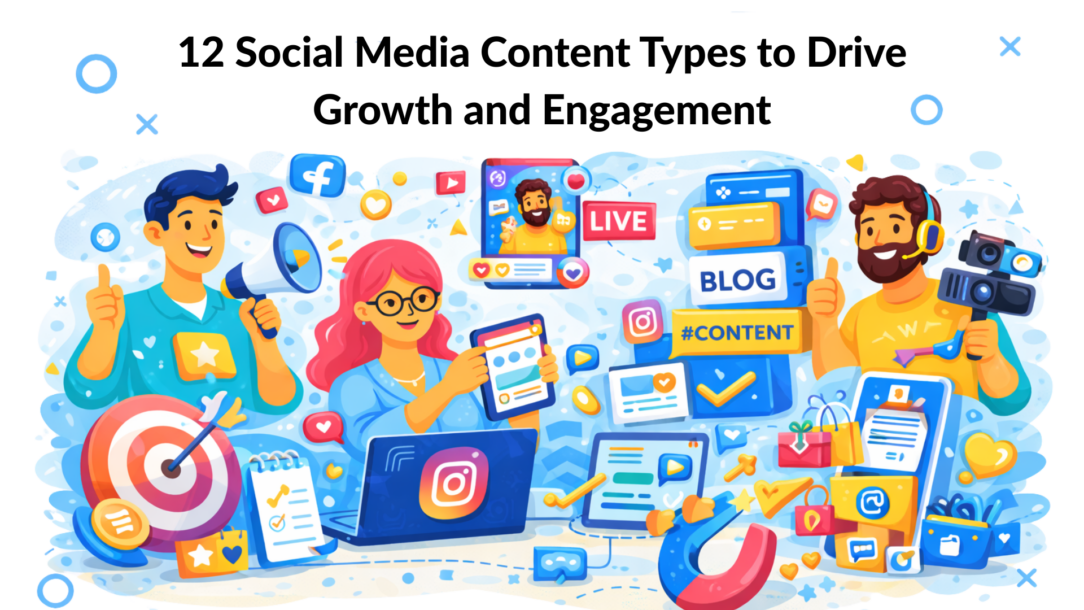
Stuck in a social media rut, posting the same single-image updates and wondering why your growth has stalled? The problem isn’t your product; it’s your content playbook. To connect with your audience and drive real results, you need a diverse arsenal of social media content types tailored to specific business goals.
This guide gives you a practical roundup of the 12 most powerful content formats. We’ll break down what each type is, why it works, and how you can start using it today. You’ll learn which platforms are best for each format and how to measure success.
Forget the guesswork. This is your blueprint for a more strategic and effective social media presence. We’ll cover everything from engaging Carousel Posts and viral Video Reels to trust-building User-Generated Content. Let’s transform your feed from a passive billboard into an active, revenue-generating machine.
1. Carousel Posts & Stories
Carousels and Stories are multi-part formats that users navigate by swiping. Carousels are permanent posts on your feed, perfect for detailed storytelling or showcasing multiple products. Stories are temporary (lasting 24 hours), creating urgency for promotions and behind-the-scenes content. This versatility makes them essential social media content types.

Mobile Swipe
Why It Works & Key Benefits
Carousels boost engagement by encouraging users to swipe, signaling to algorithms that your content is valuable. For e-commerce, they act as mini-catalogs. For educational content, they break down complex topics into digestible steps. Stories drive immediate action with interactive features like polls and quizzes. To learn more about this format, check out What are Stories on Social Media?.
Actionable Tips for Implementation
- Hook First: Your first slide must grab attention. Use a compelling image, video, or a bold statement to encourage a swipe.
- Guide the User: Add visual cues like arrows or text (“Swipe for more”) to guide people through the sequence.
- Strong CTA: The last slide needs a clear call-to-action (CTA). Use prompts like “Shop Now,” “Learn More,” or “Message us.”
- Automate Responses: Connect your Stories to a chatbot to instantly reply to messages and capture leads. You can discover more about automating Instagram Story replies to see this in action.
- Mix Media: Combine images, videos, and text graphics in one carousel to keep it dynamic and interesting.
2. Video Reels
Video Reels are short, vertical videos (15-90 seconds) that use trending audio and creative effects. Platforms like Instagram and Facebook prioritize this content, giving Reels massive organic reach potential. This makes them a powerful tool for brand awareness and grabbing audience attention.
Why It Works & Key Benefits
Reels humanize your brand and drive rapid growth. Their fast-paced format is perfect for mobile, making them ideal for product demos, quick tutorials, or behind-the-scenes glimpses. For example, an unboxing Reel can generate more excitement for a product than a static photo. For a coach, a 30-second tip can establish authority and build trust with thousands of potential clients.
Actionable Tips for Implementation
- Hook Within 3 Seconds: Start with immediate action, a provocative question, or eye-catching visuals to stop the scroll.
- Leverage Trending Audio: Use popular sounds to increase visibility. Jump on trends early for the best results.
- Clear Call-to-Action: Tell viewers exactly what to do next. For example, “Comment ‘GUIDE’ for my free e-book” to trigger a chatbot or “DM us for a special offer.”
- Post with Consistency: Aim for 3-5 Reels per week to maintain momentum and stay relevant in the algorithm.
- Optimize for Mobile: Use large, readable text overlays and always include captions for people watching with the sound off.
3. Educational / Tutorial Posts
Educational posts teach your audience how to solve a problem or understand a topic. By sharing your expertise freely, you build trust and establish your brand as a go-to resource. This makes educational content one of the most effective social media content types for long-term growth.
Tutorial Posts
Why It Works & Key Benefits
This content shifts the focus from selling to serving. It attracts a high-quality audience actively looking for solutions, making them more open to future offers. For a software company, this could be a tutorial on a new feature. For a clothing brand, it might be a style guide. The main benefit is building credibility, which supports lead generation and conversions.
Actionable Tips for Implementation
- Solve a Specific Problem: Create content based on common questions from your audience. This ensures it’s relevant and valuable.
- Use Numbered Lists: Structure your post as a numbered list (e.g., “5 Ways to Boost Productivity”). This format is easy to scan and highly shareable.
- Create a Value-Add: Offer a free download like a checklist or template to capture emails and move followers into your sales funnel.
- Highlight Key Takeaways: Use bold text on graphics or in videos to emphasize the most important points for skimmers.
- Automate Follow-Ups: End your post with a clear CTA like, “Have more questions? DM us ‘LEARN’!” and use a chatbot to provide instant answers.
4. User-Generated Content (UGC) Posts
User-Generated Content (UGC) is any content—photos, videos, reviews—created by your customers instead of your brand. Sharing UGC on your profile is a powerful form of social proof that builds community and provides authentic marketing material. It’s one of the most trusted social media content types for building credibility.

UGC Posts
Why It Works & Key Benefits
UGC builds trust like nothing else. When potential customers see real people using and loving your products, it validates their purchase decision far more than a branded ad. This boosts conversion rates and fosters a loyal community. For example, a fashion brand sharing customer photos adds an instant layer of authenticity.
Actionable Tips for Implementation
- Launch a Branded Hashtag: Create a unique hashtag (e.g., #GoPro) and promote it to easily collect and track UGC.
- Always Credit the Creator: Tag and mention the original creator in your post to show appreciation and encourage more submissions.
- Automate Collection: Use a chatbot to ask for testimonials or create a submission system, making it easy for customers to share their content.
- Incentivize Submissions: Offer discounts, features on your page, or giveaways to motivate users to create and share content.
- Feature Diverse Stories: Showcase a wide range of customer experiences to make your brand relatable to a broader audience.
5. Live Stream Videos
Live Stream Videos are real-time broadcasts that allow you to interact directly with your audience through live comments and reactions. This format thrives on authenticity and urgency, making it perfect for product launches, Q&A sessions, tutorials, and behind-the-scenes glimpses that humanize your brand.
Why It Works & Key Benefits
Live streams generate high engagement because they create a shared, real-time experience. This builds trust and loyalty. For e-commerce, live shopping events can drive significant sales. For coaches and software companies, they are invaluable for live demos and interactive webinars. Platforms often notify followers when you go live, which boosts organic reach.
Actionable Tips for Implementation
- Promote in Advance: Announce your live stream in Stories and on your feed at least 24 hours beforehand to build anticipation.
- Set a Clear Agenda: Start the broadcast by outlining the purpose and what viewers can expect. This helps retain attention.
- Engage Actively: Acknowledge viewers by name and read their comments aloud. This encourages more participation.
- Use a Co-Host: Have a team member manage the comment section to field questions and keep the conversation flowing.
- Define a Follow-Up: Include a clear CTA during and after the stream. For example, direct viewers to a link where a chatbot can capture their information for an exclusive offer.
6. Testimonial & Case Study Posts
Testimonials and case studies showcase a customer’s successful journey with your product or service. This social media content type provides tangible proof of your value, shifting the focus from what you claim to what your customers have actually achieved. This builds immense credibility and trust.
Why It Works & Key Benefits
This format overcomes buyer skepticism. A story from a peer is far more persuasive than your own marketing. For software companies, case studies demonstrating ROI are powerful sales assets. For coaches, transformation stories provide the emotional and logical proof needed to drive conversions. These posts turn satisfied customers into your most effective salespeople.
Actionable Tips for Implementation
- Quantify Everything: Use specific numbers. Instead of “improved sales,” say “achieved a 25% increase in Q4 revenue.”
- Structure for Story: Follow the “Challenge > Solution > Results” framework. This narrative is easy to follow and highlights the transformation.
- Use Real Identities: Whenever possible, include the customer’s real name, photo, and company to build trust.
- Repurpose into Carousels: Break down a case study into a multi-slide carousel post, dedicating slides to the challenge, solution, results, and a customer quote.
- Create Video Versions: Produce short, 30-60 second video testimonials. A customer speaking directly to the camera is incredibly impactful.
7. Promotional / Sales Posts
Promotional posts are direct marketing content designed to drive immediate sales. This content type advertises products, services, or special offers with a clear call-to-action (CTA). From flash sales on Instagram to new product launches on Facebook, these posts are the engine of social commerce.
Why It Works & Key Benefits
While value-driven content builds community, promotional posts capitalize on that relationship to drive revenue. They create urgency and provide a clear path to purchase. These posts are crucial for hitting sales targets and are indispensable for events like seasonal sales or Black Friday.
Actionable Tips for Implementation
- Follow the 80/20 Rule: Dedicate roughly 80% of your content to value and 20% to direct promotions to avoid fatiguing your audience.
- Create Urgency: Use time-sensitive language (“Ends tonight!”) and scarcity (“Only 5 left!”) to encourage action. Countdown stickers in Stories are great for this.
- Write Benefit-Focused Copy: Frame your offer around the customer’s gain. Instead of “Get a discount,” use “Save 40% on your order.”
- Segment and Target: Use ad tools to show promotions to relevant audiences, such as retargeting cart abandoners. To get the most out of your ad spend, you can learn how to create Facebook ads that convert.
- Automate Post-Purchase: Use a chatbot to automatically confirm orders, answer shipping questions, and provide support.
8. Behind-the-Scenes Content
Behind-the-scenes (BTS) content offers an authentic, unpolished look into your business. This format pulls back the curtain on your processes, culture, and the people behind the brand, fostering a powerful human connection. Showing how you package an order or develop a new feature makes your company more relatable. This transparency is key for social media content types that build loyalty.
Why It Works & Key Benefits
BTS content builds authenticity and trust. Showing the real people and effort involved in your business makes customers feel more connected and invested in your success. This format isn’t about perfection; it’s about relatability. It humanizes your brand, making it more memorable and likable.
Actionable Tips for Implementation
- Show the Process: Film how a product is made, how an order is packed, or how a service is delivered. This adds transparency and perceived value.
- Feature Your Team: Create “Meet the Team” posts. When customers see the real people they’re supporting, it builds a stronger bond.
- Embrace Imperfection: Don’t be afraid to show mistakes or challenges. Sharing the unfiltered reality makes your brand more human.
- Create a Day-in-the-Life Series: Use Reels or Stories to show a typical day for an employee or founder.
- Connect BTS to Customer Benefit: Frame the content around how your process ultimately benefits the customer, such as meticulous quality control or a passionate support team.
9. Interactive Polls & Quizzes
Interactive polls and quizzes invite direct audience participation. Polls present a simple choice, while quizzes can test knowledge, reveal a personality type, or guide a user to a product. Used mainly in Stories, these formats turn passive viewing into an active conversation, making them one of the most effective social media content types for audience research.
Why It Works & Key Benefits
Polls and quizzes are masters of low-friction engagement. A simple tap signals interest to the algorithm, boosting your Story’s visibility. For businesses, they are a powerful tool for gathering customer feedback. An e-commerce brand can use a poll to choose a new product color, while a coach can use a quiz to segment their audience.
Actionable Tips for Implementation
- Ask Relevant Questions: Design polls and quizzes that inform your business decisions. For example, a software company could ask, “Which feature should we build next?”
- Keep It Entertaining: Infuse your brand’s personality into the questions. A creator might ask, “Which of my travel fails was the funniest?”
- Create Guided Paths: Use a quiz to create a personalized user journey. A skincare brand could create a quiz like “What’s Your Skin Type?” that ends with a tailored product recommendation.
- Follow Up with a CTA: After a user participates, prompt them with a clear next step, like “Message us for your results” or a link to a product page.
- Share Aggregate Results: Share the overall results in a follow-up Story. This makes participants feel part of a larger conversation.
10. Meme & Humor Posts
Meme and humor posts are relatable, shareable content designed to entertain and humanize a brand. By tapping into current trends and shared experiences, these posts use lightheartedness to build community. This content feels less like an ad and more like a conversation, making it a valuable asset among different social media content types.
Why It Works & Key Benefits
Humor lowers the audience’s guard, making them more receptive to your message. It creates inside jokes and relatable moments, which boosts shareability. For niche audiences, industry-specific humor can show a deep understanding of customer pain points, building trust and rapport in an authentic way.
Actionable Tips for Implementation
- Stay Brand-Relevant: Ensure your humor aligns with your brand voice and is relatable to your target audience.
- Leverage Trends: Use popular meme formats to increase relevance, but always add your unique brand spin.
- Test and Learn: Gauge your audience’s reaction with a small test post or Story before committing to a full feed post.
- Subtle Product Placement: Use humor to subtly highlight a product benefit. A meme about Monday morning struggles could feature your coffee as the hero.
- Encourage Interaction: End your caption with a question that prompts users to tag a friend or share their own experience. Check out some great examples in this list of funny digital marketing memes.
11. Countdown & Launch Posts
Countdown and launch posts build anticipation for an upcoming product, event, or announcement. By using teaser content and interactive elements like countdown stickers, this format creates a sense of urgency and excitement. This turns a simple launch into a must-see event, making it a powerful tool among social media content types for driving immediate action.
Why It Works & Key Benefits
This content type mobilizes an audience by turning passive followers into active participants. The gradual reveal keeps users engaged over time, boosting your content’s visibility. For e-commerce brands, this means a primed audience ready to buy the moment a product drops. For course creators, it builds a waiting list of warm leads.
Actionable Tips for Implementation
- Start Early: Begin your countdown 1-2 weeks before the launch to build maximum momentum.
- Gradual Reveals: Share sneak peeks and tease specific details gradually. Showcase behind-the-scenes content to build a connection.
- Daily Story Countdowns: Use the countdown sticker in your Stories daily. Encourage followers to set reminders, which sends them a notification when the timer ends.
- Build a Waitlist: Offer early access or an exclusive bonus to followers who sign up for a waitlist to capture leads.
- Multi-Channel Promotion: Coordinate announcements across your feed, Stories, and email marketing to maximize reach.
12. Infographics & Data Visualization Posts
Infographics and data visualizations transform complex data into engaging, easy-to-understand graphics. They simplify dense topics like industry trends or product comparisons, making them highly digestible and shareable. This format is a cornerstone of informative social media content types because it communicates value quickly and visually.
Why It Works & Key Benefits
This content establishes authority by presenting data-backed insights. Infographics are highly shareable, often leading to significant organic reach. For software companies, they can visually compare features against competitors. For e-commerce, a visual buying guide can simplify the customer’s decision-making process. They stop the scroll with compelling visuals and valuable information.
Actionable Tips for Implementation
- Focus on One Core Idea: Build your infographic around a single, powerful statistic or a clear process to maintain clarity.
- Use Brand Colors and Fonts: Reinforce your brand identity by using your established visual guidelines.
- Break It Down: Repurpose a large infographic into smaller graphics for a carousel post or a series of posts to extend its lifespan.
- Optimize for Vertical Viewing: Design with mobile in mind. Use large, legible fonts and a top-to-bottom flow.
- Include Your Logo and a Source: Always add your logo and cite your data source to protect your work and build trust.
Comparison of 12 Social Media Content Types
| Content Type | Complexity 🔄 | Resource Requirements ⚡ | Expected Outcomes 📊 | Ideal Use Cases 💡 | Key Advantages ⭐ |
|---|---|---|---|---|---|
| Carousel Posts & Stories | Medium → multiple slides, sequencing & CTAs | Medium-High → images/videos, design, slide-level analytics | Engagement uplift, better CTR; Stories add urgency | Product showcases, tutorials, flash sales, step-by-step guides | Storytelling across frames; multi-CTA conversion; slide-level metrics |
| Video Reels | Medium → short-form editing, trend alignment | Low-Medium → short video production, editing tools | High organic reach & brand awareness; viral potential | Trend participation, quick demos, unboxings, awareness campaigns | Algorithm priority; high shareability; authentic reach |
| Educational / Tutorial Posts | Medium-High → requires expertise & structure | Low-Medium → research, visuals, occasional video | Strong authority, long-term engagement, SEO value | Onboarding, how-to guides, evergreen content, lead magnets | Builds trust and followership; high engagement; evergreen value |
| User-Generated Content (UGC) Posts | Low-Medium → curation and permission management | Low → community-created content, curation effort | Increased authenticity, social proof, organic reach | Testimonials, unboxings, hashtag campaigns, product demos | High credibility; low production cost; community amplification |
| Live Stream Videos | High → real-time moderation & flow management | Medium → reliable tech, hosts, possible co-hosts | Immediate engagement, urgency, direct sales & Q&A | Product launches, live shopping, webinars, demos, Q&A | Authentic interaction; strong trust-building; live commerce |
| Testimonial & Case Study Posts | Medium-High → data collection and storytelling | Medium → customer interviews, metrics, editing | High conversion influence; addresses buyer objections | Bottom-of-funnel content, B2B sales, trust-building assets | Concrete proof of ROI; persuasive social proof |
| Promotional / Sales Posts | Low-Medium → clear CTA and offer setup | Low-Medium → creative + tracking & targeting | Direct revenue; measurable ROI; short campaign lifespan | Flash sales, seasonal promos, targeted offer campaigns | Drives conversions quickly; easy to test and optimize |
| Behind-the-Scenes Content | Low → informal, candid production | Low → frequent, low-cost content | Increased relatability and loyalty; employer branding | Culture, product process, team spotlights, recruitment | Humanizes brand; high authenticity; low production burden |
| Interactive Polls & Quizzes | Low → simple setup in Stories | Low → Story stickers & minimal creative input | Exceptional engagement; first‑party data and segmentation | Audience research, product preference, lead qualification | High engagement; valuable audience insights; easy participation |
| Meme & Humor Posts | Low → quick creation, trend-aware tone | Low → minimal design or copywriting | High shareability and brand likability; variable conversion | Brand personality, community engagement, topical content | Viral potential; low cost; builds relatability |
| Countdown & Launch Posts | Medium → coordinated multi-touch campaign | Medium-High → planning, creative cadence, reminders | Strong pre-launch buzz and launch-day surge; lead capture | Product launches, course enrollments, event promotions | Builds anticipation; concentrates early sales; list building |
| Infographics & Data Visualization Posts | Medium-High → design + data accuracy | Medium → design skills, data sourcing, layout time | Improved comprehension, shareability, authority; SEO benefit | Educational distribution, comparisons, thought leadership | Simplifies complex info; high retention; repurposable content |
From Content to Conversation: Activating Your New Strategy
We’ve explored twelve distinct social media content types. You now have a strategic blueprint for what each format is, where it thrives, and how to measure its success. This is your playbook for building a dynamic content engine.
But knowledge without action is just trivia. The goal is to move from understanding these formats to actively implementing them. It’s about intentionally selecting the right tool for the right job, every time.
Key Takeaways: From Theory to Tangible Results
Remember, the most successful brands don’t just post content; they start conversations. Each format is an invitation for your audience to engage.
- Diversification is Your Superpower: Relying on one or two content types is limiting. By integrating a variety of formats, you cater to different preferences and keep your feed engaging.
- Align Content with Business Goals: Before you create anything, ask: “What am I trying to achieve?” Whether it’s driving sales with a promotional post or building community with a live stream, clarity of purpose is key.
- The Power of Repurposing: Your best content deserves more than one moment. A single live stream can be sliced into multiple Reels. A key quote can become a graphic. This approach maximizes your effort and extends the lifespan of your best ideas.
Your Actionable Next Steps: A 30-Day Content Activation Plan
To avoid information overload, here’s a simple plan to get you started immediately.
- Conduct a Content Audit (Week 1): Review your last 30 days of posts. Which of these twelve social media content types have you been using? Identify the gaps and opportunities.
- Pilot Two New Formats (Week 2): Choose two content types from this list that align with your current goals. If you need engagement, try an Interactive Poll. If you need to build authority, create an Educational Carousel.
- Establish Your “Conversation Starter” (Week 3): Designate one post per week to drive DMs. This could be a quiz that reveals the result in DMs or a tutorial that offers a free resource via a comment trigger.
- Review and Iterate (Week 4): Analyze the performance of your new formats. Did they resonate? Use these insights to refine your strategy for the next month.
By consistently applying these principles, you transform your social media into a dynamic ecosystem where you listen, respond, and build genuine relationships. To maximize this effect, consider how these efforts fit within a larger multi-channel communication strategy, ensuring a cohesive customer experience.
Conclusion
Understanding the different types of social media content and how each type of content performs across social media channels is essential for growth and engagement. Video content—including short-form video, short-form video content, and long-form video content—continues to be among the popular types that drive attention on platforms like TikTok and LinkedIn, while written content, educational and how-to content, entertaining content, interactive content, and long-form content each play a role in a balanced social media strategy. Great social posts combine influencer content, brand content, and community-focused social posts to create engaging social media content types that resonate with social media users.
To build an effective social media content strategy, map content categories and social media content formats to your goals: use social media marketing to amplify content creation, use social media management tools like Sprout Social to schedule and measure, and blend content ideas—from social content and content that features influencers to complex ideas explained through long-form video or concise social media post types. The best social media content is varied, audience-aware, and repeatable: content helps establish trust, drives shares, and is the way to drive sustained growth across different social platforms and popular social media channels.
Ready to turn your content into automated conversations that drive sales 24/7? Clepher connects directly to your social media, allowing you to build AI-powered chatbots that instantly reply to comments, answer DMs, and guide users from a simple “like” to a completed purchase. Stop letting leads slip through the cracks and start activating your content strategy with Clepher today.
Related Posts
Unlock Growth with Conversational AI for Customer Support
March 26, 2026Your Ultimate Guide to Instagram Chat Bots
March 25, 2026How to Create a Killer Poll Game on Instagram to Boost Engagement and Leads
March 24, 2026
Founder Clepher