
Live chat online is the digital equivalent of a helpful sales associate greeting someone the moment they walk into your store. It’s a tool on your website that lets you talk to visitors in real time, turning passive browsing into an active, valuable conversation.
Understanding Live Chat Online
At its core, live chat is a simple widget—usually a small window in the corner of a website—where visitors can type a message and get an instant response. Unlike an email or a contact form that leaves customers waiting, live chat delivers the immediate answers people have come to expect.
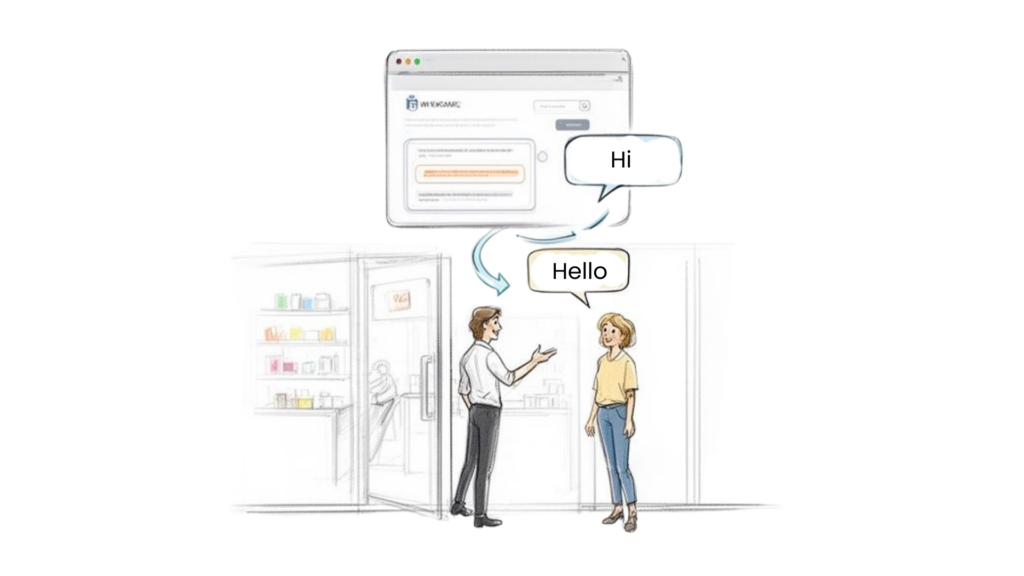
Online Live Chat
This real-time connection is a powerhouse for both sales and support.
- For an e-commerce store: It’s a way to answer a last-minute question about shipping right before a customer clicks “buy,” saving the sale.
- For a SaaS company: You can guide a new user through a tricky feature, instantly improving their first impression and reducing churn.
To get a quick handle on what live chat brings to the table, here’s a breakdown of its main purpose and the business results it drives.
Live Chat At a Glance
| Core Function | Primary Business Impact |
|---|---|
| Real-Time Communication | Instantly answers customer questions, reducing sales friction. |
| Proactive Engagement | Initiates conversations to guide visitors and prevent bounces. |
| Lead Qualification | Gathers information from visitors to identify high-potential leads. |
| Immediate Support | Resolves customer issues on the spot, boosting satisfaction. |
Ultimately, live chat closes the gap between a visitor having a question and you providing the answer. That small window is often the difference between a lost lead and a loyal customer.
The Different Types of Live Chat
Live chat isn’t a one-size-fits-all tool. It generally breaks down into three models, each designed for different business needs. Figuring out which one fits your goals is the first step.
- Human-Powered Live Chat: A real person from your team handles every conversation. It’s perfect for complex sales questions or sensitive support issues that need a genuine human touch and empathy.
- AI Chatbots: These are fully automated bots that can answer common questions, qualify leads, and even book appointments 24/7. They’re a lifesaver for managing high volumes of simple, repetitive inquiries.
- Hybrid Models: The best of both worlds. A chatbot fields the initial query, handling the basics. If things get too complicated, it seamlessly passes the conversation—and all the context—over to a human agent to finish the job.
Live chat is more than just another support channel; it’s a proactive tool for engagement. By meeting customers in the moment, you can resolve issues faster, build trust, and directly influence their decision to buy.
The market for this tech is exploding. The global live chat software market is on track to hit USD 1.79 billion by 2032 as more businesses ditch slow, expensive support channels. The reason is simple: it works. Customers who use chat tend to spend more, and conversion rates get a serious lift.
If you’re exploring options, it’s worth reviewing the different live chat support services available. For a deeper dive into the numbers, check out the full research on market growth and ROI at ResearchAndMarkets.com.
The Real Payoff: What Live Chat Actually Does for Your Business
Knowing what live chat is is the first step. The real excitement kicks in when you see what it can do for your bottom line. Adding live chat isn’t just about sticking another button on your website; it’s about fundamentally changing how you talk to customers and driving measurable growth.
When someone lands on your site, you have a tiny window of opportunity to grab their attention. Live chat lets you step in at just the right moment. It’s the digital version of a great retail assistant asking, “Finding everything okay?” right when you need them.
Boost Sales and Drive Conversions
One of the first things businesses notice with live chat is a jump in revenue. By offering real-time help on make-or-break pages—like pricing or checkout—you can squash those last-minute doubts that kill sales and lead to abandoned carts.
Real-world example: A customer is about to buy a product but has a quick question about shipping. Making them wait for an email is a recipe for a lost sale. A live chat agent can swoop in, answer instantly, and guide them right through to purchase. This direct, timely engagement is a game-changer. Just adding a live chat widget can bump up conversion rates by as much as 20%.
Enhance Customer Satisfaction and Loyalty
Today’s customers have zero patience for friction. Long waits on hold or emails that take 24 hours to get a reply? That’s a one-way ticket to your competitor’s website. Live chat meets this demand for speed head-on, providing immediate answers.
This creates a personal, one-on-one connection that feels far more human than other support channels. When a customer feels heard and gets their problem solved fast, their trust in your brand deepens. That positive feeling is exactly what drives long-term loyalty and repeat business. It’s why 63% of consumers now say live chat is their preferred way to get support—they love the speed and convenience.
The numbers don’t lie: customers who engage in a chat before buying can increase revenue by a staggering 48%. It’s a crystal-clear sign that helpful, immediate conversations translate directly into more sales. For a deeper dive, check out these insightful live chat statistics.
Drive Operational Efficiency and Reduce Costs
Live chat doesn’t just make customers happier; it makes your team more efficient. Unlike a phone agent who is stuck handling one call at a time, a skilled chat agent can juggle multiple conversations at once. This ability to multitask dramatically increases productivity without letting service quality slip.
This efficiency means you can serve more customers with a smaller team, which directly lowers your support costs. The whole approach is a cornerstone of a much broader strategy. If you want to understand how this fits into the bigger picture, take a look at our guide on what is conversational marketing. Live chat delivers a powerful return on investment that improves both your customer experience and your bottom line.
Live Chat vs. AI Chatbots vs. Messaging Apps: What’s the Difference?
Figuring out the world of online customer communication can feel like you’re drowning in jargon. You’ve got live chat, AI chatbots, and messaging apps—they all sound similar, but they do very different jobs. Picking the right tool for the job is the first step to a communication strategy that actually works.
- Live Chat: This is the purely human connection. It’s a real person from your team having a direct, one-on-one conversation with a customer in real-time. This is your go-to for complex sales questions or tricky support issues where empathy goes a long way.
- AI Chatbots: They’re your tireless, automated workforce, available 24/7. These bots are built to handle the repetitive stuff—answering common questions, qualifying new leads, or scheduling appointments. They work around the clock, freeing up your human team.
- Messaging Apps: Apps like WhatsApp or Facebook Messenger are simply the channels where these conversations happen. You can run both human-powered live chat and AI chatbots on these platforms to meet your customers where they are.
The real decision isn’t just about choosing a tool; it’s about matching the right type of conversation to the customer’s need at that exact moment. Do they need a quick, automated answer, or are they looking for a detailed, empathetic discussion? Your answer decides whether a bot or a human should step in.
This decision tree breaks down how your goals—whether it’s boosting sales or streamlining support—can point you toward the right live chat strategy.
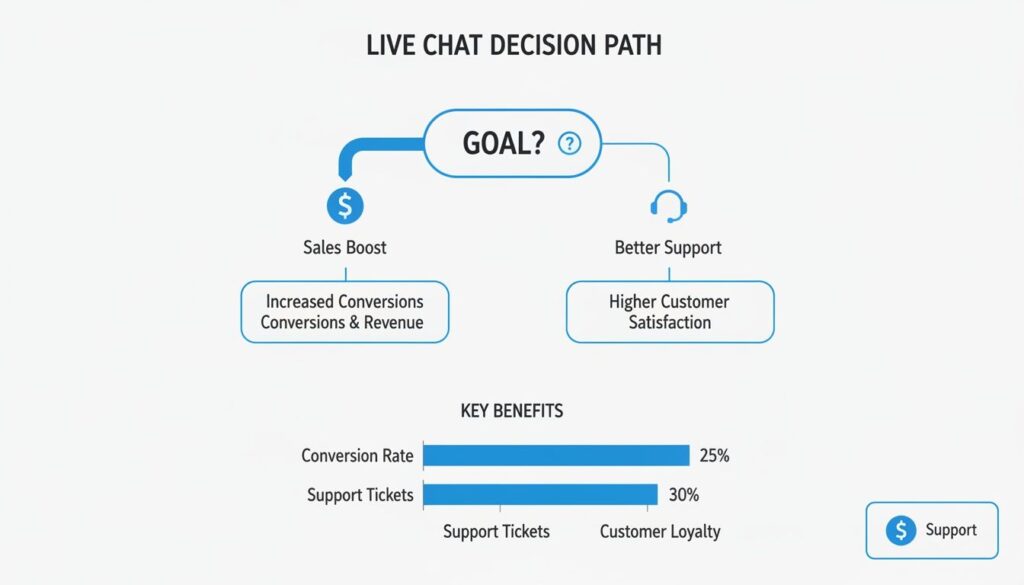
Live Chat Benefits
As the flowchart shows, both sales and support goals can be hit effectively, leading to real, measurable wins for your business.
Choosing Your Communication Mix
Often, the most powerful strategies don’t just pick one—they blend all three. For example, a customer might ask an AI chatbot on your website to check an order status. If the problem gets complicated, the bot seamlessly hands the conversation over to a human agent, all within the same chat window. You can dive deeper into this dynamic by exploring the differences between a chatbot vs live chat.
To make it even clearer, let’s break down how these tools stack up against each other.
Live Chat vs Chatbots vs Messaging Platforms
This table lays out the key differences to help you see where each tool shines.
| Feature | Live Chat (Human Agent) | AI Chatbot | Messaging Platform |
|---|---|---|---|
| Response Time | Instant (during work hours) | Instant (24/7) | Dependent on agent/bot |
| Ideal Use Case | Complex sales, nuanced support | FAQs, lead qualification | Meeting users where they are |
| Scalability | Limited by team size | Highly scalable | Depends on implementation |
| Cost | Higher (staffing costs) | Lower (subscription fee) | Varies by provider |
The goal isn’t just to talk to customers, but to connect with them in the most effective way possible. Knowing when to deploy a human, when to automate, and where to have that conversation is the key.
How Different Industries Win with Live Chat
The theory behind live chat is great, but seeing it drive real-world results is where everything clicks. Across different markets, smart businesses are using this tool as a powerful engine for growth, not just another support channel. Let’s look at how specific industries are turning simple conversations into conversions and loyalty.
E-commerce: Boosting Average Order Value
For any online retailer, two of the biggest headaches are abandoned carts and helping shoppers find exactly what they need. Live chat tackles both head-on.
Use Case: A brand that sells high-end running shoes sees a visitor add a pair to their cart but hestitates on the checkout page. A proactive chat pops up automatically: “Hey! Noticed you’re looking at the TrailBlazer Pro. Any questions about sizing or our return policy before you check out?”
This simple, timely nudge can resolve last-second doubts that kill a sale. But the agent can take it a step further:
- Personalized Recommendations: “Since you’re into trail running, customers who bought these shoes also loved our all-weather running socks. Want to add a pair?”
- Upselling: By suggesting relevant add-ons, the agent instantly increases the average order value (AOV), turning a single purchase into a more profitable one.
This approach transforms a passive shopping trip into a guided consultation, directly impacting sales. It’s no surprise that 63% of consumers say they are more likely to buy from a site that offers live chat.
Digital Agencies: Generating High-Quality Leads
Digital marketing agencies live and die by landing new clients, but their websites often feature complex services. Instead of making potential clients fill out a long contact form and wait, savvy agencies use live chat for instant qualification.
Use Case: A visitor from a mid-sized tech company is browsing an agency’s “PPC Services” page. A chat window appears: “Welcome! Looking to improve your ad spend ROI? I can connect you with a PPC specialist for a free 10-minute consultation right now.”
This approach cuts through the usual sales funnel friction. It offers immediate value and uses the conversation to quickly figure out if the visitor is a good fit, saving time for everyone involved.
The chat agent can ask a few qualifying questions—like budget, industry, and goals—before booking a call with a senior strategist. This ensures the sales team only spends time on warm, high-intent leads.
SaaS Companies: Automating User Onboarding
For Software-as-a-Service (SaaS) companies, a confusing onboarding experience leads to churn. This is where a hybrid chat model works wonders.
Use Case: When a new user logs in for the first time, an AI-powered chatbot kicks off the onboarding flow.
- Guided Setup: The bot walks them through the first steps with interactive messages and links to tutorials.
- Answering FAQs: It instantly answers common questions like, “How do I integrate this with my CRM?”
- Seamless Handoff: If the user asks a complex technical question, the bot smoothly transfers the entire conversation context and all to a live technical support agent.
This strategy provides 24/7 automated help for routine issues while keeping human experts available for the tough problems, resulting in better user activation rates and less strain on the support team.
A Practical Checklist for Getting Live Chat Right
Ready to add live chat? Great move. But just plugging in a tool isn’t a strategy. To get real results—whether that’s happier customers or more sales—you need a solid game plan. This checklist breaks down the setup into manageable steps.
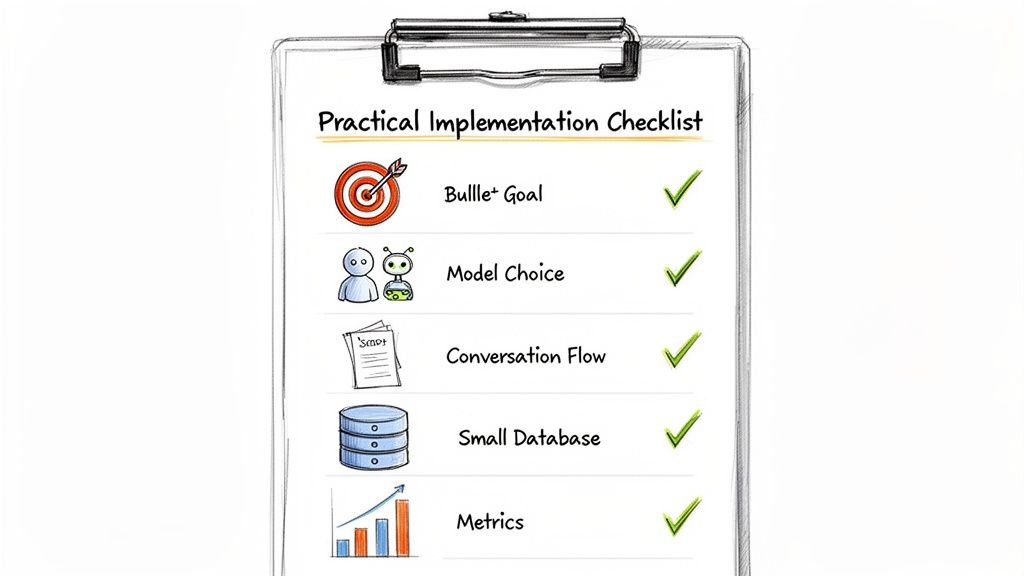
Live Chat Checklist
First, what does “success” look like for you? Don’t just add chat because your competitors are. Set a clear, measurable goal. For example, are you trying to reduce support ticket volume by 20% or increase qualified leads from your pricing page by 15%? Nailing down a specific target will shape every decision you make next.
Define Your Goals and Choose Your Model
Once you know your target, pick the right operational model for your team. This decision comes down to your budget, team size, and the complexity of customer questions.
- Human-Only: Perfect for businesses dealing with high-value conversations where empathy and a personal touch close deals.
- AI-Automated: The go-to choice if you need 24/7 availability to answer common questions and qualify leads on autopilot.
- Hybrid Model: The most flexible option. An AI chatbot handles the simple stuff, then seamlessly passes the conversation to a live agent when a human touch is needed.
Script Key Conversations and Integrate Your Tools
Next, map out your most common conversation flows. What are the top five questions visitors ask? Script out responses that are clear, helpful, and sound like your brand. A crucial piece of this puzzle is a smooth handoff from bot to human, where the agent gets the full chat history.
Then, connect your live chat tool with your other systems, especially your CRM. This integration is non-negotiable. It lets you log conversations, create new leads, and see a customer’s entire history in one place. You can find powerful tools by checking out different live chat software for websites that play well with others.
Setting clear expectations is vital. Use automated greetings to inform visitors of your typical response time. This simple message manages expectations and prevents frustration before a conversation even begins.
Finally, remember that implementing live chat also brings serious cost savings. Companies typically save 15-33% compared to traditional phone support, because chat conversations are cheaper by about 17-30%.
Your Top Live Chat Questions, Answered
Jumping into live chat brings up a few common questions. Let’s cut through the noise and tackle the questions we hear most often so you can decide if it’s the right move for your business.
Conclusion
This hybrid approach gives you the best of both worlds: instant human help during your busiest hours and automated assistance anytime.
In conclusion, live chat refers to a communication channel that allows online chat and real-time support so you can start a conversation with the right customer and respond faster to support questions, reducing wait times, abandonment, and increasing conversions. As a live chat service or live chat app, live chat enables customer service and customer support agents to provide live chat on your website, manage chat requests and chat sessions via a chat box or mobile app, access customer information and chat transcripts, and offer features like personalized service, omnichannel support, and integration with Shopify or an AI platform. The benefits of live chat include improved customer interactions and the customer journey. Agents can quickly handle conversations at the same time, and agents can manage multiple chats to support your business goals, helping you make better decisions with the best live chat software and live chat solutions to attract potential customers who are more likely to convert.
Ready to turn website visitors into loyal customers? Clepher gives you the AI-powered tools to automate sales, marketing, and support across your website and social media channels. Build powerful chatbots with our no-code builder and start having better conversations today. Discover what Clepher can do for your business
Related Posts
Chatbots for Banks: The Ultimate Guide for 2026
April 4, 2026Mastering Conversational AI for E-commerce Success
April 3, 2026Turn Visitors Into Leads With a Web Chat Widget
April 2, 2026
Founder Clepher