
In a world saturated with content, generic posts don’t just get ignored; they can actively damage your brand. You know the feeling: the constant pressure to create fresh material leads to burnout, inconsistent posting, and a feed that fails to turn followers into customers. This isn’t just theory; it’s a reality for countless businesses struggling to see a real return on their social media efforts. The solution isn’t just more content; it’s smarter content. It’s about shifting from broadcasting at your audience to building genuine conversations with them.
This guide provides a dozen specific, actionable social media content ideas designed to break that cycle of ineffectiveness. We’ll move beyond the obvious “post a photo” advice and dive into strategic frameworks you can implement today. Each idea is packed with practical examples and step-by-step instructions. For brands aiming to boost engagement and convey messages humorously, incorporating marketing memes can be a highly effective strategy, adding a layer of personality that resonates with modern audiences.
From interactive polls that capture leads to behind-the-scenes stories that build brand loyalty, you will find concrete methods to:
- Boost audience engagement and interaction.
- Generate qualified leads directly from your posts.
- Drive conversions and sales without being overly promotional.
- Foster a loyal community around your brand.
This collection is your blueprint for turning a silent social media presence into a powerful engine for engagement, lead generation, and sales. Let’s get started.
1. Interactive Polls and Quizzes via Messenger
Instead of just broadcasting a message, you can create a two-way conversation directly inside Facebook Messenger or Instagram DMs. This approach uses conversational AI to guide users through a series of questions, capturing their responses automatically. The real power lies in segmenting your audience in real-time based on their answers, allowing for immediate, transformative personalization.
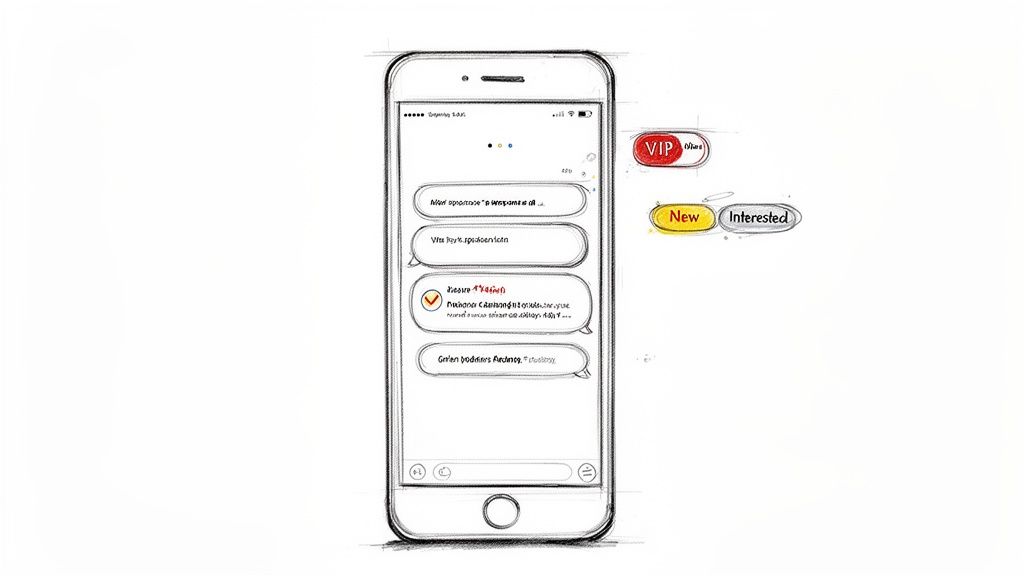
Interactive Poll
This method is incredibly effective for gathering zero-party data directly from your audience. For example, a beauty brand can create a “Find Your Perfect Foundation” quiz that asks about skin type and desired coverage, then instantly recommends the right product and shade. A SaaS company can use a “What’s Your Biggest Marketing Challenge?” quiz to qualify leads and connect them with the most relevant salesperson.
How to Implement This Idea:
- Define Your Goal: First, decide your objective. Is it to generate leads, recommend products, or educate your audience? This will shape your questions.
- Keep it Brief: Aim for 3-7 questions to maintain high completion rates. A long quiz will cause users to drop off.
- Offer an Incentive: Encourage participation by offering a discount code, a free guide, or exclusive access upon completion. For example: “Complete the quiz to get 15% off your personalized recommendation!”
- Automate the Follow-Up: Use the quiz results to trigger personalized follow-up sequences. Tools like Clepher can tag users based on their answers (“oily_skin,” “looking_for_crm”) and send them targeted product recommendations. Exploring different Facebook poll options can help you design more effective conversational flows.
2. Carousel Stories with Sequential Messaging
This technique combines Instagram or Facebook Stories with automated Messenger sequences to guide users through a cohesive journey. Each Story slide or message progresses the narrative, prompting interaction and pulling the audience deeper into a brand experience that concludes with a specific call-to-action. You’re not just posting a story; you’re creating a chapter-by-chapter interactive experience.

Storyboards
This method is perfect for telling more complex stories that a single post cannot capture. A real estate agent could use a sequence to give a “virtual tour” of a property, with each slide revealing a new room and ending with a prompt to book a viewing. A course creator could use a 3-part story to teach a mini-lesson, with each part building on the last and leading to an offer for the full course.
How to Implement This Idea:
- Map Your Narrative: Before building, storyboard your entire sequence on paper. Define the beginning (the hook), middle (the value), and end (the call-to-action) to ensure a logical and compelling flow.
- Pace the Delivery: Use typing indicators and slight delays (2-3 seconds) between messages in your chatbot builder. This mimics a real conversation and keeps users engaged without overwhelming them.
- Strategic CTAs: Don’t wait until the final message for a call-to-action. Place CTAs at key points where interest is highest, such as after revealing a major benefit.
- Test and Optimize: Use A/B testing on your opening hook or final offer. Track completion rates in your flow analytics to see where users drop off. If many people exit after slide 3, you know that’s the part you need to fix.
3. Flash Sale and Limited-Time Offer Announcements
Flash sales and limited-time offers are classic social media content ideas that use urgency to drive immediate purchases. Instead of just posting on your feed, where it can get lost, this method delivers time-sensitive promotions directly into your audience’s Facebook Messenger or Instagram DMs. This direct-to-inbox approach cuts through the noise and creates a powerful sense of FOMO (Fear Of Missing Out).
This strategy is a game-changer for e-commerce brands. A fashion boutique can announce a 24-hour sale on a new collection to its most engaged followers. A software company can offer a weekend-only 50% discount on annual subscriptions to users who recently completed a trial. The key is delivering the right offer to the right person at the perfect time, making the decision to purchase almost irresistible.
How to Implement This Idea:
- Segment Your Audience: Don’t blast your entire list. Create segments for VIP customers, recent browsers, and cart abandoners. Reward your most loyal customers with 1-2 hours of advance notice.
- Create Scarcity: Combine a time limit with a quantity limit. For example: “Only 100 available at this price for the next 48 hours!” This dual scarcity amplifies urgency and drives action.
- Personalize the Message: Use personalization tags to reference a user’s name or browsing behavior. A message like, “Hey [First Name], the sneakers you were looking at are now 30% off for 24 hours!” is far more effective.
- Automate Reminders: Set up an automated reminder message to target subscribers who didn’t click the initial offer. Sending one 2-4 hours before the sale ends can capture a significant number of last-minute conversions.
4. User-Generated Content (UGC) Campaigns and Hashtag Challenges
User-Generated Content (UGC) campaigns turn your audience into your most authentic marketing channel. Instead of you telling everyone how great your product is, your customers do it for you by sharing photos, videos, and testimonials. This social proof is incredibly powerful, building trust and community around your brand. It’s a core social media content idea that generates high-impact, low-cost assets.
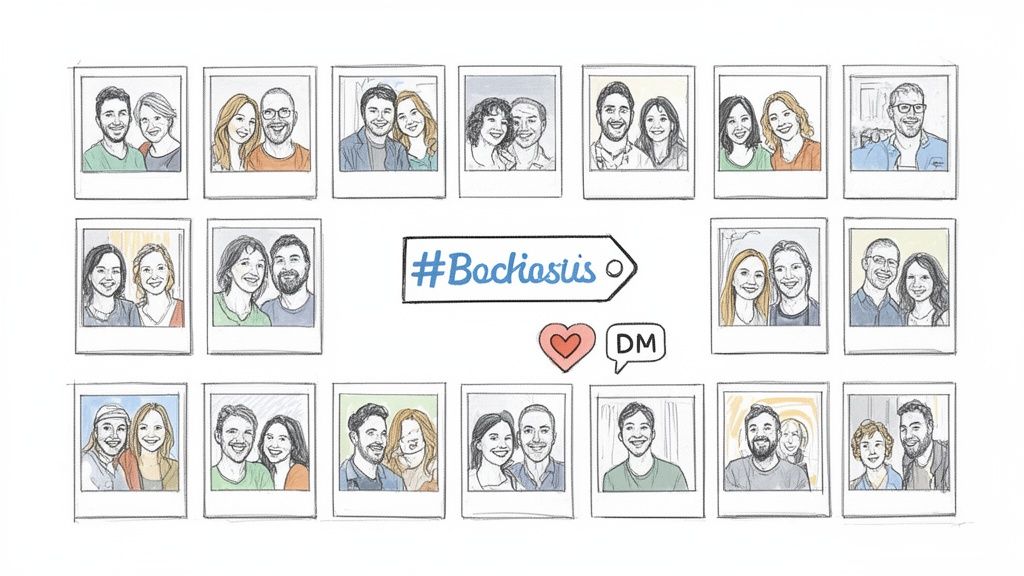
Illustrated Portraits
This strategy is famously used by brands like GoPro, whose #GoProHero hashtag challenges encourage customers to share their most exciting moments. These efforts showcase products in real-life settings, making them far more relatable than polished studio shots. To truly supercharge UGC campaigns, integrate interactive features such as AI virtual try-on experiences, enabling users to create and share personalized content featuring your products.
How to Implement This Idea:
- Create a Clear Call-to-Action: Launch a branded hashtag (e.g., #ClepherInAction) and promote it everywhere. Make the submission process simple: “Share a photo using our product with #YourHashtag to enter!”
- Offer Tangible Rewards: Motivate participation with discounts, gift cards, or the chance to be featured on your main feed. Exclusivity is a strong driver.
- Automate Submission & Engagement: Use a DM automation tool to collect submissions. Set up AI keywords (like your hashtag) to trigger an automated thank-you message and ask for permission to use their content.
- Amplify and Repurpose: Feature the best UGC in your Instagram Stories, Reels, and even broadcast messages. This not only provides you with content but also encourages more people to participate.
- Segment Your Advocates: Track which users submit high-quality content. Tag them in your automation tool as “Brand Advocates” to send them exclusive offers or early access in the future.
5. Educational Series and Tips Content
An educational series is one of the most effective social media content ideas for building authority and trust. Instead of a hard sell, you provide genuine value by sharing how-to guides, industry tips, and structured lessons directly with your audience. This can be delivered through sequential Messenger broadcasts or carousel-style posts, positioning your brand as a helpful expert and nurturing subscribers with free knowledge.
This method excels at demonstrating your expertise. A financial coach could offer a “5-Day Savings Challenge” via DM, sending one simple, actionable tip each day. A software company could create a “7 Days to Better Email Marketing” series to help users succeed with its platform. The goal is to educate first, establishing a relationship built on value before you ever ask for a sale.
How to Implement This Idea:
- Structure Your Curriculum: Plan a short series of 5-7 lessons around a core topic. Keep each lesson focused on a single, actionable tip. For example, “Day 1: Write a Killer Subject Line.”
- Automate Delivery: Use an automation tool to schedule the lessons, releasing one per day or week. This creates anticipation and keeps your brand top-of-mind.
- Include Downloadable Assets: In one of your messages, offer a free checklist or template. This adds value and can be used to capture an email address. For example: “Here’s a free subject line template to help you get started!”
- Show Progress: Let users know where they are in the series (e.g., “Welcome to Lesson 3 of 5!”). This manages expectations and encourages them to complete the sequence.
- Position a Soft Sell: The final message is the perfect place to introduce your product or service as the next logical step. “If you enjoyed these tips, our full course goes into even more detail…”
6. Customer Testimonials and Case Study Sequences
Customer testimonials and case study sequences turn real customer success into compelling narratives. Instead of posting a generic quote on your feed, you deliver mini-stories directly to prospects via Messenger broadcasts or automated DM sequences. This approach walks potential customers through a relatable problem, your product as the solution, and the tangible results achieved, making your value proposition concrete and credible.
This strategy is exceptionally effective because it provides social proof at scale. A fitness coach can share a client’s 30-day transformation story with prospects who have shown interest in a weight loss program. The narrative format makes the customer’s journey feel authentic and attainable, building trust and demonstrating your service’s real-world impact.
How to Implement This Idea:
- Structure the Narrative: Frame each story around the classic “Problem, Solution, Results” model. Start with the challenge (“I struggled with meal prep”), introduce your product (“Your meal plan made it easy”), and end with specific outcomes (“I saved 5 hours a week and lost 10 pounds!”).
- Recruit and Incentivize: Identify your most successful customers and ask them to participate. Offer a gift card or a free month of service as a thank you.
- Segment Your Audience: Use a tool like Clepher to tag subscribers based on their interests or pain points. Send case studies that directly match the profile of the recipient for maximum relevance. A prospect interested in “lead generation” should get a case study about that, not one about “customer support.”
- Vary Your Format: Create both short-form testimonials (a single message with a powerful quote) and long-form case study sequences (a series of 3-5 messages that tell the full story). Video testimonials are especially convincing.
7. Behind-the-Scenes and Brand Story Content
This approach involves sharing authentic, unpolished glimpses of your business operations, team, and processes. Instead of just showcasing the final product, you pull back the curtain to reveal the human element driving your brand. This type of social media content is exceptional for building an emotional connection and differentiating your business by showing the real people and passion behind the scenes.
This method humanizes your brand. A local coffee shop can share a video of their roaster explaining the origin of a new bean. A software startup can post a photo of the team working late to fix a bug, with a caption thanking them for their dedication. These stories build trust and loyalty that go far beyond a simple transaction.
How to Implement This Idea:
- Choose Stories That Align: Focus on content that reflects your core brand values. If you are an eco-friendly brand, show your sustainable sourcing process. If you value customer service, show your team celebrating a great customer review.
- Feature Your Team: Regularly spotlight different team members with a quick Q&A or a short video. This gives your company a face and fosters a stronger connection with your audience.
- Show the Process, Not Perfection: Document the real challenges and how you solve them. Sharing the messy middle of creating a product is more relatable than a flawless, curated narrative.
- Segment Your Storytelling: Use an automation tool to send different behind-the-scenes stories to various audiences. A long-time customer might get a story about your company’s origins, while a new lead gets a look at your production process.
8. Personalized Product Recommendations via AI
Move beyond generic marketing blasts and act as a personal shopper for your audience. With AI-powered tools, you can send tailored product recommendations directly into Messenger and Instagram DMs. This approach analyzes user data like quiz responses and past purchases to suggest items that genuinely match their interests, creating a one-to-one shopping experience that boosts conversions.
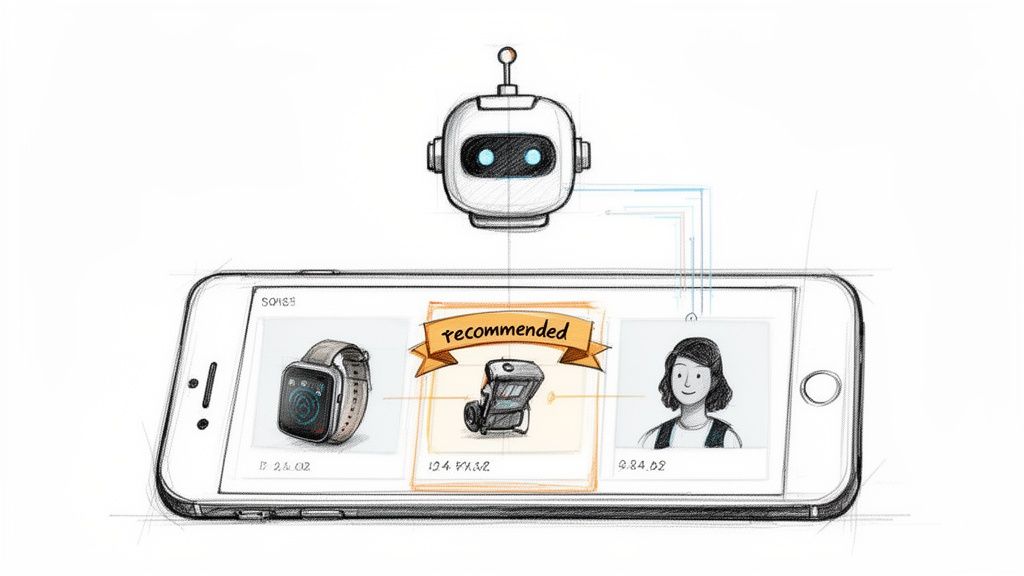
AI Recommendations
This turns your social media DMs into a powerful sales channel. Imagine a fashion brand automatically suggesting a matching handbag after a customer buys a dress, or a bookstore recommending a new sci-fi novel based on a user’s previous purchases. This level of attention makes customers feel understood and significantly increases the likelihood of a purchase. Exploring the role of personalization in digital marketing can provide valuable context.
How to Implement This Idea:
- Gather Preference Data: Use a quiz flow to ask users about their style, needs, or goals upfront. “What’s your biggest skincare concern?” This zero-party data is the foundation for accurate recommendations.
- Recommend in Small Batches: Avoid overwhelming users. Present 1-3 highly relevant products at a time, making the choice feel curated and manageable.
- Explain Your Logic: Briefly add context like, “Because you loved our Vitamin C serum, you might like this…” This builds trust and shows you’re paying attention.
- Provide an “Out”: Always include a button like “Show me something else” or “Not for me.” This keeps the conversation going even if the first recommendation isn’t a perfect fit.
- Automate with Dynamic Feeds: Connect your product catalog to your chatbot to ensure all recommendations are in-stock and display current pricing, preventing customer frustration.
9. Exclusive Community Access and VIP Programs
Creating a sense of belonging is one of the most powerful ways to foster loyalty. Exclusive community access and VIP programs achieve this by offering members special content, early product access, or private events through channels like Messenger and Instagram DMs. This strategy transforms customers into brand advocates, deepening relationships and boosting customer lifetime value.
This approach is highly effective for making your most valuable customers feel seen. A coffee subscription brand could create a “First Sip Club” for VIPs, giving them early access to new roasts. A SaaS company might offer a VIP tier with direct access to new features and one-on-one support. The key is to deliver real, tangible value that is not available to the general public.
How to Implement This Idea:
- Define Your Tiers: Create 2-3 clear membership levels with distinct benefits. For example, a basic tier gets early sale access, while a premium tier receives exclusive products and invitations to private Q&A sessions.
- Manage Access with Automation: Use segmentation tools to manage your VIP communications. With Clepher, you can apply a “VIP” tag to subscribers who join, ensuring they receive exclusive broadcasts that your main audience doesn’t see.
- Deliver Exclusive Content First: Make your VIPs feel like true insiders. Grant them 24-hour early access to new product launches before they are released to everyone else.
- Recognize and Reward Members: Send personalized, automated messages for birthdays or membership anniversaries. A simple message acknowledging their loyalty can go a long way in strengthening the relationship.
10. Interactive Contests and Giveaways with Lead Capture
Interactive contests and giveaways run through Messenger or Instagram DMs are excellent for generating excitement and growing your audience. Instead of a simple “like and share” entry, this method uses a conversational flow to capture valuable lead information directly from participants. This turns a one-off engagement spike into a long-term marketing asset by building a segmented list of subscribers.
This approach is perfect for collecting data while providing value. A fitness apparel brand can run a giveaway for a new workout set. The entry isn’t just a click; it’s a conversation where users willingly share their email in exchange for a chance to win.
How to Implement This Idea:
- Define a Valuable Prize: Ensure the prize is genuinely appealing to your target audience. A generic gift card won’t attract qualified leads as effectively as one of your signature products.
- Structure a Multi-Step Entry: Start by requiring an email for the initial entry. Then, offer bonus entries for actions like sharing the post. For example: “Get 5 extra entries by sharing this with a friend!”
- Automate the Process: Use a tool to manage entries, select a winner, and send notifications. You can even automate a follow-up message for non-winners, offering a “consolation” discount to drive sales. Exploring how to use chatbots for lead generation can provide a clear roadmap for this.
- Build Anticipation: Create urgency with countdowns and reminder broadcasts before the deadline. “Only 24 hours left to enter!” This keeps your giveaway top-of-mind.
- Segment Entrants: Tag participants based on their actions. This helps you understand which incentives are most effective for acquiring new subscribers.
11. Feedback Loops and Customer Surveys via DM
Creating feedback loops directly inside Messenger and Instagram DMs is a direct way to improve your products and services. Instead of sending users to an external link, you can deliver short, conversational surveys directly in their inbox. This approach gathers feedback in real-time, making customers feel heard while providing you with critical data for improvement.
This method turns customer service from a reactive function into a proactive listening tool. An e-commerce store can send a quick satisfaction survey after a delivery. A local restaurant can ask diners to rate their experience via DM right after they’ve paid. The goal is to capture insights at the moment they are most relevant, directly within the platform where the customer is already engaged.
How to Implement This Idea:
- Keep it Short: Limit surveys to 3-5 questions to maximize completion rates. Start with a simple rating scale (like emojis or stars) before asking for open-ended text.
- Time it Right: Send surveys at key moments, such as 3 days post-purchase or immediately after a support ticket is closed.
- Use Conditional Logic: If a customer provides a low score (1-2 stars), immediately trigger a follow-up question asking for more details and offer to connect them with support. This allows for instant service recovery.
- Automate and Segment: Use a tool like Clepher to tag users based on their survey responses (e.g., “dissatisfied,” “promoter”). This helps you create segments for targeted follow-ups, such as sending a special offer to unhappy customers or asking promoters for a public review.
12. Seasonal Campaigns and Holiday-Specific Content Sequences
Seasonal campaigns align your brand with specific holidays or seasons like Black Friday, Christmas, or Back-to-School. Instead of one-off posts, you create a complete content sequence that builds anticipation, drives sales, and engages your audience around these timely events. This pre-planned approach creates predictable revenue spikes by tapping into existing consumer excitement.
These campaigns are powerful for almost any business. An e-commerce brand can run a “12 Days of Christmas” sale, revealing a new deal each day via DM. A wellness company might create a “New Year, New You” challenge in January. The goal is to tie your products directly to the moments and needs that are already top-of-mind for your audience, making your offer feel more relevant and urgent.
How to Implement This Idea:
- Plan Ahead: Create a content calendar 2-3 months before each major holiday. This gives you time to produce assets and set up your automation.
- Build a Sequence: Don’t just post on the day of the event. Start your campaign 2-3 weeks in advance with teaser content. For example, a first message could promise, “Get ready! Our Black Friday deals are coming. VIPs get early access in just 48 hours.”
- Segment Your Audience: Create targeted gift guides for different customer segments. “Gifts for Dad,” “Gifts under $50.” This personalization makes your recommendations far more effective.
- Automate and Optimize: Use broadcast scheduling to send messages at the optimal time for different time zones. A/B test your messaging angles (e.g., scarcity vs. savings) to see what drives the best results. Also, plan for post-holiday sequences to clear out inventory.
12 Social Media Content Ideas Comparison
| Item | 🔄 Implementation Complexity | ⚡ Resource Requirements | ⭐ Expected Outcomes | Ideal for | 📊 Key Advantages | 💡 Quick Tip |
|---|---|---|---|---|---|---|
| Interactive Polls and Quizzes via Messenger | Medium | Moderate — chatbot setup, question design, segmentation | ⭐ High engagement; first‑party data & lead qualification | E‑commerce, beauty, SaaS, coaches | Real‑time responses; automatic segmentation; conversational data | Keep quizzes 3–7 Qs; incentivize completion; A/B test |
| Carousel Stories with Sequential Messaging | High | High — creative production, timing controls, branching logic | ⭐ Strong attention retention; narrative-driven conversions (harder attribution) | Product launches, courses, onboarding, coaches | Cohesive storytelling; progress indicators; lower friction per step | Map entire story first; test pacing; place CTAs strategically |
| Flash Sale and Limited‑Time Offer Announcements | Low–Medium | Moderate — inventory integration, broadcast scheduling, support ops | ⭐ Immediate conversion spikes; high CTR/open rates | E‑commerce, course platforms, local businesses, subscriptions | Urgency-driven conversions; bypasses feed algorithms; VIP targeting | Segment VIPs for early access; manage inventory & support capacity |
| User‑Generated Content (UGC) Campaigns & Hashtag Challenges | Medium | Moderate — moderation, rights management, curation, incentives | ⭐ Builds trust and social proof; reduces content costs over time | E‑commerce, travel, fitness, community creators | Authentic social proof; scalable content; community engagement | Use clear CTA and hashtag; offer rewards; secure usage rights |
| Educational Series and Tips Content | Medium | Moderate — content creation, scheduling, expert input | ⭐ Long‑term trust & lead nurture; reusable assets; slower ROI | SaaS, coaches, agencies, B2B service providers | Authority building; reduces support load; natural upsell path | Structure 5–10 lessons; include downloadable resources and progress markers |
| Customer Testimonials & Case Study Sequences | Medium | Moderate — customer interviews, editing, permissions | ⭐ Strong social proof; higher conversion for matched prospects | SaaS, e‑commerce, services, health & wellness, coaches | Credible metrics & narratives; repurposable across channels | Recruit best customers; include clear metrics and short/long formats |
| Behind‑the‑Scenes & Brand Story Content | Low | Low — simple photo/video capture, scheduling | ⭐ Builds emotional connection and brand differentiation | E‑commerce, local businesses, startups, conscious brands | Authenticity; low production cost; culture and recruitment content | Feature real team members; align stories with brand values |
| Personalized Product Recommendations via AI | High | High — data integration, recommendation engine, dynamic feeds | ⭐ Increased AOV and conversion; scalable personalization | E‑commerce, fashion/beauty, marketplaces, SaaS | Personalized shopping assistant; reduces choice paralysis; real-time recommendations | Explain “why” recommendations; recommend few items; ensure data accuracy |
| Exclusive Community Access & VIP Programs | High | High — tier design, ongoing exclusive content, community management | ⭐ Higher lifetime value, retention, and advocacy | E‑commerce/luxury, creators, memberships, gaming | Drives loyalty; justifies premium pricing; builds advocates | Create 2–3 clear tiers; use tags to manage VIP communications |
| Interactive Contests & Giveaways with Lead Capture | Medium | Moderate — prize management, legal compliance, multi-step flows | ⭐ Rapid audience growth; high participation; data capture | E‑commerce, local businesses, new brands, launches | Viral potential; low-cost acquisition; strong list growth | Require email/phone; automate winner selection; ensure prize relevance |
| Feedback Loops & Customer Surveys via DM | Low–Medium | Low — survey design, conditional flows, analysis tools | ⭐ Actionable product insights; promoter identification; recovery opportunities | E‑commerce, SaaS, coaches, service businesses, local shops | Conversational insights; NPS tracking; early detractor recovery | Keep surveys 3–5 Qs; follow up detractors within 24 hours |
| Seasonal Campaigns & Holiday‑Specific Content Sequences | Medium | Moderate — advance planning, holiday creatives, inventory coordination | ⭐ Predictable revenue spikes; high ROI windows when timed well | E‑commerce, digital courses, fitness, seasonal product businesses | Repeatable campaigns; high purchase intent; data for optimization | Plan 2–3 months ahead; start sequences 2–3 weeks prior; use scheduling tools |
From Ideas to Impact: Your Next Steps
You now have a robust collection of social media content ideas that move beyond simple posts and into strategic, conversational marketing. We’ve explored everything from interactive quizzes in Messenger to powerful user-generated content campaigns. Each idea is a blueprint for creating experiences that capture attention and drive real business outcomes.
The common thread is a shift in focus. Instead of broadcasting your message to a passive audience, the goal is to pull them into a direct, one-to-one conversation. This is where you build genuine relationships, gather valuable data, and create a direct path from interest to conversion.
Core Principles for Lasting Success
As you move forward, keep these central takeaways in mind. They are the strategic pillars that turn a simple list of social media content ideas into a predictable, revenue-generating system.
- Conversation Over Proclamation: The most effective social media strategies are no longer about shouting from a digital rooftop. They are about starting meaningful conversations in private channels like Messenger and Instagram DMs, where trust is built and loyalty is earned.
- Automation as an Amplifier: Manually managing hundreds of conversations is impossible. Automation is not about replacing human connection; it’s about scaling it. Building automated chat flows allows you to deliver personalized experiences and qualify leads 24/7.
- Data-Driven Iteration: Your first campaign won’t be your best. The key is to launch, measure, and learn. Each quiz, giveaway, or survey provides data that tells you what your audience wants. Use these insights to refine your next campaign for even better results.
Your Actionable Path Forward
Feeling overwhelmed by the possibilities is normal. The secret is to resist the urge to do everything at once. True momentum comes from focused, iterative action.
Here is your immediate plan:
- Select ONE Idea: Review the list and choose a single content idea that aligns with your primary business goal right now. If you need sales, try a flash sale. If you need leads, try an interactive quiz.
- Map the Conversational Flow: Before you write a single line of copy, sketch out the user’s journey. What’s the trigger? What’s the first question? What happens if they answer A versus B? This simple map will become the foundation for your automated chat sequence.
- Build and Launch: With your map in hand, use a tool like Clepher to build the automated flow. Write the copy, set up the triggers, and connect it to your social media post. Then, launch your campaign.
- Analyze and Adapt: Once the campaign is live, watch the data. How many people started the conversation? Where did they drop off? What was the conversion rate? Use this information to improve your next attempt.
This simple, repeatable process is how you build a resilient and effective social media machine. By focusing on one campaign at a time, you transform a list of social media content ideas from a static document into a dynamic engine for growth.
Conclusion
Turning social media content ideas into action starts with a clear content strategy that focuses on relevant content and the types of content that perform well for your niche. Whether you create content for TikTok, LinkedIn, YouTube video shorts, or other social media channels, mixing short-form videos, infographics, social media videos, and visually engaging pieces of content will help your social media accounts stand out. Use hashtags, trending topics, and trending content to stay ahead of the curve and adapt ideas for your social media that resonate with your audience.
Practical tips and tricks include repurposing content across social media platforms, encouraging “user-generated content,” sharing BTS sneak peek posts, and offering related articles or a simple social media post ideas list so you always have 100 content options or fresh ideas to pull from. A marketer should track what’s working across social networks and social channels, build brand identity and brand awareness, and create social media that is on-brand to build trust with your followers. These ideas to help your brand remain relevant will give you ways to use digital content and social media marketing to engage social media users, increase engagement via your social media, and create engaging social media content that helps your brand stand behind the brand.
Ready to turn these ideas into automated, revenue-driving conversations? Clepher is the platform that makes it happen, allowing you to build the Messenger and Instagram DM flows we’ve discussed. Launch your first conversational campaign in minutes at Clepher.
Related Posts
E-commerce Automation Tools: A Complete Guide for 2026
April 16, 2026Instagram Comments Bot: A Guide for Marketers in 2026
April 14, 2026
Founder Clepher