
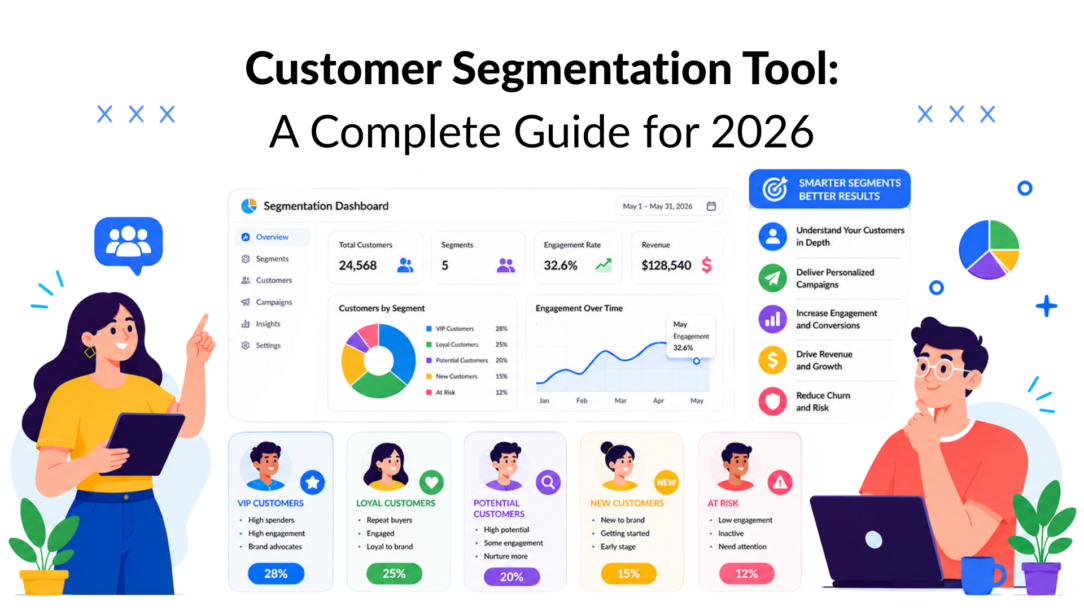
Generic marketing fails for a simple reason. Buyers don’t arrive with the same intent, the same urgency, or the same objections. One person is comparing options. Another is ready to buy but worried about shipping. A third bought twice already and needs a different message entirely.
That’s why a customer segmentation tool matters. It helps you stop treating your audience like a list and start treating them like a set of live conversations. Bain & Company describes segmentation as dividing markets into meaningful groups, estimating the profit potential of each segment, targeting them accordingly, and measuring performance over time. That framing matters because it moves segmentation out of the reporting layer and into day-to-day commercial decisions like pricing, offers, product focus, and service design, as Bain explains in its guidance on customer segmentation as a management tool.
The practical shift is this. Segmentation is no longer just for slide decks and quarterly planning. It’s the engine behind timely messages, smarter automation, and better conversion paths across email, chat, SMS, and social DMs. When teams connect segment data to message delivery, they stop broadcasting and start responding.
Your Guide to Smarter Marketing
Most brands don’t have a traffic problem. They have a relevance problem.
They send the same welcome flow to first-time visitors and repeat buyers. They push the same discount to bargain hunters and premium customers. They route support questions and purchase-intent signals into the same inbox, then wonder why conversion stalls. A customer segmentation tool fixes that by helping teams decide who should get what message, when, and in which channel.
That sounds basic. In practice, it changes everything.
Segmentation used to be treated like a planning document. Marketing teams would build a few audience buckets, label them, and leave them untouched for months. Modern segmentation works differently. It pulls from transaction history, web behavior, support conversations, and engagement signals, then turns those inputs into usable groups for targeting and follow-up.
Why this matters in real campaigns
A strong segment isn’t just descriptive. It’s actionable.
- New leads need direction: They should get education, social proof, and low-friction next steps.
- Repeat buyers need momentum: They respond better to replenishment prompts, cross-sell recommendations, or VIP treatment.
- At-risk customers need intervention: They need service help, reassurance, or a reason to come back before they disappear.
- High-intent browsers need speed: If someone asks about pricing, stock, or delivery, that’s not passive interest. That’s buying behavior.
Segmentation works best when it shapes conversations, not just dashboards.
Conversational marketing emerges as the multiplier. A segment on its own is a label. A segment connected to automation becomes a revenue mechanism. If a customer segmentation tool can identify behavior in real time and pass that signal into chat, Messenger, Instagram DM, or email, you can respond while interest is still active.
For e-commerce brands, agencies, creators, and subscription businesses, that’s the prime opportunity. Use segments to guide messaging in the moment, not after the moment has passed.
What Is Customer Segmentation and Why It Matters
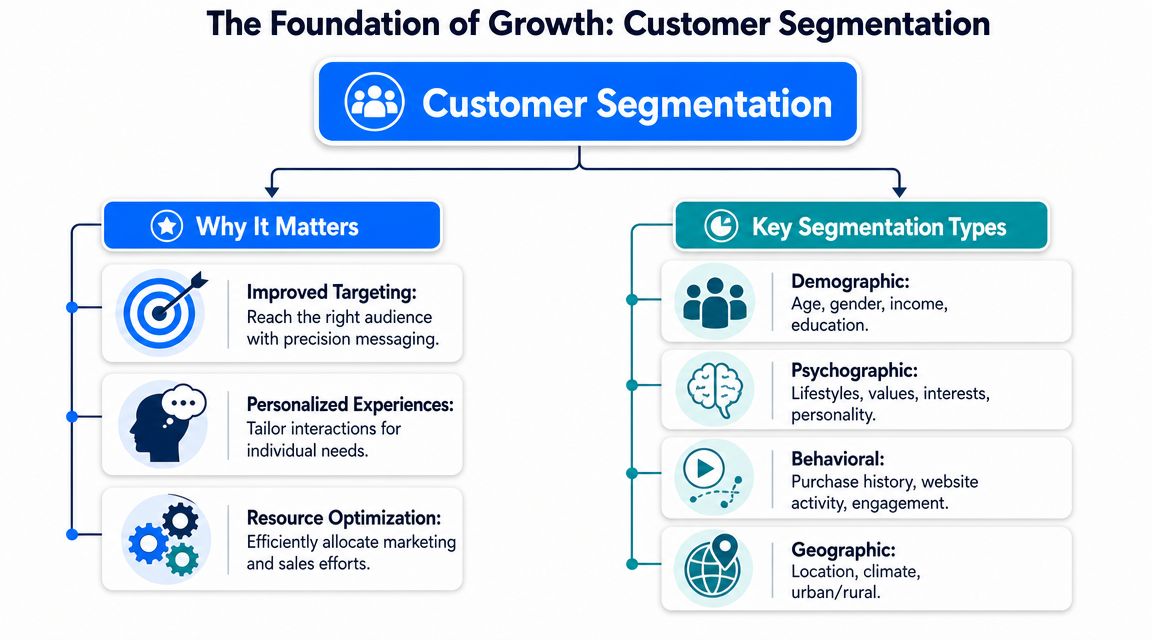
Customer segmentation groups people by shared traits so teams can decide who should hear what, when, and through which channel. That sounds simple, but the business impact is large. Bain explains in its customer segmentation framework that strong segmentation helps companies estimate profit potential by group, target those groups with more precision, and measure performance over time.
A practical comparison is a sales floor. If every shopper gets the same pitch, conversion suffers. If the team knows who is browsing, who is comparing options, who is ready to buy, and who needs support before a purchase, the conversation changes fast.
Customer Segmentation Tool
Why segmentation changes business outcomes
Segmentation matters because it turns customer data into decisions teams can act on. It improves budget allocation, pricing, campaign timing, service follow-up, and retention planning. This approach improves targeting into a core commercial strategy.
It also changes how marketing operates day to day. A segment should not sit in a dashboard waiting for the next quarterly review. It should trigger the next message. If a customer segmentation tool detects repeat purchase behavior, product interest, inactivity, or buying intent, that signal can feed an email flow, chat sequence, SMS follow-up, or DM automation through a platform like Clepher while the customer is still engaged.
Here is where the value shows up across teams:
- Marketing gets sharper: Campaigns reflect real demand, objections, and timing instead of broad assumptions.
- Sales gets context: Reps can separate price shoppers from qualified buyers and adjust outreach accordingly.
- Retention improves: Existing customers receive win-back offers, onboarding help, or loyalty messages based on their behaviors.
- Product teams get clearer feedback: Segment-level behavior shows where friction exists, which users expand, and which groups drop off early.
If you want a practical breakdown of segment models and campaign use cases, this guide to customer segmentation strategies gives a useful starting point.
The old mistake and the better model
A common failure is treating segmentation like a filing system. Teams create personas, save static filters, and call the work finished. A few months later, the segments no longer match live customer behavior, and the messaging starts to miss.
The better model is operational. Define the segment, connect it to an outcome, and attach a response. For example, a high-intent visitor who asks about shipping or pricing should enter a fast follow-up path. A repeat buyer should get replenishment timing or a complementary offer. An inactive subscriber should get a reactivation sequence before churn becomes permanent.
Practical rule: If a segment does not change a message, an offer, or a workflow, it is not useful yet.
The goal is not a longer list of audience groups. The goal is a system that turns customer signals into timely conversations and more revenue.
Common Customer Segmentation Methodologies
Not all segmentation methods carry the same weight. Some are easy to build but weak in action. Others take more work and produce much better targeting.
Mailchimp’s segmentation guidance notes that effective analysis combines transaction records, website analytics, social media, and customer service logs. It also points to metrics like cohort retention, churn rate, customer lifetime value, and monthly recurring revenue by customer group for SaaS and e-commerce. That’s why segmentation has become a financial tool, not just a marketing filter, as described in Mailchimp’s overview of customer segmentation analysis.
The four core methodologies
| Methodology | What It Measures | Example Use Case |
|---|---|---|
| Demographic | Who the customer is | A beauty brand markets different starter kits to students, professionals, and retirees |
| Geographic | Where the customer is | A retailer promotes weather-specific products by region |
| Psychographic | What the customer values or believes | A premium skincare brand speaks to customers who care about ingredient quality and routine simplicity |
| Behavioral | What the customer does | An online store targets cart abandoners, repeat buyers, and dormant customers with different follow-ups |
For a broader primer on grouping audiences before you build campaigns, this guide to what audience segmentation means gives a useful starting point.
Where each method works
Demographic segmentation is the easiest place to start. Age range, income band, family status, or occupation can help shape top-level messaging. The weakness is obvious. Two customers with the same age and income can have completely different buying intent.
Geographic segmentation is practical when location changes demand. Restaurants, local services, event businesses, and retailers often use it well. It’s useful, but limited. Geography tells you context, not motivation.
Psychographic segmentation gets closer to why people buy. It helps with brand voice, creative angles, and positioning. A premium brand can speak to status, wellness, convenience, or sustainability depending on what matters to the segment. The challenge is collection. Psychographic data is often harder to validate and keep current.
Why behavioral segmentation carries more weight
Behavioral segmentation is usually the most actionable because it reflects real intent.
A customer who viewed a product page twice, asked a question in chat, clicked shipping info, and returned the next day has told you far more than a demographic label ever could. That person doesn’t need a generic welcome campaign. They need help getting over the line.
Behavioral segments are also easier to connect to automation:
- Browsed but didn’t buy: Trigger a reminder or FAQ message.
- Repeat purchase pattern: Send replenishment or bundle suggestions.
- High engagement with support content: Offer assisted buying help.
- Inactive after onboarding: Trigger a recovery sequence.
The closer a segment is to observable behavior, the easier it is to turn into revenue.
That doesn’t mean demographics and psychographics are useless. It means they’re often best used as supporting context. For modern marketers, behavior is usually the clearest signal of what to do next.
Core Features of a Modern Segmentation Tool
A weak customer segmentation tool gives you labels. A strong one provides an advantage.
The difference comes down to whether the tool helps you build a living customer model and activate it across channels. Recent guidance increasingly favors behavioral signals like purchase history and channel preference over static demographics, because first-party behavioral data has become more reliable for activation. The more useful buying question is not just which tool to choose, but which data model the tool can support, as discussed in WebEngage’s piece on customer segmentation techniques.
Customer Segmentation Tool Essential Features
What to look for before you buy
Teams often get distracted by dashboards. Dashboards matter, but they’re not the deciding feature.
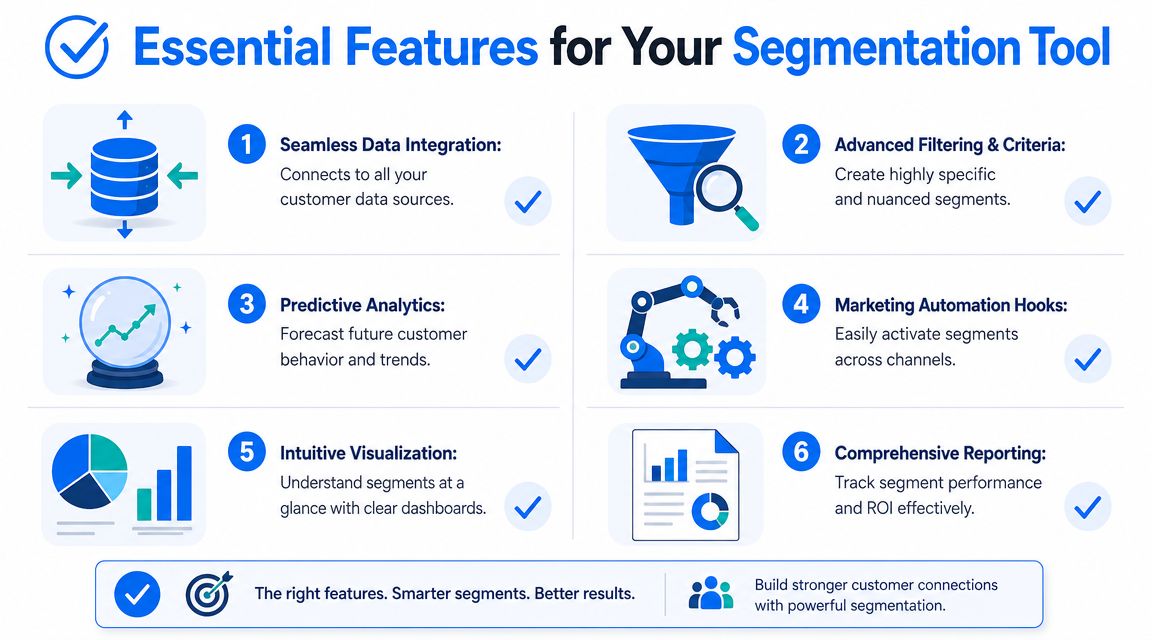
What matters more is whether the platform can do these jobs well:
- Unify data cleanly: It should pull in customer events from commerce, CRM, website, email, and support systems without creating duplicate identities.
- Handle flexible logic: You need static segments for analysis and dynamic segments that update as behavior changes.
- Support behavior-led segmentation: Rules based on recency, frequency, purchase type, support interactions, or engagement are more useful than broad profile filters alone.
- Push segments into action channels: If the segment can’t move into email, ads, SMS, or chat flows, it stays trapped in analysis mode.
- Show performance by segment: You need to compare outcomes, not just group membership.
The real differentiator is activation
Many tools fall short; they can tell you who your customer groups are, but they can’t help you do anything in the moment.
A stronger stack lets you pass segment membership into campaign systems immediately. That means:
- sending a Messenger follow-up to customers who asked product questions,
- routing high-value leads to a live rep,
- suppressing discount campaigns for loyal full-price buyers,
- changing on-site prompts based on return visits or cart activity.
Identity quality matters here. If your records are fragmented, your segments will be too. A useful reference point is this overview of customer identity resolution with AI, because identity stitching is often the hidden dependency behind “bad segmentation.”
The checklist that separates useful tools from noisy ones
Ask vendors these questions:
- Can this tool build one profile from multiple systems?
- Can segments update automatically when behavior changes?
- Can we trigger messages or workflows from segment entry?
- Can we measure outcomes by segment, not just campaign?
- Can non-technical marketers operate it without waiting on engineering?
Buy the tool that shortens the path from insight to message. That’s usually the tool that produces value faster.
Analytics alone won’t move revenue. Activated segmentation can.
How to Implement a Customer Segmentation Strategy
A segmentation strategy breaks when teams overcomplicate it early. They build too many audience buckets, stuff them with weak data, and never connect them to message delivery. A simpler workflow works better.
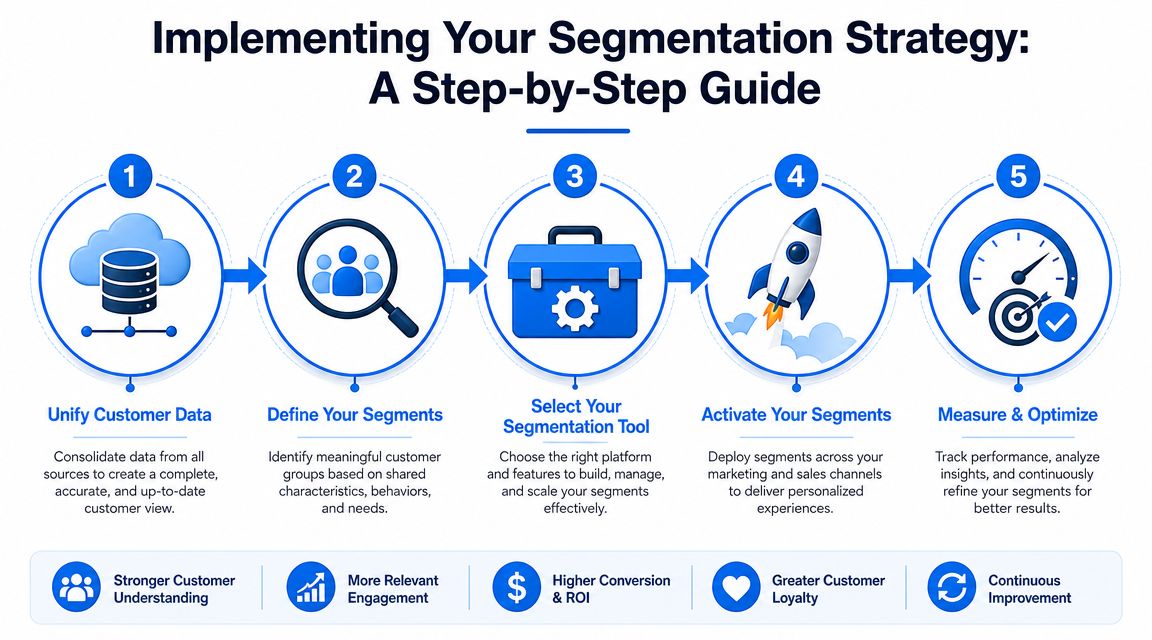
Pushwoosh notes that an effective segmentation stack starts with a unified customer profile across app, web, email, CRM, and support data so rules-based or AI segmentation can work from a richer dataset. That unified profile improves targeting precision for messages and offers, according to Pushwoosh’s summary of user segmentation tools and CDP-style unification.
Customer Segmentation Process
Start with a usable customer record
Before naming segments, fix the profile.
Pull together the signals you already have. For most businesses, that means purchase history, site behavior, lead form entries, support conversations, and campaign engagement. You don’t need every possible field. You need a reliable customer record that tells you what someone has done, what they care about, and where they are in the journey.
That same principle shows up in adjacent retail workflows too. If someone is trying to manage my Target account or handle another account-based buying process, the useful signal isn’t just who they are. It’s what task they’re trying to complete right now. Good segmentation starts from that kind of intent.
Build a short list of high-value segments
Don’t begin with twenty segments. Begin with the few that can clearly change revenue or retention.
A practical starting set looks like this:
- New subscribers: People who joined but haven’t purchased.
- Cart abandoners: People who showed buying intent and dropped.
- Repeat customers: People who’ve already shown trust.
- At-risk buyers: Customers who haven’t returned when they normally would.
- High-value customers: Customers worth protecting from generic promotions.
Each of these groups supports a different conversation.
Connect the segment to an action
At this point, implementation becomes marketing, not analytics.
A segment should trigger a change in message, timing, channel, or route. If it doesn’t, it’s just a report. Tools that combine segmentation with conversational workflows can be especially useful here. Clepher lets teams use tags, segments, and chatbot flows across website chat, Facebook Messenger, WhatsApp, and Instagram Direct Message, which makes it possible to act on segment signals inside ongoing customer conversations.
Here’s a practical e-commerce example.
A shopper visits a product page, opens chat, and asks about shipping cost. That question is more than support. It’s purchase intent with a specific objection. The business can tag that user as shipping-sensitive, place them into a matching segment, and trigger a follow-up flow that answers delivery timing, clarifies thresholds, or presents a shipping-related incentive. The support interaction becomes a conversion path.
A second example works for repeat buyers. If a customer has ordered multiple times and clicks into a new product category, that segment can receive a personalized DM or chat prompt focused on early access, bundle suggestions, or concierge-style support. Same store, same product catalog, different message because the segment changed.
Keep the workflow tight
Use this operating sequence:
- Unify the data
- Choose a small number of segments
- Attach each segment to a specific campaign or automation
- Review performance and refine the logic
Segmentation should answer one practical question every time. What should we send, to whom, right now?
That’s how a customer segmentation tool stops being a database feature and starts acting like a conversation engine.
Measuring Success and Troubleshooting Your Segments
A segment isn’t successful because it exists. It’s successful because it changes an outcome you care about.
The cleanest way to evaluate segmentation is to start with a hypothesis. CGAP’s segmentation toolkit describes an iterative workflow that includes developing hypothesis segmentation, conducting research, refining and finalizing segments, then tracking and measuring results. It also emphasizes combining direct feedback and indirect analytics so segments stay relevant over time, as detailed in CGAP’s customer segmentation toolkit.
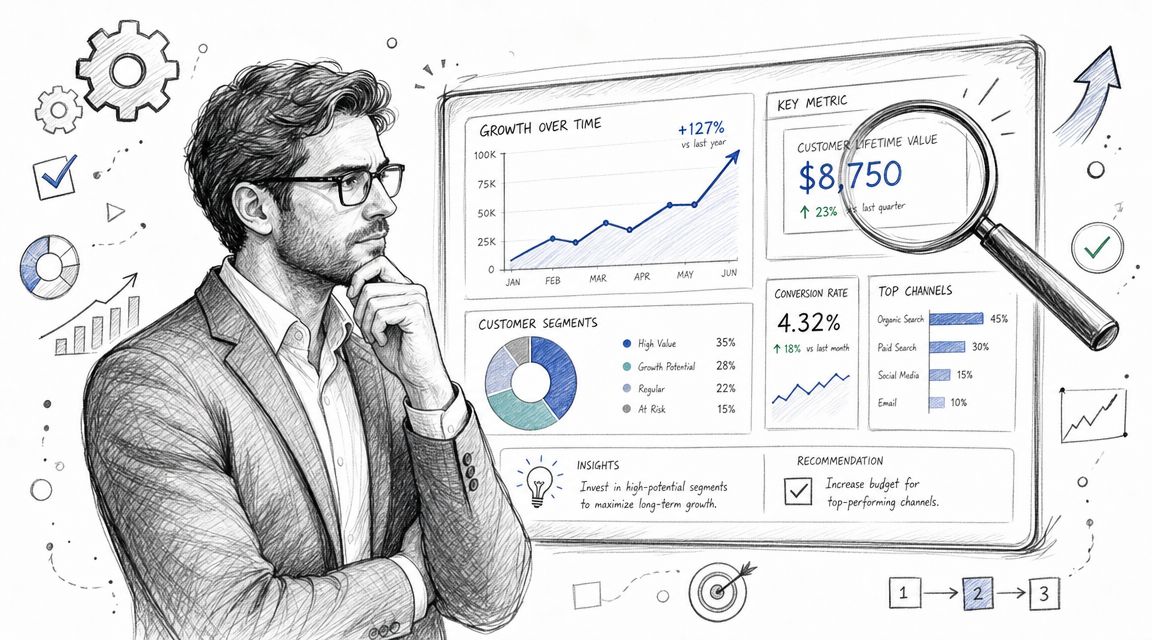
Customer Segmentation Tool Business Analysis
What to measure by segment
The right metric depends on the segment’s job.
If you’re looking at new subscribers, focus on whether they move toward first purchase. If you’re tracking repeat buyers, watch reorder behavior and response to cross-sell or replenishment prompts. If you’re working with at-risk users, pay attention to re-engagement and support outcomes.
Useful questions include:
- Is this segment converting differently from the broader audience?
- Are customers in this segment buying again or disappearing?
- Do support-heavy segments need service changes instead of better copy?
- Does this segment respond better in email, chat, or direct messages?
How to diagnose a broken segment
Sometimes the issue isn’t the campaign. It’s the segment logic.
Common problems usually fall into a few buckets:
- Too broad: The group includes people with different intent, so the message feels vague.
- Too narrow: The segment is technically precise but too small to be useful operationally.
- Built on weak signals: Vanity engagement often looks interesting but doesn’t predict action.
- Left untouched: Customer behavior changes, but the segment rules stay frozen.
If a segment doesn’t outperform generic messaging in a meaningful way, question the inputs before rewriting the copy.
A practical fix is to go back to the behavior that matters. Purchase recency, repeat visit patterns, support inquiries, and product-category interest usually tell you more than surface-level profile data.
Keep segments from decaying
Segments drift because customers drift.
That’s why good teams revisit the hypothesis behind each segment. Ask whether the original signal still predicts the outcome you wanted. Add survey responses or post-purchase feedback when possible, then compare that with observed behavior. If the story customers tell and the actions they take no longer line up, the segment needs to be rebuilt.
The best segmentation programs aren’t more complicated. They’re more disciplined.
Frequently Asked Questions
If you want to turn segments into real-time conversations instead of static reports, Clepher gives you a way to activate audience data across website chat, Messenger, WhatsApp, and Instagram DM. It’s a practical fit for teams that want segmentation to trigger personalized messaging, lead capture, support flows, and follow-up automation from one place.
Related Posts
Customer Journey Automation: The Practical Guide
October 10, 2026Lead Qualification Marketing: A Practical 2026 Guide
October 9, 2026Customer Experience Optimization Playbook
October 8, 2026
Founder Clepher