
59.1% of respondents say customer experience is key to building loyalty, and 58.4% say emotional connection based on beliefs and values helps forge loyalty, according to customer relationship experts Brierley’s summary of eMarketer survey findings. That should change how most brands think about retention.
Too many teams still treat loyalty like a points tab bolted onto email. Customers buy, get a coupon, receive a few scheduled blasts, and then drift. That model can create repeat purchases, but it rarely creates attachment.
The brands that keep customers longer usually do something more practical. They stay present in the moments that shape trust. A shipping delay. A product question. A first reorder. A support issue handled well. A smart reminder sent in the channel the customer regularly checks.
That’s where conversational automation changes the game. Messenger, Instagram DMs, WhatsApp, and on-site chat give brands a way to turn loyalty from a campaign into an ongoing dialogue. Instead of broadcasting at customers, you can respond, guide, recover, and personalize in real time.
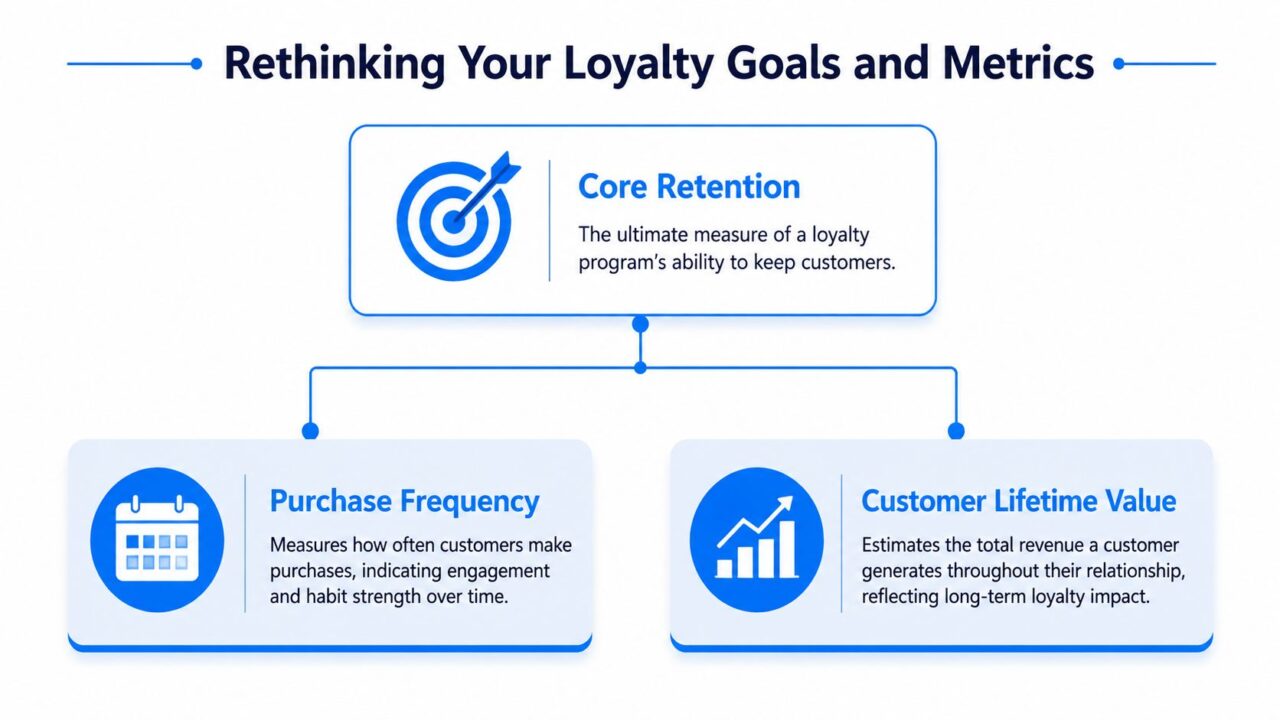
Rethinking Your Loyalty Goals and Metrics
A lot of loyalty programs fail for a simple reason. They measure activity, not loyalty.
If your dashboard only shows signups, points redemptions, or coupon usage, you can’t tell whether the program is changing behavior or just discounting purchases that would have happened anyway. Real loyalty shows up in retention, repeat buying, satisfaction, and long-term value.
A solid starting point is this: customer loyalty should be measured through retention metrics tied to customer experience, including Net Promoter Score, Customer Satisfaction, churn rate, repeat purchase rate, and Customer Lifetime Value, all of which are vital metrics for understanding customer retention, as outlined in Nextiva’s guide to building customer loyalty.
Customer Loyalty Metrics
Stop treating loyalty as a rewards tab
Points and perks can help reward customers and encourage customer loyalty. They just shouldn’t be your operating system.
I’ve seen brands overinvest in rewards mechanics before they’ve fixed the basics. Slow support. Weak onboarding. Generic post-purchase emails. No feedback loop. In that setup, a loyalty program becomes a subsidy for a broken experience.
Use metrics that tell you whether customers want to stay:
- NPS for advocacy: This shows whether customers are likely to recommend you. It’s useful when you want a read on brand trust and overall experience.
- CSAT for service quality: This captures how customers felt about a specific interaction, especially after support or post-purchase help, influencing their likelihood of repeat business.
- Repeat purchase rate for behavior linked to types of customer loyalty: This is the clearest signal that loyalty is turning into action.
- Churn rate for leakage: If customers disappear after first purchase or after onboarding, this metric tells you where to look.
- CLV for economics: This helps you evaluate whether retention work is improving the value of each relationship over time.
Practical rule: If a metric doesn’t help you decide what to improve next, it’s probably a vanity metric.
Build the measurement system before launch
A better way to build loyalty is to treat it like a performance system. Data Axle recommends defining a baseline for your customer base, business objectives, budget, and competition, then setting KPIs such as engagement rate, conversion rate, revenue per customer, purchase frequency, retention rate, and NPS before launch. It also recommends calculating ROI as (Program Revenue – Program Costs) / Program Costs × 100% in its loyalty program planning framework.
That matters because loyalty programs are easy to approve when they sound strategic, and much harder to defend when finance asks what changed.
A practical operating model looks like this:
| Focus area | What to benchmark first | What to watch after launch |
|---|---|---|
| Core retention | Current customer drop-off points | Whether churn slows in key windows can significantly affect the overall customer retention strategy. |
| Purchase behavior | Existing order cadence | Whether repeat purchase timing improves customer loyalty programs. |
| Value growth | Revenue per customer by segment | Whether retained customers deepen over time |
If you need a simple dashboard structure, this guide to client success metrics is a useful reference for tying customer health signals to business outcomes.
What this changes in practice
When you think this way, “how to build customer loyalty” stops being a creative brainstorm and starts becoming an operating decision.
You stop asking, “Should we launch points?” and start asking better questions. Which segment is slipping fastest? What interaction causes second-order drop-off? Which support issue kills repeat buying? Where can a fast conversation remove friction before churn sets in?
That’s when loyalty work gets sharper. And more profitable.
Designing a High-Impact Loyalty Journey
Loyalty is usually won or lost between the campaign moments.
Not on the ad click. Not in the rewards portal. In the handoffs. In the waiting. In the silence after purchase, customer loyalty initiatives can make a significant impact. In whether the customer feels guided or abandoned.
Research summarized by ECI Solutions notes that PwC and Circana point toward moments that matter, customer research, and loyalty plus behavior segmentation as better levers for durable loyalty than blanket incentives. In its article on customer loyalty programs, strategies to boost customer loyalty for small businesses.
Customer Loyalty Journey
Map the journey the way a customer feels it
Most customer journey maps are too neat. They show stages. Customers experience uncertainty.
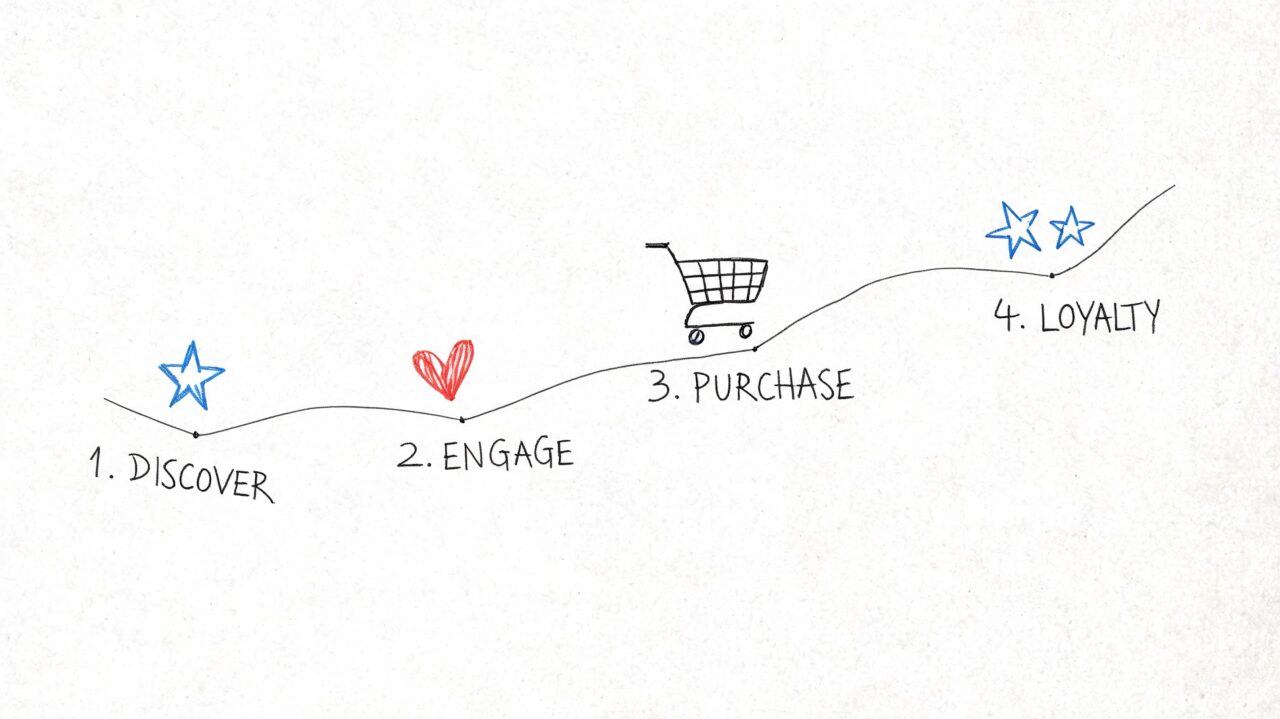
For a DTC brand, I like to map the journey with four practical lenses:
-
Discovery
The customer finds you through social, creators, search, or referral. The loyalty question here is simple. Does your first interaction feel relevant and clear? -
Consideration
They browse, compare, ask questions, leave, come back, and hesitate. Many brands lose people at this stage by forcing them into one-way communication. -
Purchase
Payment goes through, but trust hasn’t been secured yet, which is crucial for retaining loyal customers. The customer now wants reassurance, not more persuasion. -
Post-purchase and reorder
Loyalty compounds, or leaks out, during this critical phase of customer interactions. Updates, support, product education, feedback collection, and reorder timing all matter more than companies typically realize.
Find the moments that deserve intervention
Not every touchpoint needs automation. The high-impact ones do.
For an e-commerce brand selling skincare, supplements, apparel, or pet products, the pressure points usually look like this:
- First product question: The customer wants reassurance before buying. A conversational reply beats a static FAQ.
- Order confirmation and shipping update: Customer anxiety is highest during this phase. A proactive message reduces avoidable support tickets.
- Early usage window: If the customer doesn’t understand how to use the product or what to expect, disappointment shows up fast.
- Issue recovery: A damaged item, delayed shipment, or confusing instruction can end the relationship if the response feels slow or robotic.
- Reorder window: Timely reminders work better when they’re based on product use patterns and actual engagement.
The strongest loyalty journeys don’t feel “automated.” They feel well-timed.
A simple mapping exercise that works
Take one product line and review the customer journey from the customer’s point of view. Don’t start with channels. Start with decisions and emotions.
Ask your team:
- Where do customers hesitate most often?
- Which questions show up before purchase?
- What support issues appear right after delivery?
- Where do customers go silent before churn?
- Which experiences create delight that you can repeat?
Then mark each moment with one of three actions:
| Moment | Risk or opportunity for customer loyalty in B2B. | Best response |
|---|---|---|
| Pre-purchase question | Drop-off risk | Fast answer in chat or DM |
| Order in transit | Anxiety | Proactive update with support option |
| First use | Confusion | Educational follow-up |
| Complaint or friction can negatively impact customer retention if not addressed promptly. | Churn risk | Priority handoff to human support |
| Positive feedback | Advocacy opportunity | Ask for review or referral |
Many brands sharpen their loyalty strategy here. They do so not by adding more promotions, but by deciding exactly where a conversation can reduce friction or deepen trust.
Automating Retention with Conversational Campaigns
The fastest way to make retention feel personal at scale is to automate the conversations customers want.
That doesn’t mean blasting everyone the same script in a different channel. It means building flows that answer questions, reinforce value, and surface intent while there’s still time to act.
How to Build Customer Loyalty Automated Campaign
Zendesk notes that 61% of consumers expect improved response consistency and personalization, and emphasizes that loyalty strengthens when the post-purchase experience is operationalized, especially in the first 60–90 days. That guidance comes from its article on building customer loyalty through customer experience.
Three campaigns every retention team should build
The first campaign is a welcome and onboarding flow. For DTC, that means helping the customer get started, understand delivery expectations, and know where to ask questions. For SaaS, it means guiding them toward activation milestones instead of dropping them into a help center.
A simple conversational version might look like this:
Brand: Thanks for your order. Want updates here on Messenger?
Customer: Yes
Brand: Great. While your order is on the way, do you want quick tips on how to get the most from it?
Customer: Sure
Brand: Perfect. I’ll send the setup guide and check in after delivery.
That flow does three jobs at once. It secures opt-in, sets expectations, and starts a relationship in a two-way channel.
The second campaign is a post-purchase check-in. Many brands still rely on email surveys that arrive too late and get ignored. A DM or messaging prompt can ask what happened in plain language.
Try a branching check-in like this:
- If the customer is happy: tag them for a review request or reorder education
- If the customer is confused: send product usage help
- If the customer has an issue: create a fast path to a live agent
- If they don’t respond: schedule a softer follow-up later
A post-purchase message shouldn’t ask, “How did we do?” unless you’re ready to act on the answer immediately.
Use milestone timing, not batch timing
One big mistake is sending loyalty campaigns on the brand’s schedule instead of the customer’s timeline.
For SaaS and subscriptions, milestone check-ins are stronger than generic newsletters. Monday.com’s customer success guidance, referenced in the verified brief, points to adoption checkpoints in the early lifecycle and business reviews around renewal windows, focusing on customer feedback. That logic applies broadly. Use the moments tied to value realization, not just the calendar.
A practical setup could include:
- New customer follow-up: confirm setup and answer common questions
- Adoption checkpoint for every customer: ask what’s working and where they’re stuck
- Pre-renewal conversation: surface issues before the decision point
- At-risk re-engagement: trigger outreach when engagement drops or support friction rises
Here’s a useful resource if your messaging workflows also need to pass context into inbox-based support or follow-up. Robotomail’s guide to agent email integration explains how email can stay connected to AI-driven workflows without creating disconnected handoffs.
For teams building this inside chat-first systems, Conversational marketing workflows can enhance customer interactions. are useful because they let you trigger flows from behavior, segment responses, and route high-risk conversations to people.
What works and what usually fails
The campaigns that work tend to share a few traits:
- They arrive with context: The customer knows why they’re receiving the message.
- They ask easy questions: Buttons and short replies outperform open-ended friction.
- They branch intelligently: Happy customers and frustrated customers should never get the same next step.
- They escalate cleanly: Automation should shorten the path to exceptional customer service, not block it.
What fails is just as consistent:
| Weak approach | Why it hurts loyalty |
|---|---|
| Promo-first post-purchase flow | It ignores customer anxiety and support needs |
| One script for every buyer | It treats first-time and repeat customers the same |
| No handoff path | It traps frustrated customers in automation |
| Delayed feedback collection | It misses the moment when issues can still be fixed |
Done well, conversational campaigns don’t just retain customers. They create the feeling that your brand is available when it matters.
Scaling Personalization with Smart Segmentation
Personalization earns loyalty only when it changes the experience, not just the copy.
A first name in a message is formatting. A cart reminder is timing. Useful personalization is different. It reflects what the customer has done, what they have told you, and what they are likely to need next. In chat channels, that standard is higher because the interaction feels closer to a real conversation. If the message is off, the brand feels off.
That is why segmentation matters. The goal is not to build more audiences in a dashboard. The goal is to decide who should get help, who should get a nudge, who should get thanked, and who should not receive another promotion until a problem is fixed.
Segment by behavior, then sharpen with declared preferences
Demographics can help with acquisition. Loyalty programs usually get stronger with behavioral segments.
Start with signals like:
- Purchase history: what they bought, how often, and whether they reordered
- Engagement level: replies, clicks, support interactions, and message responsiveness
- Intent signals: questions asked, products viewed, or offers claimed
- Declared preferences: size, use case, goals, concerns, communication preference
Declared preferences are especially valuable in Messenger and Instagram flows because the customer gives them to you directly. That cuts down on guesswork. It also keeps follow-up messages relevant without relying on broad assumptions that break the moment someone behaves differently than expected, ensuring existing customers feel valued.
A practical segmentation model for conversational loyalty
Inside a chatbot builder, useful personalization usually comes from a small number of tags and clear rules. Complex logic looks smart in a workshop and falls apart in production.
Here’s a model that holds up:
| Segment | Trigger | Personalized action |
|---|---|---|
| New buyer | First purchase or first opt-in | Send onboarding help and product education |
| Engaged repeat customer | Multiple purchases or strong message engagement | Offer early access, replenishment prompts, or review request |
| High-risk customer | Support friction, inactivity, or negative feedback | Route to service recovery flow |
| VIP or advocate | Positive feedback plus repeat behavior | Invite referrals, testimonials, or insider perks |
Each segment should map to a different job. New buyers need confidence to become loyal customers. Repeat customers need convenience. High-risk customers need fast recovery. Advocates need recognition that feels earned through effective customer loyalty initiatives.
Field note: Sending a loyalty perk while a support issue is still unresolved is one of the fastest ways to make automation feel careless.
Build the logic before you write the messages
Loyalty teams often create unnecessary chaos by writing the campaign first, then trying to force segmentation rules around it later.
A better approach is to define the operating logic up front. In Clepher, that usually means assigning a tag such as “first-time buyer,” storing product or category data in a custom field, capturing one or two preferences during the conversation, and using conditional branches to control the next step. Someone who reports a problem should exit promotional paths immediately. Someone who confirms they love the product can move into a review, referral, or replenishment sequence.
Keep the system tight:
-
Name the segment clearly
Use labels your support, CX, and marketing teams all interpret the same way. -
Use one primary trigger
If nobody can explain why a customer entered a segment, nobody can maintain it. -
Assign one business goal
Recovery, reorder, onboarding, renewal, or advocacy. -
Set an exit rule
Customers should move forward, age out, or switch paths based on new behavior.
If you want a cleaner planning method, these customer segmentation strategies for lifecycle marketing are useful for matching customer signals to message logic without overbuilding the workflow.
What good segmentation feels like to the customer
The customer should feel understood, not tracked.
A strong message says, “You bought the starter kit last week, so here’s the quickest setup guide and the refill timeline most customers follow.” That is specific, helpful, and easy to act on. A weak message says, “Based on your profile, you may also like these products.” That sounds automated because it is automated in the wrong way.
Good segmentation makes conversational automation feel more human at scale, fostering brand loyalty among loyal customers. It shortens the path to the next useful message, reduces irrelevant promos, and gives your team a cleaner way to protect loyalty before it slips.
Example: The Conversational Loyalty Flywheel in Action
The easiest way to understand how to build customer loyalty with conversations is to follow one customer all the way through the system.
The modern challenge is that third-party data is getting thinner, while attention is more fragmented. Circana’s perspective, summarized in the verified brief, points to a more durable answer: shift loyalty-building into owned, opt-in channels like Messenger or WhatsApp, where chatbots can capture zero-party data and trigger timely follow-ups at the moment of interest. That framing comes from Circana’s discussion of loyalty-building tactics for scaling brands.
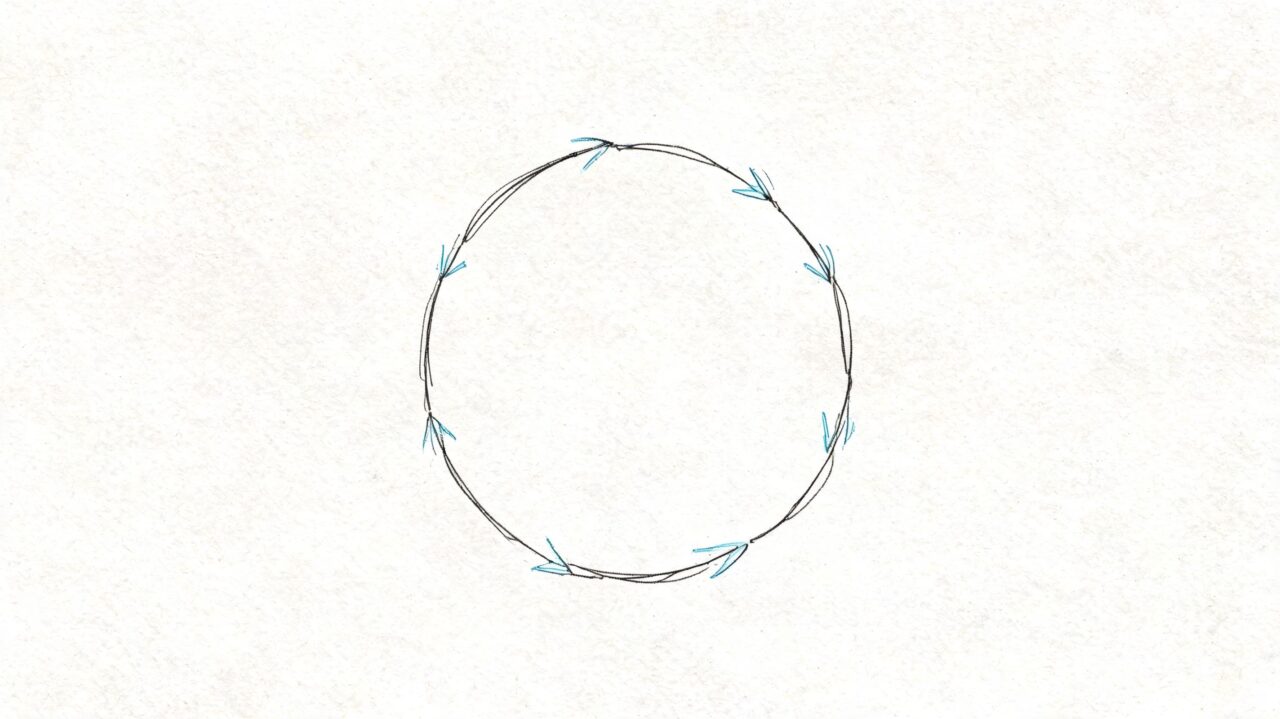
Customer Loyalty Flywheel
Sarah enters the flywheel
Sarah buys from a DTC wellness brand after clicking an Instagram ad. On the thank-you page, she opts into Messenger updates because she wants shipping notifications and usage tips.
That single opt-in changes the relationship. The brand no longer has to hope she opens an email. It now has a direct, permission-based channel.
Here’s the first part of the flow:
- Order confirmation message: confirms purchase and sets expectations
- Preference question: asks whether Sarah wants shipping updates only or also product tips
- Support shortcut for enhancing customer expectations: gives her a quick way to ask a question without hunting through the site
Sarah chooses both. The system stores that preference.
The loop splits based on experience
After delivery, the brand sends a check-in. Not a broad survey. A simple question: “How’s your first experience so far?”
Sarah taps the positive option.
Now the flywheel moves:
| Sarah’s action | System response | Loyalty effect |
|---|---|---|
| Positive feedback | Tag as happy customer | Future messages become more targeted |
| Happy customer tag applied | Ask for public review | Turns satisfaction into advocacy |
| Review intent captured from customer feedback. | Sync to CRM through integration to better manage customer relationships and enhance loyalty programs. | Enriches profile for future segmentation |
| Product interest inferred | Schedule reorder education based on customer data. | Makes the next purchase easier |
That’s the happy path. It’s efficient because every step uses first-party or zero-party information the customer gave directly.
The recovery path matters even more
Now take the alternate version. Sarah replies that the product arrived damaged.
Bad automation is a quick way to lose loyalty. Many brands keep the customer inside a generic survey path or send a discount code that feels tone-deaf.
A stronger conversational path does this instead:
- Apply an issue tag immediately
- Pause promotional messages
- Offer live-agent handoff to ensure existing customers feel supported and valued.
- Capture the issue type for service team context
- Follow up after resolution to confirm satisfaction
That sequence matters because service recovery is part of loyalty, not separate from it.
When a customer raises a problem, your automation should stop selling and start listening.
Why the flywheel compounds
The reason this model works isn’t just convenience. It’s memory.
Each reply makes the next interaction better. Sarah’s opt-in preference shapes channel strategy. Her feedback shapes message tone. Her support history shapes prioritization. Her purchase behavior shapes reorder timing. Over time, the brand stops acting like a sender and starts acting like it knows her.
This is the practical advantage of conversational loyalty systems. They capture intent at the moment it appears, then use that signal to improve the next touchpoint.
That’s much closer to real loyalty than a monthly blast with a coupon code.
Moving from Transactions to Relationships
The old loyalty model was mostly transactional. Buy more, earn more, redeem later.
That still has a place. But it doesn’t answer the harder retention problem. Why does one customer stay after a mistake while another leaves after a decent first order? Usually the difference is whether the brand built trust between transactions.
That’s why loyalty now depends less on reward mechanics and more on relationship design. Customers stay when they feel understood, helped quickly, and remembered across channels. They leave when every interaction feels generic, delayed, or disconnected.
A useful perspective on this comes from relationship marketing examples outside traditional retail. Sensoriium’s examples of practical relationship marketing in B2B tech show the same principle in another context: durable growth comes from relevance, continuity, and helpful follow-up, not just campaigns.
What this shift looks like operationally
If you want to know how to build customer loyalty in a way that lasts, make these changes:
- Replace batch-first thinking with trigger-first thinking: Send messages when customer behavior creates a reason to respond.
- Treat support as retention infrastructure: Fast, clear help protects future revenue.
- Collect preferences in conversation: Let customers tell you what they want instead of inferring everything later.
- Build for recovery, not just promotion: Create a rewards program to enhance customer loyalty. The brands that keep customers are usually the brands that handle problems well.
The brands that win this next phase
The brands that stand out over the next few years won’t just automate more. They’ll automate better.
They’ll know when to use AI to answer instantly and when to route to a person. They’ll use Messenger, Instagram, WhatsApp, and on-site chat as relationship channels, not just support widgets. They’ll design journeys around moments that matter, then measure whether those moments improve retention and value.
That’s the fundamental shift. From campaigns to conversations. From incentives to trust. From transactions to relationships.
And once a brand gets that right, loyalty stops feeling like a marketing tactic. It starts behaving like a growth system focused on customer retention.
If you want to put this into practice, Clepher gives teams a way to build chatbot flows for website chat, Messenger, WhatsApp, and Instagram DM, then use segmentation, live chat, and automation to support post-purchase follow-up, retention campaigns, and customer support without relying only on email.
Related Posts
Customer Journey Automation: The Practical Guide
October 10, 2026Lead Qualification Marketing: A Practical 2026 Guide
October 9, 2026Customer Experience Optimization Playbook
October 8, 2026
Founder Clepher