
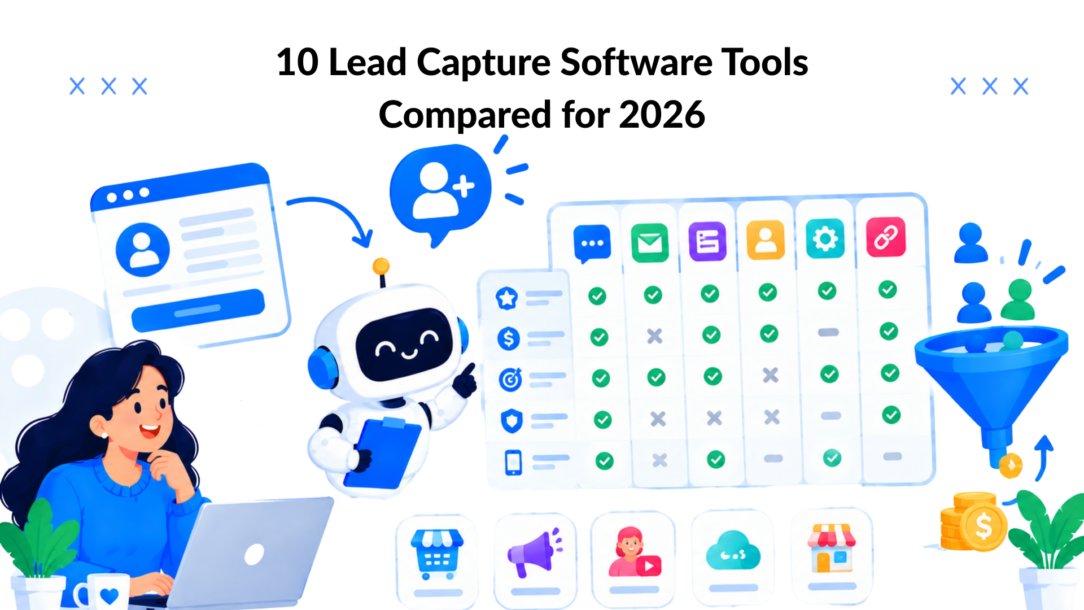
An ecommerce brand might need product recommendations, a discount exchange, and SMS capture in the same visit. A SaaS team running paid traffic may need dedicated landing pages, short forms, qualification questions, and fast testing. Those businesses are both looking for lead capture software, but they don’t need the same type.
There isn’t one universal winner. The right choice depends on lead scoring criteria. How visitors become leads, whether conversations happen on your website or in messaging channels, how much targeting you need, and where captured data must go next. This comparison evaluates capture format, targeting, integrations, pricing uncertainty, implementation effort, and fit for ecommerce, agencies, creators, SaaS, subscription companies, and local businesses.
Start by mapping your conversion path to effectively capture leads. If prospects need help choosing a product, use guided discovery tools to streamline the process and collect their contact information efficiently. If they need qualification before a sales call, use conversational capture. If paid traffic lands on campaign-specific pages, prioritize landing-page testing. A tool that supports your existing path will outperform a feature-heavy platform that adds unnecessary setup.
For teams evaluating chatbot-led capture, this Voicedial.ai chatbot guide offers useful context on conversational experiences. The list below gets practical quickly, matching each platform to the job it performs best.
1. Clepher
A lead who asks a product question may need more than an email form. Clepher is designed for that conversation, combining a no-code chatbot builder with lead capture across websites, Facebook Messenger, WhatsApp, and Instagram Direct Message. It suits ecommerce brands, agencies, creators, coaches, SaaS teams, subscription businesses, local companies, and solopreneurs that need qualification before follow-up and effective lead routing.
Best for conversational qualification
The drag-and-drop Flow builder lets non-technical teams create guided conversations, ask qualifying questions, collect contact details, and route leads according to their answers. AI Agents and AI keyword triggers can handle common requests, send visitors into the appropriate flow, and qualify them before a human joins.
On a website, the capture point can be a popup, slide-in, inline form, floating bar, or chat-based flow. A visitor might select a product category, answer a budget question, then provide an email address or phone number. A local business could use the same structure to separate appointment requests from promotion inquiries.
Clepher also includes live chat, audience segmentation, analytics, personas, tags, custom fields, global fields, typing indicators, conditions, personalization, GDPR controls, A/B testing, and random path distribution. Unlimited broadcasts support recurring promotions and follow-up. Unlimited Pages and Instagram accounts also make it a practical option for agencies and teams operating several brands.
Where it fits and where it doesn’t
Clepher’s clearest advantage is multi-channel continuity. A lead can begin on a website and continue through Messenger, WhatsApp, or Instagram instead of entering a separate email workflow. Native integrations cover more than 50 apps, while Zapier, Make, n8n, and Pabbly connect the platform with more than 5,000 additional tools for email, SMS, CRM, and other handoffs.
Basic installation takes seconds. Advanced routing, channel rules, and third-party integrations require more planning, testing, and maintenance. Clepher does not publish public pricing, independent testimonials, awards, or certifications on its website. Request current plans, trial access, and relevant case material before committing to any management software that supports lead generation. Messaging-platform policies and API changes may also limit available features on Facebook, Instagram, and WhatsApp.
Practical rule: Choose Clepher when the lead needs a conversation, not just a submission.
Next action: Implement lead scoring to prioritize high-quality leads. Map one journey, such as a product question leading to WhatsApp follow-up. Build and test that flow first, then add broadcasts and segmentation.
2. OptinMonster
OptinMonster suits marketers with existing website traffic who want more visitors to become subscribers, inquiries, or customers. Its job is to optimize lead management. Onsite conversion targeting uses popups, slide-ins, full-screen takeovers, floating bars, and behavioral rules instead of ongoing sales conversations.
Exit intent, scroll depth, timers, page-level rules, geolocation, and follow-up logic let you match offers to visitor behavior. An ecommerce store can show a product-specific offer on a category page. A content site can wait until a reader engages with an article before presenting a newsletter prompt. Yes/No multi-step forms, countdown timers, and content locking give small teams more options than a standard embedded form.
A/B testing, analytics, and integrations with Shopify, WooCommerce, Magento, and Zapier support campaign measurement and handoffs. The template library and drag-and-drop builder reduce setup time, so a marketing team can launch without developer support. Plan for testing display rules and integrations before scaling campaigns across the site.
Trade-offs for growing sites
Impression-based limits make usage easier to forecast than an opaque quote, but higher-traffic websites may need plan upgrades as campaigns gain exposure. Annual billing often provides the most favorable pricing, while introductory rates may rise at renewal. Check renewal terms before creating a large campaign library, especially if you plan to use management software for tracking.
Choose OptinMonster when a landing page or content page needs more conversions. Choose a conversational tool when qualification belongs in Messenger, WhatsApp, Instagram, or a sales workflow. Compare those approaches in lead management. lead capture widget guide and find the best OptinMonster resources before committing.
Next action: Install OptinMonster on one high-intent page, create an exit-intent offer, and compare qualified contacts with your current embedded form for better lead data.
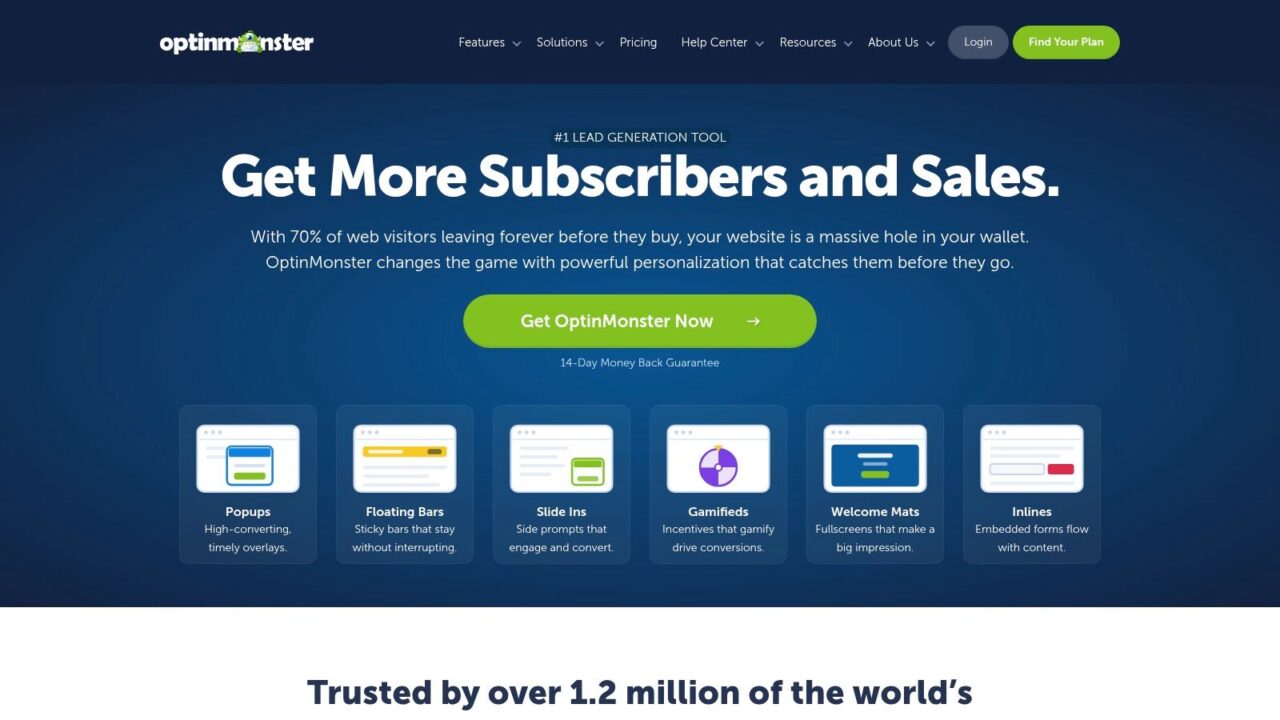
Lead Capture Software Landing Page
3. Justuno
Justuno is the clearest choice for a Shopify or Shopify Plus brand that treats lead capture as part of ecommerce promotion. It combines overlays, banners, gamified campaigns, visitor identification, segmentation, A/B testing, analytics, and email and SMS integrations in an ecommerce-first environment.
A DTC store could show a spin-to-win campaign to first-time visitors, a replenishment reminder to returning shoppers, or a targeted SMS offer to customers browsing a specific collection. Agencies can also use the lead capture platform across client campaigns when hands-on support matters more than having the lowest possible subscription cost.
Strong support for scaling DTC teams
Justuno stands out for onboarding and support. Growth-focused ecommerce teams can use managed services and the Justuno Plus option when internal marketers need a dedicated strategist rather than a self-serve tool alone. That support can shorten the path from campaign idea to a tested promotion, especially when segmentation and ESP or SMS connections need to work together.
The trade-off is pricing uncertainty. Advanced tiers are quote-based and can depend on traffic, so small stores may pay for capability they won’t use. Justuno also has more depth than a simple newsletter popup, which can create unnecessary complexity for a brochure website or early-stage creator.
Next action: List the Shopify segments you already use, such as new visitors, returning shoppers, and product-category viewers, to improve lead management. Ask Justuno to demonstrate one campaign for each segment and show the full data handoff.
4. Wisepops
Wisepops fits brands that want an ongoing onsite experimentation program, not just one popup. Its six onsite channels include popups, quizzes, feeds, web push, embeds, and bars. That range makes it useful for teams coordinating promotions, recommendations, surveys, and subscription capture across a larger website, enhancing their universal lead capture efforts.
Behavioral targeting uses more than 30 signals, and the platform supports A/B testing with control groups. A retail brand might use a quiz for product discovery, a feed for a seasonal promotion, and web push for visitors who aren’t ready to subscribe. A SaaS company could embed a qualification CTA on a feature page while using a separate popup for content subscribers.
Wisepops also offers more than 50 native integrations, including Klaviyo, GA4, HubSpot, Salesforce, and Segment. White-glove onboarding and customer success manager options suit teams that need help designing a repeatable testing process.
Enterprise-style capability with enterprise-style friction
The main limitation is implementation and commercial complexity. Pricing is sales-assisted and can depend on pageviews, channels, and service level. That’s reasonable for an established brand with several onsite programs, but it’s excessive if all you need is a basic email capture popup.
Use Wisepops when multiple onsite surfaces must work from a shared targeting and measurement strategy. Don’t choose it because it has more channels than a simpler tool.
Next action: Define the onsite surfaces you’ll launch this quarter. If the answer is one popup, choose a lighter platform. If it includes quizzes, feeds, embeds, and web push, request a Wisepops plan based on those channels.
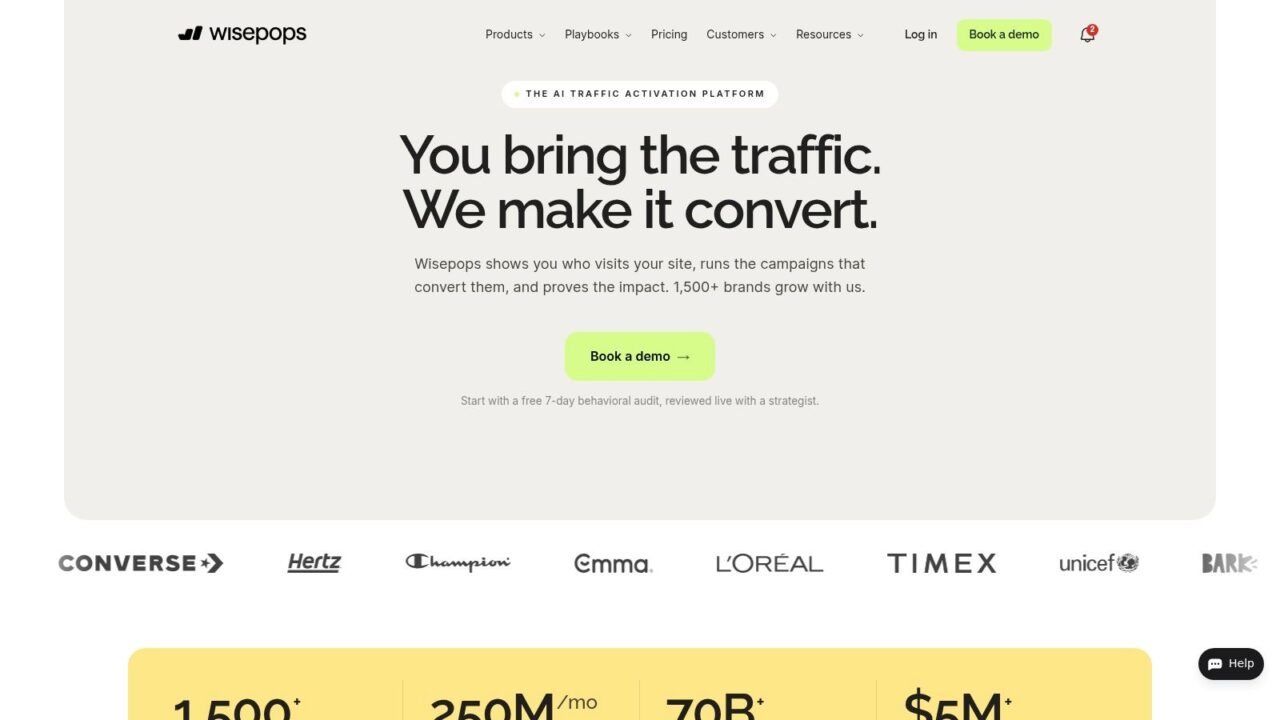
Lead Capture Software Wisepops
5. Sleeknote
Sleeknote is for retail and DTC marketers who care about polished onsite design as much as capture mechanics, particularly in real-time data entry scenarios. Its popup builder supports branded layouts, gamification, targeting, triggers, A/B testing, analytics, Shopify integrations, and connections to major ESPs and CRMs.
That design focus matters when a store has a strong visual identity and can’t afford a popup that looks bolted onto the site. A fashion retailer might use a clean collection-specific signup, while a home-goods store could use a scratch card or quiz without making the experience feel disconnected from the brand, ensuring they collect valuable contact information.
A practical choice for design-led campaigns
Sleeknote’s ecommerce playbooks help teams launch faster, and the no-code builder keeps implementation accessible. It’s more capable than a minimal capture widget, but the same depth can make it a poor fit for a small site that only needs one newsletter form.
Pricing can also sit above basic popup tools. Before signing up, estimate how many campaigns you’ll maintain and whether gamification will support a real promotion strategy or add visual novelty.
Next action: Build one campaign around a specific visitor behavior, such as exit intent on a collection page. Keep the creative on-brand and judge the tool by qualified signups, not popup views.
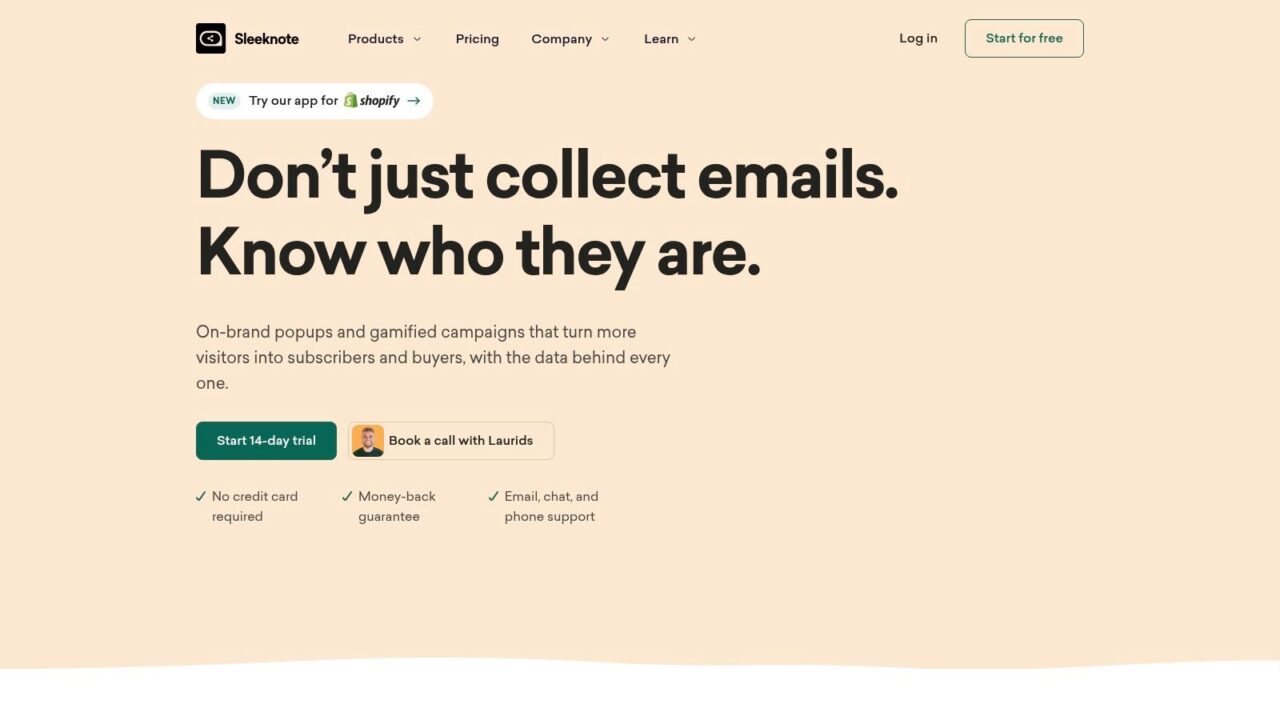
Lead Capture Software Sleeknote
6. OptiMonk
OptiMonk is a strong fit for Shopify and DTC teams that want on-site personalization, not just list growth. It supports popups, slide-ins, full-screen experiences, survey and quiz elements, AI Popups, product recommendations, behavioral targeting, UTM and referrer rules, device targeting, branching Experiences, A/B testing, and analytics.
A shopper arriving from a paid social ad can see a campaign-specific message. A returning visitor can receive a different offer. A product recommendation flow can ask a few preference questions and then direct the shopper to a relevant collection. These experiences give ecommerce teams more ways to connect capture with merchandising.
Flexible targeting, usage-sensitive economics
OptiMonk’s main strength is the combination of campaign logic and ecommerce context. Shopify integrations can support discount codes and product recommendations without requiring a custom development project. The drawback is that plans are tied to traffic or visitor usage, so the cost can grow as the site grows, similar to the expenses associated with manual data entry at a trade show.
That pricing model is not automatically bad. It becomes a problem when a successful acquisition campaign pushes the business into a higher tier without a corresponding improvement in qualified revenue. Model expected traffic before launch, and include the cost of integrations and campaign management in the decision.
Next action: Choose one traffic source, one audience, and one product recommendation flow. Test the personalized experience against the existing capture treatment.
7. ConvertFlow
ConvertFlow is the best option here when a team wants one onsite system for popups, embedded forms, sticky bars, multi-step calls to action, quizzes, and landing pages. It can replace several disconnected tools, which is useful for agencies, growth teams, and SaaS companies managing multiple conversion paths.
Progressive profiling, conditional logic, dynamic text, identity resolution, A/B testing, funnel analytics, CRM integrations, SMS connections, Zapier, and webhooks give marketers control over both the experience and the handoff. A SaaS company could start with an interactive assessment, ask for an email after the first meaningful answer, then route qualified users to a demo page. An agency could reuse the same structure across client funnels while changing the logic and branding.
One platform, one billing constraint
The appeal is consolidation of lead management processes. Teams can manage pages, forms, quizzes, and onsite prompts without stitching together separate tools. The limitation is traffic-based billing tied to funnel views, with higher tiers required as volume increases. Managed experimentation can also increase the operational workload.
ConvertFlow makes sense when multiple capture formats are part of the same funnel. It’s unnecessary if you only need a single popup and already have a reliable landing-page platform.
Next action: Inventory your current popup, quiz, form, and landing-page tools. If three or more perform overlapping jobs, model whether ConvertFlow would reduce integration work enough to justify its traffic-based cost.
8. Unbounce
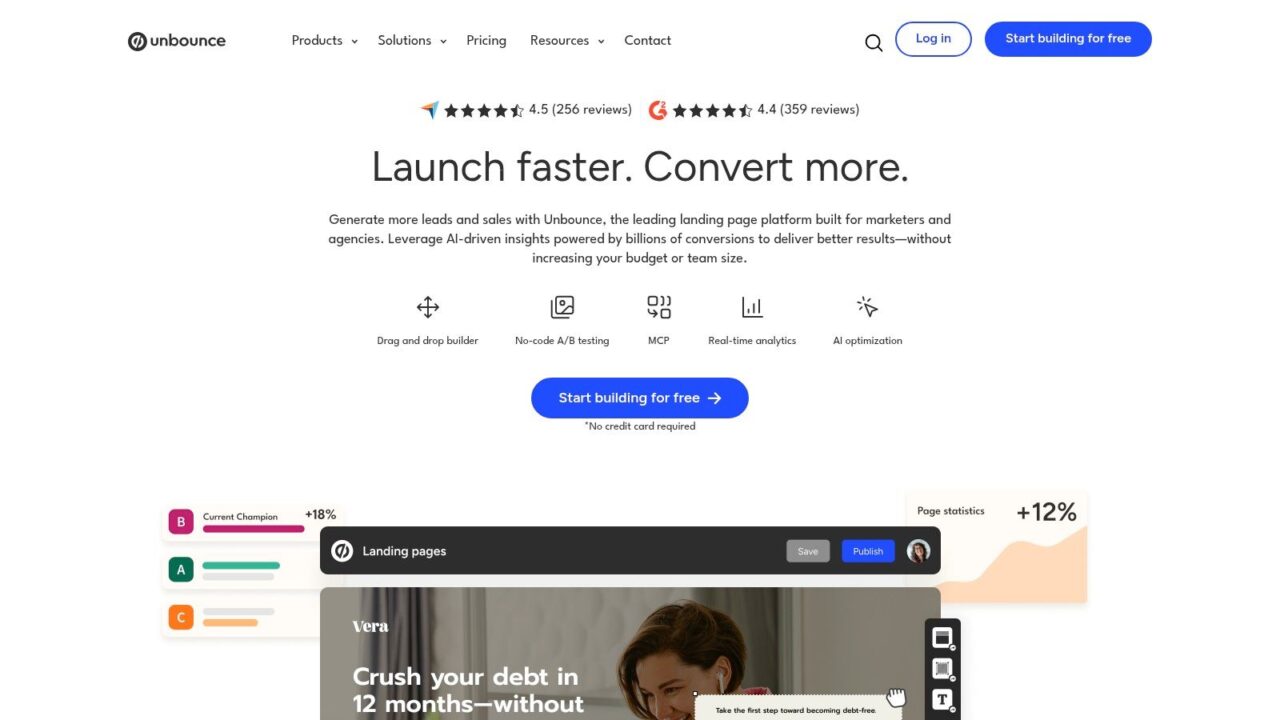
Unbounce is the right choice for teams whose primary lead source is paid traffic and lead retrieval. Its core strength is dedicated landing pages, with built-in popups and sticky bars for additional onsite capture.
The drag-and-drop builder supports A/B testing, Smart Traffic, multi-step forms, Dynamic Text Replacement, conversion insights, and broad domain and subdomain support. A SaaS team can create separate pages for paid search campaigns, match the headline to the visitor’s query, and test form structure without rebuilding the main website. An agency can also manage campaign-specific pages while keeping site-wide overlays in the same environment.
Best when page-level optimization matters
Unbounce is easier to justify when every paid click needs a focused destination. It gives marketers more control than sending all traffic to a generic homepage or a single contact page. Popups and sticky bars add useful capture options, but the platform remains landing-page-led rather than conversation-led.
Pricing is tied to monthly unique visitors. Lower tiers can be outgrown as acquisition scales, so include projected visitor volume and the number of campaigns your team will run in the buying decision.
Next action: Pick one paid campaign with a clear offer and build a dedicated landing page. Measure qualified leads and downstream sales conversations, not just page conversion.
Lead Capture Software Unbounce
9. Privy
Privy is the practical choice for Shopify brands that want to capture email and SMS in one place. It combines popups, exit-intent displays, gamified campaigns, mini-quizzes, embedded forms, landing pages, email automation, SMS automation, and Shopify segmentation.
That combination reduces the need to connect a separate popup tool to an email service and an SMS platform. A DTC brand can collect a phone number through an exit-intent offer, add the shopper to a Shopify-aware segment, and continue with automated messages. It’s a useful fit for small internal teams that want fewer systems to administer.
Good value inside a Shopify-centered stack
Privy supports Shopify, BigCommerce, Wix, and Klaviyo, but its strongest case is still a Shopify-centric operation. Entry pricing is transparent, and the email plan doesn’t impose email send limits. Displays-only plans use pageview-based pricing, so costs can rise with traffic even when the campaign count stays stable.
The platform is less compelling for a SaaS business that needs advanced sales qualification or a local service company whose main conversion path is a live conversation. Ecommerce operators who are still building their subscriber base can also use this guide on lead capture forms. Learn how to build an email list to align capture with follow-up.
Next action: Audit whether your current stack separates popup capture, email automation, and SMS. If it does, compare the total workflow and integration workload with Privy’s combined setup.
10. Octane AI
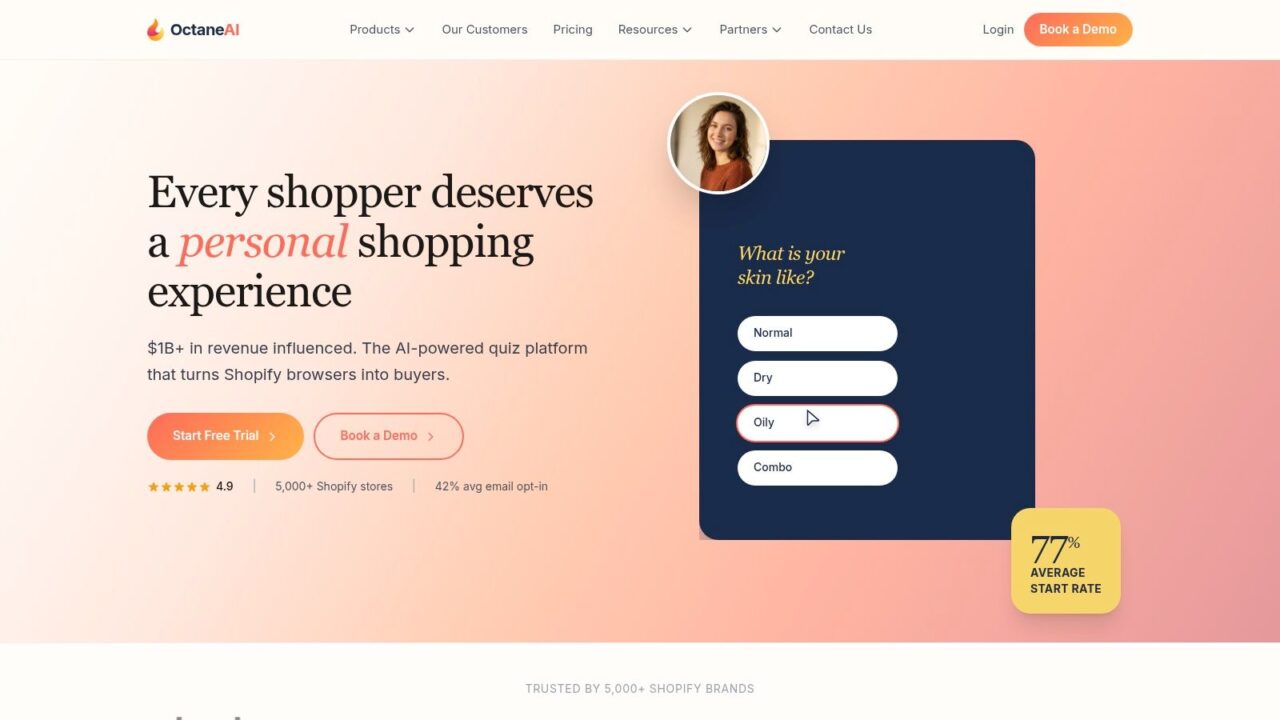
Octane AI is the specialist for quiz-led product discovery on Shopify. It captures email and SMS inside branched quizzes, recommends products, and sends zero-party preference data into ecommerce and marketing systems.
A skincare store could ask about skin type, routine, and product preferences before recommending a bundle. A supplement brand could use goals and usage preferences to guide the shopper toward a product set. The visitor gets a more useful buying experience, while the brand receives information that a generic email form can’t collect.
High intent through guided shopping
Octane AI supports advanced product-recommendation quizzes, deep Shopify and ESP or SMS integrations, and AI functionality. Its strength is not broad onsite coverage. It’s the ability to turn uncertainty into a guided decision and connect that decision with segmentation and follow-up.
Pricing starts higher than generic popup tools and uses credits for quiz engagements and AI usage. That model requires careful forecasting, particularly if a quiz becomes a major entry point from paid or organic traffic. Octane AI also fits Shopify best, so it’s not the right choice for a multi-CMS operation.
For teams considering conversational alternatives, this resource on chatbots for lead generation explains how question-led capture can work outside a product quiz.
Next action: Choose a product category with frequent buyer uncertainty, create a short recommendation quiz, and connect every outcome to a relevant segment and follow-up path.
Lead Capture Software Shopping Quiz
Top 10 Lead Capture Tools Comparison
| Product | Core features ✨ | UX / Quality ★ | Target audience 👥 | Pricing / Value 💰 |
|---|---|---|---|---|
| Clepher 🏆 | ✨ AI Agents, no‑code drag‑drop Flows, multi‑channel (Web, FB/IG, WhatsApp), unlimited broadcasts, 50+ native + 5k via connectors | ★★★★☆ Fast install, intuitive builder, vendor‑reported high open/CTR | 👥 DTC/e‑commerce, agencies, coaches, SaaS, local biz, solopreneurs | 💰 Contact sales, scalable for unlimited Pages; high value for multi‑channel automation |
| OptinMonster | ✨ Exit‑intent, page‑level rules, templates, A/B testing, ecommerce/Zapier integrations | ★★★★☆ Mature UX, large template library | 👥 Marketers, SMBs, sites needing granular display rules | 💰 Impression‑based tiers; best value with annual billing |
| Justuno | ✨ Popups, banners, gamified captures, visitor ID & segmentation, Plus managed service | ★★★★ Known for hands‑on onboarding and support | 👥 Shopify/Plus DTC brands, agencies scaling promos | 💰 Quote/traffic‑based pricing; suited for growth teams that rely on management software to optimize lead generation. |
| Wisepops | ✨ Popups, quizzes, feeds, web push, 30+ behavioral signals, enterprise integrations | ★★★★ Enterprise measurement, behavioral AI for orchestration | 👥 Enterprise & teams investing in onsite experimentation | 💰 Sales‑assisted; pageview/channel pricing (enterprise) |
| Sleeknote | ✨ Designer‑friendly builder, gamified campaigns, ecomm playbooks | ★★★★ Strong UX polish; brand‑forward templates | 👥 Retail & DTC brands prioritizing on‑brand CRO | 💰 Mid‑to‑high; 14‑day trial; premium for design focus |
| OptiMonk | ✨ AI popups, product recommendations, surveys/quizzes, branching experiences | ★★★★ Good ecommerce personalization & multi‑step flows | 👥 Shopify/DTC brands focused on list growth & CRO | 💰 Traffic‑tied plans; usage can grow with visitors |
| ConvertFlow | ✨ Popups, landing pages, quizzes, progressive profiling, funnel analytics | ★★★★ Can replace multiple tools; strong personalization | 👥 Marketers wanting full‑funnel on‑site system | 💰 Traffic/funnel‑view pricing; scales with usage |
| Unbounce | ✨ Drag‑drop landing pages, Smart Traffic, popups & sticky bars, DTR | ★★★★ Excellent for paid traffic landing optimization and lead retrieval strategies. | 👥 PPC/paid‑social teams, agencies, conversion specialists | 💰 Visitor‑based tiers; generous domain allowances but limits apply |
| Privy | ✨ Popups, email & SMS automations, Shopify segmentation, landing pages | ★★★ Good all‑in‑one for capture + messaging | 👥 Shopify DTC brands preferring one integrated tool | 💰 Transparent entry pricing; displays plans tied to pageviews |
| Octane AI | ✨ Branched product quizzes, email/SMS inside quizzes, Shopify deep integration | ★★★★ Purpose‑built for guided shopping & zero‑party data | 👥 Shopify merchants using quizzes for product discovery | 💰 Credit‑based billing; higher starting cost for quiz usage |
Choose the Capture Path You Can Improve
The best lead capture software is the one your team can connect to a real visitor journey, launch without unnecessary delay, and improve with evidence. A popup can work well for a returning shopper, but it won’t replace a conversation when a SaaS prospect needs qualification. A quiz can help someone choose a product, but it may be wasted effort for a paid campaign that needs a fast landing page and a short form.
Choose Clepher when conversational qualification, AI-assisted routing, and multi-channel messaging matter. It’s the strongest fit when your leads arrive through a website, Facebook, Messenger, WhatsApp, and Instagram and need automated follow-up rather than a single database entry.
Choose OptinMonster, Justuno, Wisepops, Sleeknote, or OptiMonk when onsite targeting and ecommerce experimentation are central. OptinMonster is the practical targeting specialist. Justuno suits Shopify and Shopify Plus teams that want hands-on support. Wisepops fits broader onsite activation programs, including universal lead capture strategies for trade shows. Sleeknote is strongest for polished, design-led campaigns. OptiMonk is the better choice when AI personalization and product recommendations matter.
Choose ConvertFlow or Unbounce when forms, funnels, and landing pages lead the strategy. ConvertFlow is more versatile across quizzes, embedded CTAs, forms, and pages, making it ideal for real-time engagement and universal lead capture. Unbounce is more focused and compelling for paid traffic that needs dedicated landing-page testing.
Choose Privy when a Shopify brand wants capture plus email and SMS without stitching together several products. Choose Octane AI when guided product discovery is the core experience and quiz answers should improve recommendations and segmentation.
Before committing, compare the limits that will shape your real cost and workload:
- Traffic or impression limits: Check whether pricing rises with visitors, pageviews, impressions, funnel views, or quiz engagements.
- Integration requirements: Confirm that captured data, tags, answers, consent status, and source information reach your CRM, email, SMS, and analytics systems.
- Renewal and quote-based pricing: Review annual billing, introductory rates, renewal changes, traffic-based tiers, and sales-assisted plans.
- Setup workload: Ask who builds the flows, connects webhooks, maps fields, tests routing, and maintains campaigns.
- Post-capture handoff: Confirm what happens immediately after submission. A lead should enter a useful nurture, sales, or messaging path instead of sitting unused.
Form design still matters. Benchmark data compiled in 2026 reports conversion falling from 23.1% with three fields to 17.0% with five fields, 11.4% with seven fields in the lead capture forms, and 6.9% with ten or more fields (Piperocket lead-generation benchmarks can provide insights into the effectiveness of badge scans at trade shows). A separate benchmark places average lead-generation form conversion at 12.3%, with webinar registration forms at 18.2% and demo-request forms at 9.7%, using the same source.
Other datasets show the same friction pattern from a different angle. Across benchmark data, single-field forms convert at about a rate that can significantly improve with effective badge scan strategies at events. 25.5%, three-field forms at 25%, five-field forms at 20%, six-field forms at 15%, and forms exceeding ten fields at below 10% (Foundry CRO form benchmarks). Keep the first exchange focused, then use progressive profiling, conversational questions, or downstream enrichment to learn more.
The follow-up gap is where many capture programs fail. Independent 2026 coverage reports that 44% of sales reps never follow up with a lead, which highlights the importance of lead data., while 80% of leads never convert, highlighting the importance of effective data entry techniques in capturing contact information.. The same coverage says 41% of marketers use AI in lead-magnet follow-up automations, up from near zero two years earlier, indicating a significant increase in lead generation efforts through methods like badge scans. (Vellum’s lead capture and follow-up analysis enhances data enrichment.).
That’s why you shouldn’t judge a tool only by form submissions. Track qualified leads, response speed, booked conversations, revenue, and whether the next message reaches the right person on the right channel.
Map one high-value visitor journey, launch one focused capture experience, and measure qualified leads rather than form submissions alone.
Clepher combines no-code AI Agents, conversational Flows, website widgets, live chat, segmentation, analytics, and messaging automation across Facebook, Messenger, WhatsApp, and Instagram. Visit Clepher to build one focused multi-channel capture journey and connect new leads to the email, SMS, CRM, or automation workflow your team already uses.
Related Posts
10 Lead Capture Software Tools Compared for 2026
October 18, 2026WhatsApp Chatbot for Ecommerce: A Practical 2026 Guide
October 17, 2026What Is Lead Scoring and How It Drives Real Sales Results
October 16, 2026
Founder Clepher