
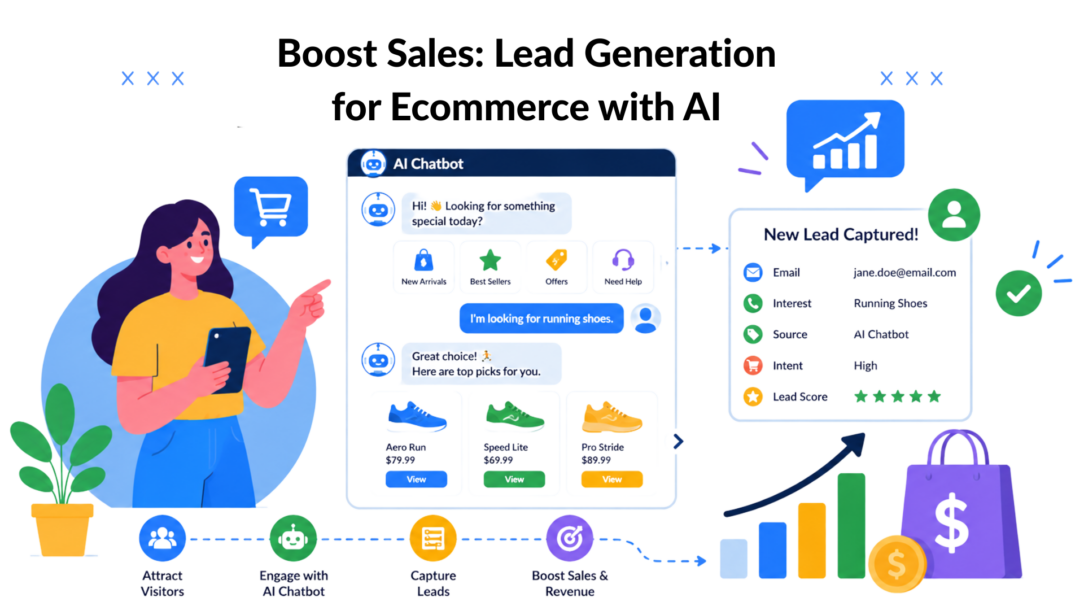
Lead generation for e-commerce changed the moment brands stopped treating every visitor like an email field.
The clearest proof is the economics. E-commerce businesses that implement automation see an 80% boost in lead generation and a 45% increase in ROI, according to Keywords Everywhere’s ecommerce stats roundup. That gap doesn’t come from prettier popups. It comes from systems that respond in real time, qualify intent, and keep the conversation moving while the shopper is still paying attention.
Most stores still run the old playbook. A generic discount popup. A buried footer form. A newsletter box that asks for trust before offering value. That approach still captures some leads, but it misses a bigger opportunity: turning product questions, DM replies, comment threads, and quiz interactions into qualified contacts before a shopper ever reaches checkout.
That’s where conversational lead generation wins. Instead of asking for an email first, you help first. You recommend the right product, answer shipping questions, handle restock requests, and collect preference data naturally inside the conversation. The lead feels understood. Your team gets better data. Follow-up gets easier.
Moving Beyond Popups: The New Ecommerce Lead Mindset
Automation works because it matches how people shop. They don’t move through a clean funnel anymore. They bounce between product pages, Instagram, Messenger, reviews, and email. If your lead capture only lives in a static form on your site, you’re leaving intent scattered across channels.
The old popup model also has a quality problem. A discount-first form often attracts low-intent subscribers who want the code, not the product. You grow the list, then wonder why engagement is weak and conversion lags. That’s a list growth tactic, not a lead generation strategy.
Why static forms underperform
Static forms fail in three common ways:
- They interrupt without context, affecting the quality of analytics.. A visitor lands cold and gets asked for an email before seeing enough value.
- They collect contact info but no buying signal. You know who subscribed, but not what they want.
- They create extra work later. Your team has to guess intent in follow-up campaigns.
By contrast, conversational systems capture both identity and context. A shopper asking “Do you have this in medium?” is a better lead than someone who typed an email to receive a coupon.
Practical rule: If the lead source doesn’t tell you what the shopper wants, your nurture flow starts half-blind.
That’s also why brands putting more effort into community, creators, and social conversations often outperform brands that only optimize forms. If you’re building top-of-funnel demand through partnerships, a tool like a creator marketing platform can help generate the kind of traffic that’s more likely to engage with conversational capture instead of bouncing after a one-time offer.
Think like a sales rep, not a popup app
Good lead generation for ecommerce borrows from strong retail sales behavior. A skilled store associate doesn’t open with “Give me your email for 10% off.” They ask a useful question, narrow options, and guide the buyer.
That same mindset applies online:
| Old mindset | New mindset |
|---|---|
| Capture emails | Capture intent |
| Lead with discount | Lead with relevance |
| Use one site form | Use conversations across channels |
| Blast everyone | Segment by stated preferences |
The channel matters less than the sequence in email marketing strategies. Start with a useful interaction. Ask only what helps the shopper move forward. Save the contact capture for the moment it makes sense.
Popups still have a place. They just shouldn’t carry the whole lead engine.
Design Value First Lead Magnets That Start Conversations
The fastest way to improve lead quality is to stop bribing strangers with weak discounts and start giving them a reason to engage.
That change matters because shopper behavior has moved. Recent 2026 data indicates 68% of shoppers refuse to share emails for discounts but are highly engaged with interactive diagnostics that personalize recommendations, according to CUFinder’s retail ecommerce lead generation analysis. If your only hook is “Join our list and save,” you’re asking for data before earning attention.
What a value-first lead magnet looks like
The strongest lead magnets in ecommerce usually do one of these jobs:
- Product matching. “Find your ideal moisturizer,” “Pick the right running shoe,” “Choose the best supplement stack.”
- Fit or style guidance. “Build your capsule wardrobe,” “Find your perfect frame shape.”
- Buying confidence. “Which material works for your skin type?” “What size setup fits your space?”
Each one creates immediate utility. The lead doesn’t feel extracted. They feel helped.
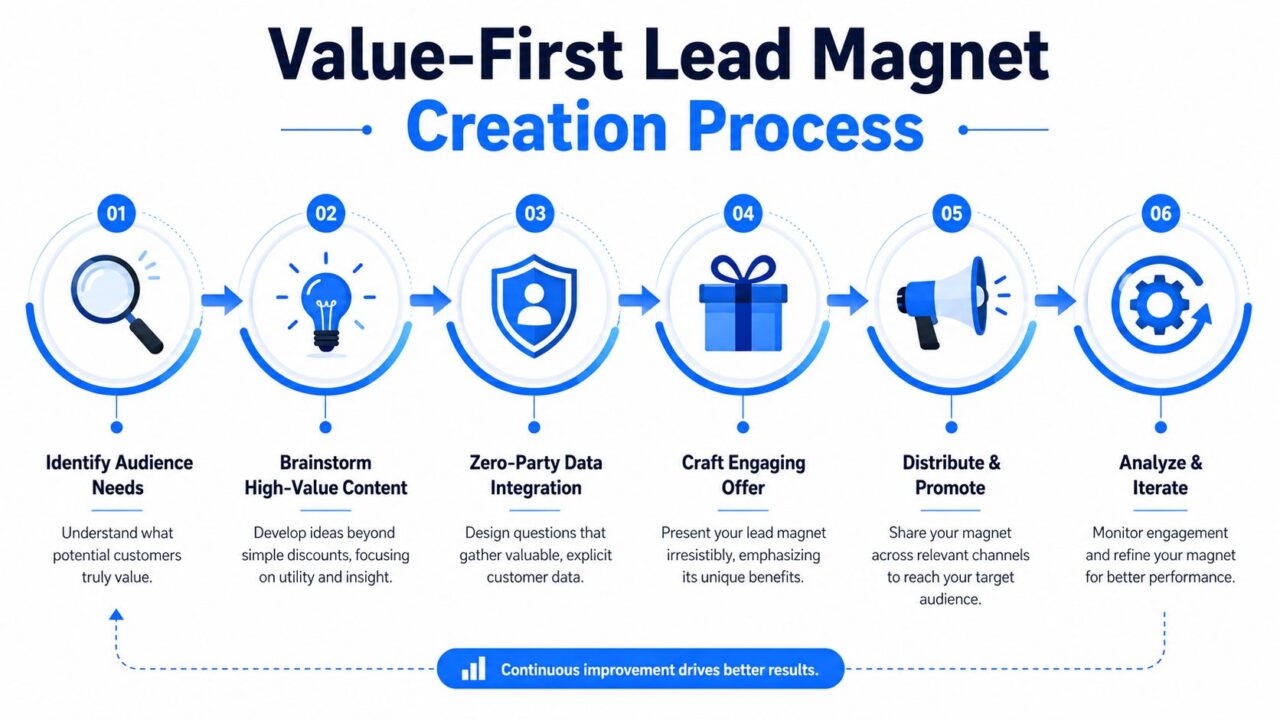
Lead Generation for Ecommerce Creation Process
Build the quiz around decisions, not demographics
A lot of teams write bad quizzes because they start with profile questions. Age. Gender. Location. Those fields may matter later, but they don’t create momentum.
Start with decision-making inputs instead of relying solely on lead gen.
A skincare quiz, for example, should open with questions like:
- What’s your main skin concern right now?
- How would you describe your skin type?
- Do you prefer a simple routine or a full regimen?
- What’s your budget range?
- Are there any ingredients you avoid?
That flow does two jobs at once. It helps the shopper narrow options, and it gives your CRM zero-party data you can use for segmentation.
A practical quiz architecture
Use this simple structure:
| Stage | What happens |
|---|---|
| Problem identification | Ask what the shopper wants to solve |
| Preference mapping | Capture style, budget, format, or use case |
| Recommendation logic | Match answers to products or bundles |
| Light capture | Request email or DM opt-in to save results |
| Follow-up path | Send tailored recommendations and reminders |
The best quiz questions feel like the same questions a good sales associate would ask in chat.
Keep the contact step late in the flow, not early. By the time someone has answered several useful questions, they’re more willing to save their results or get a personalized follow-up.
What to avoid
Three mistakes show up constantly:
- Too many fields up front. Asking for full profiles before value kills momentum.
- Fake personalization. If every answer leads to the same three products, shoppers notice.
- No downstream use of the data. Don’t collect preferences you won’t use in email, SMS, or DM follow-up.
No-code automation can be particularly useful. If you map quiz answers to tags like “budget-conscious,” “dry skin,” “gift buyer,” or “restock-ready,” your follow-up stops sounding generic. The conversation continues with context for potential customers.
Done right, a lead magnet doesn’t just grow a list. It starts a sales conversation with enough detail to make the next message relevant.
Build Automated Social Messaging Funnels
A lot of ecommerce intent never hits your site forms. It shows up in Instagram comments, story replies, Facebook DMs, and Messenger threads. That’s why social messaging deserves its own funnel, not just an inbox.
64% of businesses using AI chatbots report an increase in qualified leads, with real-time interaction boosting conversion rates by up to 20%, according to Martal’s lead generation statistics. The practical takeaway is simple: when someone asks a buying question, a live conversation or automated chat flow usually qualifies better than a static form in lead gen.
Lead Generation for Ecommerce Chatbot Software
Start with one buying scenario
Don’t automate every message on day one. Pick one repeated, high-intent use case.
A good first funnel is restock demand.
If a customer comments “restock?” on an Instagram post or sends a DM asking when a sold-out item is coming back, that person is raising a hand. They’ve already identified the product and signaled interest. Your job is to catch that moment and turn it into a qualified lead.
A basic flow looks like this:
- Trigger on keywords like restock, back, available, size, or notify.
- Confirm the product they want.
- Ask for a preference that matters, such as size, color, or variant.
- Capture the best contact path, usually DM permission first, then email if needed.
- Tag the lead by product interest.
- Route them into a restock alert sequence and related product follow-up.
Use DM questions that qualify without feeling invasive
The best social funnels don’t feel like forms pasted into chat. They feel like helpful retail conversations.
Compare these two approaches:
| Weak DM flow | Strong DM flow |
|---|---|
| Enter your full details | Which size should I alert you for? |
| Join our newsletter | Want me to message you the moment it’s back? |
| What is your budget? | Are you shopping for everyday use or a specific event? |
Small wording changes matter. A question framed around help gets answered. A question framed around data collection gets ignored.
If you’re setting this up on Instagram, automated Instagram messaging makes it easier to trigger flows from keywords, comments, and inbound DMs without routing everything through a human first.
Add branching logic, not just autoresponders
Most brands stop at autoresponders. “Thanks for your message. “We’ll get back soon.” That doesn’t qualify anyone for effective email marketing.
Branching logic is where the funnel starts working:
- Product-specific branch for item questions
- Shipping branch for delivery concerns
- Promotion branch for PPC campaigns. for shoppers reacting to campaign posts
- Support branch for existing order issues
Those branches matter because not every conversation belongs in the lead pipeline. A late-shipment complaint should not receive the same sequence as a new prospect asking for product advice.
Route support away from sales automation early. Lead generation gets cleaner when the bot distinguishes buyer intent from service intent in digital marketing.
The setup can stay simple. In Clepher, for example, you can build these branches visually, assign tags from answers, and pass those tags into later broadcast or nurture logic. That’s useful when you want “restock for black hoodie size M” to follow a different path from “price question on bundle offer.”
What works better than “DM us for details”
Generic invitations create generic conversations. Use offer-specific prompts instead:
- For product launches. “Comment SHADE, and we’ll help you find your match.”
- For apparel. “DM FIT and we’ll recommend your best size.”
- For restocks. “Message RESTOCK for alerts on your color and size.”
- For bundles. “Reply SETUP, and we’ll suggest the best starter kit.”
That framing pre-qualifies the lead before the first automated message goes out. The keyword itself becomes intent data.
Social messaging funnels work because they meet people where they already ask buying questions. Done well, they don’t replace your site capture. They catch the demand your site never sees.
Qualify and Nurture Leads with Smart Automation
Most ecommerce teams spend too much energy capturing leads and not enough energy deciding what should happen next.
That’s the expensive mistake. Ecommerce brands that implement marketing automation see a 77% higher conversion rate compared to those that do not, and 72% of shoppers explicitly demand personalized content during their purchase journey, according to GrowthList’s lead generation statistics. Personalization doesn’t start with clever copy. It starts with structured lead data.
Turn responses into qualification signals
A lead becomes useful when you can sort it by likely buying intent.
If someone completed a product-finder quiz, asked about shipping in DM, and selected a premium budget range, that person should not receive the same follow-up as someone who grabbed a giveaway and never clicked again.
Use the data you already collected:
- Declared need from quiz answers
- Product interest can be enhanced through targeted digital marketing from DM keywords or clicked options
- Price sensitivity from bundle or budget choices
- Urgency from actions like restock alerts, sizing help, or gift-related questions
You don’t need a complicated scoring model to start. You need clear rules.
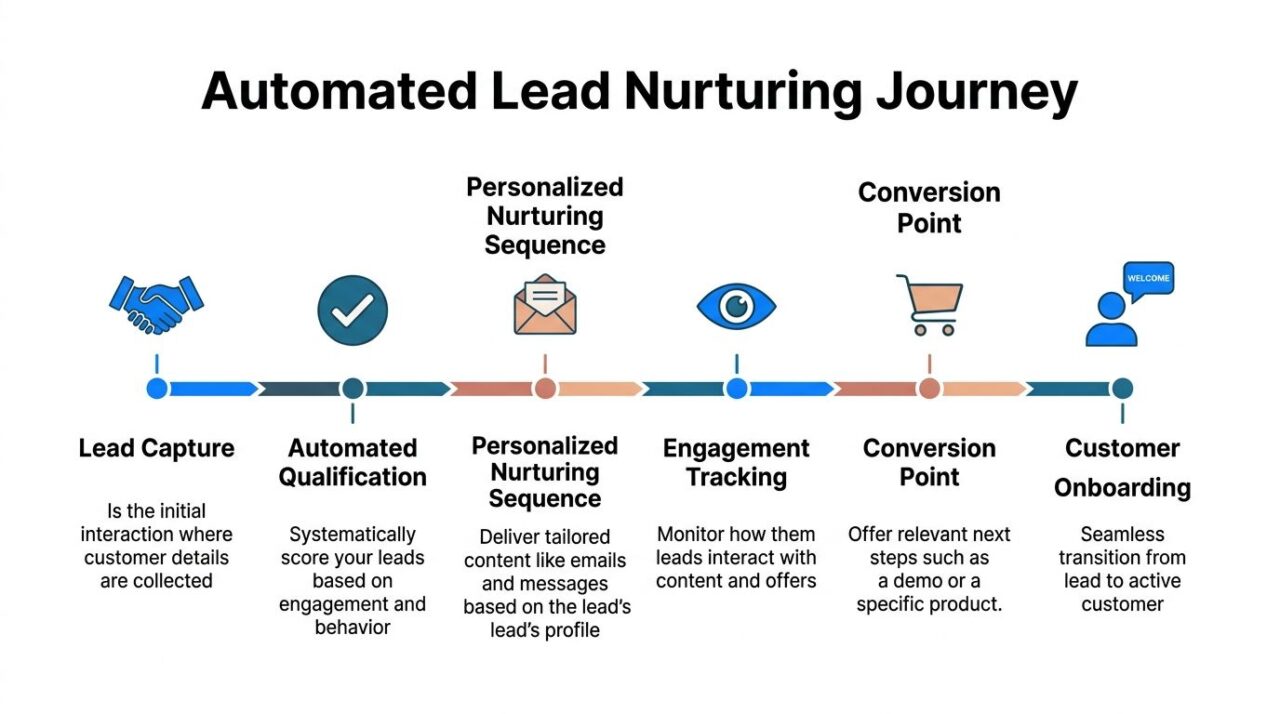
Lead Generation for Ecommerce Lead Nurturing
Build different nurture paths for different lead types
A single welcome series usually underperforms because it assumes every lead entered for the same reason.
A better structure looks like this:
| Lead type | Best next step |
|---|---|
| Product-match quiz taker | Send personalized recommendations and education via email marketing. |
| Restock subscriber | Send alert sequence plus close alternatives |
| High-intent DM prospect | Follow up quickly with product-specific proof and offer |
| Low-intent browser | Add to slower education and social proof sequence |
This is where sales lead qualification becomes operational, not theoretical. Qualification isn’t a score sitting in a dashboard. It changes message timing, channel choice, and offer type.
Use the right channel for the right moment
Email is still valuable for considered follow-up, especially when you have enough preference data to personalize the send. Messaging works better when speed and continuity matter. A shopper who started in Instagram DMs often converts better when the follow-up continues there first, then expands to email once trust is established.
A simple nurture pattern might look like this in practice:
- Immediate response with the promised result, recommendation, or alert confirmation
- Short follow-up that answers a common objection tied to the selected product
- Proof message featuring reviews, UGC, or routine tips relevant to the lead’s segment
- Offer or conversion push tied to the exact category they explored
- Fallback branch if they don’t engage, moving them to a lower-frequency sequence
Good nurture feels like remembered context, not repeated outreach.
Examples that work in real stores
For a beauty brand, quiz answers like “sensitive skin” and “simple routine” should trigger a lean regimen recommendation, not a 10-product collection email.
For a furniture or home brand, a shopper who asks in Messenger about dimensions likely needs buying confidence. Send room-fit guidance, assembly answers, and a product comparison. Don’t drop them straight into a generic campaign calendar.
For apparel, size and fit questions should route into fit-specific follow-up. If a customer selected “oversized preferred,” your next message should reflect that preference in both product picks and styling.
The common thread is relevance. Automation only improves lead generation for ecommerce when it carries forward what the shopper already told you. Otherwise, you’re just automating noise.
Measure and Optimize Your Conversational Engine
Once the funnel is live, a common pitfall is observing the wrong metrics.
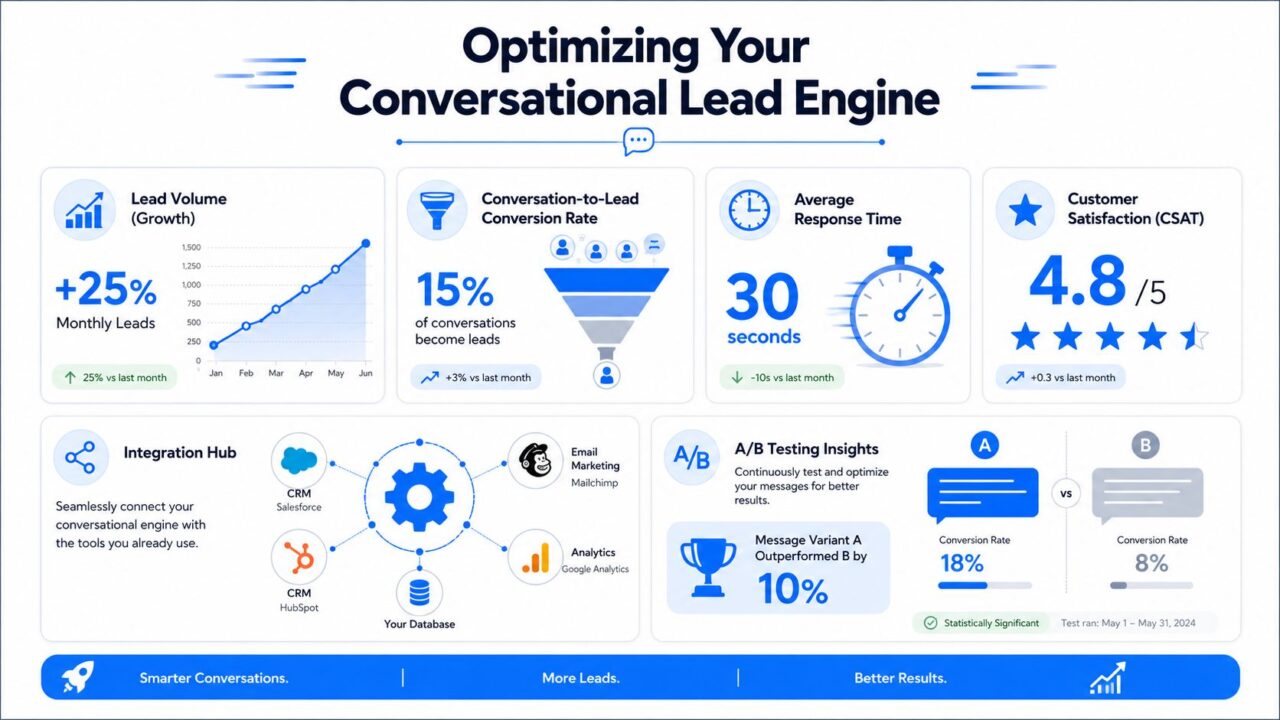
Subscriber count looks nice. Open rates can be misleading. Raw conversation volume often tells you more about traffic than quality. What matters is whether the conversation turns into a qualified lead and whether that lead moves toward revenue.
Responding to a lead within 5 minutes increases contact rates by 900%, whereas calling a lead after just 30 minutes reduces the probability of closing the sale by 80%, according to MarketingLTB’s lead generation statistics. Ecommerce doesn’t always involve literal phone calls, but the principle holds. Delay kills intent.
Track operational metrics first
Start with the measures that expose friction inside the system:
- Response speed. How quickly does the first useful reply happen on the landing page?
- Qualification rate. How many conversations produce enough data to segment properly?
- Lead-to-customer lag. How long does it take for qualified leads to purchase?
- Revenue by source path. Which entry points produce buyers, not just subscribers?
If you run DM automation, also track where conversations stall. Do people drop after the first question? After the contact request? After the recommendation? Each drop-off point points to a specific fix.
Lead Generation for Ecommerce Lead Engine
Build a connected stack
A conversational funnel breaks when data stays trapped in the chatbot.
Your messaging platform should pass lead data into your CRM, email platform, and reporting layer. If a shopper selected “oily skin,” clicked a serum recommendation, and later purchased through email, that journey should remain connected. Otherwise, you can’t tell which lead magnets, questions, or DM triggers influenced revenue.
Use a stack that supports:
| System need | Why it matters |
|---|---|
| Tag sync for better tracking of contact information. | Keeps quiz and DM answers usable downstream |
| CRM updates | Gives sales or support the same context |
| Email and SMS handoff | Extends nurture outside the chat channel |
| Event tracking | Connects conversations to purchase behavior |
Optimize the parts that carry buying intent
Not every test deserves equal attention. Focus first on the moments closest to qualification:
- Opening prompt. Does the first message feel useful or robotic?
- First question. Does it clarify intent fast?
- Contact ask timing. Are you asking too early?
- Recommendation format. Are the suggested products specific enough to feel personal?
A conversational funnel rarely fails because the bot is too simple. It fails because the questions arrive in the wrong order.
This is also where operators overcomplicate things. You don’t need dozens of branches to start optimizing. One strong restock flow, one product-match flow, and one shipping question flow will usually teach you more than a bloated automation tree.
The best lead generation for ecommerce systems is measurable because they’re structured. Every tag means something. Every branch has a purpose. Every handoff lands in the right place. When that happens, optimization stops being guesswork and starts looking like disciplined merchandising inside chat.
Your New Ecommerce Lead Generation Playbook
The winning shift in B2B marketing is simple. Stop treating lead generation like a form placement problem.
Strong lead generation for ecommerce starts earlier and feels more useful. You give shoppers a reason to engage through quizzes, product matching, and messaging flows. You capture zero-party data while helping them decide. You qualify intent inside the conversation. Then you follow up based on what they told you.
That’s a very different system from “show popup, collect email, send welcome discount.” It produces better context, cleaner segmentation, and more relevant nurture.
A practical rollout looks like this:
- Replace one generic popup with a value-first quiz or guided recommendation flow
- Choose one social DM use case such as restock, fit help, or bundle guidance
- Tag every meaningful response so follow-up can stay personalized
- Connect chat data to your email and CRM stack so the journey stays visible
- Optimize speed and qualification first before chasing vanity metrics
If you want a broader view of channel planning around this approach, Silver Spoon Agency’s 2026 ecommerce playbook is a useful companion read for mapping messaging, content, and conversion strategy together.
The core principle doesn’t change. Lead with value. Ask better questions. Automate the next step while intent is still warm. That’s how ecommerce brands turn scattered conversations into revenue.
If you want to put this into practice, start with one simple flow in Clepher: a restock DM funnel, a product-match quiz, or a post-click Messenger sequence. Keep the first build narrow, tag responses carefully, and let real shopper conversations show you where to expand next.
Related Posts
Customer Journey Automation: The Practical Guide
October 10, 2026Lead Qualification Marketing: A Practical 2026 Guide
October 9, 2026Customer Experience Optimization Playbook
October 8, 2026
Founder Clepher