
Waiting for customers to abandon a cart, request support, or become inactive means acting after the most valuable moment has passed. Only 13% of more than 6,000 customers surveyed in 2023 said brands they’d recently interacted with had provided proactive customer service, according to the survey summary from Proactive Strategies. That leaves a wide gap between what businesses could anticipate and what they prevent.
The strongest proactive strategy examples don’t rely on constant messaging. They connect a behavioral signal to a useful next action, such as offering help after repeated product views, explaining setup after purchase, or escalating a frustrated customer before the conversation deteriorates. This article follows that logic across acquisition, conversion, onboarding, support, retention, and expansion.
Clepher can help teams operationalize these moments with conversational Flows, AI Agents, segmentation, tags, broadcasts, conditions, and live-chat escalation across websites and messaging channels. The platform matters less than the operating principle: detect intent, respond in context, and give the customer a clear way forward.
1. Predictive Lead Scoring With AI Behavior Analysis
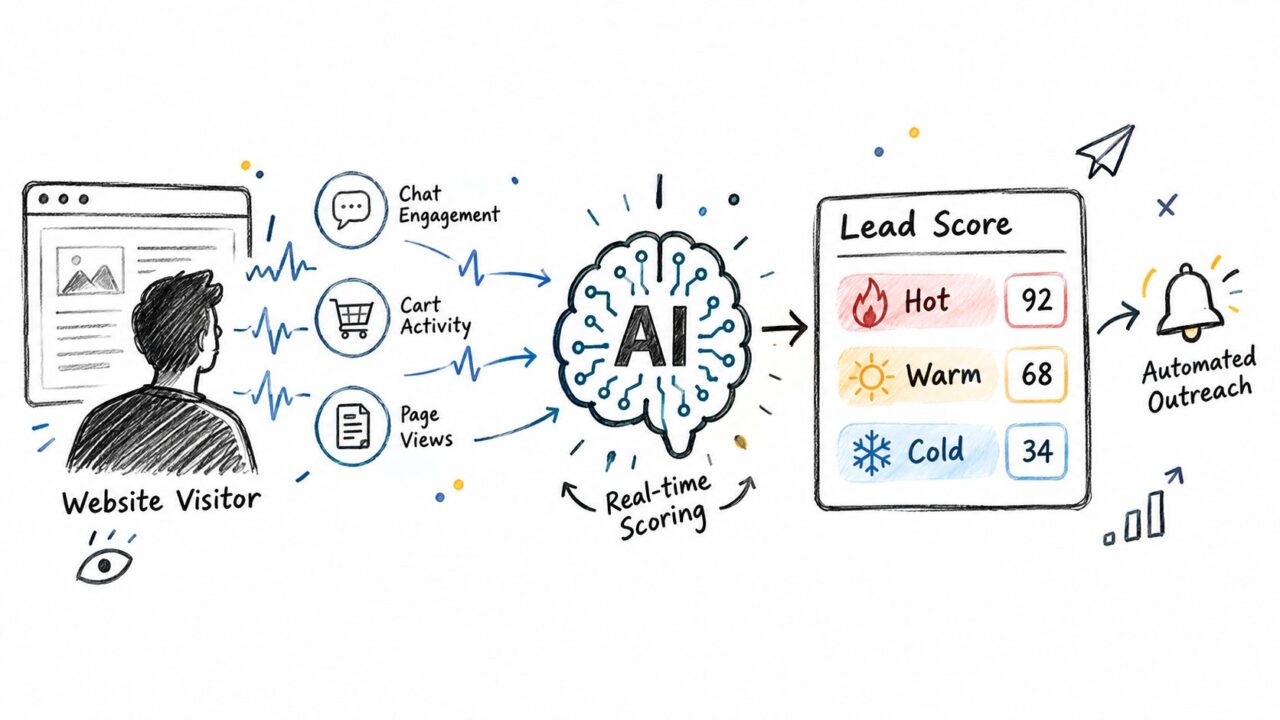
A visitor who returns to the same product or feature page several times is providing you with more insight than a casual visitor, indicating a proactive interest. Predictive lead scoring turns those signals into a priority level, so your team can engage high-intent prospects before they leave or become distracted.
Start with the customer journeys that already convert well. Review the actions that commonly appear before a purchase or demo request, such as repeat visits, comparison-page activity, pricing views, or interaction with a chatbot. Then build scoring tiers that reflect buying intent rather than assigning every visitor the same generic follow-up.
Build the score around behavior
Clepher users can apply tags and segments such as hot, warm, and cold leads. A hot lead might have revisited a checkout page, asked about implementation, and opened a product conversation. A warm lead may have viewed several educational pages but shown no direct buying signal. A cold lead may need content before a sales conversation makes sense.
Trigger the conversation only when the score reaches a meaningful threshold. The message should match the signal, not expose the scoring system. A high-intent visitor might see, “Need help choosing the right option?” A lower-intent visitor may receive a short guide or comparison prompt.
Practical rule: Reverse-engineer the behavior that preceded real conversions, then test whether your score predicts outcomes instead of rewarding activity for its own sake.
Review scoring accuracy regularly against actual conversions to mitigate discrepancies and enhance effective proactive strategies. If a large group of “hot” leads never engages, the threshold or signal weighting needs adjustment. The point isn’t to contact more people. It’s to make the next conversation more relevant.
Proactive Strategy Examples AI Lead Scoring
2. Abandoned Cart Recovery Through Multi-Channel Automation
Cart abandonment creates a narrow recovery window. A single reminder email treats every abandoned cart the same, even though a first-time visitor with a small basket needs different help from a repeat customer considering a high-value order.
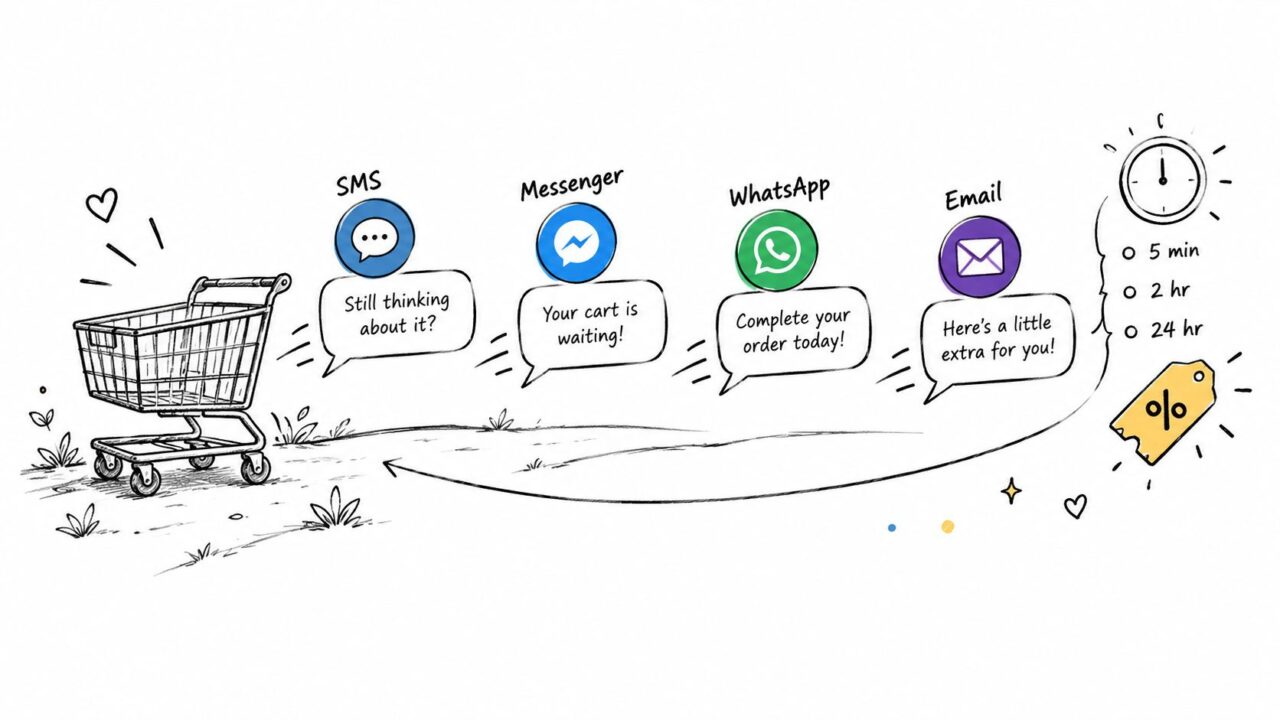
A coordinated sequence can begin with a gentle reminder in Messenger, continue through SMS or email, and use WhatsApp or Instagram Direct Message when the customer needs a more personal response. Each touch should remove a different obstacle. The first can restore context, the next can answer a question or present a relevant incentive, and the final message can add urgency without manufacturing pressure.
Let the trigger determine the treatment
Segment by cart value, customer history, product type, and previous abandonment behavior. A VIP customer may deserve live assistance. A repeat abandoner may need shipping clarity or payment support rather than another discount. A first-time shopper may respond better to reviews, returns information, or a concise product comparison.
Clepher’s drag-and-drop Flows can connect these conditions to different paths, allowing for both reactive and proactive responses. Add a live-chat option so customers can ask about fit, delivery, compatibility, or payment without leaving the recovery sequence. Test urgency against incentives, because discounting every cart can train customers to wait.
For practical guidance on reducing friction before recovery begins, use this guide to reducing shopping cart abandonment. Track recovered purchases, assisted conversations, incentive cost, opt-outs, and margin to gain insight beyond just message clicks.
Proactive Strategy Examples Cart Recovery
3. Proactive Onboarding Sequences for First-Time Users
The first interaction after purchase should answer the customer’s next practical question. A welcome message that only says “thank you” leaves the customer to discover setup, access, and first value alone. A useful onboarding sequence turns those steps into small, conversational actions.
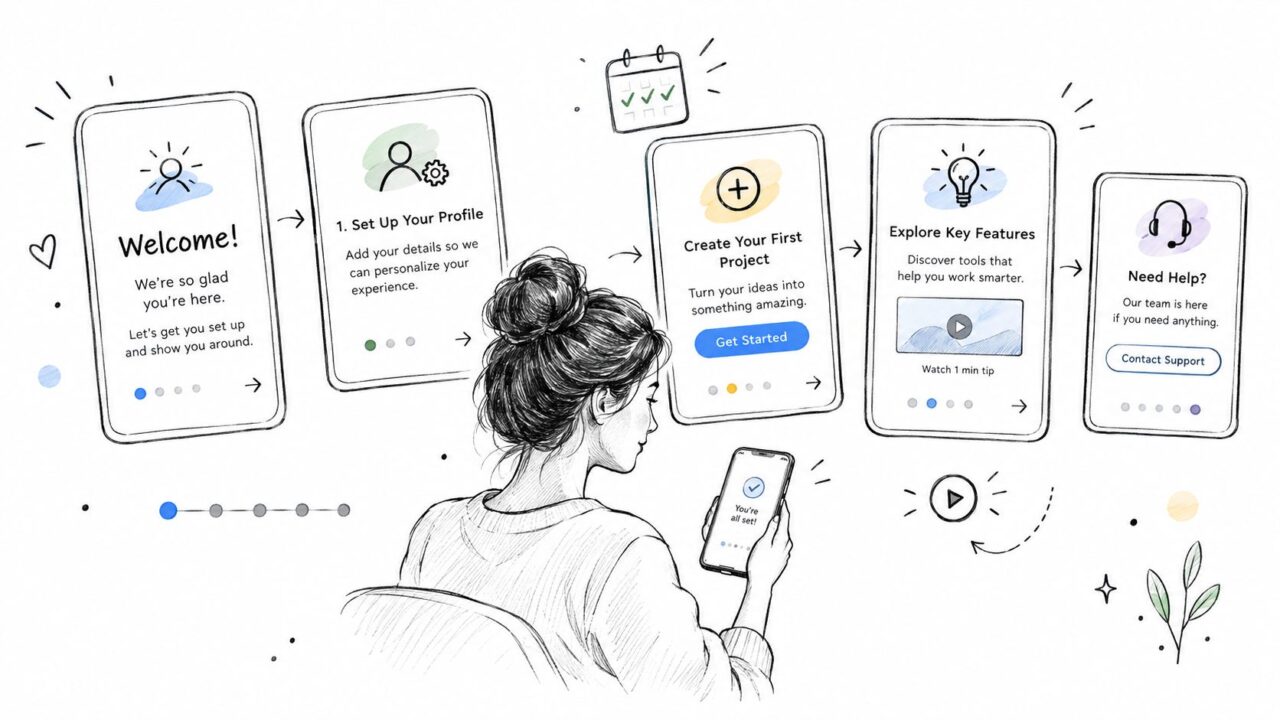
An online course platform, for example, can guide new students to their materials, explain assignment submission, and show where cohort conversations happen. A project-management SaaS product can guide a new account through creating a first project, inviting teammates, and activating a core feature. A subscription business can explain the delivery, account access, and customization options before confusion becomes a cancellation reason.
Branch around progress, not a calendar
Map the actual path to first value, then create a message for each milestone. If the customer completes setup, skip the instruction they no longer need. If they stall, offer a short video, an example, or a human handoff. Clepher can use conditions and tags to route users through different onboarding paths.
The channel should follow the signup context. Messenger, SMS, and WhatsApp can each support concise prompts, while website chat can assist customers during setup. Keep the language action-oriented. “Create your first project” is clearer than “Explore project functionality.”
For teams designing a structured sequence, this overview of customer onboarding automation provides a relevant starting point. Measure activation, completion of key steps, support requests during onboarding, and time to first meaningful outcome.
Proactive Strategy Examples App Onboarding
A short walkthrough can make an abstract instruction concrete. Use a product demonstration to show the action immediately before asking the customer to complete it.
4. Proactive Customer Support Through Keyword-Triggered Responses
Customers often reveal their problem in a single word. “Shipping,” “refund,” “invoice,” or “certificate” can identify the intent before a support agent reads a full message. Keyword-triggered responses let the business provide immediate direction, while more complex cases move to a person with context attached.
Start with the questions your support team answers repeatedly. An online store might route shipping and tracking terms to order-status information, while refund and return terms can lead to policy details or a request form. A SaaS company can detect payment-failure language and offer a billing portal or troubleshooting steps. An education business can respond to certificate or completion questions with the requirements and the next action.
Automation needs an escape route
A keyword trigger shouldn’t trap customers in a rigid script. Clepher AI Agents can support a more natural exchange, then pass the conversation to a human when the answer doesn’t resolve the issue. The handoff should include the customer’s message, relevant tags, and the automated steps already attempted.
Track resolution rate, escalation rate, repeat contacts, response time, and customer feedback. A response that closes a chat but causes another contact later isn’t a successful resolution. Review conversations marked unhelpful and update the underlying content, trigger logic, or escalation condition.
If internal capacity is limited, it may require a reactive strategy to address customer needs effectively. outsourced customer support option can complement automated first responses, provided the external team receives the same context and service rules.
The best automation handles predictable questions quickly and protects human attention for ambiguous, emotional, or high-value cases.
5. Proactive FAQ and Knowledge Base Delivery Through Contextual Chat
A knowledge base becomes more useful when it appears at the moment a customer is likely to need it. Someone reading a returns page may need help with eligibility. Someone studying pricing may be comparing plans, which provides insight into customer preferences and needs. Someone on account settings may be stuck on configuration rather than browsing casually.
Use page context and recent behavior to offer help without forcing a conversation. A returns-page prompt could ask, “Do you need help checking whether your order qualifies?” A pricing-page prompt could offer a plan comparison. A cancellation-page prompt might explain pause options or recent product improvements, but it should respect the customer’s intent rather than blocking the exit.
Timing and tone matter
Show the message after the visitor has had time to read the page. A prompt that appears instantly can feel like an interruption. A prompt that appears after meaningful engagement can feel like assistance. Use soft language such as “Can I help?” or “Would you like a quick explanation?” rather than aggressive sales copy.
Map common questions to the pages where they arise, then connect each prompt to a concise answer or guided Flow. Clepher conditions can prevent a visitor from seeing a message if they’ve recently contacted support or already completed the relevant action.
Measure article engagement, assisted completion, support deflection, escalation, and page-level conversion. Don’t judge the program by chat volume alone. A lower number of conversations can be positive if customers complete tasks without needing additional help.
Proactivity earns attention when it reduces effort. It loses attention when it adds another decision to a customer who is already trying to finish something, highlighting the need for a proactive approach to simplify choices.
6. Personalized Product Recommendations Based on Browsing Behavior
Generic recommendations are easy to ignore because they don’t explain why a product is relevant. Browsing behavior gives you a stronger basis for timely suggestions, especially when a customer has shown interest in a category, product family, or compatible accessory.
An apparel store can detect repeated interest in winter coats and suggest scarves or other complementary items. A beauty brand can connect a viewed skincare product with a suitable serum, moisturizer, or tool. An electronics retailer can recognize that a laptop purchase may create a need for a bag, keyboard, monitor, or adapter.
Explain the connection
“Because you viewed this, you may like that” gives the customer context. “Recommended for you” sounds automated and generic. The recommendation should also reflect the customer’s likely priorities. A price-sensitive segment may need a practical bundle, while a premium segment may respond to quality, durability, or service.
Use Clepher personalization tags and segments to vary product suggestions and channel selection. Website chat works while the customer is still comparing. A follow-up message can work after the visit if the customer has permission and the recommendation remains timely.
Avoid recommending items solely because they’re popular. Relevance comes from the customer’s behavior, current basket, previous purchases, and the relationship between products. Test recommendation placement, explanation, bundle structure, and timing.
Track assisted revenue, attach rate, average order value, returns, and opt-outs. A recommendation that increases short-term purchases but creates unsuitable orders can damage trust and create support work.
7. Upsell and Cross-Sell Recommendations Through AI-Driven Personas
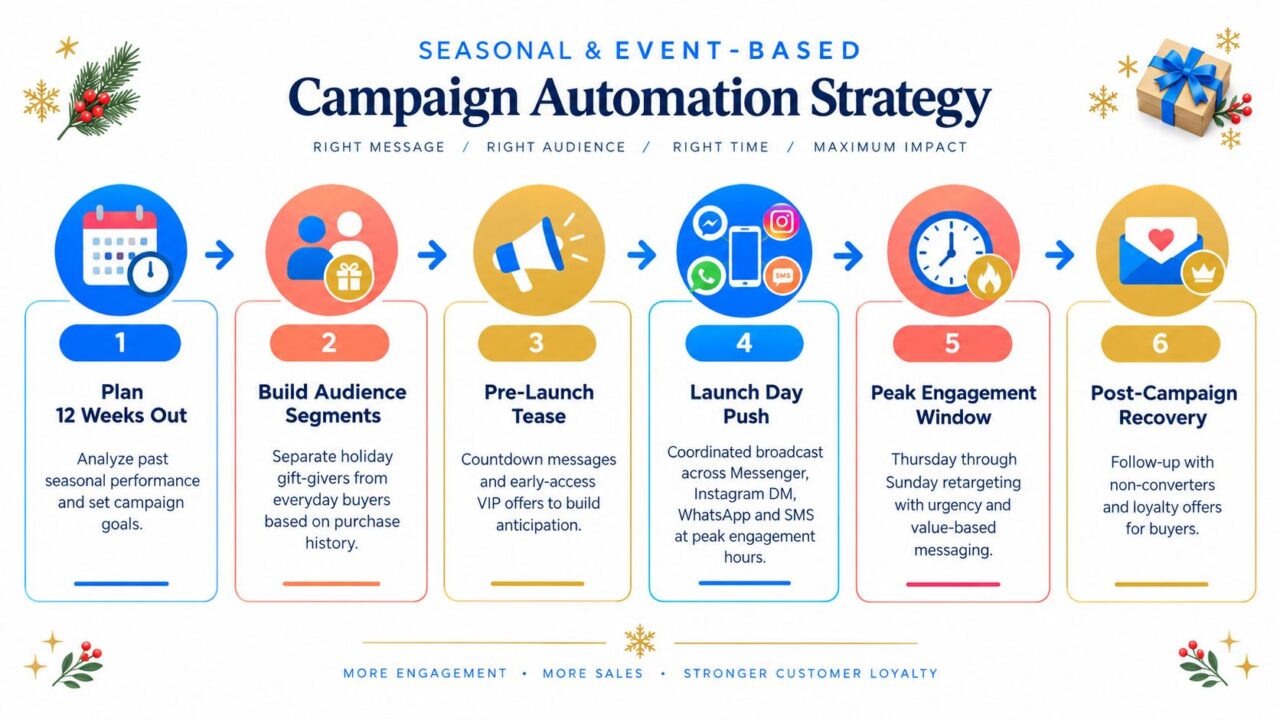
Proactive Strategy Examples Campaign Automation
Upselling should follow demonstrated value and a clear constraint. A customer who has not activated the core product is unlikely to need a premium feature pitch. An account that uses the product heavily, adds teammates, or approaches a usage limit may need a plan that removes a specific restriction.
Build personas from behavior rather than demographics alone. A SaaS team might identify high-collaboration accounts through user count, activity, and project complexity. A subscription business could recognize frequent buyers who repeatedly browse premium products. A coaching platform might spot customer volume that points to group delivery or advanced curriculum tools, allowing for a proactive approach to customer engagement.
Connect the offer to the problem
Start with the trigger, then name the relevant outcome. If an account adds teammates repeatedly, the message can explain how a higher plan centralizes permissions and collaboration. If usage is approaching a limit, show how the plan prevents an interruption. Customers who have just achieved a successful outcome may be ready for an offer, while others need more time with the core product.
In Clepher, tag an account when it crosses a usage limit or adds a third teammate, then open a conversation that names the constraint before naming the plan, adopting a proactive approach to customer management. Let the customer ask questions or decline without entering another sales sequence.
Test each persona’s trigger, offer timing, message, and conversation path. Measure upgrade conversion by persona, expansion revenue, downgrade rate, feature adoption, and support contacts after the offer. A persona that converts but later churns may have received a recommendation before the account was ready. Pause that branch, raise the qualifying threshold, or add an adoption checkpoint before presenting the plan.
8. Feedback Collection and Issue Resolution Through Conversational Surveys
A post-purchase survey can do more than collect a rating. It can identify a damaged item, confusing setup, poor fit, or unmet expectation while the business still has a chance to repair the relationship.
Keep the opening prompt simple. After delivery, an e-commerce company might ask how the order went. A positive response can lead to a review or relevant next step. A negative response should create a support case, capture the issue, and route the customer to someone who can resolve it. A SaaS company can ask trial users whether a demo helped, then branch into onboarding or an open question.
Close the loop quickly
Use a rating or emoji response first, then ask for detail only when the score indicates a problem. Long surveys reduce participation and create more data than teams can act on. A short conversational exchange gives the customer a clear reason to respond.
Negative feedback needs an owner and a response path. Support should see the original context, while product and operations teams should review recurring themes. Share summaries internally on a regular cadence and identify which problems need a process change rather than another apology.
Useful measures include response rate, negative-response volume, time to follow-up, issue resolution, repeat complaints, and retention after recovery. The survey is only proactive if the business acts on what it learns.
9. Win-Back Campaigns for Dormant Customers
Dormancy is a signal, not a diagnosis. A customer may have stopped purchasing because of price, poor delivery, a product mismatch, a missing feature, or simple forgetfulness. A generic “we miss you” message can’t address all of those causes.
Create segments based on recency, value, product category, and prior behavior to develop both proactive and reactive strategies. A recently inactive customer may need a reminder about new value. A high-value customer may warrant a personal message. A seasonal buyer may respond when the relevant season approaches. A customer who previously complained about delivery needs reassurance or a service update before another promotion.
Give the customer a reason to return
A win-back sequence can begin with a progress update, continue with a useful product or content recommendation, and offer a clear choice such as returning, pausing, or updating preferences. Incentives can help, but they shouldn’t be the only strategy. Repeated discounting may bring back customers who purchase only when prices fall.
Use WhatsApp, Instagram Direct Message, Messenger, email, or SMS according to the customer’s permission and past engagement. Clepher tags and conditions can stop the sequence when the customer returns, replies with a problem, or opts out.
Track reactivation, revenue from returning customers, incentive cost, subsequent retention, and unsubscribe rate. A win-back is valuable when the customer resumes a healthy relationship, not merely when they click one message.
10. Seasonal and Event-Based Campaign Automation
Predictable events give teams time to prepare, but only if planning starts before the customer’s buying window. Seasonal automation should cover the full journey, from early discovery through purchase, delivery, and follow-up, ensuring a proactive approach to customer satisfaction.
Build the campaign around audience intent. Gift buyers may need guides and reminders, while repeat customers may want early access to familiar products to mitigate any potential dissatisfaction. VIP segments can receive priority information, and first-time buyers can receive reassurance about shipping, returns, or gifting.
Design the sequence before the peak
A campaign might use an email broadcast for awareness, an SMS message for early access, Messenger or Instagram for reminders, and post-purchase support for delivery questions. Clepher can coordinate conversational Flows, broadcasts, tags, and conditional paths to ensure the customer doesn’t receive irrelevant messages after purchasing, taking a proactive approach to communication.
Test urgency against value. “The deadline is approaching” and “Here’s the easiest way to choose” serve different customers and different stages. Build stop conditions for purchase, inventory changes, failed payment, and opt-out. Seasonal promotions also need compliance review, especially when they use personal data or electronic messaging.
Measure revenue contribution, conversion by segment, assisted conversations, inventory pressure, delivery issues, and opt-outs. For broader automation planning, this marketing automation guide offers additional context.
10-Point Comparison of Proactive Customer Strategies
| Strategy | 🔄 Implementation complexity | ⚡ Resource requirements/efficiency | ⭐ Expected outcomes (quality) | 📊 Ideal use cases | 💡 Key tips |
|---|---|---|---|---|---|
| Predictive Lead Scoring with AI Behavior Analysis | Medium–High, requires model training, real-time integrations | Data- and compute‑intensive; needs historical behavior logs and Clepher integration | ⭐⭐⭐⭐, higher lead-to-opportunity conversion; better prioritization | B2C/B2B sites with repeat visitors, SaaS demos, high‑traffic e‑commerce | Start with top-converting journeys; monitor scoring accuracy monthly |
| Abandoned Cart Recovery via Multi-Channel Automation | Low–Medium, trigger + sequence setup across channels | Low development; needs accurate contact data and channel integrations | ⭐⭐⭐⭐, recovers 15–40% of abandoned cart value | E‑commerce, DTC brands, high‑cart‑value stores | Segment by cart value; test timing and incentive vs. urgency |
| Proactive Onboarding Sequences for First‑Time Users | Low–Medium, build multi-step flows and conditional branches | Content creation and flow design; moderate support escalation setup | ⭐⭐⭐⭐, reduces refunds 20–35%; increases adoption | SaaS, online courses, subscription services | Map core onboarding steps into conversational micro‑actions |
| Proactive Customer Support via Keyword‑Triggered Responses | Low, keyword rules + KB integration; escalation paths needed | Maintainable but requires ongoing KB updates and QA | ⭐⭐⭐⭐, handles ~40–60% of inquiries; faster resolution | High support volume businesses (e‑commerce, SaaS) | Automate top 10 FAQs first; add feedback loop for improvements |
| Proactive FAQ & Knowledge Base Delivery via Contextual Chat | Medium, page/context mapping and conditional logic | Needs well‑organized KB and page‑detection setup | ⭐⭐⭐, reduces tickets 20–40%; lowers page abandonment | Pricing, returns, account settings pages, help centers | Use soft language and delay display (e.g., 10s) to avoid intrusiveness, ensuring a proactive communication strategy. |
| Personalized Product Recommendations Based on Browsing Behavior | Medium, recommendation engine + real‑time triggers | Requires product catalog, behavior tracking, personalization tags | ⭐⭐⭐⭐, AOV +10–30%; CTRs 3–5x vs generic recs | E‑commerce, beauty, apparel, electronics | Recommend based on this user’s signals; time while on‑site or within 2 hours |
| Upsell & Cross‑Sell via AI‑Driven Personas | High, persona modeling, predictive offers, timing optimization | Significant data infrastructure, testing and monitoring | ⭐⭐⭐⭐⭐, CLV +30–50%; upsell conversion 2–3x vs generic | SaaS upgrades, subscription plans, repeat purchasers | Build behavior‑first personas; test offer timing per persona |
| Feedback Collection & Issue Resolution Through Conversational Surveys | Low, survey triggers + conditional branching | Low tech; needs human follow‑up process and sentiment analysis | ⭐⭐⭐⭐, higher response (15–30%); resolves issues before churn | Post‑delivery, trial endings, service interactions | Keep surveys 2–3 Qs; escalate negative feedback within 24h |
| Win‑Back Campaigns for Dormant Customers | Medium, segmentation, tailored flows, incentive sequencing | Requires historical transaction data and budget for offers | ⭐⭐⭐, reactivates 10–25% depending on incentives | Dormant subscriber lists, lapsed buyers, seasonal churn | Segment by dormancy length; address likely churn reason in message |
| Seasonal & Event‑Based Campaign Automation | Medium, calendar triggers, countdowns, inventory logic | Planning & creative resources; schedule weeks ahead for templates | ⭐⭐⭐⭐, AOV +20–40% during peaks; captures seasonal demand | Holiday sales, Black Friday, product launches, industry events | Plan 8–12 weeks ahead; use audience segmentation and A/B tests |
Turn Signals Into Timely Customer Action
The practical path isn’t to automate every customer interaction. Start with one trigger where the cost of waiting is clear, such as a high-intent lead, an abandoned checkout, a failed payment, an onboarding stall, or a cancellation visit. Define the action you want the customer to take and the human fallback if automation can’t resolve the situation.
Then connect the trigger to the right channel. A live website conversation may suit a visitor comparing products. WhatsApp or Messenger may work better for an existing customer who already engages there. Email can support longer explanations, while SMS is useful for concise reminders when the customer has given appropriate permission.
Track the full chain, not just the first click. Useful measures include trigger volume, engagement, conversion, resolution, escalation, retention, revenue contribution, repeat contacts, and opt-outs. A message that generates replies but no completed action may need better routing. A message that produces sales but also increases complaints may be too aggressive or poorly targeted.
Compliance belongs in the implementation plan. GDPR requires a lawful basis for processing personal data, while ePrivacy rules generally require separate consent before marketing is sent to an individual electronic communications address. Consent should be freely given, specific, informed, unambiguous, granular, and documented with the timestamp and collection method, as outlined in this GDPR email marketing consent guide.
For existing customers in an EU or UK-style framework, a soft opt-in may apply to similar products or services when the details were collected during a sale, the customer could opt out at collection, and every message includes a clear opt-out route. Transactional messages such as order confirmations and invoices are treated differently from marketing communications, according to this reactive and proactive balance – direct marketing compliance explanation.
Keep evidence of consent, unsubscribes, suppression records, and data changes. A permission statement alone isn’t enough. This privacy and email marketing overview explains why consent management depends on records and ongoing control.
Clepher can support this operating model with Flows, AI Agents, tags, segments, conditions, live chat, broadcasts, and integrations that pass customer context to the rest of the stack. Use it to make the next action more relevant, not to increase message volume indiscriminately.
The core takeaway is simple: proactive strategy works when automation is relevant, carefully timed, and connected to a useful next step. Choose one signal, build one helpful intervention, add a human fallback, and measure the business outcome. Once that system works reliably, expand to the next moment in the customer lifecycle.
Clepher helps businesses build conversational Flows for marketing, sales, onboarding, support, follow-up, and recovery across websites, Facebook Messenger, WhatsApp, and Instagram Direct Message. Visit Clepher to connect behavioral triggers with segmentation, AI Agents, live-chat escalation, and measurable customer actions.
