

In a world of overflowing email inboxes and crowded social media feeds, text messaging offers a direct, personal connection to your customers. SMS and Messenger have open rates that consistently outperform email, making them critical channels for any modern business. But just sending a message isn’t enough. The quality, timing, and relevance of your texts determine whether you build a relationship or just become another ignored notification.
This guide provides actionable text message examples you can use right away. We’ll break down the strategy behind each one, explaining the business goal, the customer psychology, and how to implement it for the best results. You’ll learn to personalize messages with customer data like {{first_name}} to make your communication feel one-to-one, not one-to-many.
We’ll cover practical tactics for:
- Segmenting your audience for maximum impact.
- Crafting compelling calls to action that get clicks.
- Maintaining compliance with TCPA and other regulations.
- A/B testing your messages to continuously improve performance.
Let’s dive into the examples and turn your messaging into a revenue and engagement engine.
1. Welcome & Subscription Confirmation Message
Your welcome text is your first direct conversation with a new subscriber. It’s your chance to make a great first impression, confirm their subscription, and deliver any promised incentive (like a discount). This message has the highest engagement rates you’ll ever get, so make it count.
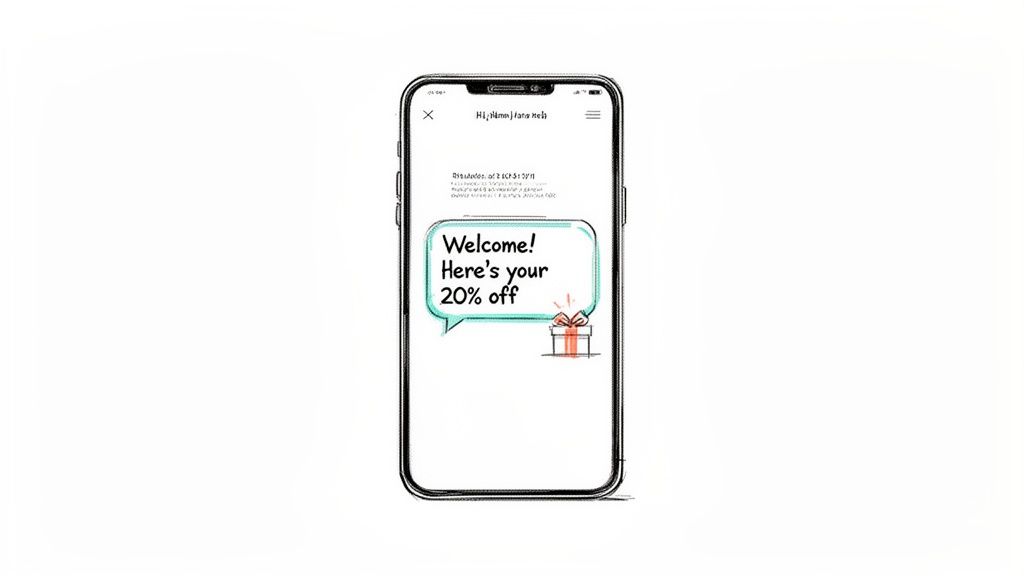
Text Message Discount
This isn’t just a simple confirmation; it’s a strategic move. By delivering an offer directly via text, you’re training subscribers to open and interact with your messages. It’s one of the most effective text message examples for instantly proving the value of your subscription.
Example Welcome Messages
- E-commerce: “Hey [FirstName]! 🎉 Welcome to [Brand]. Here’s your exclusive 20% off code: WELCOME20. Shop our best-sellers → [Link]”
- SaaS: “Welcome to [App], [FirstName]! Your account is ready. Get started with our quick 5-minute tutorial to see how it works → [Link]”
- Local Business: “Hi [FirstName], thanks for joining the [Business Name] VIP list! Show this text for a free appetizer on your next visit. Valid through [Date].”
Strategic Breakdown & Actionable Tips
- Timing is Everything: Automate this message to send within one minute of opt-in. The user’s interest is at its peak, and immediate delivery makes a great impression.
- Personalize Beyond the Name: Use
[FirstName]to make the message feel personal. Platforms like Clepher can pull this data directly from your opt-in form. - Clear Call-to-Action (CTA): The link should lead directly to what you promised. Don’t make users hunt for their discount code or tutorial.
- Compliance First: Always include opt-out instructions, like “Reply STOP to unsubscribe.” This builds trust and keeps you compliant. Learn more with this detailed subscribe message example.
Key Takeaway: The goal of a welcome text is to confirm the subscription and immediately deliver value. A fast, personalized message with a clear benefit builds trust and encourages future engagement.
2. Flash Sale & Limited-Time Offer Message
A flash sale text creates urgency to drive immediate sales. These short-term campaigns announce a special discount, tapping into the fear of missing out (FOMO). They’re perfect for moving inventory, hitting sales goals, or capitalizing on a shopping holiday.
This tactic interrupts the customer’s normal thinking process, prompting a quick purchase decision. By conditioning subscribers to act fast, you create an event-driven shopping culture around your brand and generate a direct spike in revenue.
Example Flash Sale Messages
- Fashion: “⏰ FLASH SALE ENDING IN 2 HOURS! Get 40% off everything. No code needed. Don’t miss out → [Link]”
- Beauty: “🚨 Last chance! Our best-selling serum is 50% off today only. Grab yours before it’s gone → [Link]”
- Fitness: “⚡ LIMITED: First 100 people get 50% off our annual membership. This offer ends tonight! Claim your spot → [Link]”
Strategic Breakdown & Actionable Tips
- Segment for Relevance: Don’t blast your entire list. Target customers based on past purchases or engagement levels to make the offer feel more exclusive.
- Optimize Send Times: Don’t guess. Test different times and days to find when your audience is most likely to buy. Mid-week evenings (6-8 PM) are often a good starting point.
- Create Visual Urgency: Use strong, attention-grabbing words like “⏰ Last Chance,” “Ending Soon,” or “Today Only” to reinforce the deadline.
- Send a Follow-Up Reminder: Schedule a follow-up message to non-converters a few hours before the sale ends. A simple “Last call! 40% off ends in 2 hours” can capture significant last-minute sales.
- Track Your ROI: Use a unique, trackable link for your text campaign to measure clicks and the direct revenue generated from the sale.
Key Takeaway: A flash sale text uses urgency to drive immediate action. Success hinges on smart segmentation, clear deadlines, and a compelling call-to-action that makes subscribers feel they’ll miss out if they don’t act now.
3. Abandoned Cart Recovery Message
An abandoned cart message is an automated text sent to customers who add items to their cart but leave without buying. This is one of the most profitable automations in e-commerce because it targets shoppers who have already shown strong purchase intent. A timely reminder can overcome distractions and recover otherwise lost sales.
These messages gently nudge the customer, reminding them of what they liked and giving them a direct path back to their cart. You’re communicating with an audience that is just one step away from converting.
Example Abandoned Cart Messages
- General E-commerce: “You left something behind! 🛒 Your [Product Name] is still waiting. Complete checkout now with FREE shipping → [Link]”
- High-Ticket Item: “Hi [FirstName]! Your luxury [Product] order is on hold for 24 hours. Questions? Chat with us or complete purchase → [Link]”
- Subscription Box: “Your curated selection is almost yours! 📦 Finish checkout to start receiving [Frequency] shipments → [Link]”
- Marketplace: “Your cart expires in 6 hours! 3 items waiting. Use code COMEBACK10 for 10% off → [Link]”
Strategic Breakdown & Actionable Tips
- Implement a Multi-Step Sequence: Use a timed sequence. Send the first reminder 1-2 hours after abandonment. A second reminder after 24 hours can capture those who needed more time to think.
- Reserve Incentives Strategically: Avoid offering a discount in the first message. Many customers convert with a simple reminder. Add an incentive like
10% offin the second or third message to persuade hesitant buyers. - Provide a Direct Link to Checkout: The link must take users directly to their pre-populated cart. Any extra steps will drastically lower conversion rates.
- Optimize for Mobile: Most cart abandonment happens on mobile. Ensure your message is concise and the checkout page is mobile-friendly. For more tactics, check out these shopping cart abandonment recovery strategies.
Key Takeaway: An abandoned cart text makes it incredibly easy for an interested shopper to complete their purchase. A well-timed sequence with a direct checkout link and a strategic incentive is one of the highest-ROI automations you can implement.
4. Post-Purchase Thank You & Order Confirmation
An order confirmation text reassures customers their purchase was successful. Sent immediately after a transaction, it confirms key details like the order number and provides tracking information. This instant communication reduces buyer’s remorse and minimizes support tickets by proactively answering the question, “Did my order go through?”
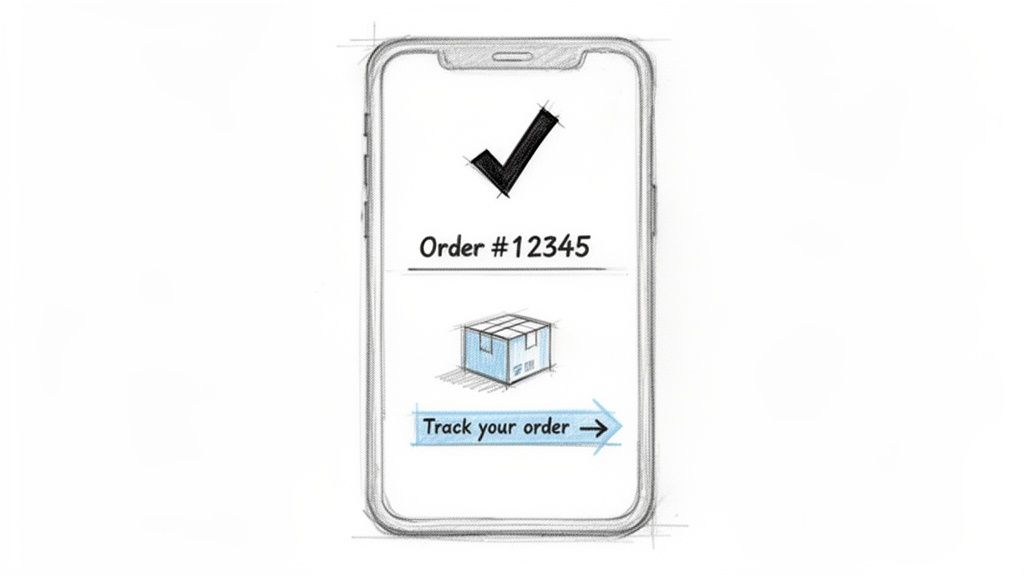
Text Message Order Confirmation
This is more than a receipt; it’s a chance to build trust when the customer is most engaged. These are powerful text message examples for turning a one-time buyer into a loyal customer.
Example Order Confirmation Messages
- E-commerce: “✅ Order confirmed! Thanks for your order, [FirstName]. Your order #[OrderNumber] for [Product] ships tomorrow. Track its journey here → [Link]”
- Digital Product: “🎉 Success! Your access to [Course/Product] is ready. Start learning now → [Link]. Questions? Just reply to this text.”
- Subscription: “Welcome to the club, [FirstName]! Your first [Brand] box is confirmed and ships on the 1st of each month. See what’s inside → [Link]”
- SaaS: “Your subscription to [Plan] is active! Thanks for joining us. Here’s your login link to get started → [Link]. Need help? Check our guides.”
Strategic Breakdown & Actionable Tips
- Send Immediately: Automate this message to send within five minutes of purchase for instant peace of mind.
- Include Key Identifiers: Always add the
[OrderNumber]so customers (and your support team) can easily reference the purchase. - Provide Direct Links: Whether it’s a tracking page or an access link, the CTA should lead directly to the next step to prevent frustration.
- Address Potential Anxiety: Mention your return policy or satisfaction guarantee. A simple “Love it or return it within 30 days” can significantly reduce purchase anxiety.
- Segment by Product Type: Create different flows for physical vs. digital goods. A digital product confirmation should offer immediate access, while a physical product message should focus on shipping expectations.
Key Takeaway: An order confirmation text provides immediate reassurance and clear information. By confirming the order and giving customers what they need to track or access their purchase, you build trust and set the stage for a positive long-term relationship.
5. Educational Content & Value-Add Series
Beyond promotions, educational texts build brand authority and a loyal audience. This strategy involves sending non-promotional messages that provide genuine value through tips, tutorials, or insights. By consistently offering helpful information, you keep subscribers engaged between purchases and position your brand as a trusted expert.
These sequences turn your SMS list into a community. Instead of just waiting for the next discount, subscribers look forward to your messages for the value they provide. These text message examples are perfect for nurturing leads and making your eventual sales pitch feel more natural.
Example Value-Add Messages
- E-commerce: “Style Tip #3: Mix high & low fashion. Pair a $15 basic with your designer piece for the perfect balance. See examples from our latest lookbook → [Link]”
- Coaching: “Today’s affirmation: Progress over perfection. One small action today beats zero tomorrow. What’s your one action? Reply to this message and commit!”
- SaaS: “Pro Tip: Use our API webhooks to sync data in real-time. This can save your dev team 5+ hours monthly. Here’s how it works → [Link]”
- Creator: “Content lesson: Hook viewers in the first 3 seconds. Try starting with a question or an unexpected statistic. Share your best attempts with our community!”
Strategic Breakdown & Actionable Tips
- Plan Your Series: Before sending, map out a 7- to 30-day content series to ensure consistency.
- Build a Habit: Send messages on a consistent schedule (e.g., every Tuesday morning). This trains your audience to expect and open your texts.
- Encourage Interaction: Ask subscribers to reply with their thoughts or questions. This two-way communication boosts engagement and provides valuable customer insights.
- Balance Education and Promotion: While the focus is value, you can include soft CTAs. For example, a style tip can link to a category page featuring one of the items mentioned.
- Track Topic Performance: Monitor which tips get the highest clicks and replies. Use this data to create more of what your audience loves.
Key Takeaway: A value-add series builds trust by giving away knowledge for free. Consistent, helpful content keeps subscribers engaged and makes them more receptive to future sales messages.
6. Customer Service & Support Inquiry Response
When a customer has a problem, the speed and quality of your response define their experience. A support inquiry text acknowledges their question immediately and sets clear expectations for a solution. These automated messages can filter inquiries, provide instant answers to common questions, and free up your human agents for complex issues.
This initial text confirms the message was received, preventing the anxiety of being ignored. By providing a ticket number or a self-service link, you empower the customer and show that a solution is already in motion.
Example Support Messages
- General Support: “Thanks for reaching out! 👋 We’ve received your question and will get back to you within 2 hours. Your ticket # is ABC123. For updates, reply to this text.”
- Refund Inquiry: “Got it, you’d like to process a return. Refunds typically complete in 5-7 business days. You can start your return here → [Link]”
- Account Issue: “Account locked? No problem. We’re sending a password reset link to your email. Check your inbox (and spam folder!). Still stuck? Reply to chat with us.”
- Shipping Question: “Our orders ship within 24 hours on weekdays. You can track your package with the latest updates here → [Link]. Any other questions? Just ask!”
Strategic Breakdown & Actionable Tips
- Confirm Receipt Immediately: An automated response should fire the moment a support request is received. This simple acknowledgment is critical.
- Set Specific Timelines: Avoid vague promises. Provide a concrete timeframe like “within 2 hours” to manage expectations.
- Offer Self-Service First: Route customers to FAQs or return portals with a direct link. This resolves common issues instantly and reduces your support team’s workload.
- Provide a Clear Escalation Path: Always include a simple way to reach a human, like “Reply to this message to chat with our team.” An AI chatbot for customer support can handle initial triage before escalating.
- Personalize with Context: Use data like
[FirstName]or[OrderNumber]to make the support interaction feel personal and efficient.
Key Takeaway: A support response text should immediately acknowledge the customer’s issue, set clear expectations, and offer self-service options. This approach reduces customer anxiety and improves support efficiency.
7. Re-engagement & Win-Back Campaign
A re-engagement campaign is a targeted text message sent to inactive subscribers or dormant customers. The goal is to reignite their interest with a compelling offer or a direct question before they become permanently lost, improving retention and cleaning your contact list.
This approach is more cost-effective than acquiring new customers. It helps you strategically win back users and confidently remove those who aren’t interested, improving your overall deliverability and engagement metrics.
Example Re-engagement Messages
- E-commerce: “We miss you, [FirstName]! 😔 It’s been a while. To welcome you back, here’s 25% off your next order. Use code: COMEBACK25 → [Link]”
- SaaS: “Sticking around, [FirstName]? We noticed you paused your [Product] subscription. Could you tell us why? Your feedback helps us get better → [LinkToSurvey]”
- Creator: “You haven’t opened our emails in a while. Still interested in [Content Topic]? Reply YES to stay on the list. Reply STOP to unsubscribe.”
- Local Business: “It’s been a while since your last visit, [FirstName]! Your favorite [Service] is 30% off for your next appointment (this week only). Schedule now → [Link]”
Strategic Breakdown & Actionable Tips
- Segment by Inactivity: Create segments based on last engagement (e.g., 90 days, 180 days). A customer gone for 90 days needs a different message than one gone for a year.
- Lead with Value, Not Guilt: Focus on a benefit for the customer. An exclusive discount or a genuine request for feedback is more effective than a guilt trip.
- Ask a Direct Question: Asking “Still interested? Reply YES or NO” is a low-effort way for subscribers to confirm their status, making list cleaning easy.
- Honor Their Response: If a user replies “NO” or asks to unsubscribe, remove them immediately. This respects their wishes and keeps your active list healthy.
Key Takeaway: The goal of a re-engagement campaign is to either win back a dormant customer with a strong incentive or confirm their lack of interest to keep your list clean. Smart segmentation and a value-first approach are key.
8. Review Request & Social Proof Generation
A review request text asks satisfied customers to share their experience on public platforms like Google or your website. Sent after a positive interaction, these messages help build social proof, which is a powerful driver of trust and sales. The goal is to make leaving a review as simple as possible.
This message turns a happy customer into a public advocate. By providing a direct link, you remove the friction that prevents people from leaving reviews. It’s one of the most effective text message examples for building your brand’s reputation.
Example Review Request Messages
- E-commerce: “⭐ How’d we do? Your honest 1-2 minute review helps us improve (and helps other shoppers). Leave a review → [Link]”
- Local Service: “Thanks for choosing us! If you loved your experience, leave a Google review → [Link]. Takes 60 seconds!”
- SaaS: “Quick question: Would you recommend [Product] to others? Rate us on G2 → [Link]. TY! 🙏”
- Coaching: “Loved working with you! One 5-star review helps others find us. Submit your testimonial here → [Link]”
Strategic Breakdown & Actionable Tips
- Timing is Critical: Send the request 3-5 days after a positive experience, like a product delivery. This gives them time to experience the value without forgetting their satisfaction.
- Make it One-Click: The link must go directly to the review submission page. Do not make users search for your profile.
- Be Specific in Your Ask: Instead of a generic “leave a review,” try asking, “What one thing did you love most?” to get more valuable testimonials.
- Consider a Gentle Follow-Up: A single, polite follow-up after 7 days can capture those who were initially busy.
- Don’t Gatekeep: Avoid offering incentives only for positive reviews, as this can violate platform rules. If you offer a reward, make it available for any honest feedback.
Key Takeaway: The goal of a review request text is to make leaving feedback frictionless. By sending a timely, direct link after a positive experience, you capture authentic social proof that builds credibility and attracts new customers.
9. Event, Webinar, or Launch Announcement
Promotional texts are powerful for driving registrations for events, webinars, or product launches. Unlike email, a text creates urgency and directness. These announcements are often part of a countdown sequence designed to build anticipation and maximize attendance.
These messages capitalize on scarcity and exclusivity to prompt immediate action. By framing the announcement as an exclusive opportunity, you can significantly boost conversions.
Example Announcement Messages
- Webinar: “🎓 Learn how to double your sales with AI from [Expert] LIVE this Wed at 2pm EST. Free masterclass. Spots limited to 500. Register now → [Link]”
- Product Launch: “🚀 Countdown! [Product] launches tomorrow. Early access for subscribers only (get 50% off). Secure yours before anyone else → [Link]”
- Event: “Last 24 hours! Get your ticket to [Conference] for 30% off. The early bird discount ends tonight at 11:59pm ET. Don’t miss out → [Link]”
- Course Launch: “📚 Enrollment opens tomorrow! The new cohort of [Course Name] starts on [Date]. Be the first to be notified when doors open → [Link]”
Strategic Breakdown & Actionable Tips
- Lead with the Outcome: Frame your message around the benefit. Instead of “Attend our webinar,” use “Learn how to generate 10k/month.” Focus on the transformation.
- Create Scarcity (Realistically): Use genuine limitations like “limited spots” or an “early-bird discount” to encourage immediate sign-ups.
- Use a Reminder Sequence: Announce the event 14 days out, then send reminders 7 days, 3 days, 1 day, and 1 hour before it begins.
- Be Explicit with Details: Always include the timezone (e.g., EST, PST) to prevent confusion. For a full promotional strategy, check out this comprehensive marketing and events playbook.
- Reduce No-Shows: For registrations, send a calendar invite link after sign-up to help attendees block off the time.
Key Takeaway: An announcement text must create urgency and clearly communicate value. A well-timed sequence that builds anticipation and highlights benefits is essential for driving registrations and sales.
10. Personalized Recommendation & Browse-Based Follow-Up
A personalized recommendation message uses customer data to suggest products or content they’ll likely enjoy. These texts are triggered by actions like past purchases or browsing history. This data-driven approach makes customers feel understood and increases the relevance of every message.
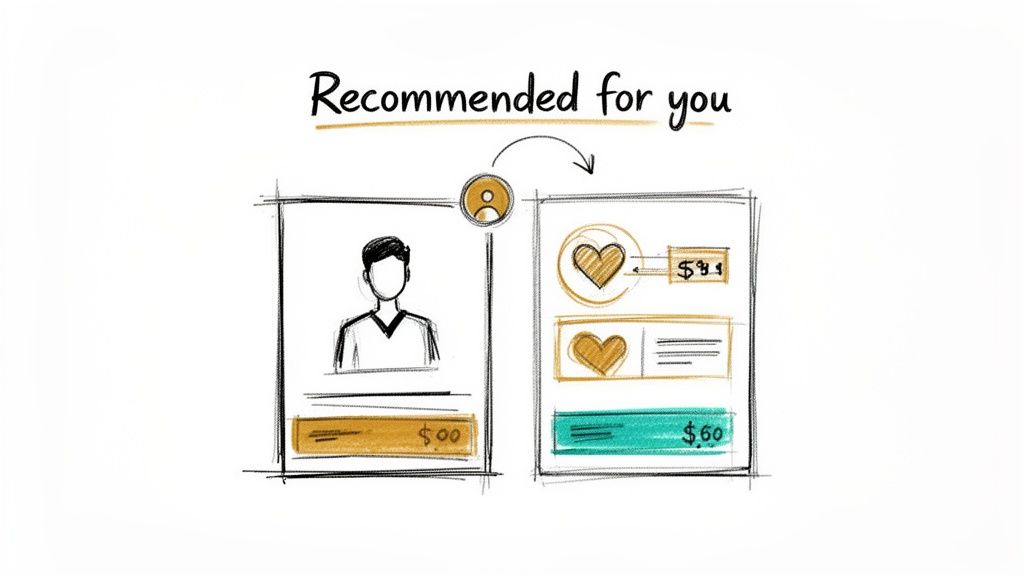
Text Message Recommendations
These follow-ups are powerful because they arrive at a moment of high interest. By referencing a specific action, the message feels less like an ad and more like a helpful suggestion. This is one of the most effective text message examples for driving repeat purchases.
Example Recommendation Messages
- E-commerce: “Based on your purchase of [Product A], we think you’d love [Product B]. See it here → [Link]. Use code MATCH15 for 15% off.”
- Course Platform: “You finished [Course 1]! Ready for the next level? [Course 2] builds on what you learned. Enroll now → [Link]”
- SaaS: “You’re using our analytics tool heavily. [Feature] could save you 10+ hours monthly. Let’s set up a demo → [Link]”
- Marketplace: “Others who viewed [Item] also bought [Related Item]. Check it out → [Link]. Free shipping with [Item] →”
Strategic Breakdown & Actionable Tips
- Explain the “Why”: Context is crucial. Start with phrases like “Because you viewed [Category]” or “Since you bought [Product]” to show you’re paying attention.
- Segment Your Offers: Test different incentives. A new customer might get 10% off, while a VIP could receive a “free gift with purchase” offer.
- Use All Available Data: Trigger messages based on viewed products, wish-listed items, or time spent on a page. The more data you use, the better your recommendations.
- Track and Optimize: Monitor which recommendations generate the most clicks and conversions. Use this data to refine your logic and surface your best suggestions more often.
Key Takeaway: The goal is to act as a helpful expert, not a pushy salesperson. Use customer data to provide timely, relevant suggestions that add value and encourage the next purchase.
10 SMS Message Examples Comparison
| Message Type | 🔄 Implementation Complexity | ⚡ Resource Requirements | 📊 Expected Outcomes | Ideal Use Cases | ⭐ Key Advantages |
|---|---|---|---|---|---|
| Welcome & Subscription Confirmation Message | Low — single trigger, template-based | Low — capture widget + personalization tags | Very high open rates (95%+); strong initial engagement ⭐⭐⭐⭐ | New subscribers, incentive delivery, onboarding | Confirms opt-in, sets expectations, immediate trust signal |
| Flash Sale & Limited-Time Offer Message | Medium — segmentation + timed sends | Medium — assets, inventory coordination, countdown elements | Immediate revenue spikes; high CTR when segmented ⭐⭐⭐⭐ | Inventory clearance, seasonal promotions, time-sensitive offers | Creates urgency and FOMO; measurable ROI quickly |
| Abandoned Cart Recovery Message | Medium–High — cart integration + timed sequence | Medium — cart data, product images, 1‑click links | Recovers ~10–30% of carts; high ROI for e‑commerce ⭐⭐⭐⭐ | Cart abandoners across web/DM channels | Recovers lost sales with automated reminders and incentives |
| Post-Purchase Thank You & Order Confirmation | Medium — real‑time order sync required | Medium — order data, tracking links, accurate templates | Reduces anxiety/returns; high engagement; trust building ⭐⭐⭐⭐ | Transactional communications post‑purchase | Confirms order details, reduces support queries, upsell opportunity |
| Educational Content & Value-Add Series | Medium — multi-step content sequencing | Medium–High — content creation and scheduling | Builds long-term authority and engagement; slower sales lift ⭐⭐⭐ | Nurturing, onboarding, thought leadership | Increases LTV, lowers unsubscribe rates, repurposable content |
| Customer Service & Support Inquiry Response | Medium — AI + routing + escalation flows | Medium–High — training data, human agents, integrations | Faster resolution, higher CSAT/NPS; reduces ticket volume ⭐⭐⭐⭐ | Support channels, self‑service with escalation | Immediate acknowledgment, scalable automation with human backup |
| Re-engagement & Win-Back Campaign | Medium — segmentation by inactivity | Low–Medium — tailored offers, multiple variants | Low conversion (5–15%) but cost‑effective recovery ⭐⭐⭐ | Inactive subscribers/customers (90–365+ days) | Recovers lapsed users, improves list hygiene and segmentation |
| Review Request & Social Proof Generation | Low–Medium — timed triggers and direct links | Low — review links, optional small incentives | Low response rates (5–15%); increases review volume and SEO ⭐⭐⭐ | Recent satisfied customers, local services, SaaS NPS follow-up | Generates user reviews and testimonials for credibility |
| Event, Webinar, or Launch Announcement | Medium — countdown sequence + logistics | Medium — registration, calendar invites, reminders | Drives registrations; variable attendance (no‑show risk) ⭐⭐⭐⭐ | Webinars, product launches, ticketed events | Builds anticipation, captures leads, highly trackable |
| Personalized Recommendation & Browse-Based Follow-Up | High — behavior tracking + dynamic content | High — analytics, product catalog sync, personalization logic | High conversion (15–30%+); increases AOV ⭐⭐⭐⭐ | Cross-sell, browse abandonment, personalized upsells | Highly relevant offers, data‑driven, boosts average order value |
Putting It All Together: Your Action Plan for Conversational Marketing
We’ve covered a wide range of powerful sample text messages and practical SMS templates. But the real power isn’t in copying any single SMS example—it’s in understanding why they work. Modern message marketing has evolved far beyond simple promotional blasts. It’s a direct, personal channel that demands respect for your customer’s attention. Success comes from delivering value, not just messages.
The most effective marketing campaigns are built on segmentation, personalization, and precise timing. Whether you’re using an automated text message template for a discount, sending an order update, or requesting feedback, every message should serve a clear purpose.
Your Tactical Blueprint for Success
Don’t try to launch everything at once. Focus on what drives results first.
Prioritize the “Money-Makers”
Start with high-impact flows like abandoned cart recovery and welcome sequences. These are proven performers in business texting and can quickly boost revenue.
Master Compliance Basics
Before sending anything, follow best practices. Make sure you have explicit opt-in consent and include clear opt-out instructions like “Reply STOP to unsubscribe.” This isn’t just legal—it builds trust.
Establish a Testing Framework
A/B test one variable at a time. Compare different offers, timing, or wording across your SMS templates. Let real data guide your optimization.
Integrate and Automate
Manual texting doesn’t scale. Connect your tools so your message marketing runs automatically based on customer actions. This is where automated text message templates become powerful growth drivers.
From Examples to a Conversational Engine
Think of these sample text messages as building blocks of a larger system. A subscriber enters through a welcome flow, makes a purchase, receives updates, and later gets a review request. Each SMS example becomes part of a connected journey.
This transforms your outreach from isolated campaigns into a continuous, meaningful conversation. When done right, business texting creates a seamless experience where every message feels relevant—leading to stronger relationships, higher lifetime value, and a brand customers genuinely trust.
Ready to put these strategies into action with powerful automation? Clepher makes it simple to build, automate, and manage the very conversational flows we’ve discussed. Connect with your customers on SMS, Facebook Messenger, and Instagram by turning these text message examples into automated campaigns that drive sales and build loyalty. Start your Clepher journey today.

Related Posts
10 Lead Capture Software Tools Compared for 2026
October 18, 2026WhatsApp Chatbot for Ecommerce: A Practical 2026 Guide
October 17, 2026What Is Lead Scoring and How It Drives Real Sales Results
October 16, 2026
Founder Clepher