

Google still captures the vast majority of mobile search activity. That is why websites for free advertising continue to matter in 2026. They put a business in front of buyers who are already searching, comparing options, and deciding where to click or call.
Free promotion shifts the cost. Instead of paying for reach, you spend time improving listings, publishing useful updates, collecting reviews, answering questions, and tightening the offer. Those assets can keep producing leads after a paid campaign ends.
I see the same mistake often. Businesses claim too many profiles too early, then leave half of them thin or outdated. A focused presence on three relevant platforms usually produces better results than ten weak listings. The right approach is to treat each profile like a conversion asset with a clear audience, a clear offer, and a clear next step.
That matters even more as paid acquisition gets more expensive. Analysts at Grand View Research expect the online advertising market to keep growing through 2033, which usually means more competition for attention and higher costs in paid channels. Free visibility helps offset that pressure, especially for local service businesses, early-stage ecommerce brands, and B2B companies with limited budgets.
This guide covers 10 of the best websites for free advertising in 2026, grouped by function: local, social, and niche. Each entry includes a practical mini-playbook on how to post, what to post, and how to measure whether the channel is contributing to growth. If local discovery is part of the plan, this framework also pairs well with a stronger local business promotion strategy.
Practical rule: Choose platforms based on buyer intent and your ability to maintain them well. Popularity matters less than fit, consistency, and trackable results.
1. Google Business Profile
If you serve a local area, Google Business Profile is usually the first free listing to set up and the last one to neglect. It controls how your business appears in Google Search and Maps, which means it sits close to the moment of intent. Someone isn’t casually browsing there. They’re looking for a place, a provider, a phone number, or reassurance.
What makes it powerful is the combination of visibility and trust. You can add hours, services, photos, posts, offers, and responses to reviews, all inside a profile many buyers see before they ever visit your site. For local operators, it often acts like a storefront window.
How to use it well
Post like a business owner who knows what customers ask before they call.
- How to post: Claim the profile, verify it, fill every core field, and add real photos of your location, team, work, or products.
- What to post: Service highlights, limited-time offers, seasonal updates, common questions, and proof of recent work.
- How to track success: Watch for calls, direction requests, website visits, message volume, and review trends inside your profile analytics.
A practical example: a local med spa shouldn’t just list “facials” and stop there. It should publish service-specific updates, before-and-after style visuals where appropriate, and answer review feedback with enough detail to show professionalism.
For businesses trying to connect free listings to real local demand, this guide on how to promote a local business pairs well with a strong Google profile.
The trade-off is maintenance. In crowded categories, a bare listing disappears into the background. Reviews, fresh photos, and accurate service details do the heavy lifting.
2. Google Merchant Center Free Product Listings
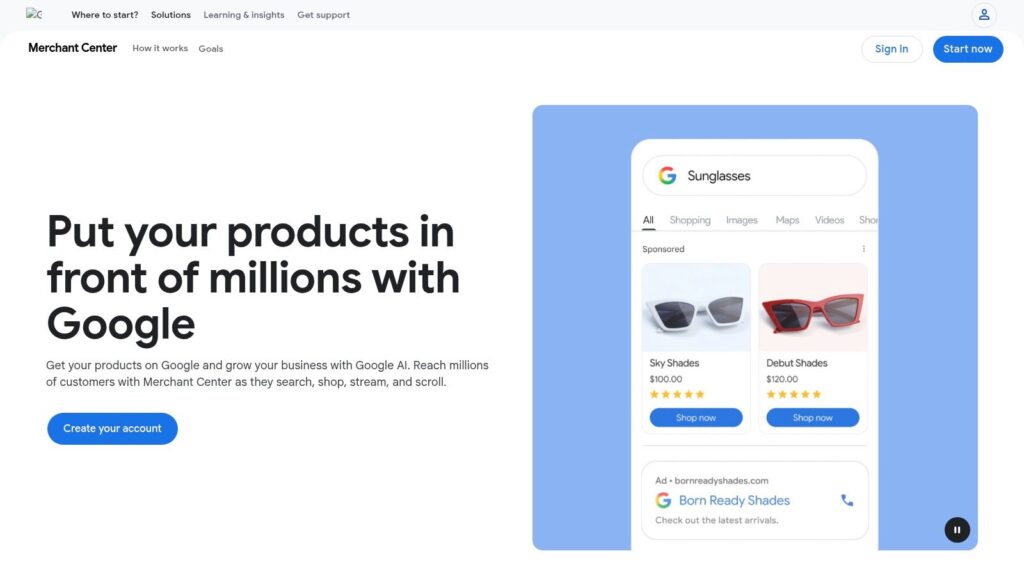
Google Merchant Center is one of the most overlooked free advertising tools for ecommerce brands. If you sell products online, free product listings give you organic shelf space across Google surfaces, including places where shoppers compare options visually before clicking.
Google Merchant
This is especially useful when your catalog is broader than what you can afford to promote with ads. Merchant Center lets you submit a product feed so your inventory can appear in free shopping placements. If your titles, images, availability, and landing pages are clean, you create a steady stream of non-paid product discovery.
Mini-playbook
Think of feed quality as your ad creative, even though you’re not paying for placement.
- How to post: Upload a complete, approved product feed in Merchant Center and keep pricing and availability synced with your site.
- What to post: Strong product titles, clean images, clear variants, and category-specific attributes that help Google understand the item.
- How to track success: Review impressions, clicks, top products, and landing page behavior in Merchant Center and your site analytics.
This works well for stores with repeatable inventory such as apparel, supplements, home goods, accessories, and specialty products. It’s less forgiving for messy catalogs. If product data is incomplete, visibility becomes unpredictable.
The brands that get value here usually don’t “post once.” They treat feed cleanup like ongoing merchandising.
One more advantage is strategic. If you later decide to scale with paid Shopping campaigns, you’re not starting from zero. The feed foundation is already in place. The downside is that performance depends heavily on product data accuracy, site trust, and image quality. Free listings aren’t automatic wins. They reward operational discipline.
3. Bing Places for Business
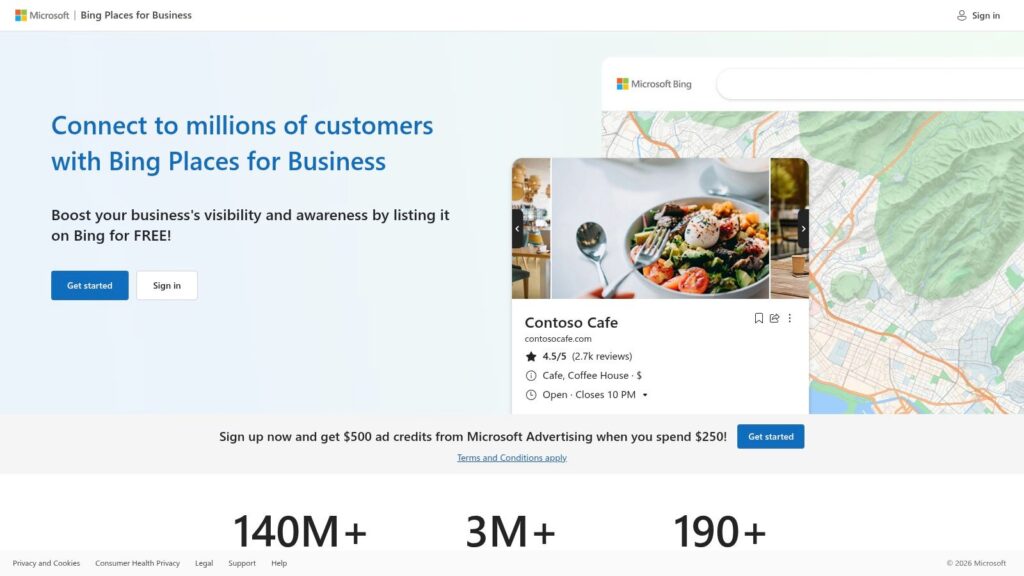
Bing Places is rarely the star of the conversation, which is exactly why it’s worth claiming. It’s a straightforward free local listing for Bing Search and Bing Maps, and for many businesses it’s an easy visibility layer that takes far less effort than launching another social channel.
Microsoft Bing
The practical reason to use it is simple. If your business already cares about local SEO, there’s little upside in leaving a major search ecosystem incomplete. It also helps maintain consistent business details across the web, which matters when prospects compare phone numbers, addresses, and hours.
Where it fits
Bing Places is best treated as a support channel, not your central growth engine.
- How to post: Claim or create the listing, match your business name, address, and phone details to your other profiles, then add services, hours, and photos.
- What to post: Focus less on frequent updates and more on profile completeness and accuracy.
- How to track success: Monitor calls, site clicks, and any branded search traffic that appears tied to Bing or Microsoft properties.
This is a strong fit for local service businesses, healthcare practices, legal firms, home services, and any company serving an audience that still uses desktop-heavy search behavior. It also makes sense for agencies managing multiple local clients because the setup effort is modest.
The limitation is reach. Google remains the bigger local prize, so Bing shouldn’t distract from your main listing strategy. Still, it’s a practical second move once your primary local presence is in good shape.
4. Yelp for Business
Yelp matters most in categories where people compare providers before they commit. Restaurants, home services, beauty, wellness, automotive, and local professional services tend to feel the impact more than businesses with low review sensitivity.
Yelp for Business
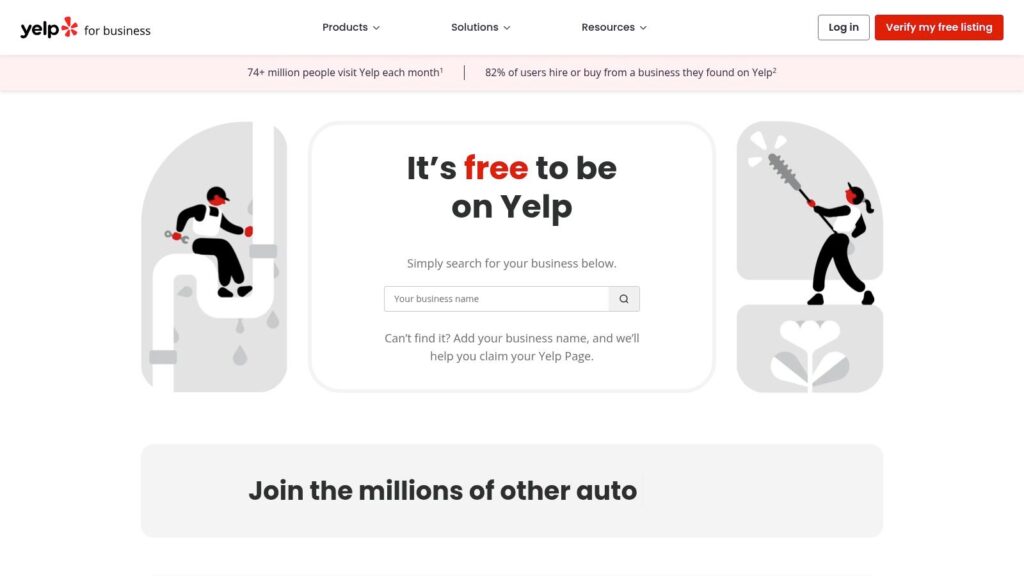
The free business page gives you a place to claim your profile, add photos, manage information, and respond to reviews. That last piece is where a lot of brands either build confidence or damage it. Buyers often read the owner’s response as closely as the review itself.
What works on Yelp
Yelp isn’t the place for broad brand storytelling. It’s the place for credibility.
- How to post: Claim the page, tighten business details, choose accurate categories, and upload photos that show the space, service, or outcome clearly.
- What to post: Use your profile details and photo gallery to answer practical buying questions. On Yelp, clarity beats cleverness.
- How to track success: Watch profile visits, calls, website clicks, direction requests, and review quality over time.
A home cleaning company, for example, should feature team professionalism, service area details, and trust-building imagery. A restaurant should prioritize ambiance, signature dishes, and recent customer feedback.
What doesn’t work is treating Yelp like passive directory coverage. Categories can get crowded fast, and the platform often pushes paid upgrades. That means the free version works best when your review management is active and your profile leaves little doubt about what you offer.
5. Facebook Pages for Businesses
With nearly 3 billion monthly active users, Facebook still gives small businesses one of the broadest free distribution channels on the web, according to Meta’s company reporting. That reach matters less for viral brand awareness than for practical buyer actions. A Page can surface in search, answer questions in Messenger, collect reviews, promote events, and keep your business visible between purchases.
This platform fits best in the Social category, but it often supports Local results too. It works well for service businesses, restaurants, clinics, real estate teams, coaches, community-led ecommerce brands, and any company that needs repeat contact rather than a single click and conversion.
What works on Facebook Pages
A good Facebook Page does two jobs at once. It gives prospects a clean business profile, and it gives existing customers a reason to stay connected.
- How to post: Complete the Page setup, add your services, hours, contact details, and action button, then connect Messenger so inquiries do not sit unanswered.
- What to post: Publish short native videos, event updates, customer wins, limited-time offers, FAQ posts, and local proof such as tagged photos or community involvement.
- How to track success: Review reach, post engagement, link clicks, message volume, event responses, and how often conversations turn into booked calls, visits, or sales.
A local gym, for example, can use Facebook better than a static website alone. Class promos, trainer clips, member milestones, and last-minute schedule updates give prospects current proof that the business is active. A B2B consultant can use the same Page differently, posting webinar invites, client education, and authority-building commentary while using Messenger for inbound leads.
If you are deciding how Facebook and Instagram should split the workload, this guide on how to sell on Instagram for free helps clarify where visual commerce content belongs and where Facebook should handle community and conversation.
The trade-off is clear. Organic reach on Pages is uneven, and low-effort promotional posts rarely travel far. Businesses that get results usually pair the Page with consistent replies, useful updates, and content built for comments, saves, or direct messages. An outdated Page still shows up in search, which means stale hours, old branding, and unanswered questions can cost trust before a prospect ever reaches your site.
6. Instagram Professional Accounts
Instagram has become a serious free advertising channel for businesses that can sell through visuals, proof, and repeat exposure. It is not just a brand-polishing platform anymore. For the right category, it can generate discovery, product interest, direct messages, and sales conversations from a single post sequence.
This platform fits the Social bucket in this list, but it behaves differently from Facebook or LinkedIn. Instagram works best when the product, outcome, or expertise can be shown quickly. That makes it a strong fit for DTC brands, creators, personal brands, salons, restaurants, fitness businesses, designers, coaches, and education offers. A Professional account adds the basic business layer you need: Insights, contact options, and cleaner account management.
Best use cases
Instagram rewards useful, creative, and clear positioning.
- How to post: Switch to a Professional account, write a bio that explains what you sell and who it helps, add one clear link, and organize Highlights around buyer questions such as pricing, results, FAQs, and reviews.
- What to post: Use Reels for discovery, Stories for day-to-day interaction, carousels for teaching, before-and-after content for proof, and customer testimonials or product demos to reduce hesitation.
- How to track success: Review saves, shares, profile visits, DMs, link clicks, Story replies, and which posts lead to actual inquiries, checkouts, or booked calls.
A local esthetician can turn Instagram into a compact sales funnel. Reels show treatments, Stories answer common objections, Highlights cover aftercare and pricing, and testimonial posts give prospects proof before they message. A small apparel brand can use the same account differently, focusing on try-ons, UGC, product drops, and short videos that show fit, fabric, and use in real life.
For sellers who need a practical setup guide, this walkthrough on how to sell on Instagram for free covers the mechanics in more detail.
The trade-off is workload. Instagram usually asks for more creative output than local directories or review platforms, and weak visuals get ignored fast. Businesses that treat it like a static brochure rarely get much from it. The ones that win post consistently, show the product or outcome in context, reply to DMs quickly, and track which format effectively drives action instead of chasing views alone.
7. LinkedIn Company Pages
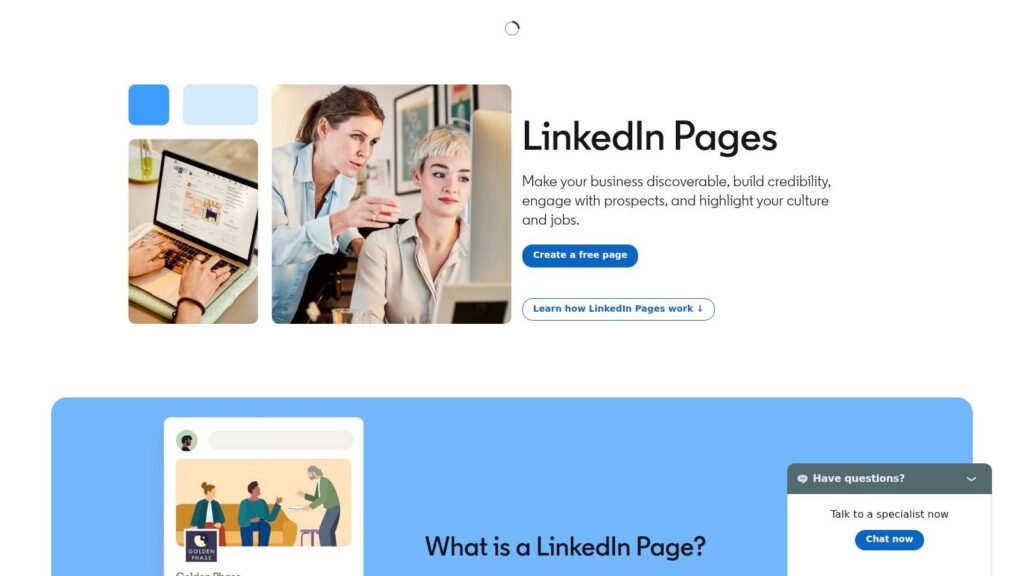
A large share of B2B buying happens before a sales conversation starts. Prospects hear your company name, search it, scan your page, and make a quick judgment about credibility, relevance, and expertise. LinkedIn Company Pages matter because they influence that judgment in a place that buyers already use for research.
LinkedIn Pages
This is a Social platform with a clear B2B bias. It works well for agencies, SaaS companies, consultants, recruiters, professional services firms, and founder-led brands that sell high-trust offers. It is less useful for impulse buys or businesses with little to say beyond promotions.
Best use cases
LinkedIn rewards clarity and consistency.
- How to post: Complete the Company Page fully, write a sharp tagline, add a banner that explains what you do, connect key employees, and publish on a steady schedule. Pair the page with employee posting when possible, because personal profiles often carry farther than brand posts.
- What to post: Category insights, strong points of view, customer problems, product updates with context, hiring announcements, client wins, team expertise, and short proof-led posts that help buyers make a decision.
- How to track success: Watch follower quality, post engagement from the right audience, profile visits, inbound messages, demo requests, branded search interest, and assisted conversions in your analytics.
The mini-playbook is simple. Post to build buyer confidence, not to fill a calendar. A B2B agency should share lessons from campaigns, reporting mistakes to avoid, and commentary on pipeline quality. A SaaS company should publish workflow examples, feature releases tied to business outcomes, and customer education that helps prospects understand the category before they buy.
LinkedIn also gives you a useful middle ground between visibility and trust. A prospect may ignore a cold email, but still check your Company Page after seeing your brand mentioned by a colleague or founder. If the page is thin, outdated, or generic, interest drops fast.
The trade-off is speed. Organic LinkedIn usually compounds slowly, and Company Pages often underperform employee-led content on reach. That does not make the page optional. It makes the job different. Use the page as your credibility hub, then support it with leadership posts, comments, and distribution tactics your team can sustain.
For teams that also want to understand community-led promotion on discussion platforms, these effective Reddit marketing tips are a useful contrast to LinkedIn’s more brand-forward approach.
8. Reddit
Reddit reaches hundreds of millions of people, but raw reach is not the reason to use it. Its value comes from intent. People show up with specific problems, strong opinions, and little patience for brand fluff. That makes Reddit one of the few free advertising channels where a useful comment can outperform a polished campaign asset.
It also needs its own category in this list. Reddit is not a local listing, and it is not a standard social profile play. It works best as a niche community platform, where distribution depends on relevance, timing, and whether your post adds something to the discussion.
Mini-playbook
- Platform type: Niche community
- How to post: Pick a small set of relevant subreddits, read the rules, study top posts, and spend time commenting before you share any link. Post from a person with context, not a faceless brand account, if the subreddit culture rewards that approach.
- What to post: Detailed answers, product comparisons, setup walkthroughs, case-specific advice, postmortems, AMA threads, and honest replies to objections.
- How to track success: Watch referral traffic, comment quality, branded searches, assisted conversions, saved posts, and repeat mentions of the same pain point.
A good Reddit post usually looks more like support, education, or informed peer advice than promotion. That is the trade-off. You can get highly qualified traffic and sharp market feedback, but only if you accept that direct selling often fails.
The format matters. Broad awareness posts tend to struggle. Specific posts win. A founder answering technical implementation questions in the right subreddit can generate more trust than a generic brand announcement seen by a much larger audience.
This channel fits SaaS, developer tools, gaming products, creator software, technical services, career offers, and niche consumer products with active communities. It is a weak fit for businesses that cannot contribute expertise or handle public criticism well.
For teams that want tactical examples before posting, these effective Reddit marketing tips are a useful starting point.
The biggest mistake is treating Reddit like another distribution slot in your content calendar. Communities notice fast. If the post reads like marketing before it reads like help, expect removals, downvotes, or comments that turn the thread against you.
9. Product Hunt
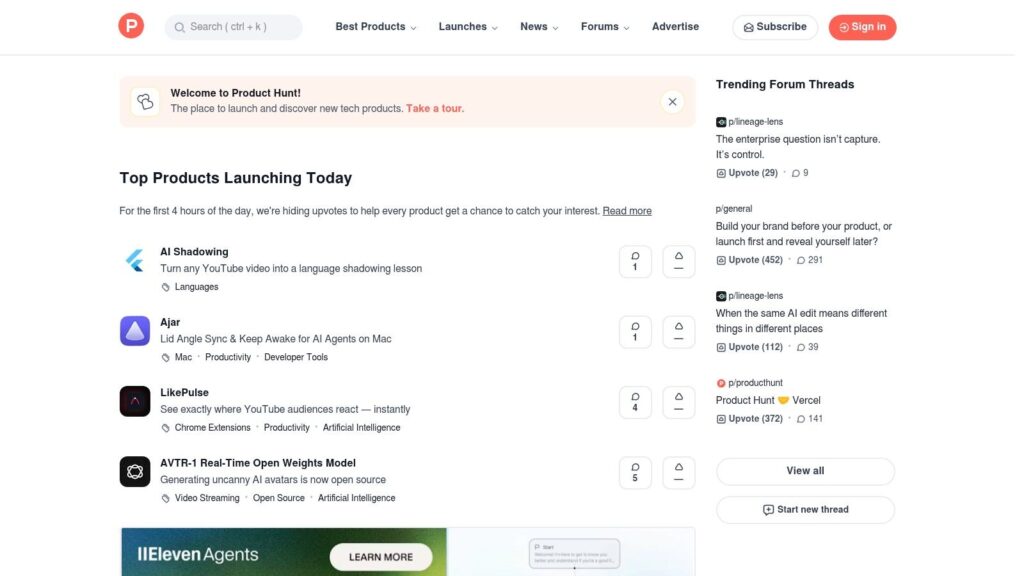
Product Hunt is one of the few free platforms where launch energy still matters. If you’re releasing a software product, AI tool, app, extension, or startup feature set, a good Product Hunt page can generate awareness, feedback, and a durable branded search result that keeps sending traffic after launch day.
Product Hunt
The platform is competitive, but that’s part of the value. People arrive expecting to evaluate new tools. That means the audience is more discovery-oriented than on many social channels.
Launch playbook
A strong Product Hunt launch starts before the listing goes live.
- How to post: Build your product page carefully, prepare visuals, write concise positioning, and line up your community and team to participate.
- What to post: A clear product promise, screenshots, short demo materials, founder context, and thoughtful replies in the comment thread.
- How to track success: Watch referral traffic, signup quality, comments, upvotes, waitlist growth, and product feedback themes.
This is a strong fit for early-stage SaaS, indie products, productivity tools, browser tools, AI software, and apps with a clear category hook. It’s a weak fit for local businesses or generic service offers with no distinct product story.
Success on Product Hunt usually comes from preparation and responsiveness. The page is free. The effort isn’t.
10. G2
G2 is where B2B software buyers go when they want outside validation. That makes a free vendor profile valuable even before you upgrade anything. If your product competes in an established software category, a complete G2 presence can support branded search, review-driven trust, and comparison visibility.
The platform is particularly useful for SaaS companies selling to informed buyers. Those buyers often visit your website, then look for independent confirmation that your product is credible. G2 helps answer that need.
How to get value from a free profile
The profile itself matters, but reviews do most of the persuasive work.
- How to post: Claim the vendor profile, complete product information, sharpen category positioning, and make review collection part of customer success.
- What to post: Accurate product descriptions, feature overviews, use cases, and onboarding language that matches how customers describe your tool.
- How to track success: Monitor profile traffic, review volume, review themes, branded search behavior, and the quality of leads that mention comparison research.
A CRM, email platform, analytics tool, or support software company can use G2 as a standing trust asset. Even if volume is modest at first, the page helps answer buyer questions your homepage can’t answer as credibly on its own.
The main drawback is momentum. An incomplete profile with stale or sparse reviews won’t do much. G2 rewards companies that operationalize review generation and keep their positioning sharp.
Top 10 Free Advertising Websites Comparison
| Platform | Core features | UX / Quality ★ | Value & Price 💰 | Target Audience 👥 | Unique Selling Points ✨ |
|---|---|---|---|---|---|
| Google Business Profile | Local listing, hours, photos, posts, reviews, messaging | ★★★★, strong local trust | 💰 Free, high ROI when optimized | 👥 Local shops, services, restaurants | ✨ Search & Maps dominance; review trust 🏆 |
| Google Merchant Center – Free Product Listings | Product feed, “Surfaces across Google”, Lens & Shopping placements | ★★★, visibility depends on feed/site quality | 💰 Free listings; complements paid Shopping | 👥 E‑commerce retailers | ✨ Zero‑cost shelf space on Shopping & Lens |
| Bing Places for Business | Claim/verify listing, NAP consistency, Bing Maps visibility | ★★★, lower competition, smaller audience | 💰 Free, fast local win | 👥 Local businesses targeting Windows/Edge users | ✨ Less crowded local results; quick verification |
| Yelp for Business (Free Page) | Business page, photos, review responses, optional upgrades | ★★★, strong buying intent in dining/services | 💰 Free base; paid upsells common | 👥 Restaurants, service providers | ✨ Review-driven conversions & reputation signals |
| Facebook Pages (for Businesses) | Page posts, Events, Offers, action buttons, messaging, IG/WhatsApp links | ★★★, massive reach but organic reach limited | 💰 Free; ads often needed to scale | 👥 B2C brands, communities, DTC | ✨ Integrated messaging across FB/IG/WhatsApp 🏆 |
| Instagram Professional | Insights, action buttons, Reels/Stories, shoppable formats | ★★★★, high engagement for visual brands | 💰 Free switch; paid promotions optional | 👥 Visual brands, creators, DTC | ✨ Reels + shoppable surfaces; creator tools |
| LinkedIn Company Pages | Company posts, showcase pages, messaging, analytics | ★★★★, strong B2B credibility | 💰 Free; paid for ad/advanced tools | 👥 B2B companies, professional services | ✨ Authority building & follower insights |
| Reddit (Organic participation) | Subreddit engagement, niche audiences, strict moderation norms | ★★★, highly targeted but requires care | 💰 Free; paid ads optional | 👥 Niche communities, product‑savvy users | ✨ Authentic feedback & hyper‑targeted audiences |
| Product Hunt | Product launches, upvotes, product pages, and community feedback | ★★★, high launch‑day visibility | 💰 Free posting; prep and engagement needed | 👥 Startups, SaaS makers, early adopters | ✨ Tech‑buyer exposure & launch momentum 🏆 |
| G2 (Free Vendor Profile) | Vendor profile, reviews, badges, category listings | ★★★★, strong B2B buyer intent & validation | 💰 Free base; upgrades for advanced features | 👥 SaaS vendors, B2B buyers | ✨ Third‑party validation via reviews & comparisons 🏆 |
Turn Your Free Presence into a Growth Engine
Businesses that treat free listings like active acquisition channels usually get more from them than businesses that treat them like set-and-forget profiles. The difference is rarely the platform itself. It is the operating system behind it.
Use the same discipline here that you would use for paid acquisition. WordStream notes that marketers commonly track paid performance through metrics such as click-through rate, conversion rate, return on ad spend, and cost per lead, with PPC often cited at roughly $2 in return for every $1 spent. Free channels do not need ad spend, but they do need measurement. If a profile gets views and messages but no booked calls, quote requests, or sales, it is not doing enough.
A simple way to manage that is to group your free advertising efforts by role, then assign each platform a job.
- Local platforms should drive calls, direction requests, bookings, and review volume.
- Social platforms should build familiarity, generate replies, and create repeat exposure.
- Niche platforms should earn trust during comparison, especially for higher-consideration purchases.
That framing keeps teams from spreading effort across too many profiles. Birdeye makes a fair point on platform quality versus quantity. High-authority platforms carry more weight, and too many listings create maintenance overhead. In practice, that means fewer abandoned pages, fewer outdated hours, and fewer missed messages.
The mini-playbook matters more than the directory. Post local proof on Google Business Profile and Bing Places. Share visual proof, customer stories, and frequently asked questions on Facebook and Instagram. Publish category-specific credibility on LinkedIn, Reddit, Product Hunt, or G2, depending on how buyers evaluate options. Whether you’re using social platforms, industry communities, or classified ads websites, focus on one primary outcome per channel instead of lumping everything into a generic engagement metric.
Many of these opportunities are completely free. Businesses can advertise for free by optimizing local listings, participating in relevant communities, creating valuable content, and using platforms where they can post free ads to reach targeted audiences. Combined with strong search engine optimization, these channels can help attract a steady stream of organic traffic and inquiries.
Response speed also changes results quickly.
A free lead is still a lead. If a potential customer messages you through Facebook or Instagram, the window to convert that interest is short. Clepher helps by automating replies, capturing lead details, and routing inbound conversations so follow-up happens while intent is still high. Those contacts can then be nurtured through email marketing and other follow-up channels to increase conversion opportunities.
The same rule applies across very different businesses. A local service company needs fast replies to quote requests. A SaaS founder needs timely answers to product questions. Someone trying to expand their doula client base benefits from the same discipline: clear offers, fast responses, and consistent follow-up.
Many of the best advertising ideas for small businesses are not complicated. They focus on being visible where customers are already looking, responding quickly when interest appears, and creating a reliable process to promote your business across multiple channels.
Free visibility starts discovery. Revenue comes from what happens after the click, message, or profile view.
If your business gets leads through your website, Facebook, Messenger, WhatsApp, or Instagram, Clepher can help you respond faster and turn more of that free traffic into real conversations with automated flows, lead capture, and follow-up.
Related Posts
Customer Journey Automation: The Practical Guide
October 10, 2026Lead Qualification Marketing: A Practical 2026 Guide
October 9, 2026Customer Experience Optimization Playbook
October 8, 2026
Founder Clepher