
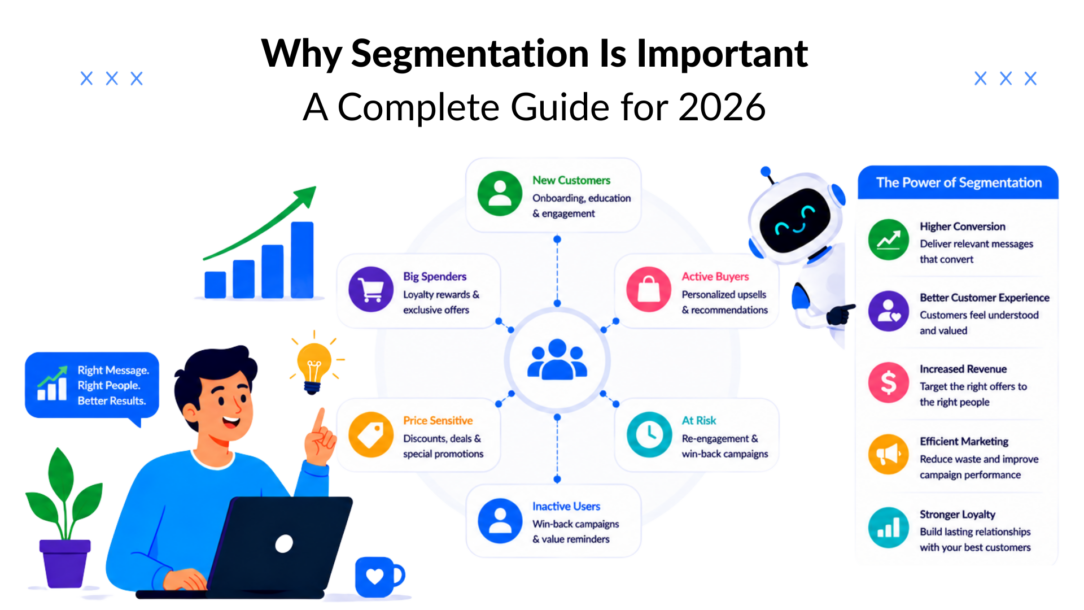
A segmented campaign can produce a 760% increase in revenue. That number changes the conversation fast.
Most businesses don’t have a traffic problem first. They have a relevance problem. They’re sending one message to buyers with different needs, timing, budgets, and objections, then wondering why clicks feel expensive, and conversions feel inconsistent.
That’s why segmentation matters. It turns marketing from a loud announcement into a useful conversation. Instead of treating your audience like a crowd, you speak to people based on who they are, what they’ve done, and what they’re trying to solve right now.
Generic messaging doesn’t just underperform. It burns budget, weakens trust, and trains customers to ignore you.
Why Generic Marketing Is Costing You Money
Sending the same campaign to every subscriber costs you money through sheer irrelevance.
The waste rarely shows up as one obvious mistake. It shows up in lower conversion rates, unnecessary discounts, poor timing, and messages sent to people who have already bought, already ignored you, or were never the right fit in the first place. Marketing budgets usually leak through mismatch, not just through overspend.
A launch email sent to a cold lead and a repeat customer at the same time will underperform for different reasons. The lead still needs proof. The repeat customer may need a cross-sell, a loyalty offer, or no message at all. Treat both people the same, and the campaign asks each one to do extra mental work before they can see why it matters.
One message forces every buyer into the same journey
That is expensive.
A broad campaign usually tries to cover too many stages of intent at once. New prospects need clarity. Cart abandoners need reassurance. Active buyers need urgency or a direct path to purchase. Existing customers need relevance tied to what they already own or already did.
When one email tries to handle all of that, the copy gets diluted. The offer gets less precise. Response rates drop because the message lands between audiences instead of squarely with one of them.
Generic marketing makes the customer sort themselves into the right message. Many will leave before they bother.
This is also where teams lose margin. Discounting everyone to move a smaller group is a common example. So is paying to retarget recent purchasers with acquisition ads they should never see. Segmentation cuts that waste by matching the message, offer, and timing to the person in front of you.
Poor targeting hurts trust as much as performance
Customers notice when a brand gets context wrong. A first-time buyer receives a “we miss you” email. A loyal customer gets beginner content. A prospect asks about one service and gets a promotion for something unrelated. None of these errors are catastrophic on their own. Repeated often enough, they train people to ignore you.
That is how segmentation protects margin and strengthens relationships at the same time.
True personalization begins with a simple decision. People in different situations should not be treated the same. Once a team accepts that, segmentation stops being theory and becomes an operating system for messaging. You tag contacts by behavior, set conditions based on interest or stage, and send broadcasts that fit what each group needs. A practical guide to audience segmentation for marketing teams helps frame that shift, and UFO Performance Marketing’s insights are useful if you want a stronger data-first approach to campaign decisions.
That represents the actual cost of generic marketing. It lowers response now and makes future messages less effective too.
What Is Customer Segmentation Really
Customer segmentation is the practice of dividing your audience into smaller groups so you can market to them with more precision.
The easiest way to think about it is this. A generic campaign is like a department store announcer talking to everyone over a loudspeaker. Segmentation is like a personal shopper who knows what one customer came in for.
That shift matters because better targeting starts with a better view of the audience. If you want a practical primer, this guide on audience segmentation is useful. For a broader strategic lens, I also like UFO Performance Marketing’s insights on using data to shape campaign decisions instead of relying on guesswork.
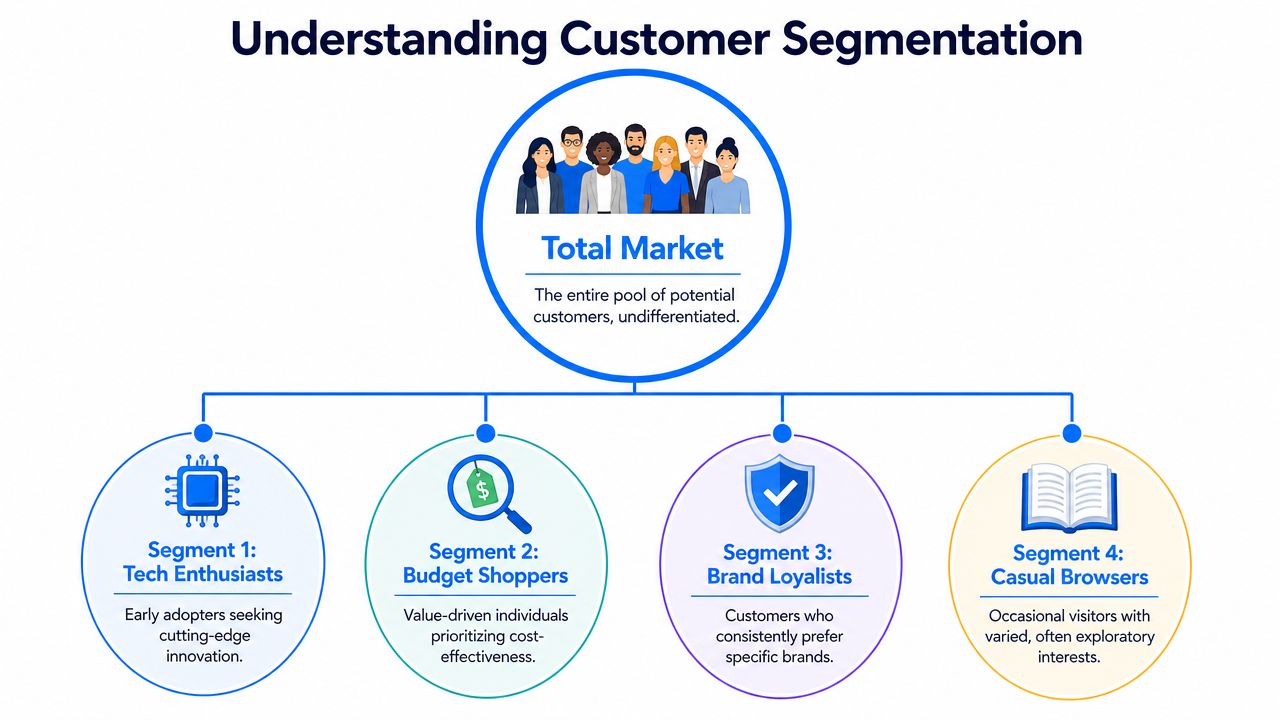
Why Customer Segmentation is Important
Four common ways to segment
Many organizations begin with four familiar lenses.
| Type | What it looks at | Simple use case |
|---|---|---|
| Demographic | Age, income, family status, job role | Different offers for students and professionals |
| Geographic | Country, city, region, climate | Local promotions or region-specific shipping messages |
| Psychographic | Values, interests, attitudes, lifestyle | Messaging for eco-conscious or convenience-driven buyers |
| Behavioral | Actions people take | Follow-ups based on clicks, purchases, or product views |
Demographic segmentation is often the easiest to build because the fields are familiar. Geographic segmentation is practical when location changes product demand or logistics. Psychographic segmentation gets closer to motivation, which is where stronger creative usually comes from.
Why behavioral data usually wins
Behavioral segmentation tends to be the most actionable because it reflects what people do, not what marketers assume they might do. As Fitchburg State’s explanation of behavioral segmentation notes, it divides markets based on actions such as past purchases, lifestyle choices, travel destinations, or daily routines rather than assumptions.
That’s powerful because actions create timing signals. Someone who visited a pricing page, clicked a product category, or abandoned checkout is telling you far more than a broad age range ever could.
Practical rule: Start with behavior when you can. It gives you cleaner triggers, stronger timing, and less guesswork.
A chatbot makes this even more practical. It can apply tags when someone clicks a button, visits a page, or responds to an offer. Those actions become the basis for segments you can use, not just labels sitting in a CRM.
The Quantifiable Benefits of Smart Segmentation
Relevant messages consistently outperform generic ones. The revenue impact shows up in practical places first: more replies, more qualified clicks, fewer wasted sends, and better conversion paths from the same audience.
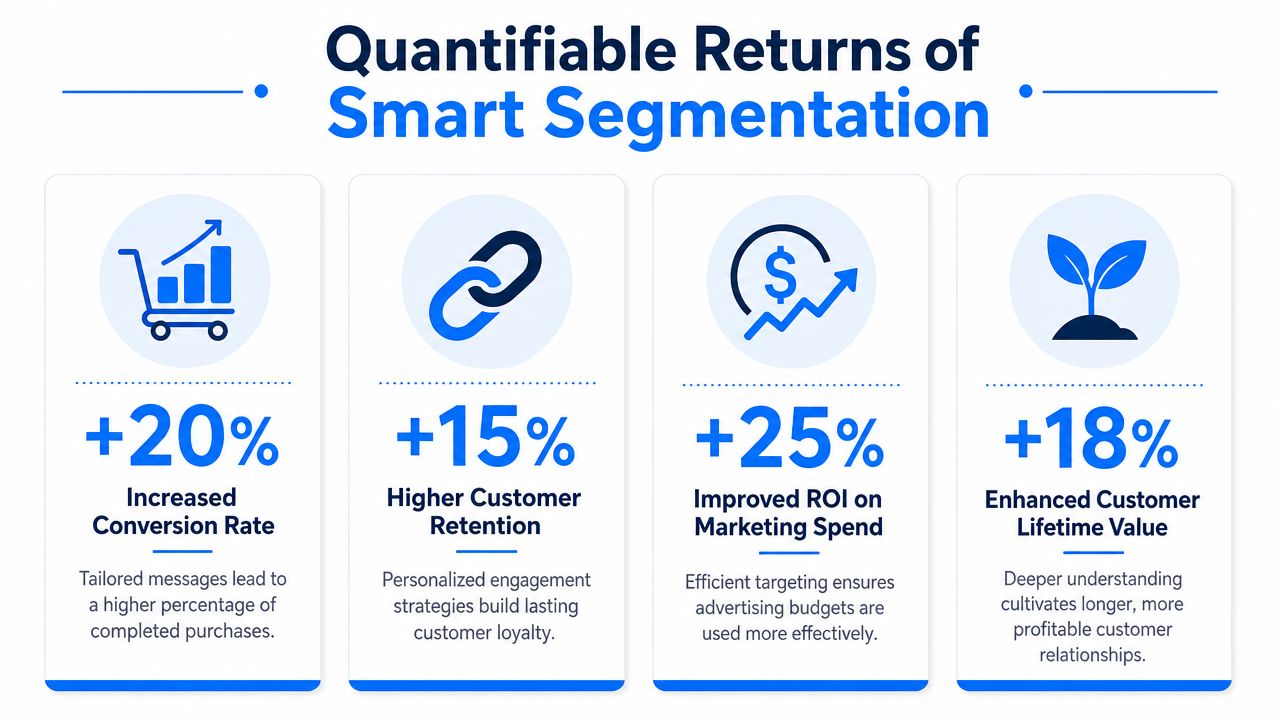
Customer Segmentation Marketing Benefits
Better conversion comes from better timing
Conversion improves when the message matches the customer’s stage, intent, and level of readiness. A prospect comparing options needs proof and clarity. A returning buyer usually needs speed, convenience, or a relevant next offer. Sending both people the same campaign lowers the odds that either one acts.
That is how segmentation becomes a growth lever instead of a reporting exercise.
In a chatbot, this gets operational fast. Tags can mark product interest, conditions can separate first-time visitors from repeat buyers, and broadcasts can go only to people who match a specific action or need. That closes the gap between theory and execution. You are not just defining segments in a slide deck. You are using them to change what each customer sees next.
Stronger efficiency protects budget
Generic campaigns waste money in quiet ways. They burn impressions on people who are unlikely to care, train subscribers to ignore future messages, and push teams to send more volume just to hit the same result.
Segmented campaigns usually do the opposite. They send fewer irrelevant messages and produce better downstream behavior because the offer fits the moment. That matters across paid social, email, SMS, chatbot broadcasts, and sales follow-up.
Keep measurement tied to business outcomes, not vanity metrics. Track response rate, assisted conversions, repeat purchase behavior, and the email marketing KPIs that show whether campaigns are actually producing profit.
The same logic applies outside email. Brands trying to boost TikTok Shop sales often get better returns by separating dormant, active, and high-potential audiences before pushing another broad promotion.
Not every segment is worth pursuing
Marketers often ignore a key trade-off. More segments create more complexity.
A segment only earns its place if it changes the message, the offer, the timing, or the follow-up in a way that justifies the work. If a group is too small to support creative, testing, and reporting, it becomes admin overhead disguised as strategy.
A peer-reviewed study citing Harvard Business Review makes the same point in its analysis of market segmentation effectiveness. Segments need to be large enough to support profitable action.
Good segmentation creates groups that are different enough to deserve different treatment and large enough to justify the effort.
Experienced teams apply that standard early. They build segments they can use in campaigns, automations, and chatbot flows. That is where measurable gains come from. Not from carving the audience into smaller and smaller slices, but from setting up segments that change decisions and improve results.
Segmentation in Action for Your Business
Segmentation shows its value in execution. It changes who gets the message, what they see, and when they see it. For businesses using chatbots, that means setting up tags, conditions, and broadcasts around real customer signals instead of sending the same sequence to everyone.
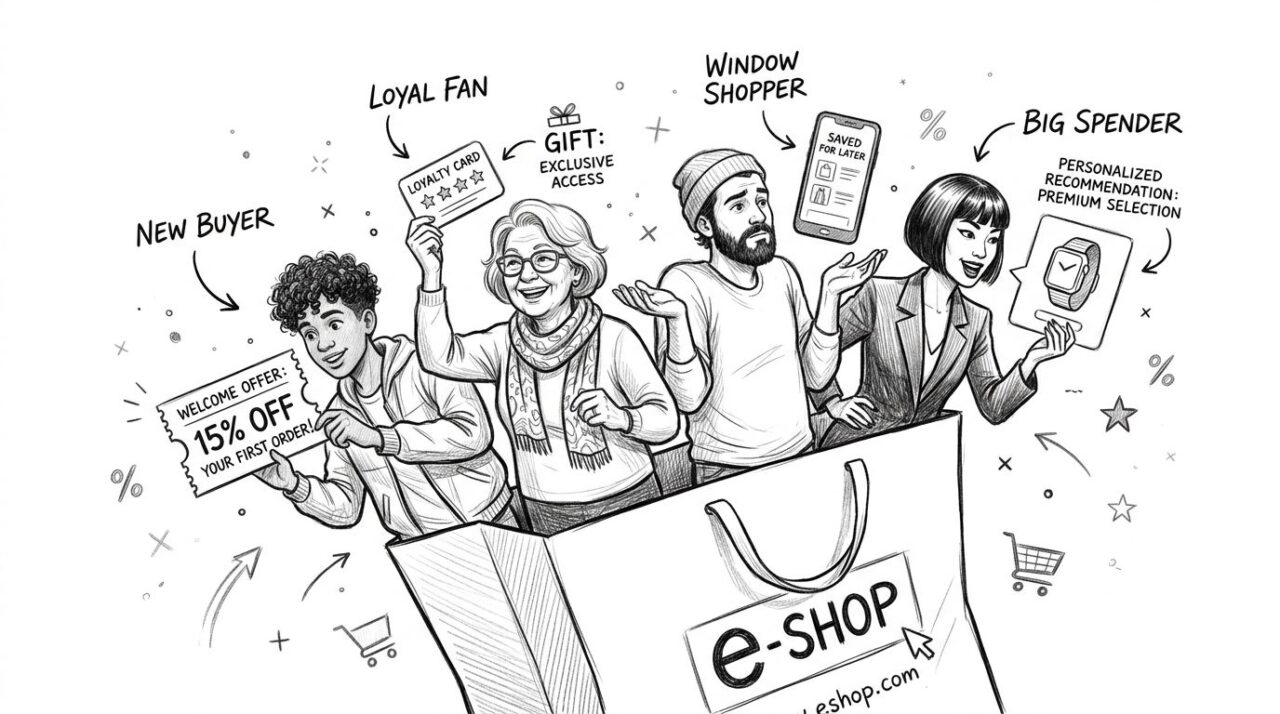
Customer Segmentation Personas
E-commerce brands
An online store does not need one campaign for every subscriber. It needs separate paths for different buying behaviors and buying obstacles.
A practical setup might include:
- Cart abandoners who viewed a high-intent product but did not finish checkout
- Repeat customers who bought from one category and are likely to want related products
- Discount-only shoppers who respond to promotions but ignore full-price launches
- Recent buyers who need onboarding, support, or product education instead of another sales push
Significant improvement comes from segmenting by intent and motivation, not just age or location. A skincare brand may sell to two customers in the same age bracket for completely different reasons. One wants speed. Another wants ingredient safety. A third wants lower cost. Those differences should change the copy, the offer, and the follow-up.
Behavior is often the clearest signal because it reflects what people do, not what they say in a form. Behavioral segmentation examples in marketing make this easier to spot. Product views, quiz answers, abandoned carts, and repeat purchases all point to different next messages.
Agencies and service businesses
Agencies often group leads by source and stop there. That leaves money on the table. A referral lead, a paid search lead, and a cold social lead rarely respond to the same proof, timeline, or call to action.
Useful segments include:
- Industry fit so the pitch uses relevant case studies
- Service interest so SEO leads do not get a paid social intro deck
- Urgency so active buyers get fast qualification and lower-intent contacts get nurture content
There is a trade-off here. More segments can improve relevance, but every segment creates extra work in copy, routing, and reporting. The answer is not to avoid segmentation. The answer is to build segments that change action. If a segment does not affect the message, offer, or speed of follow-up, it is probably admin overhead.
If your clients sell through short-form commerce channels, segmenting creators and customers by engagement quality can also help boost TikTok Shop sales without defaulting to broad creator outreach.
Coaches and creators
Coaches usually serve an audience at very different stages of awareness. Some people read free content for months. Others are ready to buy after one webinar, one DM exchange, or one clear proof point.
A useful model might separate:
- Silent subscribers who joined but have not interacted
- Content-engaged followers who click, reply, or watch consistently
- Offer-aware prospects who visited a sales page or asked pricing questions
- Current students or members who need retention and progress support
The fastest win is simple. Segment first by the problem a person wants to solve, then by how close they are to buying.
That change improves message fit quickly. Beginners stop getting advanced language. Ready-to-buy prospects stop getting long educational sequences when they need specifics, proof, and a clear next step. In a chatbot, those differences can be handled with tags, conditions, and targeted broadcasts instead of manual sorting.
How to Implement Segmentation with Clepher
Segmentation starts paying for itself when it changes what the customer sees next. In a chatbot, the practical building blocks are simple: tags, segments, and conditions. Used well, they turn scattered interactions into decisions you can act on.
The setup should stay simple enough to maintain and specific enough to affect messaging.
Segmentation Marketing Chatbot
Start with tags
A tag is a label triggered by a meaningful action. In a chatbot, that might happen when a visitor:
- Clicks a product button and shows category interest
- Chooses a pricing option and signals budget or package preference
- Asks for support and needs service content instead of promotional follow-up
- Requests a discount and belongs in a price-sensitive group
Tags matter because they capture intent while it is fresh. You are not waiting for a manual export, a CRM cleanup, or someone on the team to remember what happened. The action creates the signal.
Turn tags into segments
A segment is the audience built from those signals. A person tagged “Viewed Course Offer,” “Clicked Testimonials,” and “Asked About Payment Plan” belongs in a high-intent group. A person tagged “Support Issue” and “Existing Customer” needs a different path, different timing, and often a different tone.
This is the gap many teams miss. They collect data, but they do not convert it into routing logic. Good segmentation fixes that by grouping people according to what the business should do next. That distinction is really the importance of market segmentation: it turns raw behavior into a decision about what happens next, not just a label.
Static lists go stale fast. Segments built from live behavior are more useful because customers change. A curious browser can become a sales-ready lead in one session. A repeat buyer can turn into a support risk after a bad experience. Among the types of marketing segmentation, this kind of behavioral, live-updating approach tends to outlast the more traditional demographic or firmographic market segment models, because it reacts to what someone is doing now instead of who they were when they signed up. That responsiveness is one of the clearest benefits of marketing segmentation over static, one-time list building.
Use conditions inside chatbot flows
A condition tells the chatbot how to respond based on a tag or segment. If someone is tagged as a repeat buyer, the bot can skip the generic welcome flow and move to a reorder, cross-sell, or support option. If someone is tagged as a first-time visitor, the bot can lead with education, FAQs, or proof.
A clean implementation usually looks like this:
- Capture a signal through a button click, keyword, form response, or page-triggered flow.
- Apply a tag that records interest, stage, or intent.
- Build segments from combinations of tags and fields.
- Use conditions to send each person down the right conversation path.
- Broadcast to that segment only when the offer or follow-up fits.
That is how you move from theory to execution. Tags collect the signal. Segments organize it. Conditions turn it into a message, offer, or next step that matches the moment.
Platforms like Clepher support this workflow with no-code flows, tags, segments, conditions, broadcasts, and analytics across website chat and messaging channels. The interface matters less than the discipline of tying every message to a meaningful signal.
Build segments around decisions you can act on. If a segment will not change the message, offer, or next step, it probably does not need to exist.
Testing still matters. Once a segment is in place, test timing, CTA language, offer structure, and flow branches inside that group. Segmentation decides who gets the message. Testing helps you improve what they receive.
If you want a strong companion read for applying similar logic in lifecycle campaigns, Samuel Woods’ guide on how to transform your email marketing with AI is useful.
From Broadcasting to Building Relationships
The core shift isn’t technical. It’s philosophical. You stop broadcasting at people and start responding to where they are.
That’s why segmentation keeps outperforming batch-and-blast marketing. It respects context. A new lead doesn’t need the same message as a repeat buyer. A hesitant browser doesn’t need the same prompt as someone asking for pricing. When you align the message with the moment, marketing feels more helpful and less noisy, which is the whole point of good segmentation strategies.
This is also where marketing strategies built around broadcasting start to break down. They treat the customer base as one audience instead of many overlapping ones, each with a different relationship to your products and services. Segmentation fixes that by matching the message to where someone actually stands, and that precision is what shapes customer experience far more than the channel or the copy ever does.
If you want a strong companion read on using AI and better segmentation logic in lifecycle messaging, Samuel Woods’ guide on how to transform your email marketing with AI is worth your time.
Start small. Pick one segment that clearly matters to revenue. Cart abandoners. Warm leads. Repeat buyers. Then build one targeted campaign that speaks to that group like real people with a specific need.
That’s usually where the results start.
If you want to put segmentation into practice inside website chat, Messenger, Instagram, or WhatsApp, Clepher gives you a no-code way to build flows, apply tags, create segments, and send targeted broadcasts based on real customer behavior.
Related Posts
Customer Journey Automation: The Practical Guide
October 10, 2026Lead Qualification Marketing: A Practical 2026 Guide
October 9, 2026Customer Experience Optimization Playbook
October 8, 2026
Founder Clepher