Most brands treat abandoned cart recovery as an email problem. It isn’t. It’s a conversation problem.
When a shopper adds products to the cart and leaves, they’re not always saying no. Often, they’re hesitating, comparing, getting interrupted, questioning shipping, or waiting for reassurance. If your recovery system only sends one reminder email and stops there, you’re leaving money on the table and letting avoidable friction win.
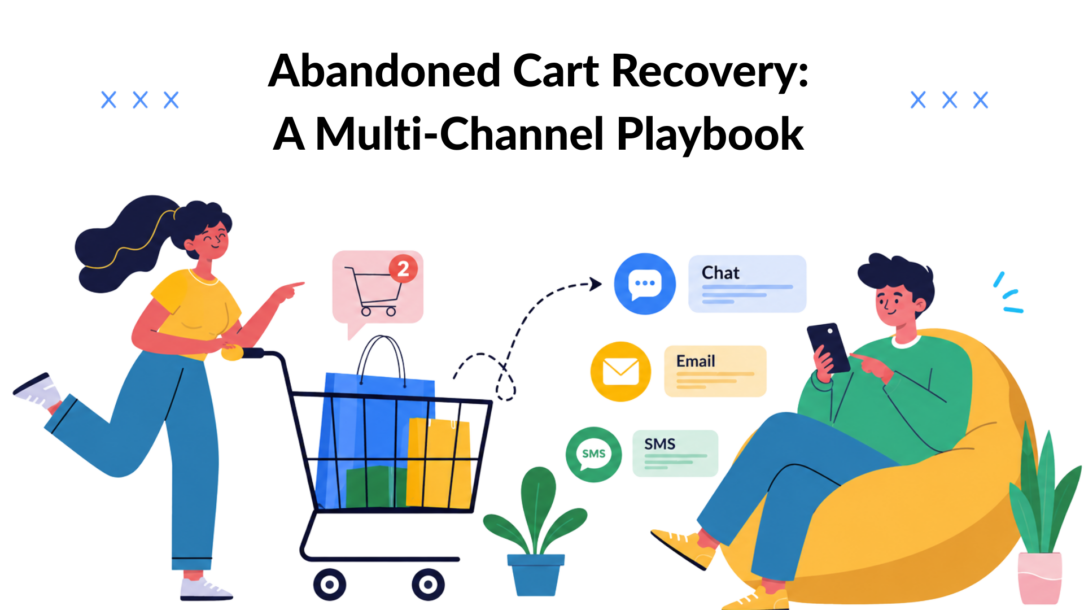
The modern playbook is multi-channel. Email still matters. SMS matters when consent is in place. Conversational recovery on Messenger, WhatsApp, and Instagram DMs matters even more for mobile-first shoppers who respond faster inside chat than inside an inbox. The job is simple: restart the buying conversation in the right channel, with the right message, at the right moment.
Why Your Business Is Losing Thousands in Lost Carts
The average global shopping cart abandonment rate in 2025 stands at approximately 70.2%, and for a business with £1 million in annual revenue, recovering just 5% of those carts could add over £100,000 to the bottom line, according to Kanuka Digital’s 2025 abandonment statistics roundup.
That changes the way you should look at recovery. This isn’t a cleanup tactic for edge cases. It’s a core revenue system.
Most abandoned carts happen for ordinary reasons. A shopper gets distracted. Shipping appears later than expected. Taxes push the total up. Someone wants to check sizing, compare variants, or ask whether delivery will arrive in time. If you don’t answer those questions quickly, the customer leaves, and your competitor gets the next click.
Every abandoned cart is a stalled buying decision, not a dead lead.
That’s why single-channel recovery underperforms. One email can work, but it can’t handle every buyer’s state. Some people respond to a reminder. Some need a short text. Others won’t move until they can ask a question in chat and get an immediate answer.
A better approach starts before the follow-up. You need clean visitor tracking, cart events, and customer identity stitched together across sessions. If that part is weak, every message after it becomes guesswork. A practical starting point is learning how to track website visitors so your recovery flows trigger from real behavior instead of loose assumptions.
If you also want to tighten the checkout side of the equation, this guide on how to combat cart abandonment on Shopify is useful because it focuses on reducing friction before recovery even has to happen.
The Foundation of Every Recovery Strategy
Recovery performance is decided before the first message goes out. If the trigger is sloppy, the segmentation is shallow, or the offer logic is inconsistent, you’ll annoy buyers, misread intent, and train customers to wait for discounts.
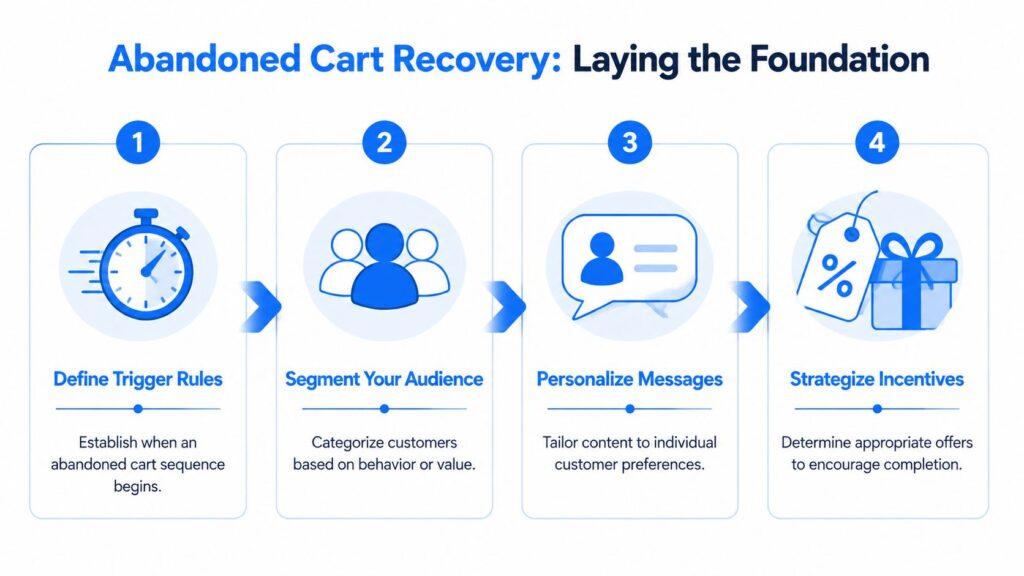
Abandoned Cart Recovery Infographic
Define abandonment properly
A cart isn’t abandoned the second someone pauses. The key question is whether the shopper has broken momentum.
In practice, I treat abandonment as an event with context attached. Did the shopper reach checkout or only add to cart? Were they logged in? Did they leave on mobile? Did they exit after seeing shipping? Those distinctions matter because they change the message.
Start with a clear event model:
- Cart created: Someone added at least one item.
- Checkout started: Buyer showed stronger intent.
- Purchase completed: Recovery must stop immediately.
- Session cooled off: No completion after your chosen delay, which should then trigger the first recovery touch.
The most common mistake is firing too late or too aggressively. Too late and intent fades. Too aggressive and you message people who were still browsing.
Segment before you automate
Not every cart deserves the same sequence.
A returning customer who left a high-consideration cart should not get the same treatment as a first-time visitor who added one low-cost item and bounced. Recovery works better when the automation reflects the buying context.
Useful segments include:
- New versus returning shoppers: Returning buyers often need less persuasion and more reassurance.
- High-intent versus light-intent carts: Checkout starters deserve faster follow-up than casual add-to-cart users.
- Product type: Commodity products can support more direct reminders. Premium or technical products often need Q&A.
- Discount sensitivity: Some buyers convert with convenience. Others stall until shipping or price objections are addressed.
- Channel availability: If you only have email, the sequence should differ from a profile with email, SMS consent, and active social messaging access.
Practical rule: Build one customer profile, then let channels act on that profile. Don’t let each channel run its own disconnected logic.
Conversational recovery fills a real gap. Most guides lean on email alone, but Recapture’s abandoned cart analysis notes that email often recovers 10 to 15%, while chat-based recovery remains underused despite 80%+ open rates on conversational channels and the opportunity to address friction in real time.
Set message rules that protect the margin
The goal isn’t to hand out discounts to everyone. It’s to remove the obstacle that stopped the order.
A practical decision tree looks like this:
- First touch: Reminder only. No offer yet.
- Second touch: If the cart shows hesitation signals, test a small incentive or shipping reassurance.
- Third touch: Use urgency carefully, especially for products with inventory pressure or gift-driven demand.
- Stop logic: End the sequence on purchase, support interaction, or explicit opt-out.
Discounts solve some carts and damage others. If buyers learn they’ll get an offer every time they leave, you create a bad habit. The better move is selective incentives tied to segment, cart value, and likely friction.
Recovery logic also shouldn’t live in isolation from payment recovery. Subscription brands and any store with retries, renewals, or card failures need a separate workflow for recovering failed payments, because a failed transaction is a different problem than an abandoned cart.
Your Automated Email Recovery Playbook
Email remains the workhorse because it’s flexible, cheap to run, and easy to personalize. It also gives you room to explain, reassure, and escalate without sounding abrupt.
A well-timed initial abandoned cart email sent 0 to 4 hours after abandonment can achieve 40 to 45% open rates and 21% click-throughs, and a follow-up incentive, such as a 10% discount, can boost conversions by an additional 25%, according to Mailmend’s abandoned cart recovery benchmarks.
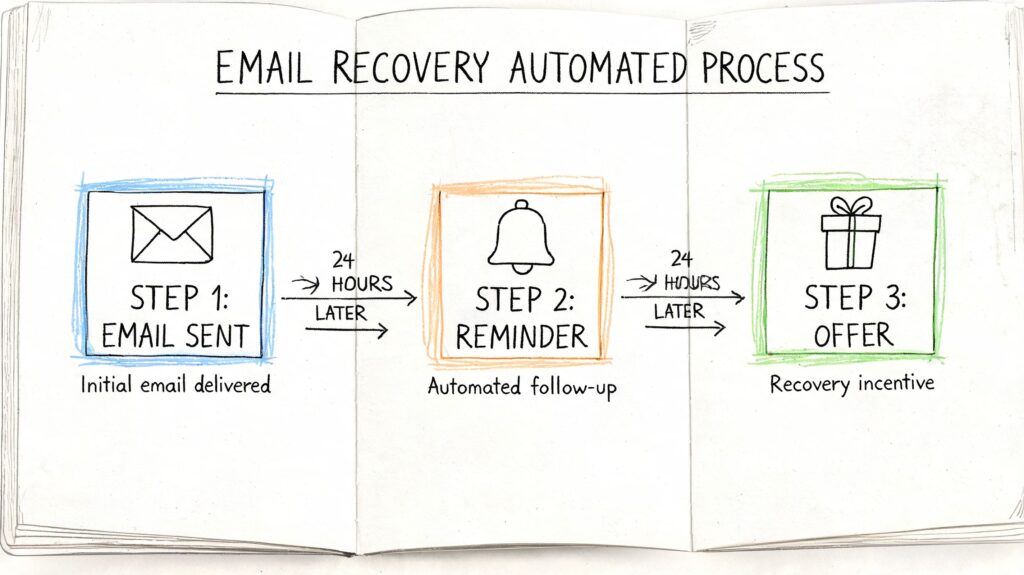
Abandoned Cart Recovery Email Process
Email one reminds, it doesn’t push
Send the first email while the intent is still warm.
This email should feel useful, not salesy. Show the cart contents clearly. Include product image, variant, price, and a direct link back to a persistent cart. Remove friction with short support copy, such as shipping, returns, or checkout help.
Good subject line angles to test:
- Did you forget something
- Your cart is waiting
- Still thinking it over
- Finish your order
Keep the body short. If your checkout process is clean, the first email often wins on convenience alone.
Email two handles objections
The second email should earn its place. If the first one was ignored, assume something blocked the purchase.
That’s where you shift from reminder to resolution. Maybe the buyer needs free shipping. Maybe a modest incentive completes the order. Maybe they need confidence around returns, delivery timing, or product fit.
Use one primary angle only. Don’t stack discount, urgency, reviews, and support links into one crowded message.
A simple structure works well:
- Lead with the product
- Address the likely objection
- Add a single incentive if warranted
- Return the buyer to checkout with one button
If you want a reference point for sequence structure and message flow, this example of an abandoned cart recovery campaign is useful because it shows how reminder and incentive emails can escalate without becoming noisy.
The best recovery emails don’t “sound automated.” They sound like someone noticed the interruption and made it easy to continue.
Email three closes the loop
The final email is where urgency belongs. By now, the customer has had enough time to act. If they still haven’t returned, you need a sharper reason to recover abandoned lost sales.
Use this email carefully. “Last chance” only works if the message has credibility. That might mean a time-limited incentive, low stock messaging, or a clear note that the cart won’t be saved forever. These tactics drive action by playing on the fear of missing out, which can significantly improve your conversion rate and reduce cart abandonment.
For e-commerce businesses, this kind of strategic follow-up is essential. It not only recovers potentially lost sales but also reminds customers of what they were interested in, making it easier for them to complete their purchase. An effective abandoned checkout email taps into urgency, encouraging the customer to complete their abandoned checkout flow before the offer expires or the product runs out. This can be a game-changer for improving your abandoned checkout recovery rates and overall sales performance.
Parts of an Ecommerce Email
A practical final email should include:
- A concise subject line: Short and direct usually beats clever.
- One call to action: Don’t split attention.
- Proof points: Reviews, guarantees, or returns reassurance if trust is the issue.
- A support option: Some shoppers convert only after asking one question.
What doesn’t work is overdesign, long copy, or fake urgency. If every email screams, none of them persuade.
The High-Impact Channels SMS and Chat Automation
If email is your backbone, SMS and chat are your speed layer. They work when buyers are on mobile, distracted, or one question away from completing the order.
SMS-based abandoned cart recovery can achieve 20 to 58% success rates, and one client cited by SlickText’s abandoned cart recovery analysis recovered 58% of abandoned carts and generated $156,915 in revenue, driven by the high visibility of text messaging.
Channel comparison
| Channel | Typical Open Rate | Response Time | Best Use Case |
|---|---|---|---|
| Qualitatively strong for recovery campaigns | Slower than SMS and chat | Detailed reminders, product context, incentives | |
| SMS | 98% open rates in the SlickText benchmark source above | Fast | Urgent reminders, short offers, mobile-first buyers |
| Chat on Messenger or WhatsApp | 80%+ open rates as noted earlier in the article | Fast and conversational | Handling objections, answering questions, guided recovery |
Use SMS for urgency and brevity
SMS works best when the message is short, specific, and tied to a real next step, especially when aiming to recover abandoned carts.
A good SMS recovery copy usually includes the shopper’s name, the product or cart reference, and one direct link back to checkout. That’s it. Don’t turn a text into a mini email. The key is to provide just enough information to remind the customer of what they left behind and make it as easy as possible for them to complete the purchase.
This approach can significantly boost abandoned cart recovery rates. By being direct and concise, you keep the focus on the action you want the shopper to take, increasing the likelihood they’ll return to finish their checkout.
A practical SMS flow looks like this:
- First message: Send quickly. Keep it as a reminder.
- Second message: If there’s no action, test one objection remover, such as shipping or a time-sensitive offer.
- Final message: Close politely. Don’t over-message and create fatigue.
Compliance matters here. If consent collection is sloppy, the channel becomes a liability instead of an asset.
For message inspiration, these text message examples are useful because they show how concise copy works better than dense promotional wording.
Use chat to resolve friction, not just remind
In this regard, most recovery setups are still weak.
Email and SMS are good at nudging. Chat is good at converting hesitation into action because it lets the shopper ask, “Does this ship by Friday?” or “Do you have this in another size?” and get an immediate answer. That changes the recovery dynamic from broadcast to conversation.
A practical chat flow on Messenger, WhatsApp, or Instagram DM should do three things:
- Acknowledge the interrupted purchase
- Offer help before offering a discount
- Route the conversation based on the objection
For example, someone abandons after seeing shipping costs. Your chat automation can ask whether they have a question about delivery, returns, or product fit. If they tap delivery, the flow answers that objection and only then offers a path back to checkout.
This is one area where a tool like Clepher fits naturally. It lets teams build no-code conversational flows across website chat, Messenger, WhatsApp, and Instagram DM, then use tags, conditions, and handoffs to sync those conversations with broader recovery logic.
A reminder says, “You left.” A chat says, “What stopped you?”
Orchestrate channels instead of blasting all of them
The mistake isn’t using multiple channels. The mistake is using them without sequence control.
If a buyer ignores email but engages in chat, suppress the next discount email. If they click from SMS and return to checkout, don’t hit them with a Messenger reminder minutes later. The whole point of multi-channel recovery is coordination.
A simple orchestration model works well:
- Email first for details and easy deployment
- SMS is second for opt-in buyers who need a stronger nudge
- Chat third or in parallel when you need to answer objections in real time
- Stop all sequences once a purchase or live support engagement happens
Brands that do this well don’t just recover carts. They reduce confusion because every channel feels like part of the same conversation.
Preventing Abandonment with Onsite Retargeting
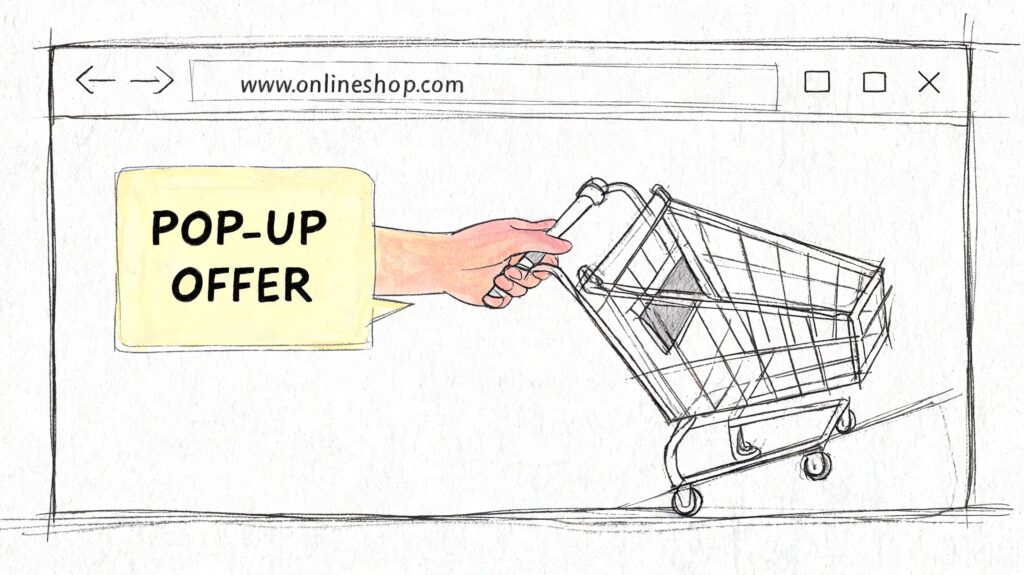
Recovery shouldn’t begin after the tab closes. Some of the best wins happen on-site, before the visitor leaves at all.
Abandoned Shopping Cart Recovery
Intervene when hesitation appears
Exit-intent, cart reminders, and smart banners work because they catch uncertainty while intent still exists.
The key is restraint. If every visitor gets an aggressive pop-up, you train people to ignore your site. On-site retargeting should feel like assistance, not interception.
Use these interventions selectively:
- Exit-intent offers: Best for visitors showing clear purchase intent who are about to leave.
- Returning-cart banners: Useful for logged-in users or recognized visitors coming back to browse.
- Checkout reassurance modules: Surface shipping, returns, or payment trust signals exactly where hesitation appears.
- Live chat prompts: Trigger help when someone stalls on shipping or payment steps.
Match the intervention to the friction
A discount isn’t always the answer.
If a buyer is hesitating because shipping is unclear, show delivery information. If the friction is trust, surface reviews, returns, or payment reassurance. If the issue is distraction, a clean “your cart is saved” reminder often works better than a coupon.
A few practical onsite rules help:
- Keep popups contextual: Reference the cart or product category when possible.
- Don’t interrupt too early: Let people browse before asking them to act.
- Use persistent carts: Recovery gets easier when the return path is smooth.
- Make support visible: Some customers would have converted if asking a question had been easier.
Onsite retargeting works best when it feeds the same customer profile your post-visit flows use. That way, a shopper who dismisses an exit popup can enter a softer email or chat sequence later, without seeing the same message repeated.
Measuring Success and Optimizing Your Flows
If you only track recovered orders, you’ll miss what makes the program profitable.
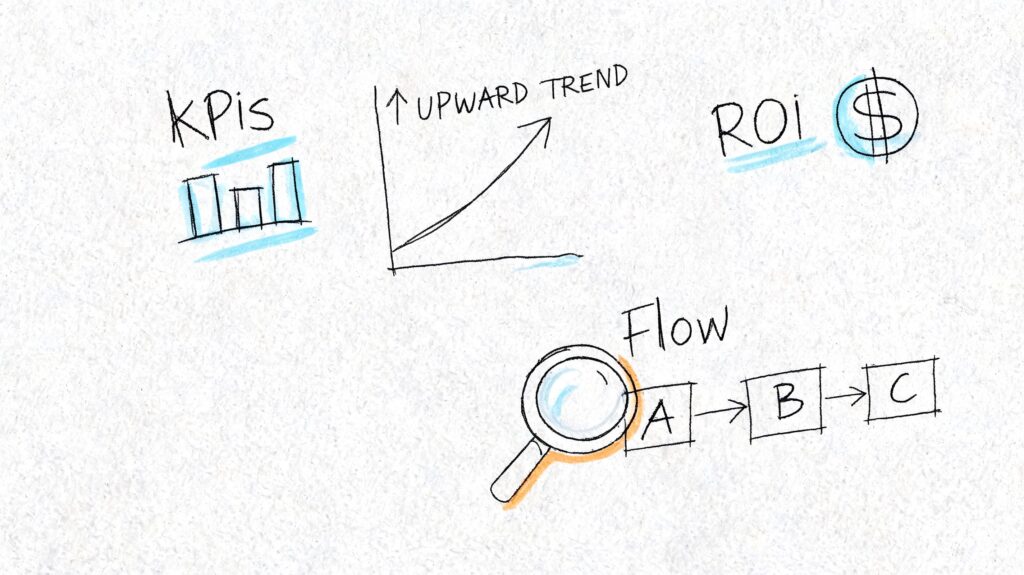
Optimized abandoned cart flows generate an average revenue per recipient of $3.65, and top-performing brands recover 10 to 30% of carts, which can translate to $5 to $20 in revenue for every recovery email sent, according to Made In 13’s 2025 abandoned cart recovery benchmarks.
Abandoned Cart Recovery Business Analytics
Track the right KPIs
A useful measurement stack is simple enough to maintain and detailed enough to guide decisions.
Focus on:
- Cart recovery rate: The share of abandoned carts that later convert.
- Revenue per recipient: Especially useful for comparing flows and segments.
- Average order value of recovered carts: Helps you spot when discounts are lowering order quality.
- Channel-assisted conversions: Important in multi-channel programs where the last click doesn’t tell the full story.
- Margin impact: Recovery revenue is not the same thing as healthy revenue.
If you want a broader framework for choosing and interpreting e-commerce metrics, Querio’s e-commerce KPI insights are a good companion resource because they help teams connect campaign metrics to business performance instead of staring at dashboard vanity numbers.
Read the story behind the metric
A higher recovery rate isn’t automatically better.
If your recovered orders come mainly from heavy discounting, you may be buying back revenue you already had. If email gets credit for a sale that happened after an SMS click or a chat exchange, your attribution is distorted. If mobile recovery lags, the issue may be checkout friction rather than message performance.
That’s why every recovery program needs a regular review process:
- Look at segment-level performance: New versus returning buyers, high-value carts, product categories.
- Compare channel paths: Which sequence combinations produce the healthiest orders?
- Check drop-off points: Open but no click, click but no checkout, checkout but no purchase.
- Review support logs: Recovery messages often surface the same objections repeatedly.
Healthy abandoned cart recovery doesn’t just recover revenue. It tells you what keeps buyers from finishing in the first place.
Test fewer variables, more deliberately
Many teams A/B test too much at once and learn nothing useful.
Test one meaningful variable at a time. Subject line versus subject line. Reminder-only versus shipping reassurance. SMS before email versus email before SMS. Support-first chat copy versus offer-first chat copy. Then hold the rest steady.
Strong optimization habits look like this:
- Start with the biggest friction point
- Pick one test variable
- Measure revenue and margin, not just clicks
- Roll the winner into your default flow
- Move to the next bottleneck
The best abandoned cart recovery systems are never “finished.” They improve because the team keeps tightening message timing, channel sequencing, and objection handling based on real customer behavior.
If you want to turn abandoned cart recovery into a coordinated conversation instead of a disconnected set of reminders, Clepher is built for that workflow. You can use it to automate messaging across your website, Messenger, WhatsApp, and Instagram DM, sync segments and tags, and connect chat handoffs with the rest of your recovery stack.