
About 30% of small businesses named lead generation as their top marketing obstacle in a 2025 survey. The pressure is not just getting attention. It is turning interest into qualified conversations before it goes cold.
For a small business, missed follow-up is expensive. A visitor fills out a form, sends a Facebook message, replies to an Instagram story, or asks a pricing question on your site. If nobody responds quickly, that lead often disappears and a competitor gets the sale.
The pattern I see most often is simple. Owners spend on traffic, post consistently, and run the occasional campaign, but the capture process is too slow or too manual to convert that interest into pipeline.
A lead generation system needs to do four jobs well: attract the right people, give them a clear reason to respond, qualify them fast, and route them into follow-up without delay. That fourth step is where conversational AI has become useful for small teams. A well-configured chatbot can answer common questions, collect contact details, qualify intent, and book the next step across your website, Facebook, and Instagram, even when nobody is available live.
That is how small businesses stop losing warm demand and start getting more value from the traffic and attention they already have.
The Real Challenge of Small Business Lead Generation
Lead generation breaks down for small businesses in a predictable place. Response time, qualification, and handoff usually fail before budget does.
Paid clicks, organic traffic, social engagement, and referrals all have a cost, even when they do not show up as ad spend. The primary issue is not getting interest. It is losing that interest because the business cannot capture, sort, and answer it fast enough.
That gap gets expensive quickly. A broad offer brings in low-fit inquiries. A slow inbox lets high-intent prospects drift away. A manual process forces someone on your team to spend time chasing leads that were never a match in the first place.
More traffic usually increases waste
Small businesses often try to solve a conversion problem with a traffic tactic. They run another campaign, post more often, or send more people to the same page. If the page is unclear, the form asks too much, or nobody replies fast, more traffic just creates more mess.
I see this constantly with owner-led teams. The website form collects names, but not buying intent. Facebook and Instagram messages sit unread for hours. Pricing questions come in after business hours and get answered the next day, if at all. By then, the prospect has moved on.
Lead generation works better when it is built as a filtering and routing system. The goal is to attract the right person, capture the inquiry in the moment, qualify it early, and move it to the next step without delay.
Weak systems create low-quality leads
Poor lead quality is often a setup problem, not a market problem.
If your messaging is too broad, the wrong people respond. If your call to action is vague, serious buyers hesitate. If every inquiry goes into the same inbox with no triage, your team treats a casual question and a ready-to-buy lead the same way. That lowers close rates and wastes selling time.
This is also why basic forms and batch email follow-up are no longer enough on their own. Prospects now ask questions across your website, Facebook, and Instagram, and they expect a useful answer right away. A simple conversational flow can handle that first exchange, collect details, screen for fit, and book the next step while your team is busy or offline.
Efficiency beats volume
The strongest small-business lead gen systems tend to do four things well:
- They target a defined buyer. If your audience is still too broad, tighten it with a buyer persona for your ideal customer.
- They give one clear next step. The page, offer, and message all point to the same action.
- They qualify early. A chatbot, short intake flow, or routing form screens out poor-fit leads before sales time gets wasted.
- They follow up immediately. Automation keeps the conversation alive while intent is still high.
That is the core challenge. Small business lead generation is less about producing more names and more about building a system that captures demand while it is still warm, then moves qualified people into a real sales conversation fast enough to matter.
Laying the Foundation Who Are You Actually Talking To
Small businesses waste a lot of time because they market to a category instead of a person. “Homeowners,” “busy professionals,” or “small companies” isn’t enough. Useful targeting starts when you define the buyer with enough detail that your offer feels specific.
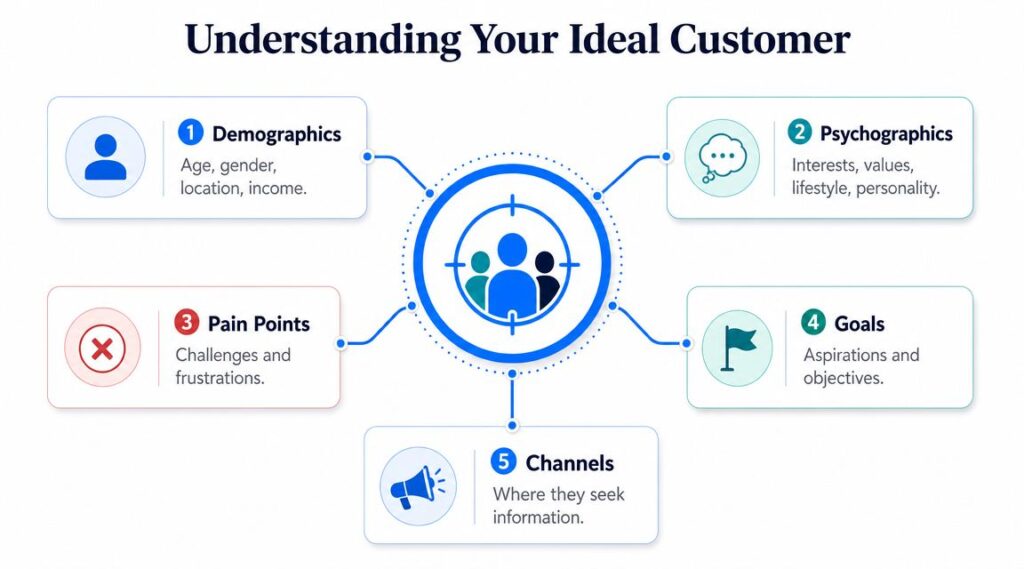
Lead Generation for Smal Business Customer Profile
Build a simple customer profile
You don’t need a long strategy deck. You need a one-page profile your team can use. If you need a starting point, this guide on buyer personas and understanding your ideal customer is a useful reference.
Include five basics:
-
Who they are
Age range, location, role, business type, household stage, or purchase context. A local med spa targets differently than a nationwide software company. -
What they’re trying to solve
Name the problem in plain language. Not “improve efficiency.” More like “I need more qualified appointments” or “I need a faster way to answer pre-sale questions.” -
What slows them down
These are objections, fears, and friction points. Price sensitivity, confusion, lack of trust, limited time, or concern that your service won’t fit their situation. -
What outcome they want
Focus on the desired change. More booked consultations, better-fit clients, fewer no-shows, less manual admin, stronger repeat sales. -
Where they pay attention
Search, Instagram, Facebook groups, local listings, referrals, email newsletters, industry communities. If you don’t know where they already spend time, you can’t choose channels intelligently.
Use customer language, not company language
The strongest offers usually come from words customers already use in emails, chats, reviews, and sales calls. If people say “I need more walk-ins,” don’t replace that with polished marketing jargon.
A simple exercise works well:
- Review inquiries your business already receives
- Highlight repeated phrases about needs, urgency, and objections
- Sort leads by fit and look for patterns among the ones who buy
- Write your landing page headline using the same language buyers use
Good targeting sounds like a conversation already happening in the buyer’s head.
One business can have more than one persona
That’s normal. A gym may target new members, former members, and corporate wellness buyers. A local agency may serve restaurants and home-service companies. The mistake is sending the same message to all of them.
Use one persona per campaign, per landing page, and per lead magnet. That keeps the value exchange clean. It also makes later automation easier because your follow-up can match the reason the person engaged in the first place.
Choosing Your Battlegrounds The Best Lead Gen Channels
Channel selection gets messy when small businesses try to be everywhere at once. That usually spreads time too thin and creates half-built campaigns across too many platforms.
The better approach is to choose a small set of channels that match buyer behavior and your team’s capacity to manage them. According to Databox lead generation benchmarks, 88% of businesses used email for lead generation, 78% used social media, and content marketing was reported to generate 54% more leads than traditional outbound practices while costing 62% less. That doesn’t mean every business should pour everything into content. It means content often gives small businesses a durable base they can build on.
How to think about channel fit
A useful rule is simple. Pick channels based on intent, speed, and operating effort.
- Search and content work well when buyers actively look for answers.
- Social media works when attention is already there and your offer can stop the scroll.
- Email works best after capture, when you need follow-up and nurture.
- Networking, partnerships, referrals, and local listings work when trust and proximity matter.
- Messaging and chat work when buyers have immediate questions and want a fast response.
If you’re building a social-first approach, this article on social media lead generation gives a practical framework for turning engagement into actual capture.
Lead Generation Channel Comparison for Small Businesses
| Channel | Typical Cost | Effort to Manage | Best For |
|---|---|---|---|
| Content marketing | Lower direct spend, higher time investment | Medium to high | Businesses that can teach, explain, or answer buyer questions clearly |
| Social media | Low to moderate | Medium | Visual brands, local businesses, coaches, creators, DTC offers |
| Email marketing | Low once list exists | Medium | Nurturing, promotions, reactivation, appointment reminders |
| Local listings and reviews | Low | Low to medium | Service businesses, clinics, restaurants, contractors, local retail |
| Networking and partnerships | Low direct spend | Medium | Relationship-driven businesses and referral-friendly services |
| Website chat and messaging | Low to moderate | Medium | Businesses with inbound interest that needs fast qualification |
| Paid ads | Variable | Medium to high | Offers with clear economics and reliable follow-up systems |
What works well for small teams
For most small businesses, a practical stack looks like this:
- One discovery channel such as local SEO, Instagram, or educational content
- One capture asset such as a lead magnet, discount, quiz, or booking prompt
- One owned follow-up channel such as email or Messenger
- One fast-response layer such as website chat or DM automation
That mix is easier to run than trying to master search, paid ads, YouTube, events, and cold outreach all at once.
A channel only counts if it feeds a capture and follow-up process. Visibility without handoff is just noise.
Common channel mistakes
Small businesses usually run into the same problems:
- Posting without capture. Social content gets likes, but there’s no path to subscribe, ask, book, or buy.
- Publishing generic content. Articles attract broad traffic but don’t connect to buyer intent.
- Relying on one source. If all leads come from one platform, performance becomes fragile.
- Choosing channels by trend. Your buyers may not care about the platform everyone else is chasing.
The best channel isn’t the one that seems complex. It’s the one your audience already uses and your team can maintain consistently.
Building Your Lead Capture System
Attention is fragile. Once someone clicks, taps, or replies, your job is to make the next step obvious and easy.
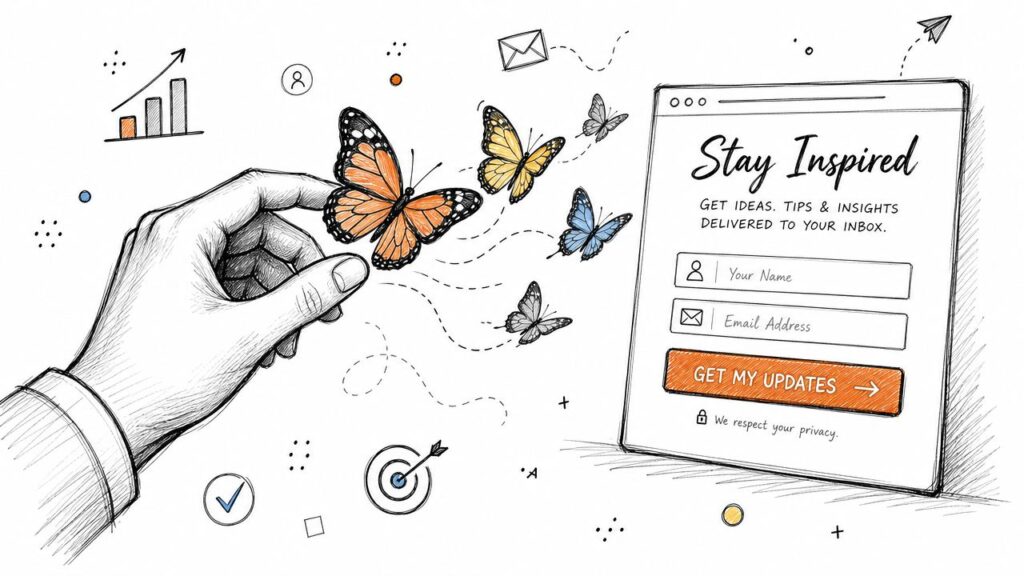
Lead Generation for Smal Business Newsletter Signup
Effective lead generation starts with a clearly defined audience persona and a valuable offer, and small-business guidance also stresses mobile-friendly experiences and claimed local listings as practical ways to improve discoverability and capture, as noted in Thomasnet’s small-business lead generation guide. In practice, that means your capture system has to work on a phone, load quickly, and feel relevant to the visitor’s situation.
Make the value exchange obvious
People don’t give you contact information because you asked nicely. They do it because the exchange feels worth it.
A few offers work especially well for small businesses:
- Service businesses can offer a quote request, consultation, checklist, or seasonal promotion.
- E-commerce brands can offer a first-order incentive, restock alert, or product finder quiz.
- Coaches and consultants can offer a template, audit, training, or workshop invite.
- Local businesses can offer booking access, event updates, or member-only specials.
If you want more ideas for turning visitors into subscribers, this guide on how to build an email list is worth reviewing.
Keep landing pages short and specific
A good landing page doesn’t try to explain everything. It answers four questions fast:
- What is this?
- Who is it for?
- Why should I care?
- What happens if I submit?
A simple page structure works:
- Headline that mirrors the buyer’s problem
- Short supporting copy that explains the benefit
- One CTA instead of several competing actions
- Short form with only essential fields
- Trust cues such as reviews, FAQs, or clear delivery details
Add capture points beyond forms
Traditional forms still matter, but they shouldn’t be your only option as part of broader lead generation strategies. Many visitors are willing to ask a question before they’re willing to fill out a form. That makes chat, click-to-message buttons, and conversation-based popups useful additions, especially as lead generation tools.
Consider a Few Placements:
- On high-intent pages such as pricing, services, booking, or shipping info
- On mobile-first traffic paths where long forms create friction
- On local pages where users may want fast answers about availability, service area, or hours
- On social landing pages, including LinkedIn, where the visit may be casual and attention is short
If a visitor has to think too hard about the next step, you’ve already made conversion harder than it should be.
Fix the Friction Before Buying More Traffic
Before you spend more on ads or content distribution, check your capture experience:
- Is the page mobile-friendly
- Is the CTA tied to one specific offer
- Does the form ask only what you need right now
- Can someone contact you through chat or messaging
- Does the page reflect the exact campaign or audience that sent the visitor
A small business, whether B2B or B2C, doesn’t need a complex funnel to capture and optimize for a new lead. It needs a clear offer, a focused page, and a low-friction way for interested people to respond.
Automating Engagement with Conversational AI
A lot of small business leads are lost in the first few minutes. Someone clicks, asks a question, or replies to a post, and the business answers hours later. By then, the prospect may have contacted two competitors.
AI-assisted conversational capture fixes that response gap. It gives prospects an immediate way to engage on channels you already use, including your website, Facebook, Messenger, and Instagram DM. According to Salesforce’s small-business lead generation guide, 80% of consumers are more likely to buy from brands that personalize experiences. Fast, relevant replies help create that experience without requiring someone on your team to watch every inbox all day.
Lead Generation for Smal Business Clepher Landing Page
What conversational capture looks like in practice
The job of conversational AI is simple. Start the interaction fast, ask a few useful questions, and move qualified people to the right next step.
On a service page, that might mean offering “Get a quote” or “Ask a question” instead of forcing every visitor into the same form. The bot can ask for service type, timeline, location, and budget range, then pass strong-fit leads to your booking or sales process with context attached. This kind of marketing automation helps build trust early, since visitors get a response right away instead of waiting.
On Facebook or Instagram, speed matters even more. A person who comments on an offer or replies to a Story usually wants quick clarification, not a delayed manual response. An automated message flow can collect the basics, tag the inquiry, and keep the conversation moving while interest is still high, supporting broader marketing efforts without extra manual work.
For e-commerce, the value is often in handling pre-purchase questions at scale. Shoppers ask about sizing, bundles, shipping, compatibility, or stock before they buy. A chatbot can guide them to the right product, nurture leads who need more time, and capture contact details for follow-up.
This is part of a practical guide to lead generation strategies for small businesses: start simple, automate the repetitive questions, and let your team focus on the conversations that need a human touch.
. For more examples in that setting, Helmsly’s e-commerce AI guide covers useful chatbot applications around product discovery and customer interactions.
Where a tool like Clepher fits
A platform like Clepher helps build these conversational flows across website chat, Facebook, Messenger, WhatsApp, and Instagram Direct Message using no-code logic for capture, qualification, tagging, and follow-up. That matters for small businesses that generate leads from several channels but do not have staff available to monitor each one consistently.
The workflow matters more than the software name.
- Start the conversation when someone visits a high-intent page, clicks a message button, replies to a Story, or engages with a post.
- Ask a few qualifying questions that help you decide whether the lead belongs in sales, support, booking, or a nurture track.
- Save the responses so the next touchpoint starts with context instead of repeating basic questions.
- Route the lead properly based on intent, urgency, and fit.
That setup does two things well. It reduces response time, and it improves lead quality before a human steps in.
Keep automation useful
Poor chatbot setups fail for predictable reasons. They ask too many questions, hide the human option, or try to sound clever instead of being clear.
Useful conversational flows are shorter and more direct:
- Start with intent. Ask whether the visitor wants pricing, product help, availability, or booking.
- Limit the branches. Too many options create drop-off.
- Collect only what you need now. You can ask for more after the lead shows real interest.
- Offer a human handoff. Some prospects want an answer from a person before they commit.
- Use the answers in follow-up. Tags, notes, and source data make later outreach more relevant.
Fast follow-up protects demand you’ve already paid to attract.
For a small business, that is the practical upside. Conversational AI turns scattered questions, comments, and DMs into a capture and qualification system that keeps working even when your team is busy.
From Lead to Relationship Nurturing and Measuring ROI
Leads decay fast when follow-up stalls. For a small business, the gap between capture and response often decides whether marketing spend turns into booked revenue or a dead contact record.
A workable system does two jobs well. It keeps the conversation going after the first conversion, and it shows which channels produce customers instead of cheap names. That matters even more when you are using chat, DMs, and forms together, because volume rises quickly and manual follow-up usually breaks first.
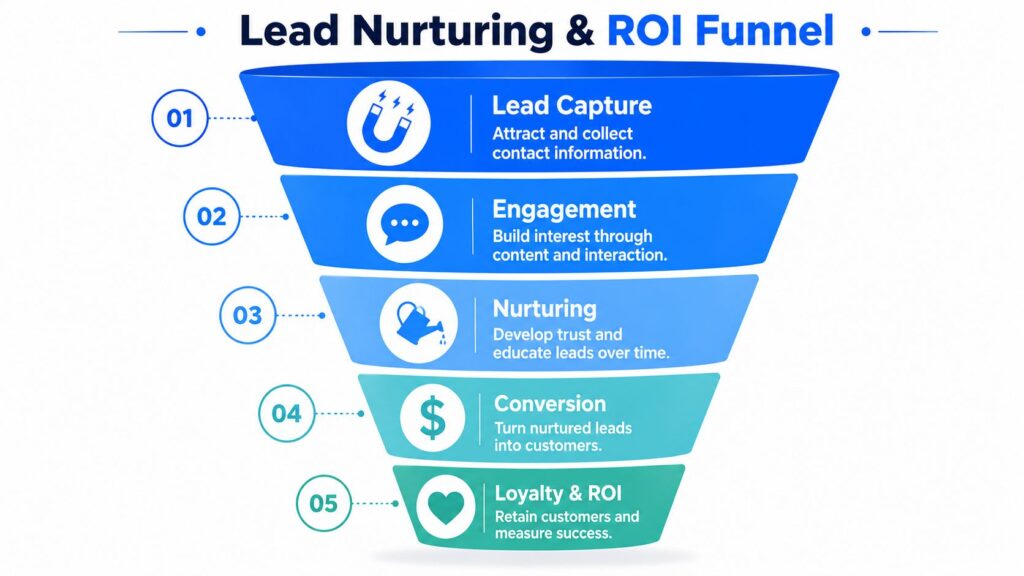
Lead Generation for Smal Business Marketing Funnel
Build nurture around triggers
Good nurturing is less about sending a weekly email and more about setting the next action based on behavior.
A simple setup usually includes an instant confirmation, a short follow-up sequence, and a handoff rule for sales-ready leads. If someone replies to a chatbot, clicks a booking link, revisits a service page, or asks a direct question on Instagram, the system should react to that signal within minutes. If there is no action, the lead stays in a lighter sequence until they engage again.
For a small team, three trigger types are enough to start:
-
Response triggers
Send the next message when a lead replies, asks a question, or completes a chat flow -
Behavior triggers
Flag follow-up when a lead visits a pricing page, starts a booking form, or returns to the site -
Time triggers
Send reminders or check-ins after a fixed delay if there has been no response
Conversational AI helps here because it can continue the exchange after the first touchpoint. A website visitor who asks about pricing at 8:30 p.m. can get an immediate answer, a qualification question, and a booking option before your team is back online. The same logic can run across Facebook and Instagram DMs, which cuts the delay that causes many small businesses to lose warm leads.
Score for action, not complexity
Lead scoring does not need a complicated model. It needs a short set of rules your team will use.
Score leads on buying signals and fit. A request for availability, a service-area match, a repeat visit to a quote page, or a direct reply to a follow-up message usually deserves faster attention than a passive content download. Keep the criteria visible inside your CRM so nobody has to guess who gets called first.
A useful scoring system helps your team answer one question fast. Who needs a response now?
Measure revenue, speed, and handoff quality
Small-business reporting should stay tight. Fancy dashboards are less useful than five numbers reviewed every month.
Track:
- Cost per lead by channel
- Visitor-to-lead conversion rate
- Lead-to-customer rate
- Time to first response
- Revenue by source
Review those numbers together, not in isolation. A Facebook campaign might produce a low cost per lead and still underperform if those leads never book. A chatbot on your site might generate fewer contacts but a higher close rate because it qualifies better before handoff. If you want practical ideas for tightening those weak points between stages, discover lnk.boo’s optimization tips.
What ROI-focused lead generation looks like
An ROI-focused system is usually simple and disciplined:
- Bring in the right traffic.
- Capture intent through forms, chat, or DMs.
- trigger immediate follow-up.
- send leads into the right automation or sales queue.
- prioritize based on fit and buying signals.
- review source quality and adjust spend.
That is how lead generation becomes predictable. You stop judging success by raw volume and start judging it by response speed, pipeline quality, and closed revenue.
If you want to put this into action, Clepher can help you capture and qualify leads through website chat, Facebook, WhatsApp, Messenger, and Instagram DM, then route those conversations into automated follow-up. It is a practical option for small businesses that need faster response times without adding more manual work.
Related Posts
Automated Checkout Bot: Build and Launch Guide
October 7, 2026AI Agent Framework: Architecture, Tools, and Use Cases
October 6, 2026Master Lead Generation Automation for Business Growth
October 5, 2026
Founder Clepher