
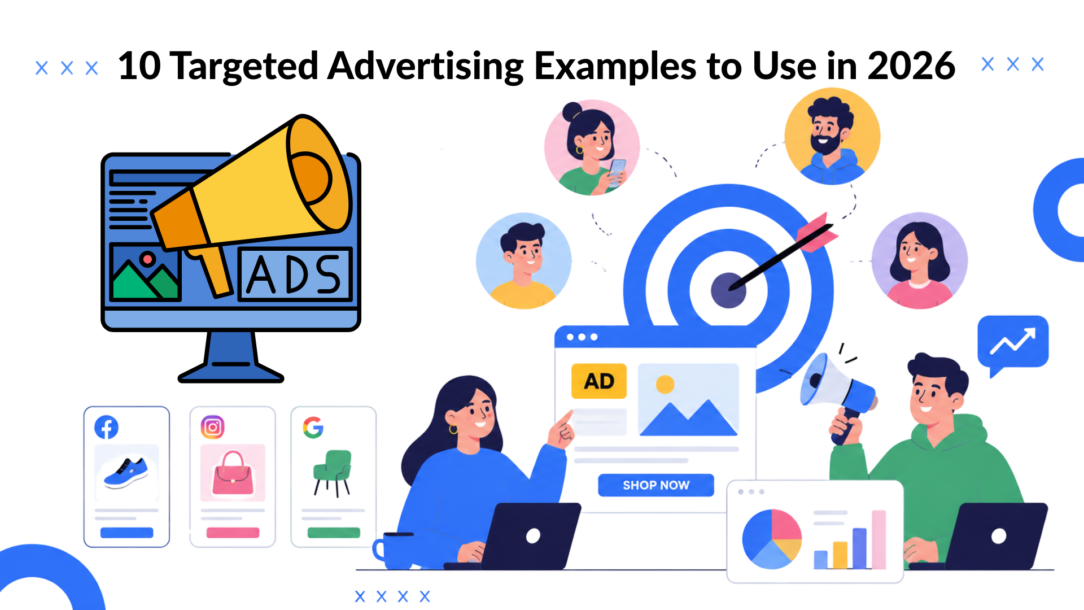
Targeted advertising spent on the scale of $512.3 billion in 2023, and it represented 72% of total digital ad spend worldwide (An industry analysis can reveal insights into effective demographic targeting for your target audience). That tells you two things fast. First, targeted media is no longer a niche play. Second, the brands winning in 2026 are not just buying better audiences; they’re building better follow-up after the click.
That’s where most campaigns break. Ads can be perfectly targeted, and still underperform if the landing path is slow, generic, or disconnected from the promise in the ad. The strongest targeted advertising examples pair audience precision with immediate post-click engagement, often through chat, automation, and segmentation. That’s the practical edge here, not just who sees the ad, but what happens when they respond.
A modern targeted setup usually combines data signals, platform targeting, and conversational automation. That matters because the same source that tracked the market also noted that programmatic advertising accounted for 85% of all digital ad spending in the broader ecosystem (industry analysis). In other words, automated delivery is already the default infrastructure. The better question is how to use that infrastructure without wasting clicks.
Below are 10 targeted advertising examples that work in real commercial settings, from e-commerce and SaaS to local services and community-led brands. Each one can be paired with a simple Clepher flow so the conversation continues after the ad click instead of dying on the landing page.
1. Facebook Dynamic Product Ads for E-commerce Retargeting
Dynamic Product Ads work because they feel specific. Someone views a hoodie, leaves, and then sees that hoodie again with the same catalog data, price, and availability reflected back at them. That basic mechanic is powerful for abandoned cart recovery, browsing follow-up, and re-engaging people who already showed intent.
A good use case is a clothing retailer. Someone looks at outerwear on mobile during lunch, then gets a carousel ad later with the exact jacket, plus related items in the same price band. The same setup fits electronics brands pushing higher-consideration products and home goods sellers re-engaging seasonal shoppers with inventory that’s still in stock.
A practical way to improve the result is to connect the ad click to a Clepher flow. Use the bot to confirm size, color, or shipping questions, then tag the shopper by product category so future broadcasts stay relevant to the target audience. That matters because the problem is rarely the ad itself. The problem is friction after the click, which can hinder effective ad targeting.
Practical rule: Keep Dynamic Product Ads tightly aligned with inventory and audience intent. If the product is out of stock or the audience is too broad, the ad starts to feel lazy instead of useful.
What works best here
- Segment by product type: Separate warm audiences for apparel, accessories, and high-ticket items so the creative matches the purchase context.
- Use Clepher broadcasts after the click: Send a personalized follow-up flow to remind users about the item they viewed, then answer objections in chat.
- Cap frequency in small pools: Retargeting can get annoying fast if the audience is narrow.
- Test format by device: Carousel often works differently from single-image ads, especially on mobile.
A lot of teams stop at “show the same item again.” The better move is to make the ad the start of a conversation, then use chat to remove the final objection.
2. Lookalike Audiences Based on High-Value Customer Segments
Lookalike audiences are still one of the cleanest ways to scale without drifting into junk traffic. Instead of targeting broad interests, you build a seed audience from people who already prove value, repeat purchasers, long-term subscribers, or your highest spenders. The platform then finds users with similar patterns in behavior, interests, and demographics.
This is especially useful for SaaS, ecommerce, and online education. A SaaS company can build a lookalike from free-trial users who converted to paid plans. An ecommerce brand can use buyers who consistently spend more and return more often. A course creator can seed from engaged email subscribers who open, click, and buy.
The tactical mistake is using one muddy seed list and calling it a strategy. Better teams build several seed pools, then let performance tell them which one is predictive. Clepher helps here because you can organize contacts with segments and tags before uploading them as seed audiences, which keeps the source data clean.
The follow-up matters just as much. Once the lookalike clicks, put them into a VIP-style Messenger flow that matches the promise of the ad. New visitors who resemble your best customers should not land in a generic form path. They should feel recognized quickly.
Use the strongest customer behavior you have, not the biggest list. Volume without quality usually just scales inefficiency.
A useful reference on this retargeting mindset is the broader remarketing approach, which fits well when you want to re-engage high-intent people instead of starting cold.
3. Instagram Shopping Ads with Personalized Recommendations
Instagram Shopping Ads work best when the product is easy to want visually. Fashion, beauty, and home decor all fit because the user can see the item in context, tap it, and move toward purchase without a long detour. That reduced friction is the whole point.
A fashion brand can run Reels ads that show a seasonal collection styled in real life. A beauty brand can showcase a tutorial with the product in use. A home decor seller can use carousel ads to show how one item changes an entire room. The stronger the visual story, the less hard selling you need.
What often gets missed is the post-click or post-tap experience. Use Clepher’s Instagram DM flows to handle product questions, review requests, and post-purchase reassurance. You can also use personalization tags to send follow-up promotions by product category, which keeps repeat offers relevant instead of spammy.
Make the creative match the buying mode
Instagram shoppers usually respond to context, not feature lists. That means the ad should show the product being used, worn, or styled, not just isolated on a white background. If you’re promoting a gym outfit, show movement. If you’re promoting a decor piece, show the finished room.
A useful source on retail targeting mechanics is targeted advertising explained, especially for understanding how behavior, interests, and context shape delivery.
And if you’re choosing a first test, start with Reels. The format tends to be the most natural place to show motion, personality, and product usage, which is exactly what visual-first audiences want.
4. Lead Generation Campaigns with Contextual Messenger Qualification
Lead gen ads work because they let people raise their hand without asking them to commit to a full landing page first. The contact details are captured on Facebook or Instagram, then Messenger handles the follow-up questions. That split lowers friction at the point of conversion and gives sales a better way to sort real interest from casual curiosity.
The format fits coaches, agencies, SaaS teams, and local service businesses. A coach can collect workshop sign-ups. A plumbing company can route emergency requests. A SaaS team can separate demo-ready leads from people who are only browsing. The ad gets the initial response, and the bot handles the qualification.
The setup should stay tight. Keep the lead form short, then use Clepher to ask about budget, timeline, problem type, or service area after submission. That keeps the ad easy to complete while giving your team the context it needs to respond well. It also reduces the chance that sales wastes time on leads that were never a fit for the target audience.
If you want a build guide, use qualify leads with Facebook Messenger chatbots.
The operational benefit is straightforward. Short forms reduce drop-off, because people are more willing to share basics than finish a full qualification quiz up front. Messenger qualification happens while the lead is still warm, so the next question feels like a natural part of the interaction rather than a second, colder conversion step.
That matters for routing too. Clepher can segment leads by source or industry before handing them off to the right person, which keeps responses cleaner and follow-up faster in your ad campaign. It also gives you a better testing setup. You can compare form copy, field combinations, and qualification logic without rebuilding the whole funnel.
For teams that want the broader strategy behind the setup, the practical retargeting introduction is the right reference. The true advantage is not just collecting a name and email. It is moving the lead into a responsive conversation quickly enough that intent does not cool off before anyone follows up.
5. Messenger Ads with AI Keyword-Triggered Responses
Messenger Ads are different because the click opens a conversation, not just a page. That gives you a direct path into a high-intent environment where the user is already in chat mode. It’s a better fit for flash sales, free audits, limited-time trials, and same-day service offers than most static landing pages used in ad campaigns.
A retailer can use it to deliver a coupon code. A SaaS company can offer a trial signup. An agency can offer a free strategy review. A local business can promote immediate availability. The common thread is urgency paired with conversation.
The operational edge comes from keyword triggers. If someone types “discount,” “price,” or “shipping,” Clepher can route the response instantly and keep the conversation relevant. If the question gets complex, the flow should hand off to a human. That balance matters. Automation should feel responsive, not stubborn.
Lead with utility, not pitch. The first message should solve something, answer something, or unlock something. If it sounds like a brochure, users tune out, negatively impacting your brand awareness.
A well-designed Messenger ad flow can also segment by topic. People asking about pricing shouldn’t receive the same follow-up as people asking about support. That separation makes later broadcasts more useful and less random, improving the effectiveness of target ads.
For the chatbot logic behind this, the intent recognition framework is the key reference in this item. Pair that with a practical follow-up system, and the ad becomes the front door to a real sales conversation instead of a dead-end click.
6. Seasonal Campaign Segmentation with Behavioral Retargeting
Seasonal campaigns work because buyer intent changes with the calendar. People shop differently for holidays, back-to-school, summer, and Black Friday, and the same audience can respond to different messaging depending on what they’ve bought before and what they browsed recently. That’s why generic seasonal ads often underperform. They ignore the segment history.
A fashion retailer might speak to parents preparing for back-to-school. A gift brand can focus on gift-givers during the holidays. A beauty brand can push seasonal skincare routines. Electronics brands can target deal hunters who already expect aggressive offers during peak shopping periods.
The best setup starts before the season peaks. Build your audience segments in Clepher weeks ahead of time, then tag users by purchase season and product category. That way, when the shopping window opens, your broadcasts and ads already know who bought what and when.
The message should change by audience history
A past buyer doesn’t need the same message as a new visitor. Someone who already bought summer items may respond to “complete your collection,” while a new browser may react better to a simple seasonal offer. If you don’t separate those paths, you waste relevance.
A useful source on broader targeting logic is the targeted advertising overview, especially for understanding how behavioral signals shape ad delivery. Seasonal retargeting is just that principle applied to a deadline.
The smartest seasonal teams don’t just push urgency. They also use Clepher to time broadcasts around peak days, then compare urgency-led creative against abundance-led creative. That’s how you learn whether your audience wants scarcity or reassurance.
7. WhatsApp Business Campaigns with Direct Customer Engagement
WhatsApp Business ads work well when the buyer expects a fast, direct reply. The ad starts on Facebook or Instagram, but the conversation shifts into WhatsApp, where many users already expect service updates, appointment reminders, and back-and-forth messages instead of a hard sell. That makes it a practical choice for convenience-led marketing.
Ecommerce brands can use it for order confirmations and tracking updates. Salons and clinics can confirm appointments. Subscription services can send personalized recommendations. Logistics teams can keep shipment notifications short and clear. The message lands better because it solves a real task before it tries to sell anything.
The main mistake is treating WhatsApp like a one-way broadcast channel. It works better for service, support, and light promotion tied to customer intent. Clepher helps here by automating order updates, answering common questions, and reducing the manual follow-up that slows teams down. For setup ideas, use WhatsApp marketing strategies as a reference point.
A useful WhatsApp flow starts with a clear ad promise, then moves into a simple chat path. If the click is about order status, the first message should confirm the request and offer the next step. If the click is about booking, the chat should route the user toward available slots or a human handoff. Every extra tap creates friction, so the message has to do useful work fast.
Keep the experience practical
- Use templates for consistency: This keeps formatting clean and helps teams stay aligned on approved message types.
- Segment by geography: WhatsApp usage patterns vary by region, so one message flow will not fit every market.
- Add quick replies: They make feedback collection faster and reduce the number of back-and-forth messages.
- Keep the tone service-oriented: Buyers respond better when the message feels helpful instead of pushy, which is crucial for effective brand awareness.
A strong WhatsApp campaign usually starts as a support channel and then becomes a sales channel. That structure suits brands that want repeat contact, clearer attribution, and a better read on what happens after the click.
8. Behavioral Lookalike Audiences Based on Website Events and Micro-Conversions
Not all lookalikes should come from purchases. Some of the best seed audiences come from earlier micro-conversions like demo requests, video views, whitepaper downloads, cart adds, or subscription starts. Those behaviors often reveal intent before the final sale, which makes them powerful for prospecting.
That matters most in SaaS, B2B, and education. A SaaS company can build from demo requesters. An agency can use whitepaper downloaders. An online educator can use free course starters. The seed is narrower, but usually more predictive of what kind of user is ready to engage.
Clepher fits here because you can treat conversion events inside Messenger as seed signals too, such as lead form submissions or specific reply patterns. That gives you another layer of behavioral data beyond the website. The result is a lookalike model that reflects real interaction, not just page traffic.
The smart move is to exclude recent customers and recent converters, then refresh the audience as the event pool grows. That keeps spend focused on acquisition instead of overlapping with people you already reached.
Micro-conversion lookalikes are strongest when the behavior lines up with the buying cycle, enhancing the effectiveness of the ad campaign. A demo request means something different from a casual video view, and your segmentation should respect that difference.
This approach also aligns with the practical shift toward more granular behavioral signals in modern targeting, where clicks alone don’t tell you enough. The better seed, the better the prospect pool.
9. A/B Testing Creative and Copy Variations Across Messenger Flows
Many teams test ad creative and stop at the click. That leaves money on the table. The lift often comes from testing the conversation itself, the opening line, the qualification sequence, the offer, and the CTA inside the Messenger flow.
An ecommerce brand can compare “free shipping” against “percent off” in cart recovery. A coach can test different qualifying questions to separate curiosity from serious buyers. A SaaS team can compare feature-first against benefit-first onboarding. An agency can test different case study styles by persona. The ad gets the click. The flow determines whether that click turns into a lead or sale.
The key is to treat each branch like a controlled sales path, not a loose script. Keep one variable per test. Opening message, offer type, qualification question, or CTA copy. If you change too much at once, the result turns into noise.
Clepher’s built-in A/B testing and random path distribution make that easier because users can be routed into different conversational branches without rebuilding the full system. That matters when you want cleaner post-click measurement, because the ad platform shows the click, while the Messenger flow shows which message sequence moved people forward.
What to measure in the flow
- Conversation completion: Did people stay engaged past the first reply?
- Qualification quality: Did the questions surface usable sales context?
- Offer response: Did one incentive clearly beat another?
- Audience differences: Did one version work better by source or persona?
That last point matters more than many teams admit in their ad targeting strategies. A message that works with paid social traffic may underperform with organic traffic, and the reverse can be true as well. Keep tests separated by source so you do not blur the result, then read the numbers by persona or intent level before you roll a winner into every campaign.
A practical advantage here is sales handoff. Once the strongest path is clear, your team can standardize the winning sequence across campaigns, and Clepher can carry the same structure into follow-up flows to improve brand awareness. That reduces guesswork, keeps the message aligned from ad to chat, and gives you a cleaner read on which creative and copy choices deserve more budget.
10. Community and Engagement-Based Retargeting Using Messenger Engagement History
Community is underrated in paid media because it turns passive attention into usable intent. If someone keeps opening messages, replying, voting in polls, or clicking content, you’re not dealing with a cold lead anymore. You’re dealing with an engaged audience that already knows your voice.
Fitness coaches do this well with daily tips. Creators do it with behind-the-scenes content. Subscription brands do it with member-only perks. Ecommerce brands can use it for early access launches. The goal is not constant selling. The goal is to build familiarity that makes the offer easier to accept later.
Clepher’s broadcast feature works well here because it lets you keep a steady rhythm of educational, entertaining, and promotional touchpoints. Score engagement by opens, replies, and clicks, then separate top community members from casual subscribers to refine your ad targeting. That gives you a warm segment for VIP offers, previews, and personalized recommendations.
Community signals should shape the sale
People who engage often want more than a discount. They want first access, relevance, and a sense that the brand remembers them. If you treat all subscribers the same, you miss the point of community-based retargeting.
That’s also why polls and quizzes matter. They gather preference data while keeping the interaction light. Over time, you’re not just building a list. You’re building a preference map.
10-Point Targeted Advertising Comparison
| Campaign | Implementation Complexity 🔄 | Resource Requirements 💡 | Expected Outcomes ⭐📊 | Ideal Use Cases | Key Advantages ⚡ |
|---|---|---|---|---|---|
| Facebook Dynamic Product Ads for E-commerce Retargeting | Moderate–High, catalog + pixel setup, automated rules | Product catalog, pixel/dev support, dynamic creative assets | ⭐⭐⭐ High conversion uplift (2–3x); strong ROAS when data quality is good | DTC retailers recovering carts, catalog sellers | Real-time personalized ads, cross‑platform scale |
| Lookalike Audiences Based on High-Value Customer Segments | Medium, seed creation and export workflows | Clean customer lists, segmentation, analytics | ⭐⭐ High-quality new user acquisition; lower CAC vs cold traffic | SaaS, e‑commerce targeting high spenders, course creators | Scales acquisition quickly with quality prospects |
| Instagram Shopping Ads with Personalized Recommendations | Medium, Shop & catalog setup, creative for Reels/Stories | High-quality visual assets, catalog sync, mobile checkout | ⭐⭐ High engagement and impulse conversions on mobile | Fashion, beauty, home decor, visual-first DTC brands | Native checkout, visual discovery, low friction purchase |
| Lead Generation Campaigns with Contextual Messenger Qualification | Medium, lead forms + messenger flows + CRM routing | Form design, messenger sequences, CRM integration, follow-up process | ⭐⭐ Higher submission rates (40–50%); faster qualification | B2B demos, coaches, local services, SaaS demo requests | Immediate qualification and real‑time engagement |
| Messenger Ads with AI Keyword-Triggered Responses | Medium–High, bot logic, keyword mapping, escalation rules | Chatbot configuration, monitoring, human handoff process | ⭐⭐ High open/response rates; good for timely conversions in display advertising. | Flash sales, support, time-sensitive offers, e‑commerce | Conversational selling with instant routing and high engagement |
| Seasonal Campaign Segmentation with Behavioral Retargeting | High, historical analysis, timed creatives & segments | Historical purchase data, creative library, planning resources | ⭐⭐ Higher ROI during peaks; reduced wasted spend | Holiday, Black Friday, back‑to‑school seasonal promotions | Time-sensitive relevance and inventory-aware targeting |
| WhatsApp Business Campaigns with Direct Customer Engagement | Medium, WhatsApp Business approvals and templates | WhatsApp account, approved templates, regional targeting | ⭐⭐ Very high read/response; strong service metrics | Order updates, appointments, customer service, notifications | Personal, encrypted channel with broad global reach |
| Behavioral Lookalike Audiences Based on Website Events and Micro-Conversions | High, advanced event tracking and model tuning | Robust pixel/event tracking, sufficient event volume (100+), analytics | ⭐⭐ More precise acquisition; lower CAC for mid/long funnels | SaaS demo starters, whitepaper downloaders, B2B funnels | Targets intent earlier using micro‑conversion seeds |
| A/B Testing Creative and Copy Variations Across Messenger Flows | Medium, randomization and tracking within flows | Traffic volume, variant creatives, analytics setup | ⭐⭐ Incremental conversion improvements; data-driven learnings | Brands optimizing offers, onboarding, cart recovery | Faster iteration on real user behavior; optimizes messaging |
| Community & Engagement-Based Retargeting Using Messenger History | Medium–High, ongoing content cadence and scoring | Content calendar, engagement scoring, broadcast tools | ⭐⭐ Long-term CLV lift; slower to realize ROI but durable | Subscription services, creators, loyalty-driven brands | Builds loyalty, VIP audiences, higher repeat purchase rates |
Start Building Your High-Conversion Ad System
Targeted advertising is only half the battle. Significant growth comes from combining precise audience targeting with automated, personal conversations that guide users from click to conversion. A strong targeting setup gets attention, but a strong post-click system turns that attention into measurable action.
The most useful pattern across these targeted advertising examples is simple. Show the right message to the right segment, then use chat to resolve the last mile of friction. That might mean confirming fit, answering a product question, qualifying a lead, routing a support request, or reminding a shopper about the item they already wanted. The channel changes, but the principle stays the same.
The data supports that direction. Targeted formats now dominate digital buying, and programmatic delivery has become the default infrastructure for much of the market (industry analysis). But infrastructure alone doesn’t create conversion. Teams still need strong creative, clean segmentation, and a fast response path after the click. That’s where chat automation earns its place.
Use the examples above as a playbook, not a menu. Pick one campaign type that matches your business model, then connect it to a simple Clepher flow. If you’re ecommerce, start with retargeting or shopping ads. If you sell services, start with lead gen and Messenger qualification. If you run a community-led brand, start with engagement-based retargeting and build from there.
The brands that win in 2026 won’t just be the ones that target better; they’ll also excel in display ads across media platforms. They’ll be the ones that continue the conversation better, with fewer delays, cleaner data, and more relevant follow-up. That’s how ad spend stops leaking and starts compounding.
For a broader full-funnel perspective, the guide to meme marketing funnels is a useful reminder that attention only matters when the next step is planned. Start there, then make your own click-to-chat path more specific, more useful, and easier to buy from.
Clepher helps you turn ad clicks into conversations on Facebook Messenger, Instagram Direct Message, WhatsApp, and your website. If you want to build targeted advertising flows that qualify leads, recover sales, and support customers without adding manual work, visit Clepher and map your first chatbot flow to one of the examples above.
Related Posts
Customer Journey Automation: The Practical Guide
October 10, 2026Lead Qualification Marketing: A Practical 2026 Guide
October 9, 2026Customer Experience Optimization Playbook
October 8, 2026
Founder Clepher