
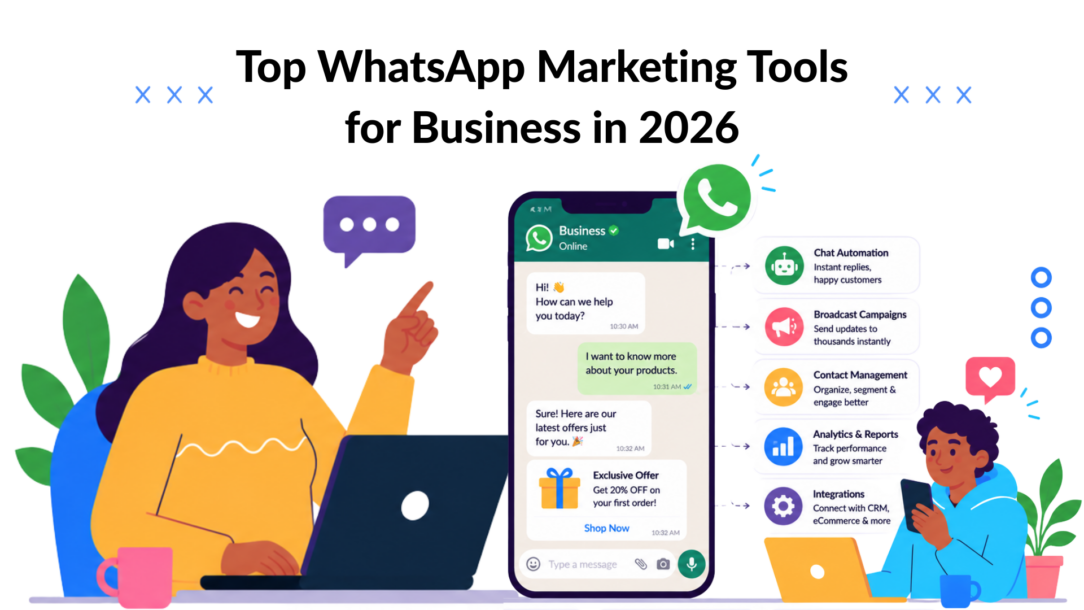
WhatsApp has become too large to treat as a side channel. By early 2026, it had more than 3 billion monthly active users and about 34% of the global mobile messaging app market, which is why serious customer communication stacks now include it alongside email, SMS, and paid social. For opt-in campaigns, industry aggregates also report 90% to 94% open rates and 35% to 60% click-through rates for WhatsApp marketing messages. That changes the economics of follow-up, cart recovery, support, and retention.
The catch is simple. The basic WhatsApp Business app isn’t enough once you need automation, routing, templates, analytics, and team access. You need software built on the WhatsApp Business Platform, either through a full-stack tool, a BSP, a CPaaS provider, or Meta’s direct API.
This guide gets straight to the point. I’m not ranking tools as if one platform is right for every business. Instead, I’m grouping the main options into the three buying paths that matter: full-stack platforms, CPaaS and API providers, and the direct Meta route.
1. Clepher
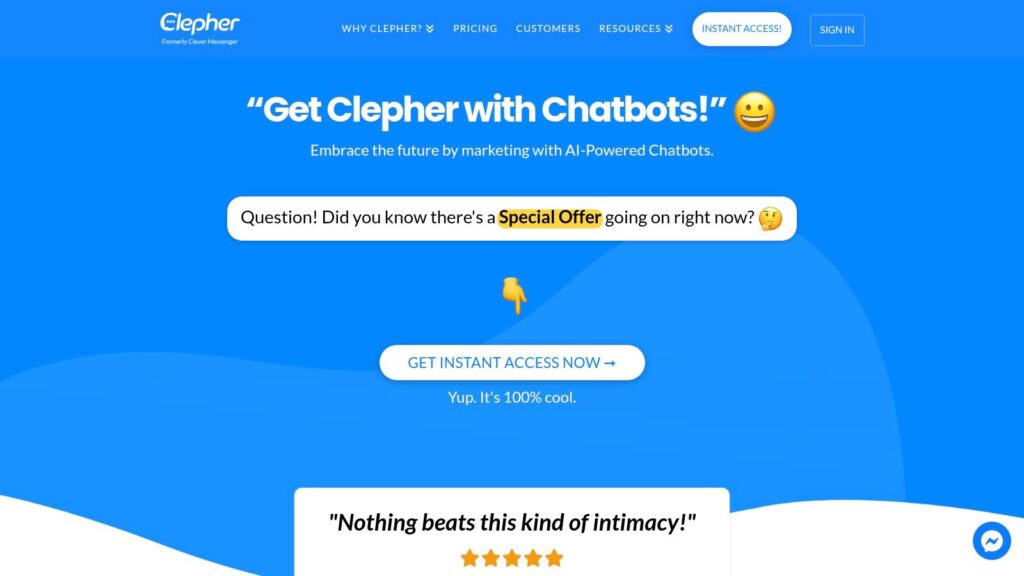
Whatsapp Marketing Tools Clepher Landing Page
Clepher sits in the full-stack platform category. That matters for teams that want to run WhatsApp as part of a broader lifecycle program instead of treating it as a standalone inbox. The platform combines a drag-and-drop builder, AI Agents, live chat, segmentation, and deployment across website chat, Facebook, Messenger, WhatsApp, and Instagram Direct.
The practical advantage is workflow consolidation. A DTC brand can capture a lead on-site, place that contact into a segment, trigger a WhatsApp follow-up, and pass the interaction into the rest of its stack through native integrations or connectors like Zapier, Make, n8n, and Pabbly. Clepher also includes A/B testing, random path distribution, personas, custom fields, global fields, typing indicators, conditional logic, and GDPR controls. Those details matter once a team moves beyond simple auto-replies and starts managing recovery, upsell, and support journeys at scale.
Where Clepher fits best
Best for: E-commerce teams, agencies, and marketer-led businesses that want one system for campaigns, automation, and conversations across more than one channel.
It is a strong fit for:
- E-commerce brands: Recover abandoned carts, answer pre-purchase objections, and send segmented product or offer broadcasts.
- Agencies: Run multiple client workflows without stitching together separate tools for chat, automation, and channel coverage.
- Creators and course sellers: Qualify inbound leads, send launch reminders, and continue the conversation after opt-in.
- SaaS teams: Use conversational onboarding and support flows without relying only on email sequences.
One operational benefit is speed. Marketing teams can launch and adjust flows without waiting on engineering for every change, which is usually the point where WhatsApp programs either gain momentum or stall.
Clepher also addresses a problem many WhatsApp tools underplay. Hybrid conversations are hard to manage well. Structured flows are efficient, but they can break down when a buyer asks an unexpected question or shifts intent mid-journey. The value of Clepher’s AI Agent plus flow-builder model is its ability to blend guided paths with more natural interactions, instead of forcing teams to choose one approach for every use case.
For teams building campaign operations, this also pairs well with a clear send schedule. The guide on how to schedule a WhatsApp message gives useful context for setting that up.
Trade-offs to know before you buy
Clepher is not the right choice for every buyer. If your team wants only raw API access and plans to build the whole messaging layer in-house, a CPaaS provider or Meta’s direct API will give you more control. If your process is heavily custom, some cross-channel workflows will still depend on integrations rather than one native feature.
Pricing and customer proof points are not included in the material provided here, so ROI modeling will require a sales conversation and a close look at implementation scope.
For businesses that want WhatsApp to drive acquisition, retention, and support from one workspace, Clepher is a complete marketer-first option.
2. WATI
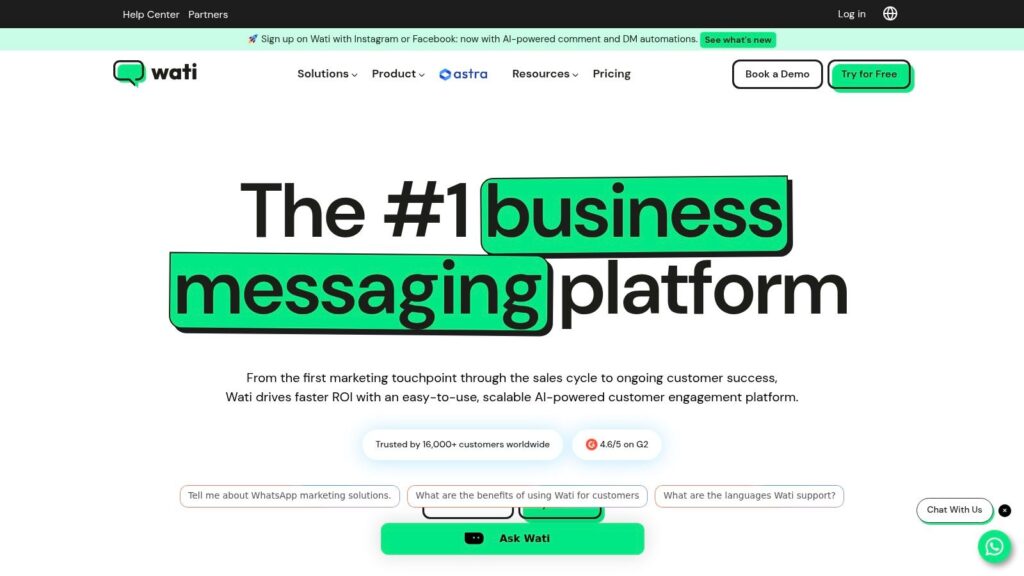
Whatsapp Marketing Tools Messaging Platform
WATI is a good example of a WhatsApp-first platform built for teams that want to get operational fast. Its shared inbox, team roles, assignments, no-code chatbot builder, broadcasts, segmentation, and catalog features make sense for SMBs that are focused on one channel and don’t want to involve engineers early.
This is the kind of platform I’d recommend to a service business, clinic, retailer, or local brand that already knows most conversations will happen inside WhatsApp. You can move from ad responses, inbound questions, and post-purchase support into one team workflow without building custom infrastructure. If your team also needs scheduled outreach, this guide on how to schedule a WhatsApp message is useful context for planning campaign operations.
What works and what doesn’t
WATI is strongest when the goal is operational simplicity. The UI is approachable, onboarding is relatively straightforward, and non-technical staff can manage core flows without waiting on a developer.
Its limits show up when your business starts asking for more custom logic, deeper analytics, or broader channel orchestration. If you want your WhatsApp layer tightly connected to a custom CRM process, ad attribution system, or a bespoke customer data model, building directly on the Cloud API gives you more room. You’ll find WATI’s platform here.
3. respond.io
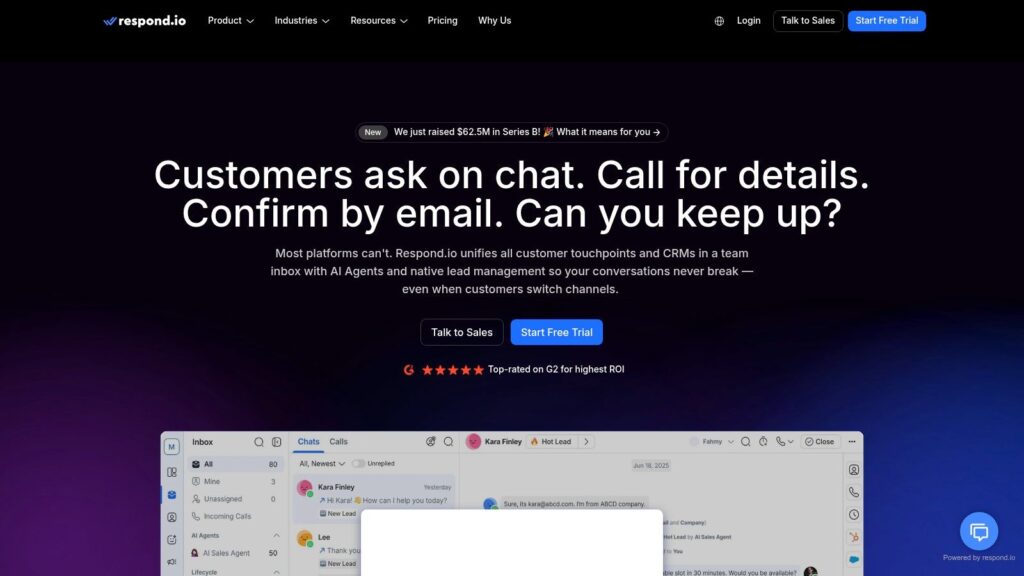
Whatsapp Marketing Tools Customer Inbox
respond.io sits in a useful middle ground. It combines a team inbox, workflow automation, routing, CRM integrations, analytics, and Meta Conversions API support, which makes it attractive for sales teams, e-commerce brands, and agencies that care about both conversation handling and marketing attribution.
Where it gets interesting is paid acquisition. If you’re running Click-to-WhatsApp ads, respond.io gives you a cleaner bridge between ad-driven conversations and downstream tracking than many smaller BSP-style tools. It also supports migration of existing WhatsApp numbers, which matters if you’re already locked into another provider and don’t want to restart from scratch. If broadcast strategy is part of your plan, this walkthrough on broadcast messages on WhatsApp covers the practical side of list management and templates.
Teams often outgrow “shared inbox only” tools before they outgrow WhatsApp itself.
Best for teams that need more than inbox management
I like respond.io for businesses that need balanced functionality rather than a pure no-code marketing app or a fully custom API stack. It covers suport, sales, and marketing without becoming as developer-heavy as Twilio or Meta’s direct route.
The trade-off is pricing depth and feature gating. Meta messaging costs still apply, and the most advanced capabilities usually sit behind higher plan tiers. If you want to evaluate it firsthand, respond.io’s official site is the place to start.
4. Twilio for WhatsApp
Whatsapp Marketing Tools Twilio Messaging
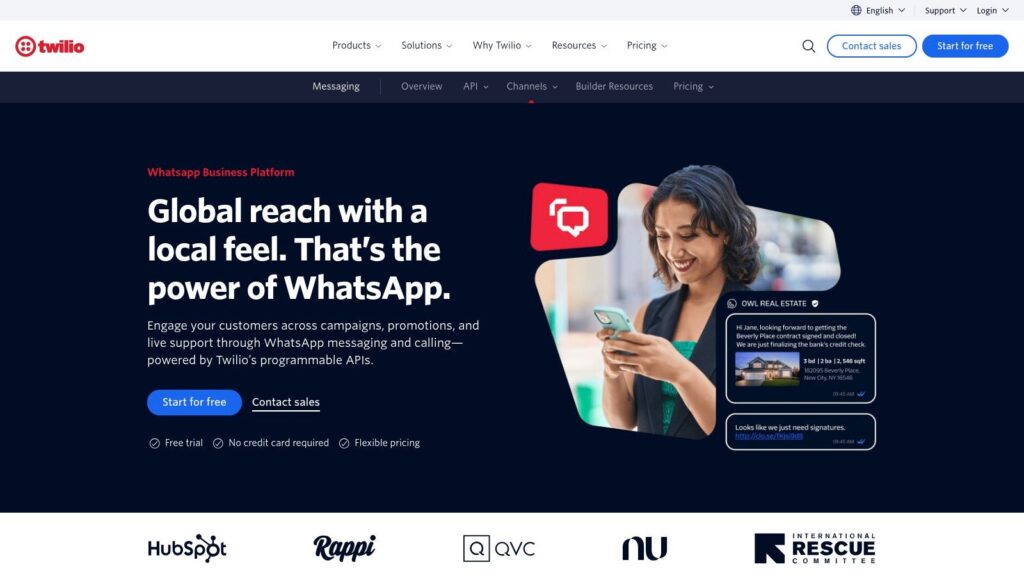
Twilio is for teams that want control. No marketer control in a visual builder. Engineering control over messaging logic, routing, events, and channel orchestration. If your company already uses Twilio for SMS, voice, or email, adding WhatsApp can be operationally clean because it sits inside the same programmable communications stack.
This path makes sense when WhatsApp is part of a wider system. A support workflow might escalate from chatbot to agent, trigger an SMS fallback, log an event in your CRM, and update an internal system. Twilio is built for that kind of architecture, not just campaign sends. If you’re mapping WhatsApp data into customer records, a dedicated CRM for WhatsApp perspective helps frame what your internal model should support.
Best for developer-led teams
Twilio’s strengths are hard to beat:
- Developer tooling: Excellent documentation and mature APIs.
- Channel unification: SMS, voice, email, and WhatsApp in one ecosystem.
- Scalability: Built for high-volume messaging and custom workflows.
Its weakness is equally clear. You have to build a lot yourself. Twilio platform fees also sit on top of Meta charges, and advanced engagement add-ons are priced separately. For engineering-first organizations, that’s acceptable. For a lean marketing team, it often isn’t. You can explore it at Twilio for WhatsApp.
5. Bird
Whatsapp Marketing Tools Business API
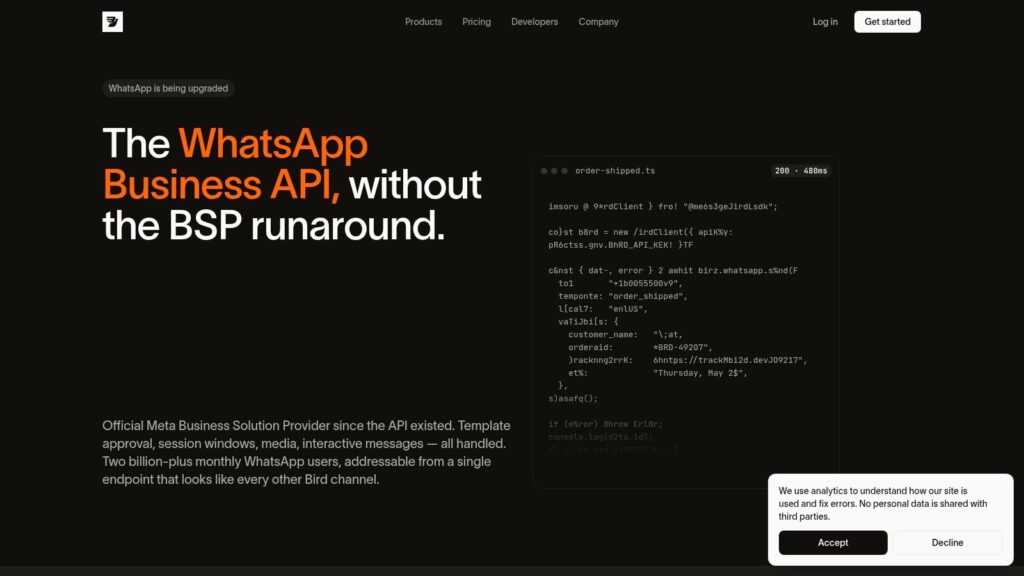
Bird, formerly MessageBird, is one of the cleaner CPaaS choices for companies that want direct API access without going all the way to Meta’s raw developer layer. Its productized WhatsApp endpoints, SDKs, and omnichannel backbone make it a practical option for teams that want developer flexibility and a more guided platform experience.
I’d put Bird in the “build, but don’t build everything from scratch” category. If your product team wants to wire WhatsApp into an existing customer communication workflow, Bird gives you a strong technical base without forcing you into a heavyweight enterprise suite.
Why Bird appeals to technical teams
Bird is attractive for a few reasons:
- Clean tooling: The developer experience is generally straightforward.
- Omnichannel support: SMS, email, and voice can sit alongside WhatsApp.
- Global orientation: Useful for companies that serve multiple markets.
The trade-off is familiar in CPaaS. Platform and processing fees stack on top of Meta costs, and if you want polished automation, marketing UI, or non-technical campaign management, you may need additional software on top. The platform is available at Bird’s WhatsApp product page.
6. Vonage Messages API
Whatsapp Marketing Tools Vonage Messaging API
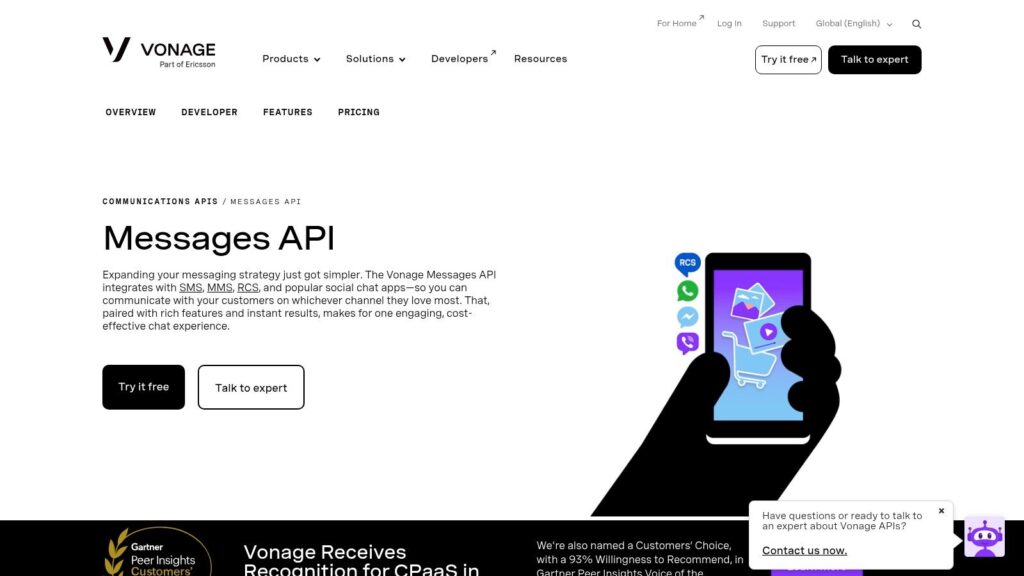
Vonage takes the unified API route. If your business wants WhatsApp, SMS, MMS, Facebook, and RCS under one messaging framework, that’s the appeal. It’s less about marketer convenience and more about reducing fragmentation for product and engineering teams.
The strongest fit is a company that needs fallback logic and centralized delivery operations. A travel brand, fintech app, or logistics business might start with WhatsApp, then route to SMS or another channel if needed, all under one API model.
If your roadmap includes cross-channel failover, unified APIs matter more than shiny campaign builders.
The practical trade-off
Vonage is a mature CPaaS with enterprise support options and SLA-oriented positioning. That reliability is valuable when messaging is tied to core business operations, not just promotions.
The downside is cost layering and less transparent self-serve pricing. Like other CPaaS providers, its platform fee is separate from Meta’s WhatsApp fees, and full commercial details may require a sales conversation. You can review the product at Vonage Messages API.
8. Infobip
Whatsapp Marketing Tools Infobip Messaging
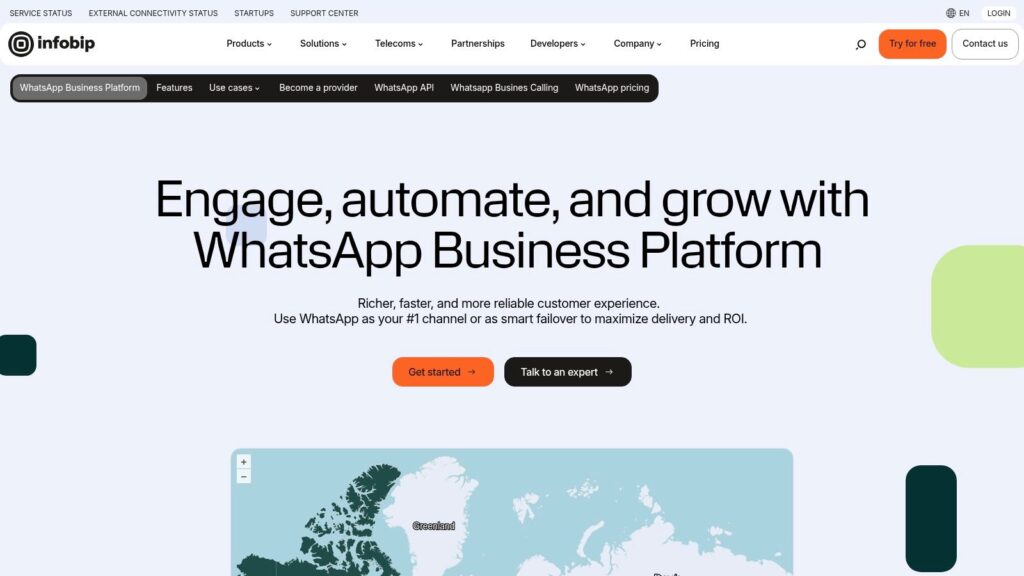
Infobip is built for scale, orchestration, and global communications complexity. It offers WhatsApp connectivity, chatbot tooling, journey orchestration, contact center integrations, and enterprise support. That makes it a better fit for larger operations than for small teams looking for a simple campaign launcher.
It’s also one of the few tools in this list where market adoption context matters. Infobip reports that WhatsApp reached about 3.3 billion monthly active users in early 2026, and that brands orchestrating conversational marketing interactions on its platform increased 38% year over year. That’s a useful signal that larger brands aren’t treating WhatsApp as a side experiment anymore.
Where Infobip earns its place
Infobip is strongest when compliance, journey design, and organizational complexity are all part of the brief. I’d consider it for enterprises that need:
- Journey orchestration: Not just messages, but coordinated lifecycle logic.
- Contact center integration: Support and marketing working from connected systems.
- Regional complexity handling: Governance and structured deployment across markets.
What doesn’t work well is using a platform like this for a simple SMB setup. Sales-assisted pricing and enterprise depth can feel excessive if you only need broadcasts, a basic bot, and team inbox functionality. You can learn more at Infobip’s WhatsApp Business page.
8. Gupshup
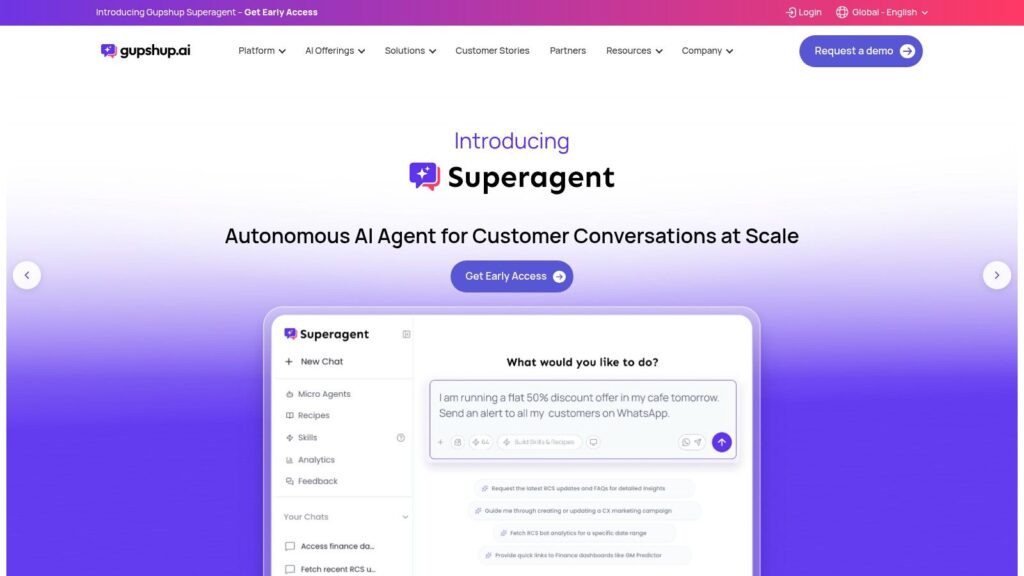
Whatsapp Marketing Tools AI Agent
Gupshup has been in this category long enough to understand the practical messiness that newer tools often hide. It offers APIs, no-code tooling, template management, campaign workflows, and embedded sign-up support. For brands that want faster onboarding than pure direct API usage, that combination is useful.
I see Gupshup as a strong middle option for teams that care a lot about template operations and campaign execution. If your WhatsApp program depends on templated sends, regional variations, and a repeatable approval process, provider experience matters more than flashy interface design.
One place Gupshup matters a lot
Non-US markets create a real operational challenge that many reviews barely address. The brief highlights pricing volatility of roughly $0.01 to $0.10 per message across markets and categories, plus template approval delays and local-language complexity. It also notes that industry reports from 2024 to 2025 indicate 62% of global marketers in emerging markets face template rejection rates above 25%, while only 8% of tool comparisons explain how platforms handle dynamic resubmission or local-language compliance. That’s exactly the kind of environment where BSP experience and template tooling become more important than generic “automation” claims.
Gupshup won’t eliminate those constraints, but it’s built closer to that operational reality than many generalist chat platforms. The trade-off is that BSP fees still sit on top of Meta’s rates, and documentation depth can vary by module. You can review it at Gupshup.
9. WhatsApp Business Platform by Meta
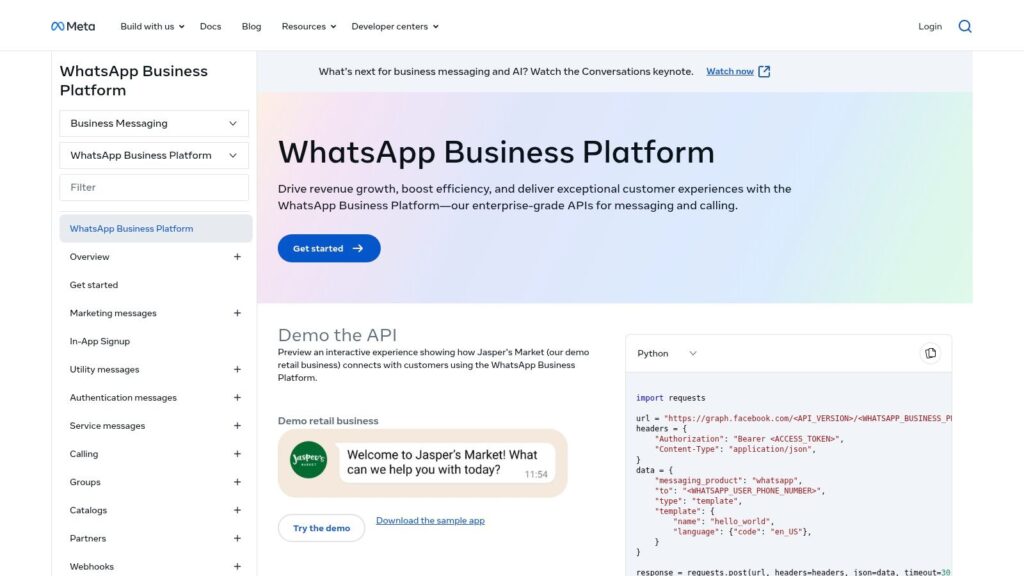
Whatsapp Marketing Tools WhatsApp API
The direct Cloud API route is the most important option to understand because every other provider in this list sits on top of it or around it. If your engineering team wants maximum control, minimum middleware, and direct ownership of integration, data governance, and release timing, Meta’s WhatsApp Business Platform is the cleanest long-term path.
This isn’t the easiest path. It’s the one with the fewest layers between you and the platform. You get direct API access, webhooks, media support, template management, and the ability to scale across multiple numbers and WhatsApp Business Accounts.
Best for teams that want ownership
Going direct works best when your company already has product and engineering capacity. The upside is substantial:
- Lower vendor lock-in: You aren’t tied to a BSP’s UI or markup model.
- Direct feature access: New WhatsApp capabilities tend to land here first.
- Custom data control: You can connect WhatsApp to your own systems exactly how you want.
The trade-off is that you must build or buy everything else. Inbox tooling, automation layers, analytics, QA workflows, and policy compliance become your responsibility. If your team can’t support that operational load, direct API access becomes a burden, not an advantage.
The direct API is powerful only when someone on your team owns the plumbing.
You can evaluate the official option through Meta’s WhatsApp Business Platform documentation.
Top 10 WhatsApp Marketing Tools Comparison
| Product | Core features ✨ | UX & Quality ★ | Price / Value 💰 | Target audience 👥 |
|---|---|---|---|---|
| 🏆 Clepher | ✨ No‑code drag‑drop Flows, omnichannel (Web/FB/IG/WA), AI Agents, unlimited broadcasts, A/B testing, 50+ native + 5k+ via Zapier | ★★★★☆ Intuitive, seconds‑to‑install, analytics, high open/CTR (claimed) | 💰 Growth‑oriented value; pricing on site / contact sales | 👥 E‑commerce/DTC, agencies, creators, SaaS, local businesses |
| WATI, WhatsApp‑first | ✨ Team inbox, no‑code bots, broadcasts, catalog & commerce helpers | ★★★★ Easy onboarding; UI for non‑technical teams | 💰 Good value for WhatsApp‑centric workflows | 👥 SMBs & mid‑market teams |
| respond.io | ✨ Team inbox + automation, native BSP, CRM syncs, Meta Conversions API | ★★★★ Balanced for sales/marketing/support; clear tiers | 💰 Subscription + Meta template fees; tiered plans | 👥 Ecommerce teams, agencies |
| Bird (MessageBird), WhatsApp | ✨ Productized WhatsApp endpoints, SDKs, omnichannel backbone | ★★★★ Clean dev tooling, global routing | 💰 Platform/processing fees + Meta charges | 👥 Developers, mid‑market teams |
| Vonage Messages API | ✨ Single API for WhatsApp/SMS/MMS/RCS, enterprise SLAs | ★★★★ Mature CPaaS, reliable delivery | 💰 Platform fee + Meta fees; enterprise pricing | 👥 Enterprises consolidating channels |
| Infobip, WhatsApp Business | ✨ Orchestration, chatbots, journeys, contact center integrations | ★★★★ Enterprise CX features and support | 💰 Sales‑assisted pricing; suited for large deployments | 👥 Mid‑market & enterprise |
| Gupshup, WhatsApp BSP | ✨ API + web UI, template approval, campaign tools | ★★★★ Fast onboarding, campaign focus | 💰 Transparent WhatsApp + platform fees | 👥 Brands running template campaigns |
| WhatsApp Business Platform (Meta Cloud API) | ✨ Direct Meta‑hosted API, webhooks, media, template mgmt | ★★★★ Dev‑first; fastest access to new features but requires engineering | 💰 No BSP markup; pay Meta rate card (developer time cost) | 👥 Developer teams wanting full control |
So, Which WhatsApp Tool Is Right for You?
The right WhatsApp tool depends less on feature count and more on the operating model. Who owns the channel, how fast campaigns need to ship, and how much engineering support you can allocate will decide whether a tool gets adopted or sits half-configured for months.
Three categories make the decision clearer.
Full-Stack Platforms fit marketing-led teams that need speed, built-in campaign tools, and a shared inbox without waiting on developers. This group makes the most sense for ecommerce brands, agencies, founders, and lean sales teams running broadcasts, automation, and support in one place. Clepher fits that category well for teams that want no-code flow building, AI agents, audience segmentation, and live chat in the same system. WATI and respond.io can also work here, but the key distinction is workflow. Some teams need stronger ecommerce automation, while others care more about multichannel inbox management or creator-focused funnel building.
CPaaS and API platforms suit companies that already have technical resources and want WhatsApp connected to a wider messaging stack. Twilio, Bird, Vonage, Infobip, and Gupshup are usually better choices when routing logic, backend events, CRM sync, or multi-country deployment matter more than a marketer-friendly UI. The trade-off is real. You get more control over infrastructure and orchestration, but you also take on implementation overhead, QA cycles, and the cost of maintaining tooling around analytics, inboxes, and approval workflows.
Direct API is a different decision again. Meta’s WhatsApp Business Platform is best for developer-led teams that want the closest access to the platform and are prepared to build the missing layers themselves. That route can lower intermediary dependency, but it does not give you a finished marketing system. Your team still needs to handle automation logic, reporting, agent experience, governance, and day-to-day operations.
I have seen teams choose the wrong category more often than the wrong vendor. A retail brand with two marketers usually struggles with a developer-first API, even if pricing looks attractive on paper. A product-led SaaS company with in-house engineers often outgrows an opinionated no-code tool once custom events, internal systems, and lifecycle messaging become central.
Start with one use case that already affects revenue or service quality. Abandoned cart recovery, lead qualification, appointment reminders, post-purchase updates, and win-back campaigns are strong starting points because they expose the practical limits of a tool fast. If the team can launch, measure, and iterate on one of those journeys without workarounds, the platform is probably a fit.
If you want a marketer-friendly option that keeps setup manageable while still giving your team room to automate and segment, Clepher is a credible place to start. It covers AI-assisted automation, visual journey building, live chat, audience management, and omnichannel messaging across WhatsApp and other customer touchpoints without requiring custom development on day one.

Related Posts
Automated Checkout Bot: Build and Launch Guide
October 7, 2026AI Agent Framework: Architecture, Tools, and Use Cases
October 6, 2026Master Lead Generation Automation for Business Growth
October 5, 2026
Founder Clepher