

SMS gets read fast. That speed is the whole reason blast texting services matter for businesses that need customers to see a message now, not the next time they clear their inbox.
Text works well for flash sales, appointment reminders, payment prompts, shipping updates, and support notices. The harder part is picking a platform that matches how your business operates. An e-commerce brand usually needs flows tied to carts, customer profiles, and repeat-purchase campaigns. A local service business may care more about quick broadcasts, two-way replies, and simple contact management. Some teams have a different problem altogether. They need to handle conversations across Instagram, Messenger, WhatsApp, web chat, and SMS from one place.
That distinction matters because a feature list does not make a buying decision easier. A platform can look strong on paper and still be the wrong fit if its pricing model, automation depth, or channel mix does not line up with your workflow.
This guide uses a practical decision framework instead of treating every tool like it solves the same problem. It groups the strongest options by primary use case: ecommerce, SMB, and pay-as-you-go sending. It also includes a multi-channel alternative for businesses that have outgrown one-way texting and need automated customer engagement across chat, social, and messaging channels.
If ecommerce is your main focus, this roundup also pairs well with this review of best mass texting services for e-commerce.
1. Clepher
Blast Texting Services Chatbot Marketing Clepher
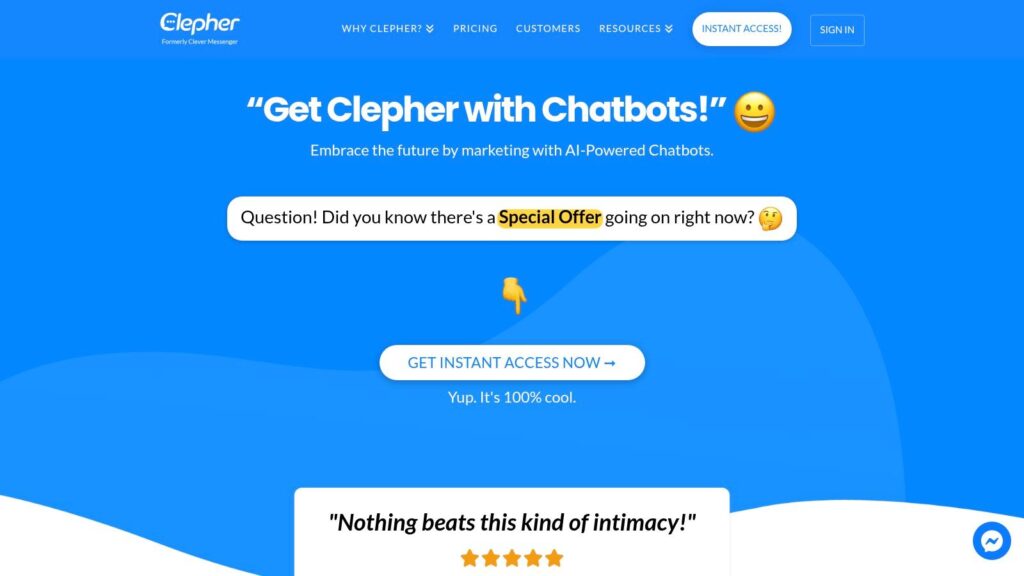
Clepher is the outlier on this list, and that’s exactly why it deserves the top spot for the right buyer. It isn’t just one of many blast texting services. It’s a no-code conversational automation platform built for businesses that want to run campaigns across web chat, Messenger, Instagram DMs, and WhatsApp, then hand off into SMS or email when needed.
That matters because a lot of companies think they need a blasting tool when what they really need is a better response system. Sending the message is only half the job. Handling replies, qualifying leads, routing support, and following up across channels often causes teams to lose momentum.
Why Clepher fits modern campaigns
Clepher’s drag-and-drop Flow builder is designed for non-technical teams. You can build conversational paths, segment users, add personalization, test variations, and push broadcasts without leaning on developers. For agencies and multi-brand operators, unlimited Pages and Instagram accounts is a strong operational advantage.
It also fits the way customers behave now. Plenty of prospects don’t want to move straight into SMS. They respond on Instagram, ask questions in Messenger, or come back through web chat. Clepher gives you one place to manage those journeys instead of stitching together separate automation tools.
A practical use case looks like this:
- Lead capture: A visitor lands on a product page and enters a chat flow through a capture widget.
- Qualification: An AI Agent tags intent, product interest, or budget level.
- Follow-up: The contact gets routed into the right Messenger, WhatsApp, or SMS sequence.
- Handoff: High-intent leads go to sales or support without manual sorting.
That last part is under-discussed in this category. Most blast texting content focuses on sends, opens, and basic autoresponders. It rarely addresses multi-channel consent management or AI-based intent routing, even though those are real operating problems for agencies and scaled DTC teams.
Practical rule: If your team handles inbound replies across more than one messaging channel, don’t buy a tool based only on send volume. Buy based on routing, segmentation, and handoff quality.
Where it wins and where to be careful
Clepher is strongest when your business wants conversational growth, not just outbound blasts. It’s a strong fit for ecommerce brands, agencies, coaches, SaaS onboarding, and local businesses that need both promotion and support automation. You can see that approach in its focus on automated customer engagement.
Pros:
- Omnichannel coverage: Web chat, Messenger, Instagram DMs, and WhatsApp in one system
- No-code setup: Flows and widgets are accessible for marketers, not just technical teams
- Scale features: A/B testing, random path distribution, personas, tags, fields, and GDPR tools
- Integration depth: Native integrations plus Zapier, Make, n8n, and Pabbly support
- AI workflow support: Useful for lead qualification, support triage, and segmentation
Cons:
- Pricing isn’t public: You’ll need a clear breakdown before committing
- Platform dependency exists: Meta and WhatsApp policy changes can affect workflows
If your business wants SMS as one piece of a broader messaging system, Clepher is one of the most interesting choices here.
Website: Clepher
2. SimpleTexting
Simple Texting
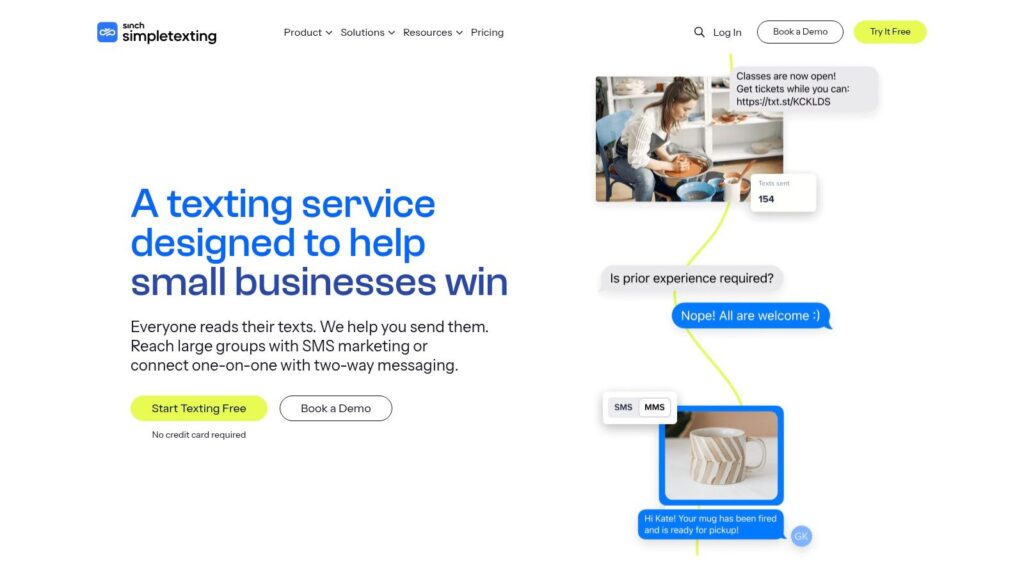
SimpleTexting fits a specific decision point in this list. It is the SMB option for teams that want SMS running fast, without the heavier setup that often comes with ecommerce-focused platforms or broader multi-channel systems.
That matters in practice. A local service company, franchise group, or small agency usually does not need advanced retention flows tied to Shopify events on day one. It needs a tool staff can learn quickly, a clean way to collect opt-ins, and reply handling that does not turn into inbox clutter after the first campaign.
Best for SMBs that need a fast, usable SMS program
SimpleTexting covers the core jobs well: bulk sends, autoresponders, keywords, text-to-join, pop-ups, and basic segmentation. It also supports number selection and 10DLC-related setup, which reduces friction for teams launching their first real SMS program.
Unlimited contacts is a practical advantage. For SMBs with large but lightly engaged lists, charging based on stored contacts can punish you before SMS is even producing revenue. SimpleTexting avoids that problem, which makes budget planning easier.
A good fit is a multi-location home services brand. The team can segment by branch, send appointment reminders or seasonal offers, and keep inbound replies organized enough for office staff to manage without a dedicated SMS specialist.
Teams that are still learning campaign structure should also study a few automated text message examples and key use cases before building their first flows. Message timing, opt-in language, and reply paths usually matter more than fancy automation in the first 60 days.
There is also a practical education angle. If your team is still learning how to write SMS offers, this collection of text message examples is useful alongside any platform you choose.
Pros:
- Easy for small teams to run: The interface is clear, and common SMS tasks are easy to set up
- Good list-growth toolkit: Keywords, signup forms, and text-to-join cover the channels SMBs use most
- Predictable contact pricing: Unlimited contacts helps teams with growing databases avoid surprise cost jumps
Cons:
- MMS costs can climb fast: Image-heavy campaigns use more credits, so creative choices affect budget
- Less specialized for ecommerce: Brands that need deep Shopify triggers and revenue attribution may outgrow it
- Automation depth has limits: It handles standard campaigns well, but complex lifecycle messaging usually needs more than basic autoresponders
Website: SimpleTexting
3. EZ Texting
EZTexting
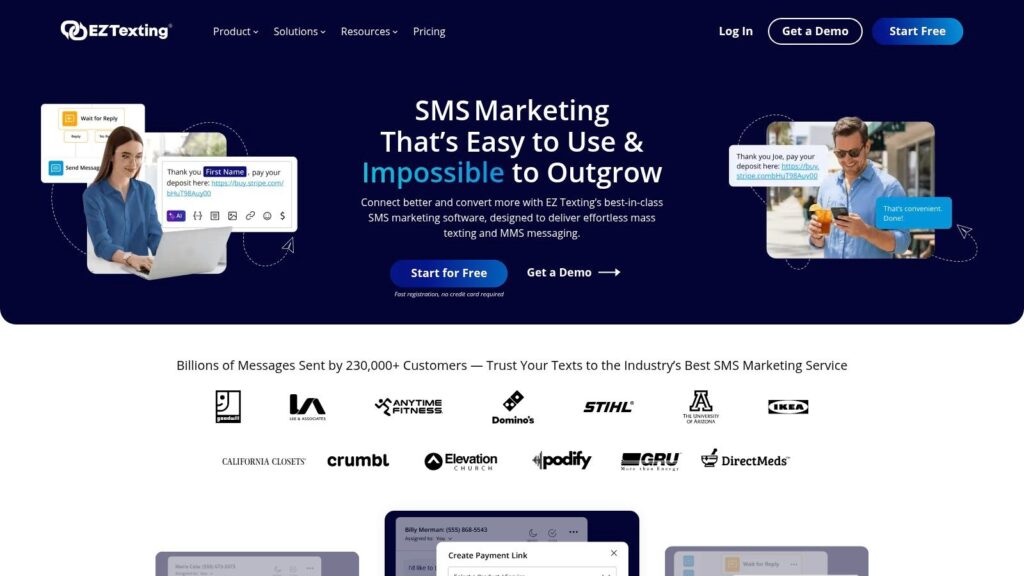
EZ Texting fits a specific buyer well. It is a strong option for SMBs and operational teams that need broadcast SMS, inbound reply handling, and compliance guidance in one place, without buying a larger customer engagement stack.
Its real value shows up after the campaign goes out. Plenty of blast texting services make it easy to send a message, then turn replies, opt-outs, and list management into manual cleanup. EZ Texting keeps those day-to-day workflows manageable for lean teams.
Best for SMBs that need structure more than advanced ecommerce depth
I usually recommend EZ Texting to organizations that care about reliability and guardrails more than deep automation logic. Schools, franchise groups, healthcare-adjacent services, nonprofits, and event teams often fall into that camp. They need SMS to work consistently, they need consent handled carefully, and they need staff to learn the platform quickly.
Compliance is a big part of that decision. EZ Texting puts more attention on registrations, opt-in collection, and provisioning than many entry-level tools, which lowers the chance of expensive mistakes. That matters because SMS is not forgiving if a team rushes setup or treats consent as an afterthought.
The platform also covers the list-growth basics well. Forms, QR codes, keywords, and segmentation are all there, which gives smaller teams a practical toolkit for running local campaigns or recurring customer updates. If your team is still shaping those flows, these automated text message examples and key use cases are a good starting point before you build autoresponders.
The trade-off is depth. EZ Texting works better as an SMB messaging platform than as an ecommerce revenue engine. Brands that want tight Shopify triggers, detailed attribution, or cross-channel chatbot journeys will usually compare it against ecommerce-first tools later in this list, or look at a broader multi-channel platform instead of staying SMS-only.
Pros:
- Good operational fit for SMBs: Easier to train staff and maintain day-to-day messaging
- Helpful compliance guardrails: Better suited to teams that want more structure around opt-ins and setup
- Solid reply management: Works well for use cases where two-way texting matters
Cons:
- Less built for ecommerce growth teams: Advanced store triggers and revenue reporting are not its main strength
- Credit-based pricing can take monitoring: Costs are not always as predictable as fixed monthly plans
- Extra seats can raise total spend: Team access may affect the actual monthly cost
Website: EZ Texting
4. SlickText
SlickText
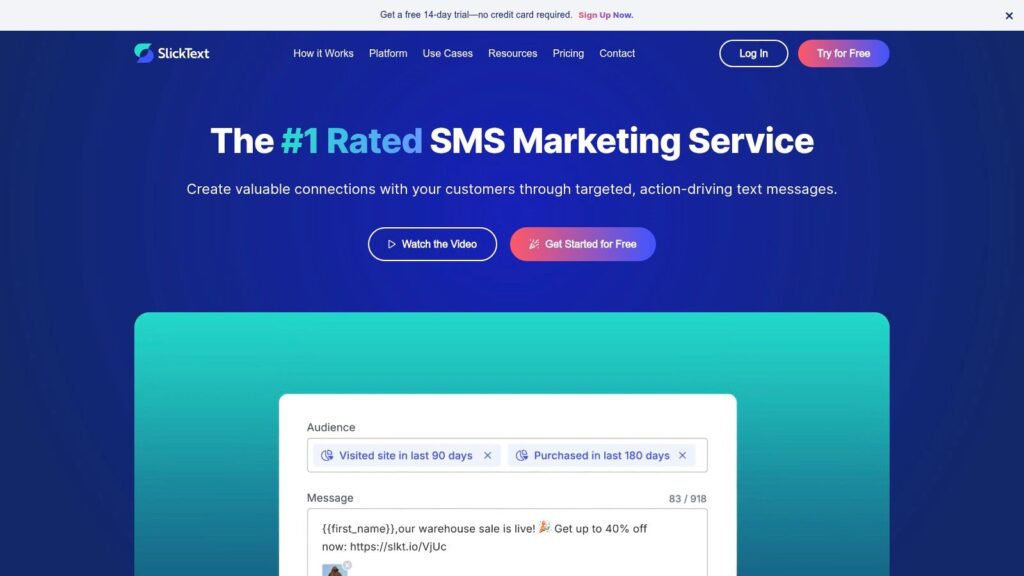
Budget surprises are one of the fastest ways to turn a workable SMS program into a tool your team avoids. SlickText stands out because pricing is easier to understand upfront than with many blast texting services, which makes it a practical option for teams that need approval before they can even start testing.
Strong option for predictable monthly sending
SlickText fits businesses with steady send patterns and clear operational needs. Retail promos, appointment reminders, loyalty updates, church communications, and franchise messaging are all good examples. If volume is fairly consistent month to month, a fixed plan is usually easier to forecast than pay-as-you-go billing.
That predictability is the primary selling point here.
In practice, SlickText works best for SMBs that want a reliable SMS platform without a long procurement process or a complicated setup. The interface is approachable, the packaging is public, and onboarding tends to feel more guided than DIY tools aimed at technical users. For a small marketing team or an owner-operator, that can matter more than having the deepest automation library.
Support is also part of the decision. Teams switching providers often care about number transfers, opt-in continuity, and getting campaigns back online fast. SlickText has a good reputation for helping with that transition, which gives it an edge over lower-touch platforms.
The trade-off is that SlickText is stronger as an SMB and local-business platform than as an ecommerce growth engine. If your decision framework starts with use case, this lands in the predictable-monthly-sending bucket, not the ecommerce-automation bucket. Brands that want advanced store triggers, detailed attribution, or a broader chatbot strategy across SMS and other channels will usually compare it with ecommerce-first tools later in this list, or consider a multi-channel platform instead of staying SMS-only.
Pros:
- Clearer plan tiers: Easier to budget and get internal buy-in
- Helpful onboarding: Good fit for migrations and hands-on setup support
- Less aggressive feature gating: Smaller teams can access core functionality without jumping straight to enterprise pricing
Cons:
- Carrier fees still matter: Total send cost is not just the sticker price
- Higher cost per message at low volume: Small senders should compare against pay-as-you-go options carefully**
- Less suitable for ecommerce revenue teams: Advanced trigger-based selling and attribution are not the main strength
Website: SlickText
5. TextMagic
TextMagic
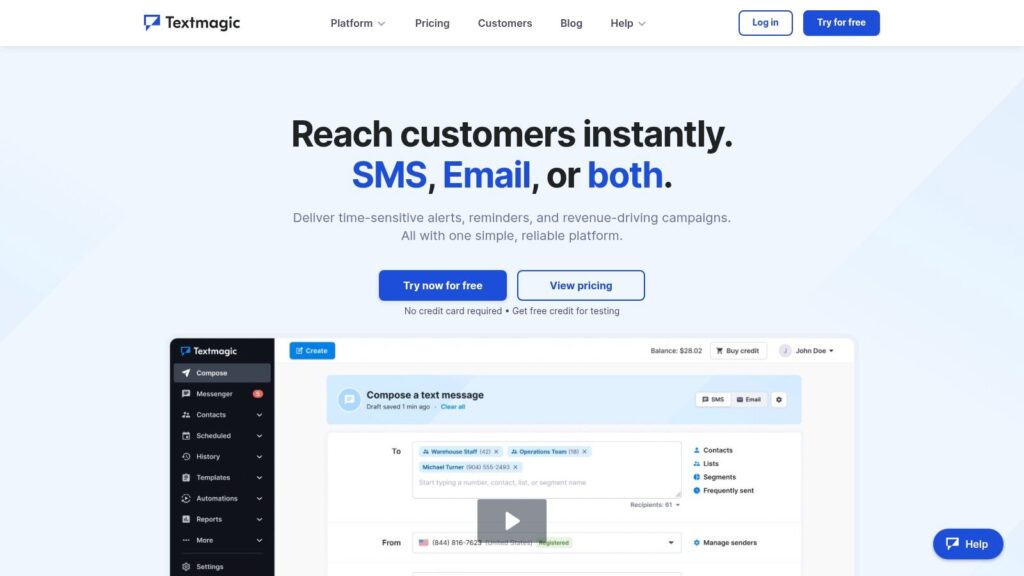
TextMagic makes the most sense when you dislike subscription pressure. Its pay-as-you-go structure is the appeal.
That’s a meaningful difference. Not every business sends enough volume to justify a monthly commitment. Some teams run bursts of outreach around events, seasonal campaigns, collections, or urgent notices, then go quiet.
Best for pay-as-you-go and operational flexibility
TextMagic is a practical fit for small teams, agencies managing irregular client sends, and operations teams that need SMS as a utility rather than a core lifecycle platform. It also supports voice, MMS, and email-to-SMS, which gives it a broader communication feel than some pure marketing tools.
The BYO-CPaaS option is especially interesting for technical teams or cost-conscious operators. If you already work with a provider like Twilio, Vonage, Sinch, or Bandwidth, that path can give you more control over infrastructure and cost structure.
What doesn’t work as well is high-end ecommerce automation. If your growth playbook depends on behavior-based flows, deep customer data, and store-native triggers, TextMagic won’t feel as purpose-built as ecommerce-first tools.
Pros:
- No long-term commitment: Easier for unpredictable usage
- Clear utility value: Good for straightforward sends and replies
- Infrastructure flexibility: BYO-CPaaS can matter for advanced teams
Cons:
- Less marketer-friendly UI: It feels more functional than polished
- Lighter automation depth: Better for utility than lifecycle marketing
This kind of setup often works well for local operations. A home services company, for example, might use it for lead response, appointment updates, and weather-related schedule changes without paying for a broader marketing suite it won’t use.
Website: TextMagic
6. Textedly
Textedly
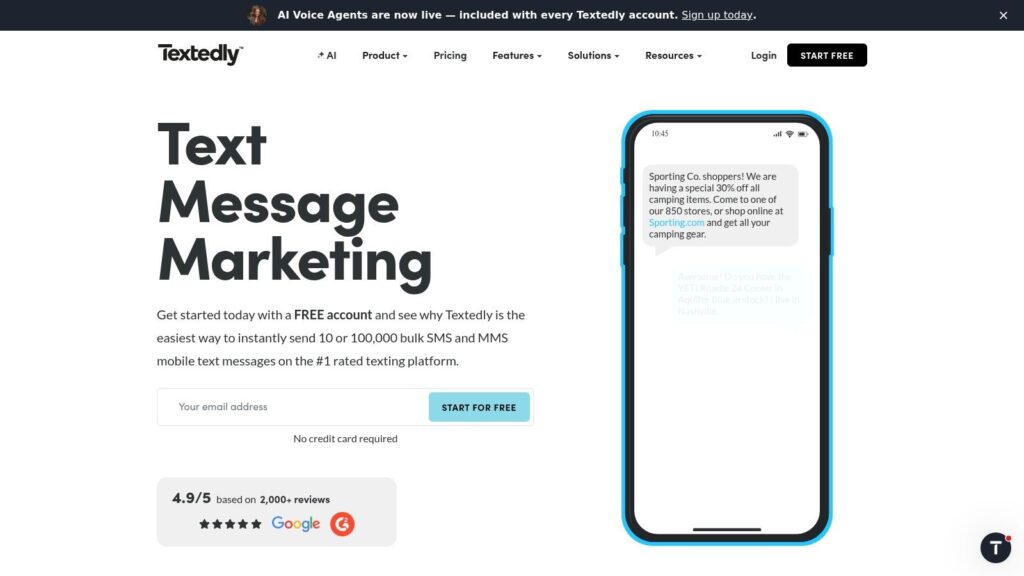
Textedly fits a specific part of this market well. It serves SMBs that want straightforward SMS marketing and customer follow-up, with a few revenue and reputation tools built in. That makes it easier to place in a shortlist if you’re using this article as a decision framework by use case. Textedly belongs in the local business and franchise bucket, not the ecommerce automation bucket and not the utility-first pay-as-you-go bucket.
The product is at its best when a text needs to drive a clear next action. A salon can send a promotion and collect payment. A dental office can send appointment reminders, then ask for a review after the visit. A multi-location operator can roll out the same campaign structure across stores without building a complex lifecycle program.
That focus matters.
Textedly gives smaller operators a practical bundle: mass texting, two-way messaging, payments, and review workflows in one system. For a business owner or office manager, that usually matters more than advanced segmentation logic or deep customer journey mapping. The trade-off is clear. You get faster setup and simpler day-to-day use, but less depth if SMS becomes a major retention or revenue channel.
A few strengths stand out:
- Strong fit for local SMB workflows: Payments and review requests tie texts to business outcomes
- Broad plan selection: Easier to match the platform to current volume, then scale up if usage grows
- Useful add-ons: Extra keywords and message capacity help without forcing a platform switch too early
The weak spot is consistency at scale. Teams sending high volumes or relying on SMS as a core growth channel should look closely at delivery controls, support responsiveness, and reporting depth before committing. In practice, that is the line with Textedly. It works well for simple, repeatable communication. It is less convincing for brands that need channel orchestration, advanced automation, or a broader chatbot and multi-channel messaging layer.
If your business wants SMS to handle promotions, reminders, payments, and review follow-up, Textedly is a reasonable SMB option.
Website: Textedly
7. MessageMedia
MessageMedia
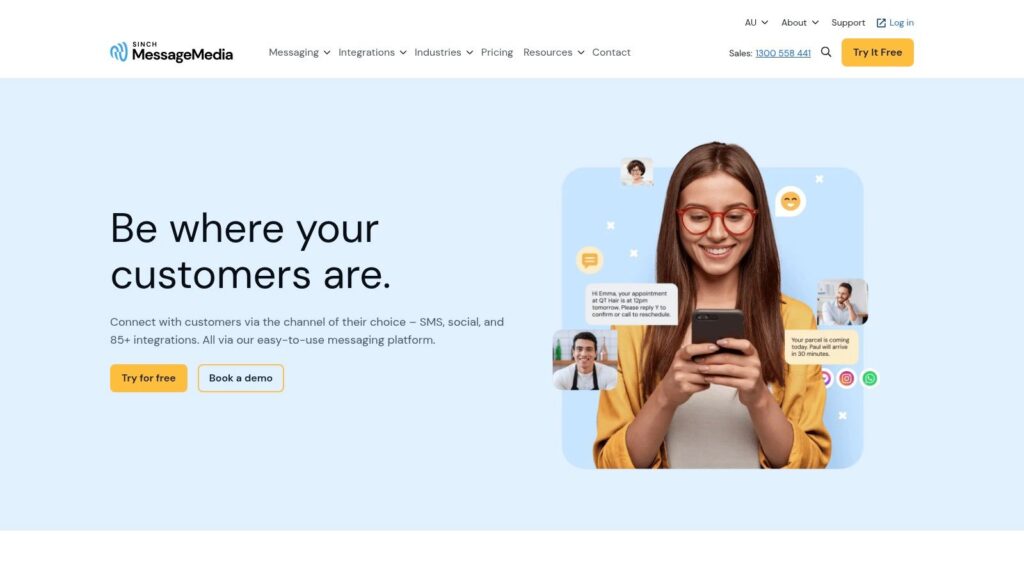
MessageMedia sits in an interesting spot. It has the backing and scale of Sinch, but it still offers tools that don’t feel out of reach for SMB and mid-market teams.
If you know you’ll want more than standard SMS over time, this is one of the better options to shortlist.
Best for teams planning beyond plain SMS
MessageMedia supports SMS, MMS, RCS, and broader messaging integrations. That matters for businesses that are already thinking ahead about richer messaging formats, omnichannel support, or text-enabling existing numbers instead of starting from scratch.
This can be useful for businesses with established phone infrastructure. Instead of introducing a new sender identity everywhere, they can often work from numbers customers already recognize.
It also fits companies that care about compliance and account support but don’t necessarily want a consumer-style self-serve product. There’s more room here for migration help and account management.
Field note: If your business expects messaging to expand into service, support, and richer customer conversations, buying a slightly broader platform early can save you one painful migration later.
Pros:
- Omnichannel direction: Helpful if RCS or channel expansion is on your roadmap
- Existing-number enablement: Useful for continuity
- Enterprise-grade backing: Good fit for reliability-conscious teams
Cons:
- Quote-based pricing: Harder to compare quickly
- Cost structure can get nuanced: Especially once multiple channels enter the mix
This is one of the better fits for businesses that don’t want to treat blast texting services as isolated tools. They want messaging infrastructure that can grow with them.
Website: MessageMedia
8. Attentive
Attentive
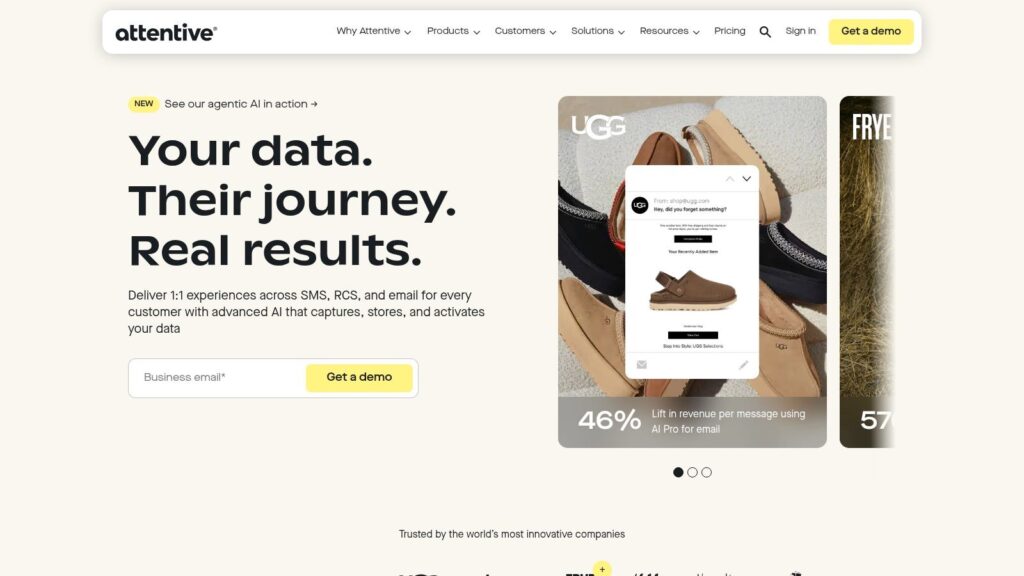
SMS can become a major revenue line for ecommerce brands. Attentive is built for that stage of growth, where list growth, segmentation, automation, and compliance all need dedicated ownership.
It fits the ecommerce branch of this decision framework more than the general SMB or pay-as-you-go options on this list. Teams usually choose Attentive when they are past occasional campaigns and need a platform that can support subscriber acquisition, lifecycle messaging, and high-volume promotional calendars without piecing together multiple tools.
Built for larger ecommerce programs
Attentive stands out on the front end as much as the sending side. Its value comes from tools for capturing subscribers, testing signup experiences, segmenting audiences, and running automated programs tied to store behavior. For DTC operators, that matters because the hard part is rarely sending a text. The hard part is growing a list responsibly and turning that list into repeatable revenue.
That also creates the main trade-off. Attentive makes more sense when SMS already has clear budget, ownership, and performance targets. Smaller stores can end up paying for sophistication they will not use, especially if they only need batch campaigns and a few basic automations.
I usually put Attentive in the “serious ecommerce program” bucket. It is a better fit for brands running frequent launches, retention flows, and list-growth campaigns than for local businesses or teams that just want a low-friction blast texting service.
Pros:
- Ecommerce-specific feature set: Strong match for DTC retention and promotion workflows
- Subscriber acquisition focus: Helpful for brands that care as much about list growth as campaign sends
- Hands-on support model: Useful when SMS performance has direct revenue accountability
Cons:
- Custom pricing and contracts: Slower to evaluate and often harder on smaller budgets
- Heavier setup: Better for mature teams than first-time SMS senders
Attentive earns its place when SMS is treated as a core ecommerce channel, not a side tactic. If your business is still validating SMS or needs a simpler tool for occasional sends, an SMB-focused platform or a pay-as-you-go option will usually be the better decision.
Website: Attentive
9. Postscript
Postscript
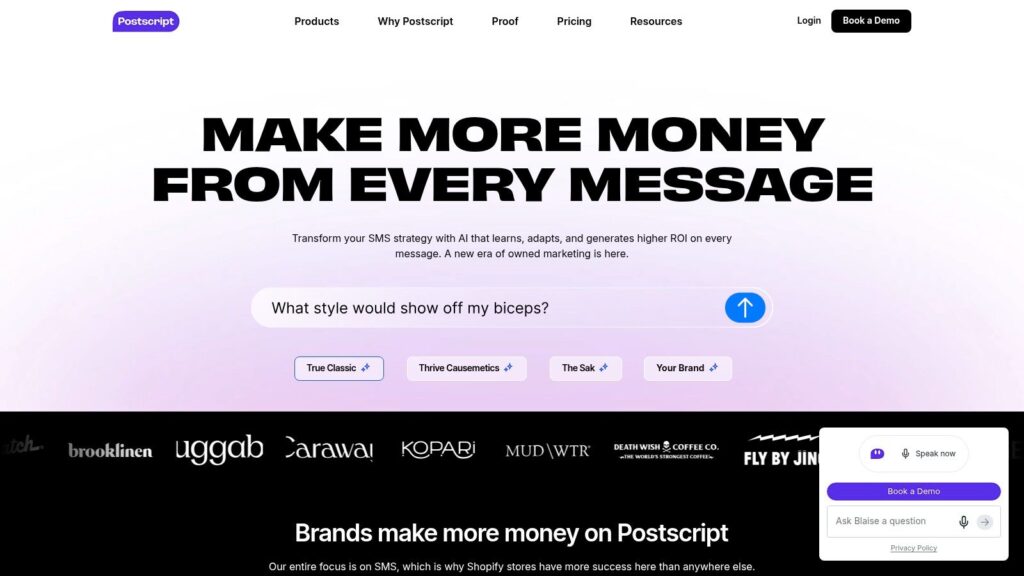
Postscript fits a specific decision path in this list. If you run a Shopify store and want SMS tied closely to storefront behavior, it deserves serious consideration. If you need a broader SMB texting tool or a pay-as-you-go sender for mixed use cases, look elsewhere.
Best for Shopify-first brands that want revenue-focused SMS
Postscript works well because it stays close to the ecommerce job. Campaigns, automations, subscriber growth, and customer replies all connect back to what shoppers do in your store. That makes common flows easier to set up and easier to justify, including cart reminders, browse abandonment, post-purchase upsells, and winback campaigns.
That focus is the primary advantage.
General blast texting platforms are fine for announcements and one-off promotions. Postscript is stronger when SMS is expected to support retention revenue, not just message delivery. For a Shopify operator, that difference shows up in day-to-day execution. Segments are more useful, triggers require less duct tape, and reporting is easier to tie back to store activity.
I also like Postscript for teams that care about measurement. If your paid, email, and SMS programs all influence the same sale, attribution gets messy fast. Good marketing attribution software helps clarify whether SMS is creating incremental revenue or claiming conversions that were already in motion.
Pros:
- Strong Shopify integration: Customer and order data feed directly into campaigns and flows
- Clear ecommerce use case: Well suited to cart recovery, promotional drops, and retention programs
- Useful cost visibility: Easier to review spend, message usage, and carrier-related charges
Cons:
- Narrow fit outside Shopify: Less compelling for non-ecommerce businesses or stores on other platforms
- Costs can vary: Message type, destination, and volume still affect budgeting
Postscript belongs in the ecommerce bucket of this guide, specifically for Shopify-centric brands. It is not the default choice for every business. It is a practical one for merchants who want SMS to behave like a core retention channel instead of a basic blast tool.
Website: Postscript
10. Klaviyo SMS
Klaviyo SMS
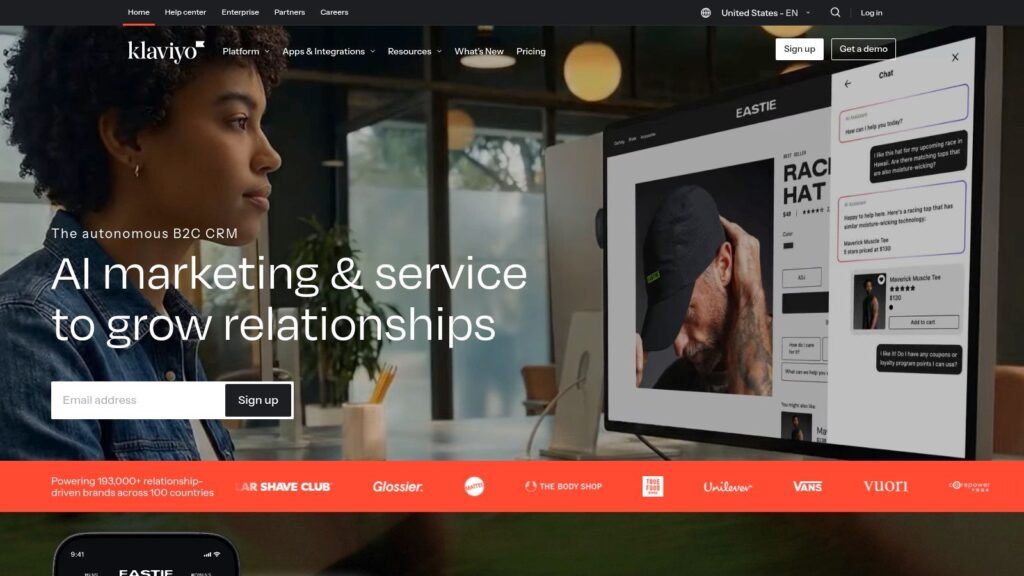
Klaviyo SMS fits a specific buyer. Brands that already run serious email programs in Klaviyo usually get more value from keeping SMS in the same system than from chasing a cheaper standalone tool.
The advantage is operational, not just technical. Segments, flows, consent data, campaign calendars, and revenue reporting all stay in one place. For an ecommerce team managing launches, replenishment reminders, and post-purchase sequences, that cuts coordination time and reduces handoff errors between channels.
Klaviyo also makes more sense as part of an ecommerce decision framework than as a general blast texting pick. If the job is broad SMB messaging or low-commitment pay-as-you-go sending, other tools in this guide are easier to justify. If the job is lifecycle marketing tied to customer behavior, Klaviyo is a stronger fit.
A practical example: send the promo by email first, then text only the segment that did not open or click. Or trigger SMS from the same browse and purchase events already feeding your email automations. That kind of orchestration is where Klaviyo earns its cost.
Pros:
- Shared customer data across channels: Email and SMS campaigns use the same profiles, segments, and event history
- Strong automation for ecommerce: Useful for flows tied to browsing, checkout, purchase, and retention activity
- Better channel coordination: Easier to control timing, suppression rules, and overlap between email and SMS
Cons:
- SMS costs can be harder to predict: Usage, message type, and destination all affect the bill
- Not the best fit for SMS-first teams: If texting is your main channel, a dedicated SMS platform may offer better economics or channel-specific tooling
- Less compelling outside ecommerce: Local service businesses and simple alert-based use cases may not need Klaviyo’s wider stack
Measurement matters here. If email, paid social, and SMS all touch the same order, platform reporting alone will not always tell you what drove the sale. Good marketing attribution software helps separate assist revenue from true incremental impact.
Website: Klaviyo
Top 10 Blast Texting Services Comparison
| Product | Core features ✨ | UX & Quality ★ | Value & Pricing 💰 | Target audience 👥 | Standout / USP 🏆 |
|---|---|---|---|---|---|
| 🏆 Clepher | Omnichannel AI Agents, drag‑drop Flow builder, capture widgets, unlimited broadcasts/accounts, A/B testing | ★★★★★, intuitive no‑code UI, fast setup, analytics & live chat | 💰 Custom pricing (request); ROI focused on conversions | 👥 DTC/e‑commerce, agencies, coaches, SaaS, SMBs, solopreneurs | ✨ AI‑centric automation + unlimited broadcasts & deep integrations (50+ native, 5k+ via Zapier) |
| SimpleTexting | Mass SMS/MMS, keywords, pop‑ups, segments, autoresponders | ★★★★, clear UI, good deliverability | 💰 Credit model with rollover; MMS costs extra | 👥 SMBs, agencies, local businesses | ✨ 10DLC guidance & flexible number types (local/toll‑free/short code) |
| EZ Texting | Mass & two‑way SMS/MMS, opt‑in tools, team inbox, integrations | ★★★★, compliance‑focused, free inbound SMS | 💰 Credit‑based with 30‑day rollover; pricing ranges listed | 👥 SMBs, nonprofits, US/Canada teams | ✨ Built‑in A2P/10DLC registration & compliance tooling |
| SlickText | Campaigns, MMS, workflows, keywords, unlimited contacts, short‑code | ★★★★, transparent plans, hands‑on onboarding | 💰 Predictable monthly tiers; carrier fees may apply | 👥 Brands wanting clear tiers, agencies, growing teams | ✨ Granular public plans + dedicated CSM at higher tiers |
| TextMagic | Pay‑as‑you‑go SMS/MMS, email‑to‑SMS, numbers, CPaaS routing option | ★★★, utility UI, fast to test | 💰 Per‑message pricing; BYO CPaaS lowers cost | 👥 Dev teams, startups, cost‑sensitive senders | ✨ BYO CPaaS (Twilio/Vonage/etc.) for cost control |
| Textedly | Bulk texting, two‑way chat, Text‑to‑Pay, review prompts | ★★★, easy adoption, occasional throughput/support variability | 💰 Wide plan ladder + add‑ons (keywords, message blocks) | 👥 SMBs, franchises, local businesses | ✨ Text‑to‑Pay & Google review integrations |
| MessageMedia (Sinch) | Bulk SMS/MMS, RCS support, templates, toll‑free/10DLC enablement, APIs | ★★★★, enterprise reliability with SMB tooling | 💰 Quote‑based enterprise pricing | 👥 SMBs to mid‑market, teams needing RCS/omnichannel | ✨ RCS & omnichannel expansion backed by Sinch reliability |
| Attentive | High‑throughput SMS/MMS, advanced flows, capture tools, AI audience features | ★★★★★, white‑glove support, strong deliverability | 💰 Custom pricing & minimums; premium service | 👥 Enterprise & large DTC retailers | ✨ Best‑in‑class capture, testing and deliverability ops |
| Postscript | Shopify‑native SMS, automations (cart recovery, winback), pop‑ups | ★★★★★ for Shopify merchants, tight ecommerce UX | 💰 Usage‑based billing + pass‑through carrier fees, clear per‑message costs | 👥 Shopify DTC merchants | ✨ Deep Shopify integration & ecommerce automations |
| Klaviyo SMS | SMS/MMS + unified email flows, segmentation, analytics, AI assistants | ★★★★, unified reporting and segmentation | 💰 Credit model; can be costly at scale | 👥 Brands already on Klaviyo, ecommerce teams | ✨ Single customer view with integrated email+SMS orchestration |
Making Your Final Decision
The best blast texting services don’t win on feature count. They win on fit.
That’s the main takeaway after comparing these tools in real buying scenarios. Most businesses don’t fail with SMS because the channel is weak. They fail because they buy the wrong type of platform for the job. A local service business buys an enterprise ecommerce tool. A fast-growing DTC brand chooses a basic bulk sender and outgrows it in months. An agency picks software that sends well but can’t manage replies, routing, or multiple client accounts without friction.
Start with your primary use case.
If you run Shopify and want SMS tied closely to revenue workflows, Postscript and Attentive are the strongest starting points. Postscript is especially compelling when you want deep Shopify alignment and practical merchant workflows. Attentive makes more sense when your brand is larger, your list-growth engine is aggressive, and you need more support and operational maturity.
If you’re an SMB and want something your team can learn fast, SimpleTexting and SlickText are easier bets. They remove a lot of friction from setup, budgeting, and day-to-day use. For many local businesses, that simplicity matters more than having the deepest automation stack.
If you want cost control and hate paying for idle software, TextMagic is worth a serious look. Usage-based billing isn’t always the cheapest at scale, but it can be the smartest model for irregular sending patterns.
If you’re already invested in Klaviyo, staying inside that ecosystem is often the right call. You’ll trade some pricing simplicity for operational efficiency, stronger segmentation, and cleaner orchestration across email and SMS.
Then there’s the bigger strategic question. Do you need a blast texting tool, or do you need a broader messaging system?
That’s where Clepher stands apart. A lot of businesses now generate conversations on Instagram, Messenger, WhatsApp, and web chat long before a customer ever gives up a phone number. If your growth motion depends on turning those conversations into leads, sales, and support outcomes, a multi-channel automation platform can be more valuable than a standalone SMS tool.
That doesn’t mean SMS becomes less important. It means SMS becomes one part of a more connected customer journey.
This is also where operational trade-offs matter. Multi-channel messaging creates real complexity around consent, audit trails, handoffs, and platform rules. Most traditional SMS roundups barely touch that problem. But for agencies, DTC brands, and scaling operators, it’s one of the most important issues in the category. The same goes for reply management. Sending high-volume campaigns is easy compared with handling the mix of unsubscribes, support issues, and high-intent purchase questions that come back in response.
My advice is simple. Buy for the workflow after the send, not just the send itself.
Choose the platform that matches how your team works, how your customers reply, and where your business is headed over the next few years. If you do that, your contact list stops being a static asset and starts becoming a real growth channel.
Frequently Asked Questions about Blast Texting Services
Conclusion
Choosing the right blast texting services can transform how you reach customers, increase engagement, and drive conversions. By combining mass text messaging with targeted SMS marketing, automated workflows, and two-way texting for real-time responses, businesses can run more effective text message campaigns while maintaining compliance and high delivery rates. Evaluate providers for scalability, reporting, segmentation, and integration with your existing CRM to maximize open rates and ROI. When implemented thoughtfully, bulk SMS and blast texting services become a reliable channel for timely promotions, appointment reminders, and customer support that complements your broader marketing strategy.
If you want more than basic SMS blasts, Clepher is worth a close look. It gives you a no-code way to automate conversations across your website, Messenger, Instagram DMs, and WhatsApp, then connect those flows to SMS and the rest of your stack. For brands that want to capture leads, qualify intent, recover lost sales, and centralize messaging in one place, it’s a practical step beyond traditional blast texting services.

Related Posts
Customer Journey Automation: The Practical Guide
October 10, 2026Lead Qualification Marketing: A Practical 2026 Guide
October 9, 2026Customer Experience Optimization Playbook
October 8, 2026
Founder Clepher