
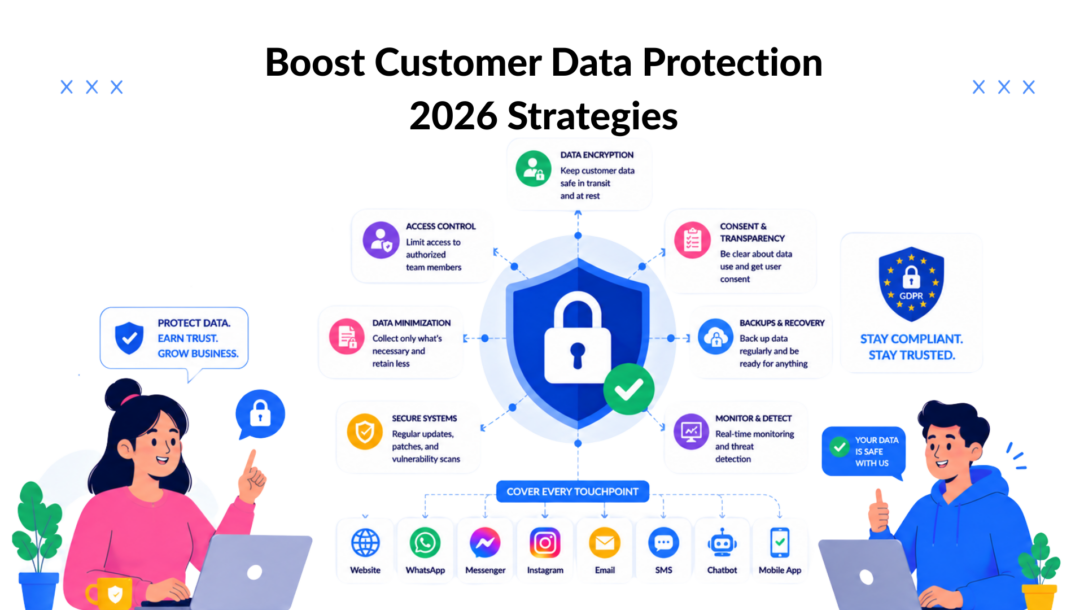
Global customer data protection is no longer a niche compliance issue. By 2026, compliance with data privacy regulations will be essential for all businesses. 179 of 240 jurisdictions had data protection frameworks in place, covering about 80% of the world’s population and turning privacy into a baseline business requirement, not an optional extra. In Europe, coverage reached 98% of jurisdictions and 99% of the population, and GDPR fines had already pushed cumulative enforcement above €4 billion by 2025, which is a strong signal that regulators are serious and customers should expect the same seriousness from businesses that handle their data.
For marketing teams, that changes the job. Customer data protection is now part legal discipline, part trust strategy, and part product design, especially when leads, subscribers, and support conversations move through chatbots, messaging apps, CRM workflows, and ad platforms. If a prospect feels safe giving you their details, they’re more likely to keep engaging, opt in, and buy again. If they feel exposed, the relationship weakens fast.
Why Customer Data Protection Is Non-Negotiable
The cost of getting this wrong is steep. IBM-based reporting puts the average global cost of a data breach at $4.44 million in 2025, while the average U.S. breach cost reached a record $10.22 million, up 9%. Those figures are big enough to reshape budgets, but the bigger point is simpler: a breach drains time, interrupts campaigns, creates legal exposure, and forces teams to rebuild confidence with customers who expected better.
Customer data protection means safeguarding personal information from unauthorized access, use, or disclosure. That includes obvious risks like stolen credentials, but it also includes quieter problems, like overshared permissions, forgotten exports, and retention rules no one enforces.
Trust is the real commercial asset
Marketing teams often treat privacy language as a legal footer. That’s a mistake. In conversational marketing, the customer is choosing a two-way relationship, and that choice only works when the business proves it can handle personal data responsibly.
Practical rule: If a customer wouldn’t be comfortable seeing a specific field, message, or transfer explained publicly, it probably shouldn’t be collected by default.
A chatbot is especially sensitive because it feels personal. People will share sensitive data such as names, emails, order issues, preferences, and sometimes highly specific concerns because the exchange feels direct. If that data is handled sloppily, the brand doesn’t just lose compliance credibility; it loses the human trust that chat-based marketing depends on.
Good protection also improves internal discipline. Teams that take privacy seriously tend to ask better questions before launching a flow, connecting a tool, or building a segment. That usually leads to cleaner data, more accurate targeting, and fewer awkward cleanup projects later.
Understanding Your Core Legal Obligations
Customer data protection is no longer a local issue. It is a baseline requirement for businesses that collect names, emails, orders, preferences, or chat transcripts from people in different regions. That matters because a simple chatbot flow can pull in personal data from visitors, subscribers, and buyers who fall under different rules without the team noticing until a request or complaint arrives.
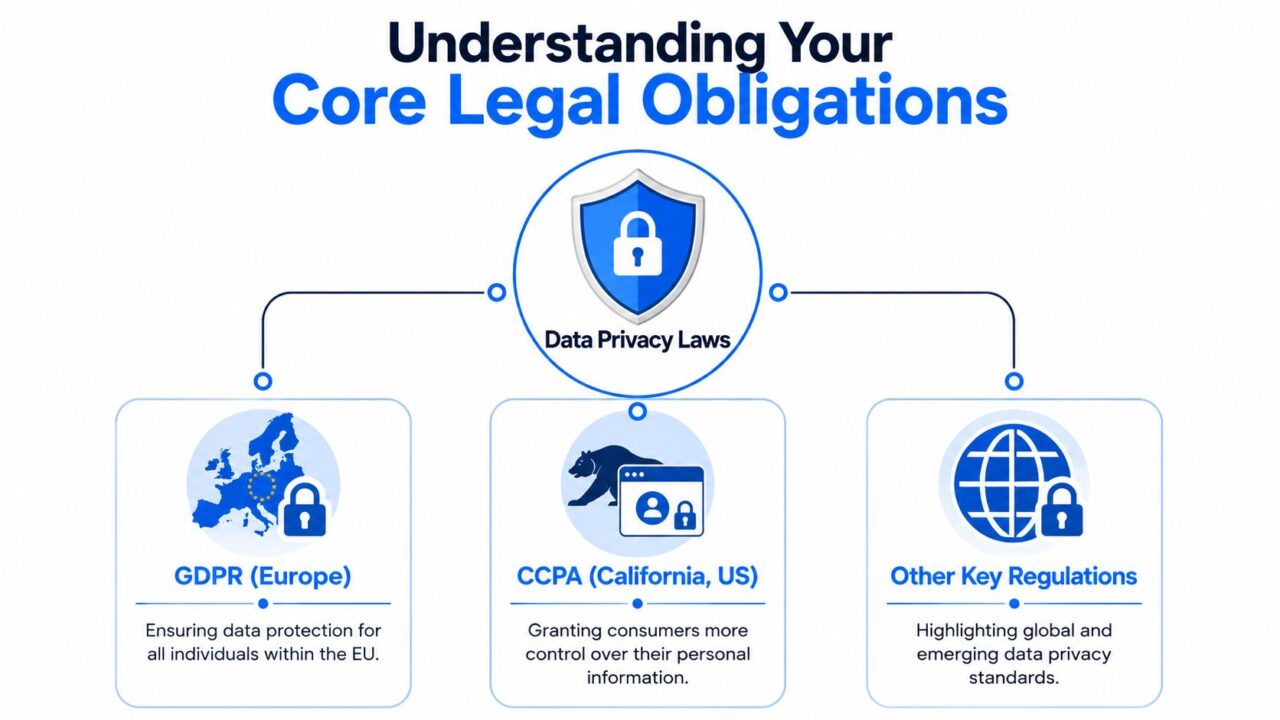
Customer Data Protection Privacy Laws
What marketers actually need to know
You do not need to become a privacy lawyer, but understanding privacy policies is beneficial. You do need to understand three practical ideas that shape how chatbot-driven marketing should be set up.
First, collect only what you need. Australian Cyber Security Centre guidance says businesses should keep a register of the types of customer personal data they hold and where it is located, collect only the data they need, and define how long it will be stored before deletion. Australian Cyber Security Centre guidance That turns privacy into an operating rule, not a slogan. A lead form that asks for email, name, and campaign source may be enough. Asking for date of birth or home address without a clear purpose creates extra exposure and more cleanup work later.
Second, respect individual rights. California law gives residents the right to see what personal information a business collected, delete it, stop the sale or sharing of it, correct inaccuracies, and limit the use and disclosure of sensitive personal information. California Attorney General CCPA guidance In practice, those requests cannot live in a policy page alone. They need working processes, such as a self-service privacy center, deletion queues, and suppression logic that reaches the right systems and vendors. For teams using chatbots, that also means knowing where conversation data is stored and how a request is carried through Clepher-style workflows, CRM records, and email platforms. Clepher chatbot best practices
Third, treat permission as an operational control. The strongest marketing teams use consent language that is clear enough for a customer to understand without legal translation. If a chatbot captures opt-ins, the flow should state what the person is signing up for, what messages they will receive, and how they can change their mind.
Businesses that can explain their data practices in plain language usually have fewer disputes and cleaner handoffs between marketing, support, and operations.
The practical test is simple. Every form, bot flow, and broadcast list should answer three questions: what data is collected, why it is needed, and how the customer can control it.
Key Technical and Organizational Measures
Current guidance converges on TLS 1.3 or higher for transport security and AES-256 for stored data, with encryption keys kept separately from encrypted data and rotated regularly. That combination matters because it protects both the message in motion and the archive at rest, enhancing overall cybersecurity. If a customer submits information through a chatbot, encrypted transport keeps the exchange unreadable in transit. If someone reaches stored records later, separate keys make the data much harder to use.
Build controls people can actually follow
Technical protections work best when they’re paired with simple operating rules.
Role-based access control, or RBAC, is vital for protecting customer data by limiting access to sensitive information. keeps users on a need-to-know basis. A marketing intern should not have the same visibility into subscriber data as a system admin, and a contractor shouldn’t inherit broad access just because they helped with a campaign. Independent guidance recommends pairing RBAC with multi-factor authentication and regular access reviews, so stolen credentials alone aren’t enough for unauthorized access and old permissions don’t linger. CDP customer data security best practices are essential for protecting sensitive data from breaches.
A secure setup also needs a clear retention policy. If your team doesn’t know how long customer data should stay in the system, it tends to stay forever. That creates clutter, increases exposure, and makes deletion requests harder to honor.
- Map permissions tightly: Give each role only the access it needs to perform a specific job to protect customer information effectively.
- Use MFA everywhere you can: Passwords alone are too fragile for systems that hold customer data.
- Review access routinely: Remove dormant accounts, former contractors, and excessive admin rights.
- Define retention by data type: Keep each category only as long as the business purpose requires.
- Document deletion paths: Make sure removal happens in the primary system and wherever the data was copied.
For teams using permission-based workflows, a central control layer like permission management is useful as a concept even outside any one platform, because it forces the right question, who should be able to see, edit, export, or broadcast customer records.
A lot of businesses focus on encryption and ignore governance. That’s backwards. If access rules are weak and retention is undefined, encryption just protects bad habits more slowly.
Navigating Chatbot-Specific Data Risks
The main risk is often not a single database but a network of tools and processors. The central question is how to keep customer data protected when it’s captured in a website chatbot, routed to Messenger or WhatsApp, segmented for marketing, and synced to other systems without creating hidden compliance gaps.
Customer Data Protection Chatbot Marketing
The data lifecycle is where the risk lives
Consent capture is the first pressure point. A visitor who clicks a website widget or a “Get Started” button in Messenger should know exactly what they’re agreeing to, especially if the conversation will lead to broadcasts or segmentation later. If consent is vague at the start, everything downstream becomes harder to justify.
Storage is the second pressure point. Custom fields can be useful, but they also tempt teams to collect too much. A chatbot can learn an order number, a preference, or a support category without needing to ask for unrelated details. The less you store, the less you have to protect, delete, and explain.
Broadcasts and segments create another layer of risk. Just because someone spoke to a bot doesn’t automatically mean they want promotional messages. Permission should match the message type, the channel, and the expectation set in the flow. That’s where built-in GDPR tooling and clear audience rules matter most.
After that comes the integration layer. CRMs, email platforms, spreadsheets, and automation tools can all copy data into places the marketing team forgets about. The practical danger isn’t only collection, it’s uncontrolled replication.
If a record exists in five tools, deletion has to be coordinated in five tools.
The safest operating habit is to trace each field from capture to storage to broadcast to cleanup. If any step can’t be explained clearly, the flow needs tightening to ensure compliance with data protection regulations.
A useful reference point for chat-heavy teams is chatbot best practices, because good bot design and good privacy design usually overlap. Clear prompts, minimal fields, and explicit handoffs reduce both user friction and compliance risk.
What to tighten before you scale
Start by checking what the bot collects by default. Then review where that data goes, who can see it, and whether the customer would reasonably expect that path. If a workflow includes a CRM, email tool, or third-party automation, write down the exact purpose for each transfer.
The goal isn’t to make conversational marketing harder. It’s to make it transparent enough that you can scale it without silent privacy debt.
Your Customer Data Protection Checklist
A customer data protection checklist works best when it reflects the way your team collects, stores, and shares information. Start with a register of the customer personal data you hold and where it sits, collect only what you need for a clear business purpose, and define how long each record stays before deletion. That is the difference between privacy as a policy and privacy as an operating habit.
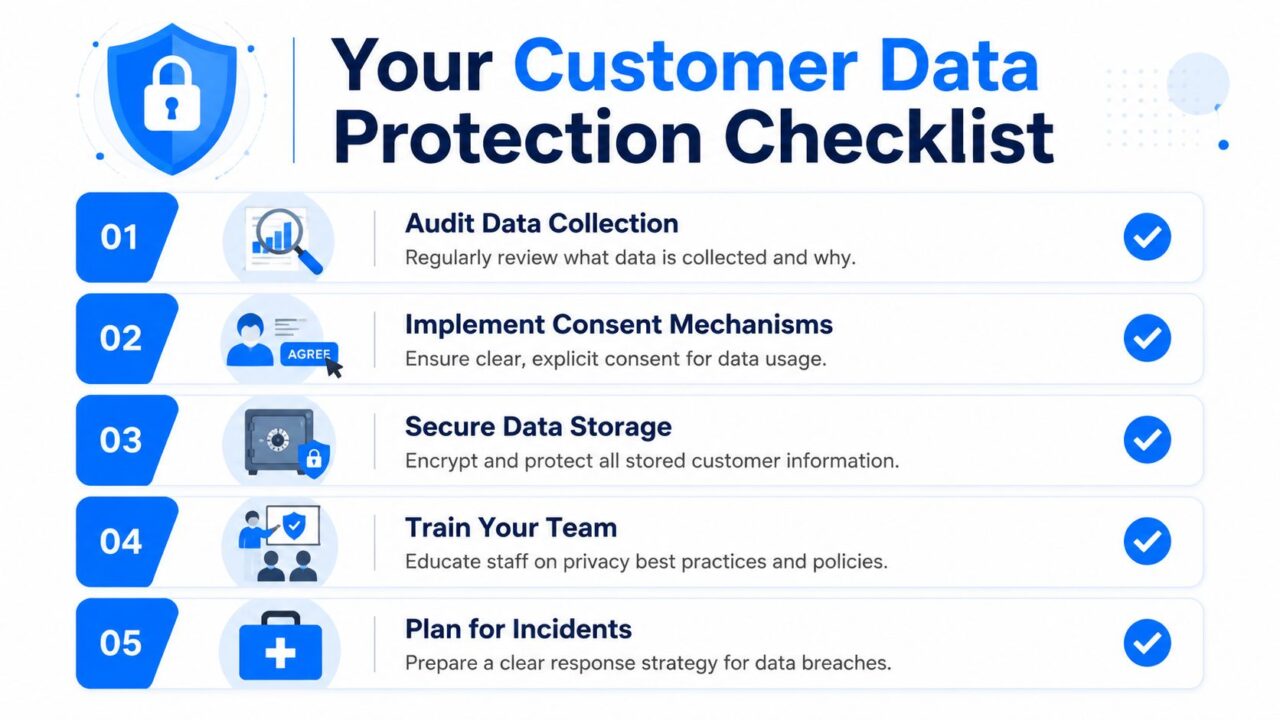
Customer Data Protection Checklist Infographic
Use this as an operational audit
Audit Data Collection. List every form, chatbot flow, broadcast list, and integration that touches customer data. If a field does not support a clear business purpose, remove it. For teams that rely on connected systems, customer data integration guidance for protecting customer data helps identify where records are copied, transformed, and passed along.
Implement Consent Mechanisms to ensure compliance with data privacy regulations. Make consent visible and specific in chatbot prompts, landing pages, and message opt-ins. Customers should understand what they are agreeing to before the first message is sent. In chatbot-led campaigns, vague consent language creates risk because the collection moment and the use case are easy to confuse.
Secure Data Storage is crucial for protecting sensitive data from unauthorized access. Encrypt stored records, separate key material, and limit who can export or edit sensitive fields. Storage controls only matter if access stays restricted in practice, especially when marketing tools, CRM records, and automation platforms all pull from the same pool.
Train Your Team. Marketing, support, and operations need the same privacy baseline. A written policy does little if one team member exports data to the wrong place or pastes customer details into an unmanaged tool. Clepher-style conversational workflows make this especially important because chat transcripts can move quickly from lead capture to follow-up.
Plan for Incidents. Decide who contains the issue, who assesses it, who notifies, and who reviews the cause. That preparation lowers confusion when something goes wrong and helps the team respond without guesswork, ensuring data privacy is maintained.
A practical way to pressure-test this list is to follow one customer record from first click to final deletion. If any stage is unclear, that is where the gap is.
For teams building connected marketing stacks, insights for enterprise data initiatives should focus on protecting customer data and ensuring data privacy. can help frame the broader architecture question, especially when customer data moves across multiple systems and owners.
The point is discipline in adhering to data protection regulations, not perfection. A business that can show a clean map of its data, a defensible consent trail, and a workable deletion process is already ahead of many competitors.
Creating a Simple Incident Response Plan
A breach response plan works best when it’s short enough to use under pressure. You don’t need a giant manual; you need a sequence your team can follow without guessing.
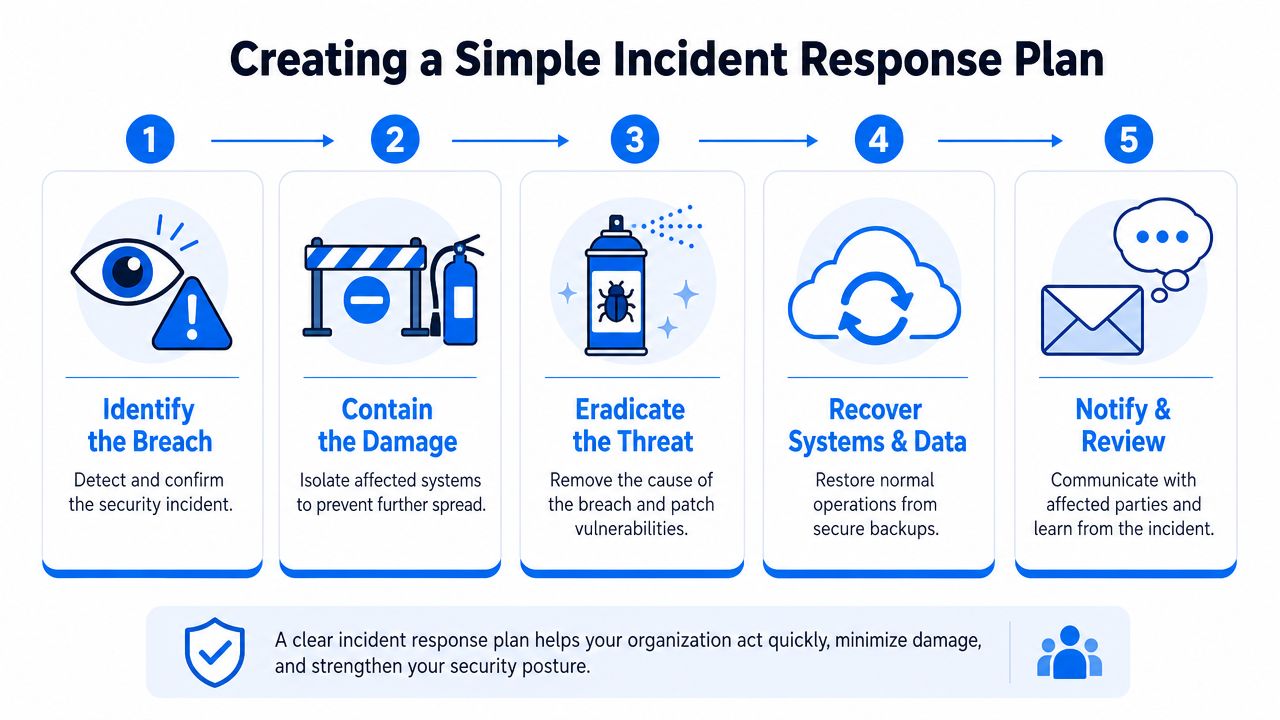
Customer Data Protection Incident Response
Keep the response sequence simple
- Identify the breach. Confirm what happened and which system, account, or flow is involved.
- Contain the damage. Cut off access, pause affected automations, and stop the spread.
- Eradicate the threat. Remove the cause, close the weakness, and patch the gap.
- Recover systems and data. Restore normal operations from secure backups and verified settings.
- Notify and review. Tell the relevant parties when required, then document what changed.
That structure matters because panic creates mistakes. Teams that already know who shuts down a compromised integration, who checks the records, and who communicates with customers usually move faster and with less confusion.
A response plan should also distinguish between a real incident and a false alarm. If a support agent loses a laptop, that isn’t the same as a confirmed exposure of customer information, but both deserve a documented review under data protection regulations.
Calm handling builds more trust than improvised reassurance.
You don’t need elaborate language in the plan. You need names, responsibilities, and a clear path for escalation. Store that plan somewhere the right people can reach quickly, and rehearse it often enough that it doesn’t depend on memory.
Turn Data Protection into a Competitive Advantage
Strong customer data protection is not a brake on growth. It’s a sign that the business understands how trust is earned, maintained, and lost. The teams that do this well collect less, explain more, and govern their tools more carefully, which usually means cleaner operations and fewer surprises later.
That mindset becomes even more valuable as systems get more connected. If you want a broader view of how data architecture supports governance, the customer data integration resource is a useful companion to the practical controls discussed here. It helps connect the privacy conversation to the reality of syncing records across marketing, support, and sales tools.
The advantage is reputational. Customers are more willing to engage when they can tell a brand respects their time, their preferences, and their personal information. Teams that prove that through consistent practice, not just policy language, create a stronger foundation for long-term growth.
A mature privacy posture also makes collaboration easier. Legal, marketing, and operations spend less time untangling avoidable issues and more time improving the customer journey. That’s where customer data protection stops being defensive and starts becoming strategic.
If you want a useful next step, review your chatbot flows, consent wording, retention rules, and vendor list this week, then close the biggest gap first. For teams that need a practical way to build safer conversational marketing systems, Clepher is a strong place to start.
Related Posts
10 Broadcast Automation Software Platforms Compared
October 11, 2026Customer Journey Automation: The Practical Guide
October 10, 2026Lead Qualification Marketing: A Practical 2026 Guide
October 9, 2026
Founder Clepher