
What does your business do when a visitor enters an email in a website widget, asks a chatbot for product advice, clicks a WhatsApp broadcast, or gets added to an AI-generated audience? Publishing a privacy policy doesn’t answer that question. A defensible GDPR compliance checklist connects each action to a purpose, lawful basis, consent record, access rule, retention period, vendor, and owner.
That matters for e-commerce brands, agencies, SaaS companies, coaches, and local businesses using website widgets, Messenger, WhatsApp, Instagram Direct Message, broadcasts, analytics, and AI-powered segmentation. Personal data can move from a chat flow into a CRM, then to an email platform, analytics tool, advertising audience, and support inbox. If nobody can explain that journey, the policy may describe an ideal process rather than the one your team runs.
Enforcement shows why operational detail matters in the context of data processing activities. The DLA Piper GDPR fines and data breach survey reported cumulative fines of about EUR 7.1 billion across surveyed jurisdictions by 10 January 2026. The CMS Enforcement Tracker recorded 3,215 cases and about EUR 6.31 billion in fines as of 5 September 2026. The exact exposure depends on your processing activities and jurisdiction, so legal or privacy counsel may need to review your setup.
The 10 steps below turn requirements into practical workflows. You’ll find examples, records to retain, configuration checks, and recurring ownership tasks for consent, chatbot data, rights requests, cookies, AI profiling, vendors, transfers, breaches, and staff training.
1. Implement Explicit Consent Mechanisms Before Collecting Data
Consent needs to happen before a marketing chatbot captures an email address, phone number, browsing behavior, or purchase history for the stated purpose. A visitor should actively agree through a clear, specific choice. Pre-checked boxes, silence, or a vague statement such as “to improve your experience” won’t create a reliable consent record.
A Clepher flow for an online retailer might display: “I agree to receive product updates and personalized offers via WhatsApp and email.” The user then selects an affirmative option before the bot writes contact details to the audience. A marketing agency should separate Messenger promotions from SMS messaging, while a SaaS company can distinguish required support processing from optional marketing communications.
Design consent around the channel and purpose
Don’t bundle every purpose into one button. If a person requests customer support, that doesn’t automatically mean they want promotional broadcasts. Use separate fields or tags for each permission, and make withdrawal as easy as acceptance.
Clepher’s conditions can show different consent language based on the traffic source or user journey. A campaign arriving from Instagram might request Instagram messaging permission, while a product quiz might request email updates. Keep the wording short, explain the channel, identify the content, and link to the relevant privacy notice.
Your consent record should capture:
- The exact wording: Store the version of the consent notice shown to the user.
- The purpose and channel: Record whether the permission covers email, SMS, Messenger, WhatsApp, or another use.
- The event details: Keep the timestamp, source, flow, and resulting tag or audience status.
- The withdrawal path: Give users a visible route to stop a channel without forcing them to contact support.
Test the flow with EU users before launch. Then inspect the analytics or consent system to confirm that an affirmative action creates a record, refusal prevents the marketing action, and withdrawal removes the relevant audience permission.
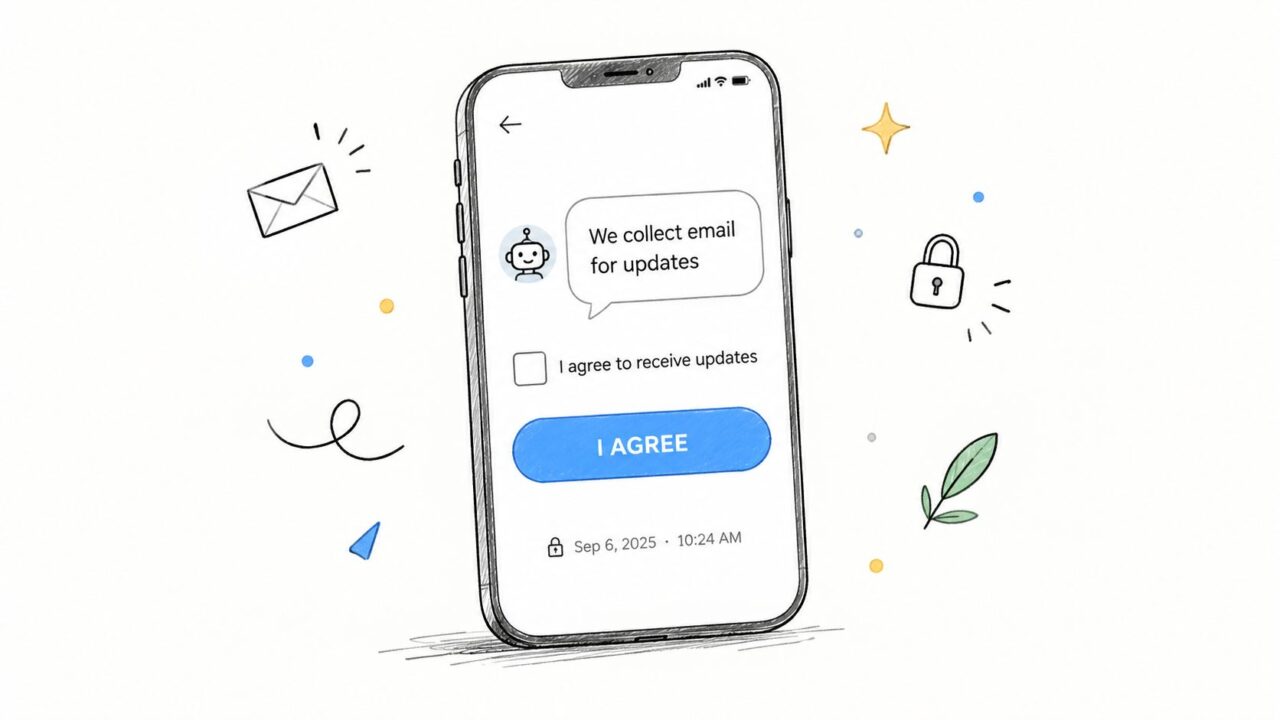
GDPR Compliance Checklist Consent UI
2. Create and Maintain a Data Processing Agreement
Map the role of every provider in each workflow before signing or filing a Data Processing Agreement to ensure compliance with data transfer regulations. A business using Clepher, an email provider, analytics platform, CRM, payment service, or automation connector should identify which party acts as controller and which acts as processor. The DPA should record the processor’s instructions, security responsibilities, sub-processors, assistance with rights requests, breach handling, and deletion or return of data.
File the DPA with your vendor inventory, not in an unsearchable onboarding inbox. For a DTC brand, connect the agreement to the systems handling chatbot conversations, contact records, tags, and campaign audiences. An agency should document each client relationship separately, since clients may set different purposes, access rules, and retention periods.
Turn vendor paperwork into operational evidence
Use Clepher’s GDPR commitment and DPA guidance as a starting point, then compare it with your live configuration. A coach selling online courses should check that the documented data categories include student contact details and support conversations. Payment information may go directly to a separate payment processor, so one DPA will not describe the entire transaction path in terms of data processing activities.
Build a service map for every provider that receives personal data. Include analytics, email, SMS, customer support, storage, advertising, and connectors such as Zapier, Make, n8n, or Pabbly. The chatbot platform’s agreement does not cover an unrelated vendor that receives the same contact record through an automation.
Keep an evidence folder with:
- The executed DPA: Store the signed copy and its effective date.
- Sub-processor records: List each provider with access to personal data and its role.
- Data-flow notes: Record what enters the platform, where it moves, and when deletion should occur.
- Review history: Log contract changes, vendor checks, and decisions to approve, limit, or replace a service.
Check current contract terms, transfer safeguards, and technical settings for data privacy before changing your privacy notice. A region-specific storage statement needs support from both vendor documentation and your configuration. Document any mismatch, assign an owner, and record the resolution rather than assuming the DPA reflects how your chatbot and marketing workflows operate.
3. Build Privacy by Design Into Your Chatbot Workflows
A chatbot should earn each piece of personal data it requests. A visitor seeking a basic answer usually does not need to provide an email, phone number, location, purchase history, preferences, and company profile at the same time. Collect information progressively, so every new field has a clear purpose and the user understands its value.
For example, an e-commerce bot can request an email to deliver a product guide, then ask for a phone number only after the visitor selects WhatsApp updates. A SaaS onboarding flow can start with company name and industry, then request feature preferences after the user completes an initial task. An agency campaign can capture name and email first, adding location only when the offer requires it.
Start with the workflow, not the database. Map each screen, branch, integration, and handoff. For every custom field, document its purpose, lawful basis, who can view it, how long it remains available, and what action removes it. A field nobody can justify should be removed or delayed.
Configure defaults that limit exposure:
- Collect progressively: Request a phone number when the user selects a phone channel, not merely because the platform offers the field.
- Restrict visibility: Give support, sales, and agency users access only to the information their tasks require.
- Avoid sensitive prompts: Do not invite health, financial, or other sensitive details in a general marketing bot. Route such requests to an approved process when needed.
- Set retention triggers: If a number supports only a time-limited campaign, configure deletion or a review event instead of retaining it without an end date.
A useful test is simple: would a first-time visitor understand why each question appears before receiving value? If the answer is no, change the sequence, remove the field, or explain the purpose at the point of collection.
Run the chatbot as both a new visitor and a returning contact. Verify that old tags, hidden fields, imported attributes, audience syncs, and automation branches do not expose information unexpectedly. Record the test results and assign an owner for corrections. Privacy by design becomes operational through configured fields, permissions, defaults, audience controls, and deletion rules checked before launch and after workflow changes.
4. Document Your Legal Basis for Data Processing
A chatbot, email sequence, or audience sync should never enter production without a recorded legal basis. Marketing opt-ins commonly rely on consent, order fulfillment may depend on contract, invoice records can involve a legal obligation, and fraud prevention may involve legitimate interests. Choose the basis from the purpose and context, not convenience.
Build a processing register around workflows rather than database fields. One email address may support product updates, abandoned-cart recovery, and payment processing, with a different basis for each activity. An e-commerce brand could record product updates as consent, abandoned-cart recovery as a carefully assessed legitimate-interest activity, and payment processing as contractual necessity. Ask qualified privacy or legal professionals to review uncertain cases.
Make each decision auditable
For every workflow, record:
- Purpose: State whether the activity supports customer service, order fulfillment, marketing, fraud prevention, or personalization.
- Data involved: List contact details, chat content, purchase information, behavioral events, and inferred segments.
- Legal basis: Identify the basis selected for that specific activity.
- Reasoning: Explain why the processing serves the purpose and fits the person’s reasonable expectations.
- Review triggers: Note changes that require reassessment, such as a new channel, audience, AI feature, or vendor.
A legitimate-interest decision needs more than a label. Document the business interest, why the processing is necessary, and how the team addresses its impact on individuals. A lead magnet signup, course enrollment, support follow-up, and upsell campaign may share one Clepher account while requiring separate decisions and audience controls.
Link the recorded basis to the consent record, campaign configuration, or workflow ticket that supports it. The privacy explanation should reflect the decision: “We email you because you opted in” is clearer than a general statement that the company processes personal data.
Review the register after a campaign, integration, audience rule, or AI feature changes. An annual review provides a scheduled check, but a material workflow change should trigger an earlier assessment. Record who approved the decision, what evidence they reviewed, and when the next review is due.
5. Establish a Data Subject Rights Process for Access, Deletion, and Portability Requests
A rights request may arrive through support email, a chatbot, social messaging, or a marketer’s direct message. Route every channel into one case process. The team must identify the requester, find relevant records, apply the requested action, check connected systems, and retain an internal record of the outcome. The ICO guidance on handling requests for personal data can help shape the procedure.
Access, correction, deletion, restriction, objection, and portability should each have an owner, verification step, response method, and evidence trail. Treat them as defined operational workflows, not unusual customer-service exceptions.
Make one request path work across every system
A DTC customer asking for all information held about them may require searches across the Clepher contact record, chat history, tags, broadcast lists, CRM, email provider, analytics profile, and order systems. A deletion request needs the same coordination. Removing a chatbot contact while leaving a marketing audience or spreadsheet unchanged produces an incomplete response.
Create a ticket or case record that captures:
- Request date and channel: Record when and where the request arrived.
- Identity checks: Verify the requester before disclosing personal information.
- Systems searched: List Clepher, CRM, email, SMS, support, analytics, and other relevant repositories.
- Action and response: Record what was exported, corrected, restricted, or deleted, and when the person was informed.
Set internal targets inside the applicable legal timeframe. The plan specifies 30 days, so a team could acknowledge the request promptly and complete a straightforward export within a week. Do not promise deletion where a separate retention obligation applies. Send exceptions to privacy or legal counsel, and record the reason for the decision.
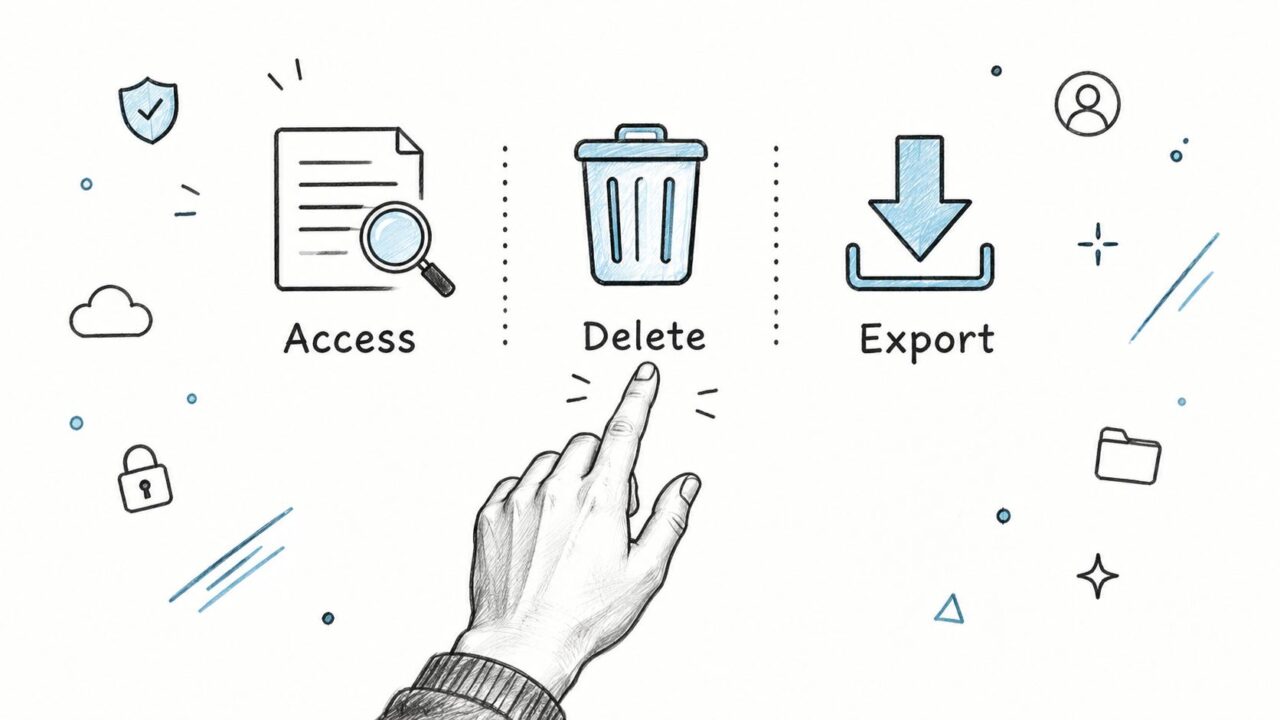
GDPR Compliance Checklist Data Management
Train customer-facing staff to recognize requests stated in ordinary language, including messages that never use legal terms.
6. Implement Cookie and Tracking Consent Management
Cookie compliance depends on what loads, not only on what the banner says. A chatbot may continue answering questions while analytics, personalization, pixels, and advertising tags remain blocked until the visitor makes an appropriate choice.
Map tracking by workflow before configuring the banner. A retailer might offer essential, analytics, and marketing categories, with marketing disabled until the visitor opts in. A SaaS company can keep its widget available while stopping behavioral events from reaching its analytics platform after an analytics refusal. An agency should review each client site separately, since one may use Meta Pixel and Google Analytics while another uses different tools.
Verify the implementation in a clean browser session
A consent management platform such as Cookiebot, OneTrust, or TrustArc can manage preferences and records in accordance with data processing activities. It does not replace configuration review. Identify every script, assign its purpose, pass the consent signal to Clepher and other tools, and document the expected behavior. Use the Clepher consent management guide as an implementation reference.
Test the site before releasing a campaign:
- Before choice: Confirm non-essential scripts do not load.
- After refusal: Confirm analytics and marketing events stay blocked.
- After acceptance: Confirm only the selected categories activate.
- After withdrawal: Confirm the preference updates and future tracking stops.
- In the records: Verify the decision, category, timestamp, and policy version are retained.
Check the same flow on mobile and desktop, after refreshing the page, and after returning to the site. Store screenshots, browser details, consent logs, and test results with the release record so a reviewer can reproduce the outcome.
Keep “accept all” visually equivalent to customization and refusal. Avoid dark patterns that make the privacy-protective choice difficult to find. When a tracking tool enters the marketing stack, update the cookie inventory, banner description, scripts, privacy notice, and test evidence together.
7. Conduct and Document Data Protection Impact Assessments
Could a chatbot, messaging workflow, or marketing model affect people in ways they would not reasonably expect? A Data Protection Impact Assessment, or DPIA, turns that question into a documented decision before processing begins. Record the data, purpose, users, systems, recipients, risks, safeguards, residual risk, and approval.
A DPIA deserves close review when a workflow introduces profiling, automated decisions, sensitive data, large-scale monitoring, or combined datasets. An online retailer using AI to predict churn should assess whether purchase history and behavioral signals create unfair or inaccurate segments. A SaaS company personalizing onboarding should document the model’s inputs, access to human help, and correction process for incorrect inferences. An agency running predictive targeting should test whether audience rules exclude or disadvantage groups without a valid business reason.
Treat AI features as a change in processing
Start the DPIA before deployment, not after a campaign has collected data. Use regulator guidance as a starting point, then adapt the assessment to the actual chatbot, messaging, or marketing workflow while ensuring compliance with the GDPR.
Document five operational questions:
- What enters the model: List chat messages, tags, purchase events, lead scores, and imported attributes.
- What the model produces: Record segments, recommendations, rankings, predicted churn, or automated responses.
- Who reviews outcomes: Assign responsibility for human review, escalation, correction, and appeal.
- What vendors do: Identify the AI provider, processor role, sub-processors, retention settings, and whether data is used for training.
- How risk is reduced: Apply data minimization, access restrictions, retention limits, accuracy checks, and clear user notices.
For each material change, record the decision and owner, and ensure compliance with the GDPR. Reopen the DPIA when the model, inputs, vendor, audience, or purpose changes, then test the updated workflow before release.
Article 22 automation and profiling require particular care. A general consent banner or privacy policy may not explain an AI feature that materially influences access, pricing, eligibility, or customer treatment. Document the legal assessment, available human intervention, user communications, and evidence that safeguards operate as configured. Keep Clepher’s technical and organizational safeguards aligned with the risks identified in the DPIA.
8. Create and Enforce a Data Breach Response Plan
Can your team act quickly after an exposed contact list, misdirected export, compromised account, or former employee’s active access is discovered? A breach plan should assign decisions before the incident and ensure compliance with the GDPR. The first actions are containment, evidence preservation, fact-finding, and escalation to the people responsible for legal and customer communications.
Under GDPR Article 33A data controller must notify the competent supervisory authority without undue delay and, where feasible, within the stipulated timeframe. 72 hours after becoming aware of a personal data breach. If notification is late, document the reason. The notice should describe the breach, approximate affected people and records, likely consequences, and measures taken or proposed.
Put the first hour on paper
Name a breach coordinator with authority to activate the plan. Include security, privacy, legal, customer support, communications, and the relevant vendor when their systems or data are involved. The ICO breach guidance also uses the deadline of “without undue delay, but not later than 72 hours after becoming aware of it.”
Use an incident record that captures:
- Detection: Who noticed the issue, when it happened, which system was involved, and what evidence is available.
- Containment: Credential resets, session revocation, disabled integrations, restricted access, and preserved logs.
- Assessment: Data categories, affected people, recipients, likely consequences, and whether notification is required.
- Notification: Regulator and customer messages covering known facts, consequences, contact details, and protective actions.
- Remediation: The failed control, vendor involvement, decisions made, corrective action, and test results must comply with the GDPR.
Apply the workflow to realistic cases. A Clepher account compromise may require credential resets, access-log review, audience inspection, and customer communication. A misdirected agency export may require recipient confirmation, a deletion request, client escalation, and a documented assessment. Run a tabletop exercise so staff practise these handoffs before an actual incident slows them down.
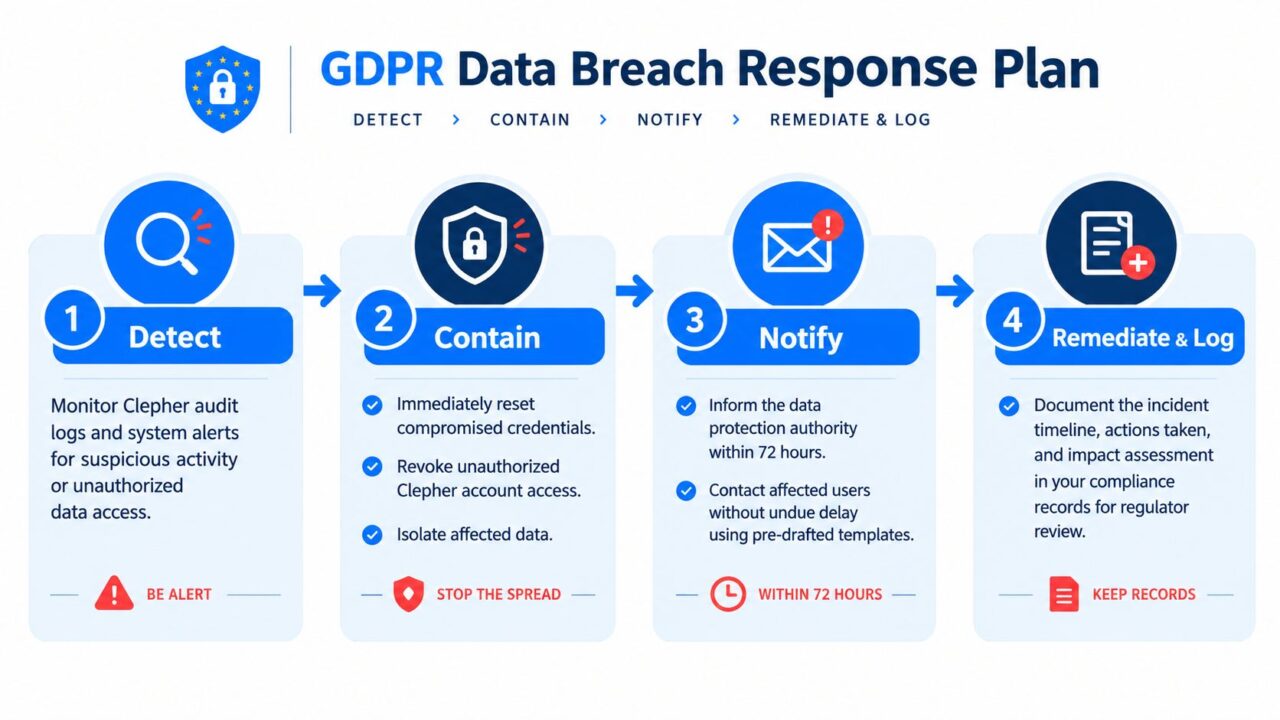
GDPR Compliance Checklist Breach Response
For wider operational controls, review this guide for IT asset managers.
9. Maintain an Updated Privacy Policy and International Transfer Controls
Can a customer understand your privacy policy while using a chatbot, signing up for SMS, or receiving marketing messages? Write the policy around those workflows. Identify the data collected, each purpose, retention criteria, recipients, available rights, and safeguards for international transfers. Place relevant notices beside forms, widgets, and subscription choices instead of relying only on a footer link to enhance data privacy awareness.
A retailer could document that its chatbot collects an email for product promotions, keeps it under a defined business rule, and processes deletion requests. A global SaaS company should also describe behavioral personalization, AI features, support conversations, and recipients when those activities apply.
Connect vendor records to transfer decisions
A DPA does not replace vendor oversight. Maintain a register showing every service that handles personal data, its role, access, sub-processors, location, transfer mechanism, and review owner. For US tools and other third-country services, request current details about Standard Contractual Clauses, transfer assessments, supplementary safeguards, and data residency. Verify the documentation rather than relying on marketing language.
Tool changes create operational gaps. An agency might connect a chatbot to a CRM, email platform, SMS service, analytics tool, advertising platform, and automation connector. Review the full chain whenever a tool is added, removed, or repurposed. Record which audience data moves between systems and who approved the change.
Use this checklist for the policy and supporting records:
- Data categories: Name, email, phone number, chat content, tags, purchase information, and behavioral events where applicable.
- Purposes and bases: Separate support, fulfillment, marketing, personalization, analytics, and fraud prevention.
- Retention: State the applicable criterion or period for each major category.
- Rights and contact route: Give usable instructions for access, correction, objection, deletion, and withdrawal.
- International safeguards: Identify the transfer mechanism and connect it to the relevant vendor documentation.
Review the policy after workflow, vendor, audience, or legal-basis changes. Keep prior versions and approval records so the wording can be matched to the consent screens and campaign configuration active at the time. The privacy terms resource for EU founders offers practical policy guidance, but legal counsel should validate the final wording for your business and jurisdictions.
10. Train Your Team and Maintain Compliance Records
Assign privacy responsibilities to the people who run each workflow. Marketing, sales, customer service, developers, contractors, and agency staff should know how to recognize a rights request, stop unauthorized messaging, report suspicious access, and escalate uncertain cases.
Training should match daily tasks. Marketers can practise separating Messenger permission from SMS permission. Support agents can route a request for “everything you have on me” instead of treating it as ordinary feedback. Developers can test access controls, audit logs, webhooks, and deletion behaviour. Managers should know when a new AI audience or vendor needs privacy review before launch.
Keep a substitute-ready evidence file. Store the current processing register, consent language and logs, privacy policy versions, DPAs, vendor reviews, DPIAs, incident records, access reviews, and training attendance. A mature audit pack can be granular. One independent GDPR audit resource describes 381 audit questions across 46 sections, covering governance, lawful processing, security, transfers, and rights handling. The sample GDPR audit pack shows how broad requirements can be organized into reviewable evidence.
Give every record a named owner:
- Compliance lead: Maintains the register, review schedule, and escalation path.
- Marketing owner: Approves consent language, audiences, broadcasts, and suppression rules.
- Technical owner: Checks access, integrations, logs, deletion, and security settings.
- Vendor owner: Tracks DPAs, sub-processors, transfers, and contract changes.
- People manager: Records onboarding and recurring privacy training.
Use Clepher’s permission management tools to support audience controls and permission handling, then link those settings to written procedures. Record who attended training and when. Require a privacy checkpoint before launching campaigns, integrations, AI features, or new data fields.
For HR administration, a SharePoint document centre for HR provides a useful model for organizing controlled records, version history, and ownership. Review the evidence file on a set schedule and after material workflow changes, so training records and operating controls remain aligned.
10-Point GDPR Compliance Comparison
| Item | Implementation complexity 🔄 | Resource requirements ⚡ | Expected outcomes ⭐📊 | Ideal use cases 💡 | Key advantages ⭐ |
|---|---|---|---|---|---|
| Implement Explicit Consent Mechanisms Before Collecting Data | Medium, UX + logging changes | Moderate, dev, legal, storage for audit logs | High, documented consent, reduced enforcement risk | Lead capture, marketing opt‑ins in EU flows | Defensible consent records; increased user trust |
| Create and Maintain a Data Processing Agreement (DPA) | Low–Medium, legal review & sign‑off | Low, legal time, vendor management effort | High, contractual clarity and legal protection | Any use of third‑party processors (e.g., Clepher) | Clarifies roles/responsibilities; audit evidence |
| Build Privacy‑by‑Design Into Your Chatbot Workflows | Medium–High, architecture & flow changes | Moderate, product/design/dev time | High, less data risk, better UX, lower storage costs | New chatbot designs; long‑term platform improvements | Data minimization; reduced GDPR exposure |
| Document Your Legal Basis for Data Processing | Medium, legal mapping and records | Low–Moderate, counsel + documentation effort | High, defensible lawful grounds for processing | Mixed processing (consent, contract, legitimate interest) | Clear legal rationale; supports regulator inquiries |
| Establish a Data Subject Rights Process (Access/Deletion/Portability) | Medium, workflows, verification, exports | Moderate–High, tooling, staff to fulfil requests | High, timely compliance with 30‑day deadlines | Businesses with many EU users or frequent requests | Meets legal deadlines; improves data quality/trust |
| Implement Cookie and Tracking Consent Management | Medium, CMP integration & gating | Moderate, CMP subscription + dev integration | High, avoids tracking fines; respects preferences | Sites with analytics, pixels, or advertising | Prevents unauthorized tracking; preserves user choice |
| Conduct and Document Data Protection Impact Assessments (DPIA) | High, thorough risk assessment required | High, legal + technical expertise, stakeholder time | High, identifies & mitigates high‑risk processing | Profiling, AI segmentation, large‑scale data combinations | Proactive risk mitigation; strong regulatory defense |
| Create and Enforce a Data Breach Response Plan | Medium, detection, playbooks, comms, and categories of personal data should be considered in the strategy. | Moderate, monitoring tools, legal/PR templates | High, faster containment and regulatory compliance | Any org handling personal data (especially high‑risk) | Enables 72‑hour notification; limits damage/fines |
| Maintain Updated Privacy Policy & International Transfer Compliance | Medium, drafting + transfer mechanisms | Moderate, legal counsel, SCCs/BCRs, technical safeguards | High, transparency and lawful cross‑border transfers | Companies operating across jurisdictions | Meets transparency rules; enables legal transfers |
| Train Your Team on GDPR Responsibilities & Maintain Records | Low–Medium, create and run training | Moderate, time, training materials, recordkeeping | High, fewer human errors; audit evidence of diligence | All teams handling customer data (marketing, support, dev) | Organizational accountability; demonstrable compliance records |
Make the Checklist a Living Control System
A GDPR compliance checklist works only when it changes team behavior. The checklist should tell a marketer whether a broadcast may run, a developer whether a tracker may fire, a support agent where to route a deletion request, and a manager who must approve a new AI segment. If it sits in a shared document without owners, evidence, or review dates, it becomes a reminder rather than a control system.
Start by assigning one accountable privacy owner, even if the business doesn’t require a formal Data Protection Officer. A DPO is mandatory in the situations described by GDPR Article 37, including public authorities, core activities involving regular and systematic monitoring on a large scale, or core activities involving large-scale processing of special-category or criminal-conviction data. The ICO’s DPO guidance explains those conditions. Smaller companies still need a clear point of responsibility when staff collect leads, operate chatbots, manage broadcasts, or connect vendors.
Establish a recurring operating rhythm
Maintain a data inventory and Record of Processing Activities. For each workflow, record the purpose, data categories, source, legal basis, recipients, transfer location, retention rule, security controls, and owner. Review consent and legal-basis records when a campaign changes. Check that a permission for email hasn’t become permission for WhatsApp, SMS, profiling, or advertising audiences.
Test rights workflows with realistic records. Ask whether the team can find a person across Clepher, the CRM, email platform, analytics tools, support system, spreadsheets, and agency accounts. Test deletion, suppression, correction, and export separately. Keep the request log and evidence of completion, but don’t retain unnecessary copies of the personal data you deleted.
Vendor oversight needs the same cadence. Confirm that DPAs are signed, sub-processors are known, transfer safeguards are documented, and access matches the contract. Inspect access and audit logs for unusual activity, former staff, shared credentials, and over-permissioned integrations. When a tool enters or leaves the stack, update the inventory, privacy notice, contract file, and deletion plan.
AI and targeting require change control. Refresh a DPIA when you add chatbot intelligence, lead scoring, personalization, churn prediction, automated replies, new model inputs, or a new provider. Document human review for decisions that may significantly affect people, and make sure the team can explain what data shaped an output. A privacy policy alone won’t show that the model operates safely.
Use the first week to close the largest gaps
A practical first week doesn’t require rebuilding every system. It requires making unsupported processing visible and stopping the riskiest behavior while the team investigates.
- Inventory the data: Trace one lead from website widget or social message through Clepher, CRM, email, SMS, analytics, advertising, and support tools.
- Pause unsupported marketing collection: Stop campaigns that lack clear consent, purpose, channel permission, or a reliable suppression process to comply with data privacy regulations.
- Document the legal basis: Map each active workflow and record why its basis fits the purpose.
- Check vendor and transfer files: Find missing DPAs, unknown sub-processors, and undocumented third-country transfers.
- Schedule privacy review: Have qualified legal or privacy counsel review the highest-risk processing, especially AI, profiling, sensitive data, and international transfers.
- Assign recurring owners: Put consent, rights requests, security, vendors, DPIAs, training, and policy updates on named people’s work plans.
The GDPR Enforcement Tracker shows that enforcement continues years after the law began applying. Its record of 169 cases in 2026 and 83 cases in the preceding six months as of 5 September 2026 reinforces the practical lesson: compliance isn’t a launch task that stays finished. Keep testing the workflows that collect, enrich, share, message, segment, and delete personal data.
Your exact obligations depend on the people you serve, the processing activities you perform, the vendors you use, the countries involved, and the supervisory authority with jurisdiction. Use this GDPR checklist to organize the work, then obtain legal or privacy advice where the processing of personal data creates uncertainty. The strongest result isn’t a thicker policy. It’s a business where consent records, audience controls, vendor documentation, rights handling, security safeguards, and staff decisions line up with what the customer experiences.
Clepher provides chatbot flows, consent and permission tools, audience segmentation, broadcasts, analytics, and integrations that can support a documented GDPR workflow across website, Messenger, WhatsApp, and Instagram Direct Message. Review how Clepher can fit into your consent records, audience controls, and recurring privacy operations.
