A chatbot can collect a visitor’s name, email address, message history, and behavioral data before anyone on the team thinks of it as a privacy system. Yet many businesses still treat GDPR as a cookie banner plus a policy copied from a template, instead of using GDPR compliance tools that cover the whole data journey. That leaves basic operational questions unanswered: What did the person agree to? Where did their data go next? Can the team find it, stop using it, or delete it when asked?
GDPR compliance works better as an operating system across consent, data visibility, processor agreements, retention, and request handling. The regulation entered into application on 25 May 2018, and its enforcement framework can include orders to restrict or stop processing, as well as fines of up to €20 million or 4% of worldwide annual turnover, whichever is higher. The European Commission’s GDPR overview makes clear why a banner alone isn’t an adequate record of accountable processes.
This roundup maps 10 GDPR compliance tools to the job each performs: policy generation, cookie consent, request fulfillment, data mapping, or broader governance. The practical question isn’t which platform has the longest feature list. It’s which combination gives a marketing team running chatbots enough coverage without buying enterprise software it won’t use.
The comparisons focus on coverage, implementation effort, pricing clarity, integration fit, and suitability for a lean team or a formal privacy program. If you’re reviewing the wider website basics alongside your chatbot setup, start with these privacy policy requirements for websites.
1. Termly
Termly is a practical starting point when a small business wants cookie consent and basic policy generation in one place. Its website-focused tools include a cookie banner, preference center, cookie scanning, cookie policy, and generators for privacy and other business policies. Termly also describes support for GDPR, UK GDPR, CCPA, and U.S. state privacy laws. Visit Termly to review its current plans and features.
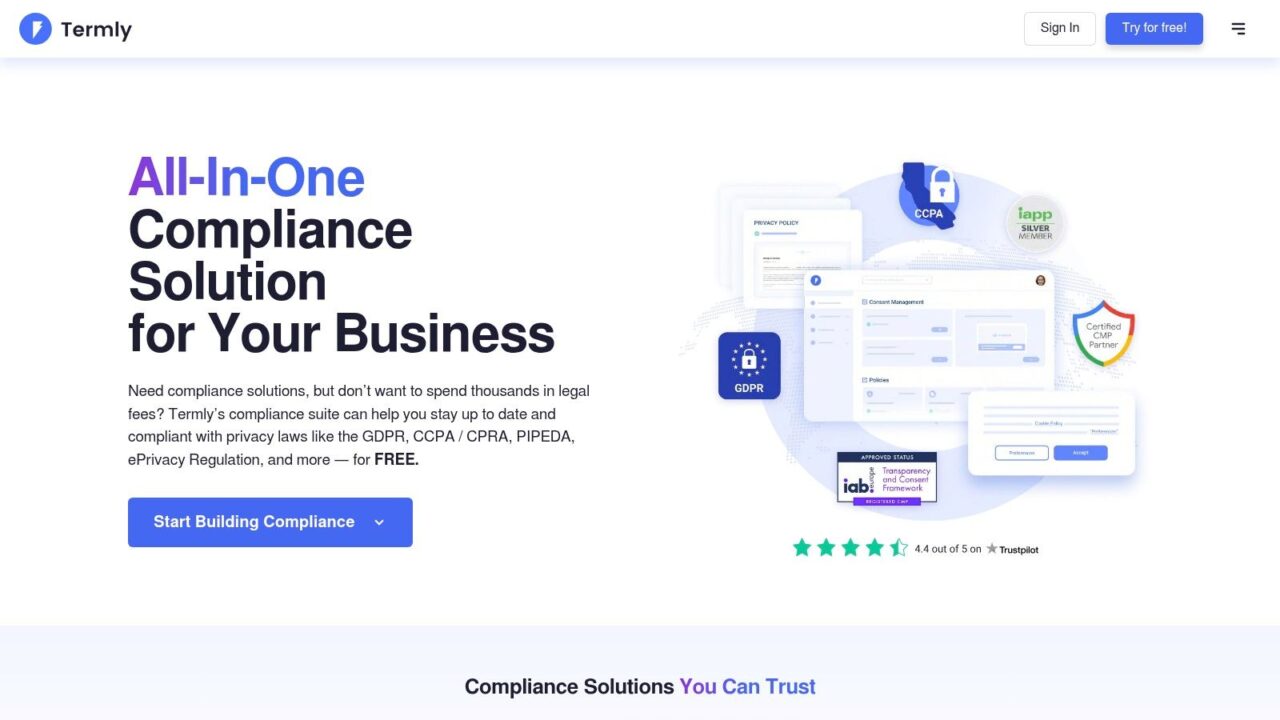
GDPR Compliance Tools Dashboard
Where it fits
A small ecommerce team that needs a consent banner and a first draft of its privacy documents can get started without assembling separate tools for each task. Termly offers a free plan for basic use, and its public pricing makes it easier to compare options before committing. Agency options may also make it a reasonable fit when one team manages several client sites.
Paid tiers add features such as regional rules, language options, and customization. Google Consent Mode v2 and IAB TCF 2.3 support are listed on Pro+ plans. Check the plan details against the regions and advertising integrations you use rather than assuming the free version covers them.
What needs human review
Generated documents depend on the information you provide. If a policy says you collect data for one purpose, but a chatbot later sends it to an advertising platform for another, the wording hasn’t fixed the underlying process. Review the generated text against the actual data flows, processors, and retention practices.
Free-plan banner views and policy features are limited, and multilingual support and regional rules require Pro+. Termly can support the website layer, but it won’t automatically map every message and customer record moving through a CRM or chatbot. Use it as one part of a documented workflow, and check your implementation against a GDPR compliance checklist.
2. iubenda
If your privacy work spans a website, an app, and several consent forms, iubenda brings more than a cookie banner into the same service. It offers privacy and cookie policy generators with a large clause library, tracker scanning, banner controls, and consent-record storage. Its materials describe GDPR and U.S. privacy-law coverage. Explore iubenda to assess which features fit your properties.
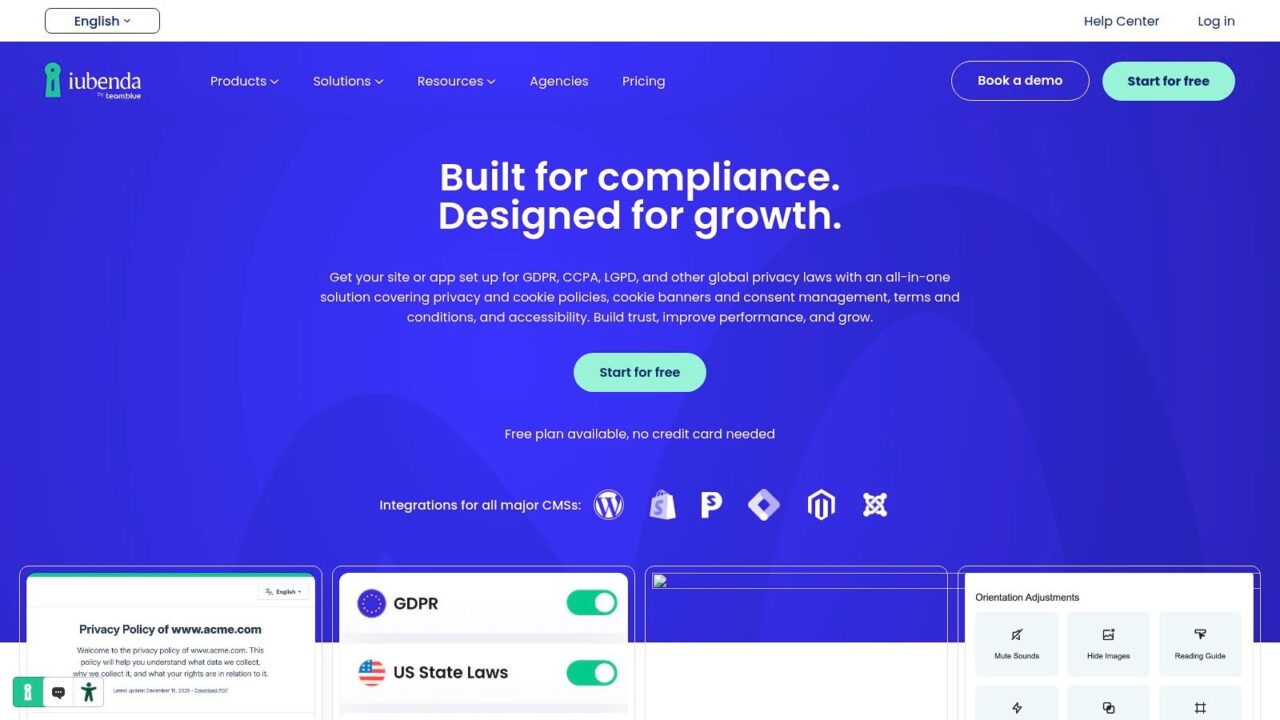
GDPR Compliance Tools Software
Useful for multi-property teams
The service offers options for multiple languages, geotargeting, and agency volume discounts. That can be useful when an agency has to maintain consent experiences across client sites, or when a business serves audiences in different regions. A limited free option lets teams start with basic needs and add capabilities as their setup grows.
Consent records can also support workflows beyond the cookie banner, including forms and other ways of collecting permission. For a chatbot lead form, for example, you’ll want to record what the person agreed to and for what purpose, not merely store an email address and assume that it implies permission for every later use.
Watch the per-property cost
Per-site or per-app pricing can become expensive across a portfolio. More extensive language, scanning, customization, and document features are available on higher tiers, so compare the total cost for all the properties you’ll manage rather than considering a single site in isolation.
The clause library is useful only if the inputs are accurate. A policy generator can’t infer that a chatbot passes contact details into a CRM, an email platform, and an analytics service unless those practices are reflected in your configuration. Treat generated documents as drafts that need review. If you’re designing chatbot permissions as well as website consent, this consent management guide can help frame the operational questions.
3. Cookiebot CMP
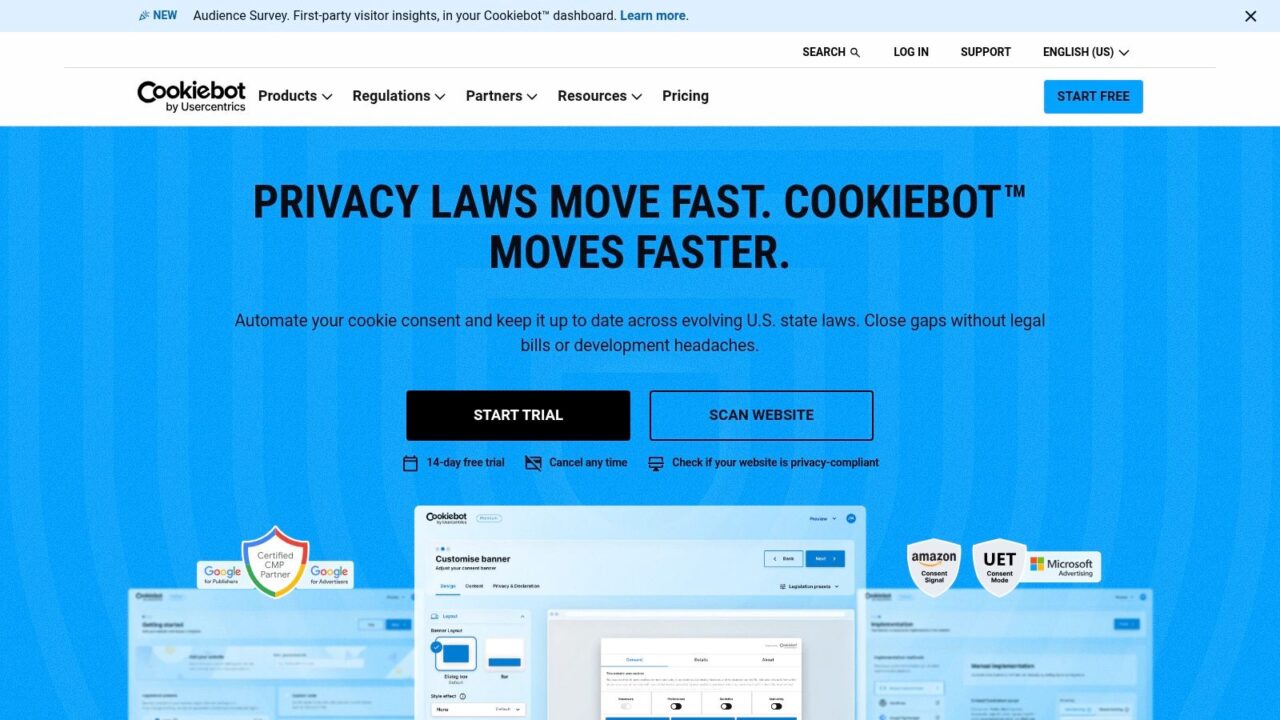
Cookiebot CMP is focused on cookie and tracker consent rather than the full privacy-operations picture. It scans websites for cookies and trackers, presents consent banners, and lets teams configure banner behavior by region. That focus can be an advantage: teams that need to manage website consent don’t necessarily need a large governance suite to do it.
GDPR Compliance Tools Cookiebot Homepage
Keep optional tracking under control
A website operator generally needs to inform visitors about cookies that process personal data and obtain consent before using them, with technically necessary cookies as the main exception. The EDPB’s guidance for small and medium-sized enterprises explains how GDPR and ePrivacy rules relate to cookies. In practice, an analytics or advertising tag shouldn’t fire because someone opened a page.
Cookiebot offers region-based banner settings, support for GDPR/ePrivacy and U.S. privacy requirements, and Google Consent Mode integration on paid plans. The listed language support is broad, with 47+ languages, and consent reporting is available on paid plans.
Where the boundary is
A free tier is available for one domain with up to 50 subpages, and paid plans are based on domain and subpage count. A 14-day premium-feature trial is available without a credit card. Those terms can make it straightforward to test the website fit, but check how your site size affects eligibility and the plan cost.
Cookie consent isn’t the same as data mapping or a complete data-subject-request workflow. A visitor might withdraw tracking consent while their email and chat history remain stored elsewhere. Assign someone to connect the banner’s consent status to the systems that control tags, messaging, and customer records. Cookie consent is one component of compliance automation, not a substitute for the rest of the process.
4. CookieYes
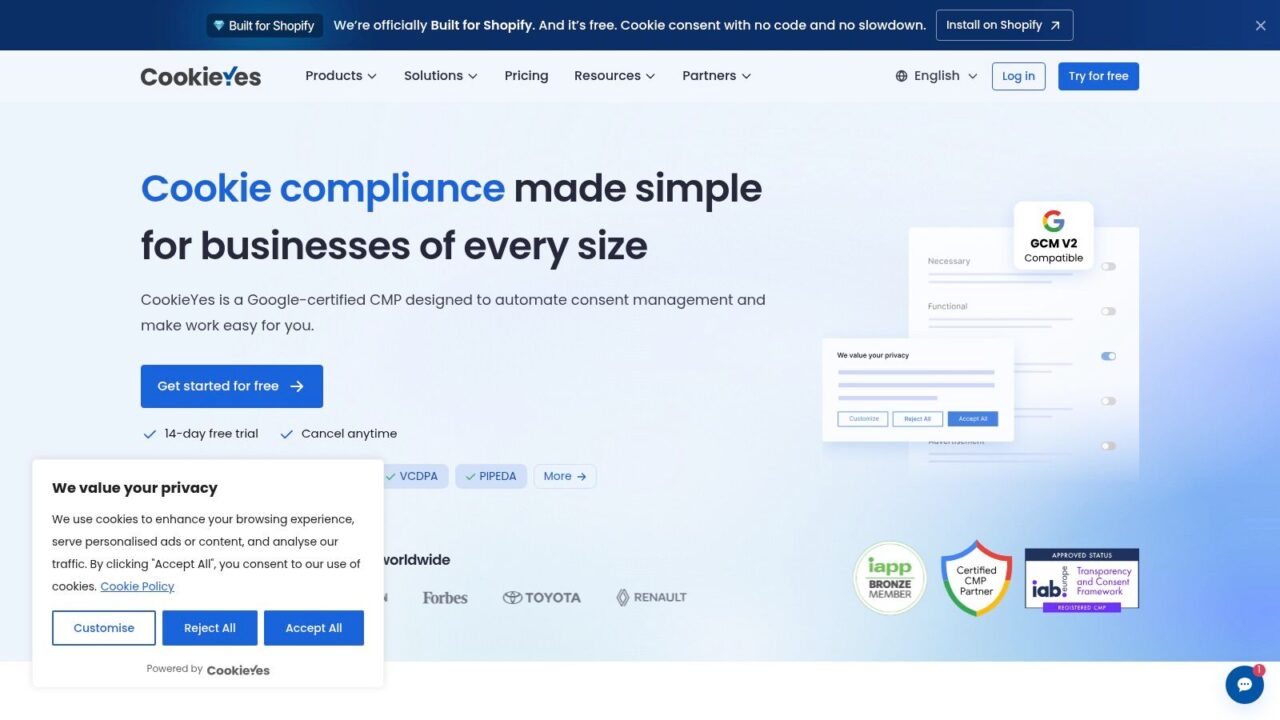
CookieYes combines a cookie banner with cookie scanning, automatic blocking, consent logs, and privacy- and cookie-policy generators. It’s a website-focused option for teams that want to manage several closely related consent tasks together, with an agency program for teams overseeing multiple client domains. Review CookieYes for its current integrations and plans.
GDPR Compliance Tools Cookieyes Platform
A useful trade-off for growing sites
CookieYes lists a permanent free plan for small sites, paid plans with different allowances, and a 14-day trial. Public pricing and common website and CMS integrations can simplify an initial evaluation. As a site grows, the tiered structure offers a route to additional capabilities rather than requiring an immediate move to a broad privacy platform.
Feature availability depends on the plan. The product lists Google Consent Mode v2, while IAB TCF 2.3 and geotargeting are available on eligible plans. Free-plan users have fewer language and customization options, and scan and pageview limits may matter for a busy site.
Check behavior, not just the banner
A banner that looks right but fails to block nonessential tags until consent is granted is not doing the intended job. During setup, test the site with analytics and advertising tags disabled, reject optional cookies, then confirm that those tags stay inactive. Repeat the test after installing new marketing tools or updating site scripts, because a new integration can change what the scan finds.
Per-domain pricing can add up for agencies or brands managing several sites. CookieYes can handle website consent and record choices, but don’t assume those records automatically control chatbot broadcasts or deletion requests across connected systems. Verify the handoff between the banner, analytics, and marketing stack before treating consent as operational.
5. Usercentrics
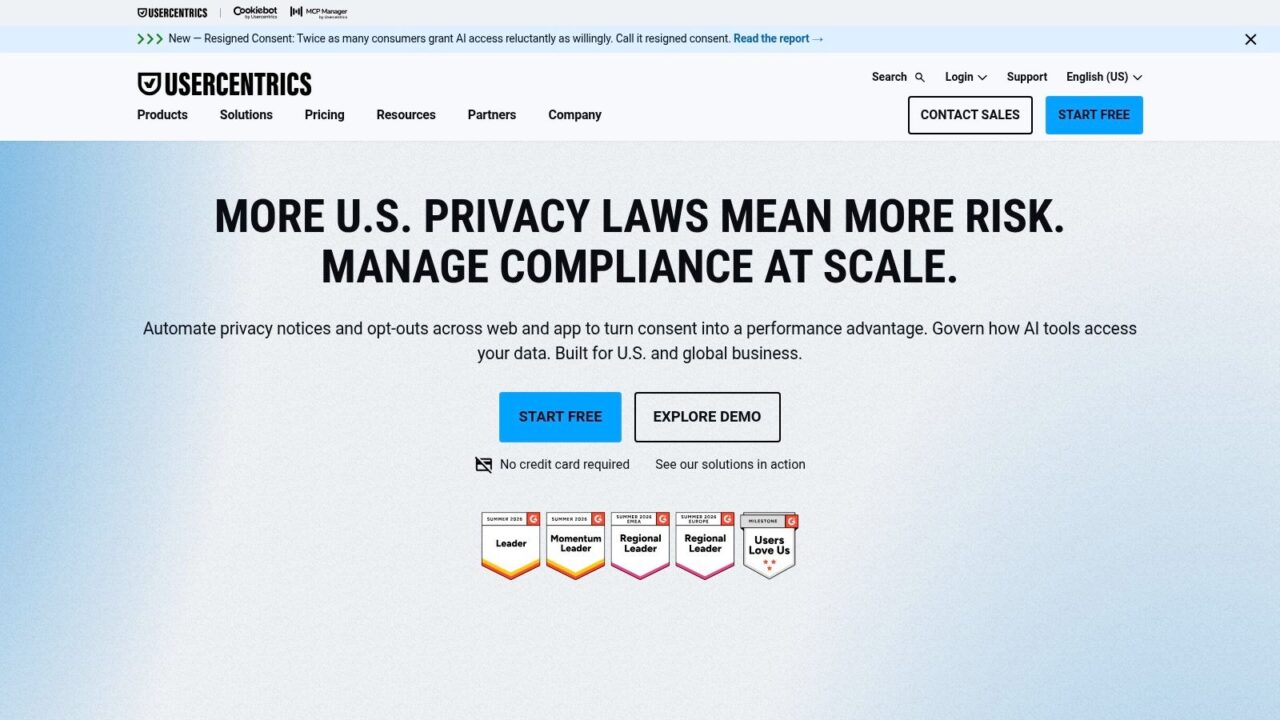
Usercentrics offers consent-management products for websites, apps, and larger digital environments. Its web CMP combines configurable banners and activity insights, with plan-dependent features and session limits. That places it between a basic banner tool and a custom enterprise privacy program for teams whose needs are expanding.
GDPR Compliance Tools Usercentrics Homepage
A growth-stage consent layer
The company lists self-serve web plans and a 14-day free trial. Its listed web tiers include unlimited users and subpages, while higher tiers support multiple domains and more languages. Separate offerings for apps and other environments may matter when consent needs to extend beyond a marketing website.
Coverage of GDPR and other privacy frameworks varies by plan, as do included sessions and language support. That makes plan-by-plan comparison important. A low-tier plan may work for one website and a narrow set of consent needs, but may not cover all the jurisdictions or properties in a multi-market setup.
Don’t confuse product breadth with operational coverage
Different products and bundles can make comparisons less direct. Before you select a plan, list the domains, apps, languages, consent categories, and integrations you actually need. Then test whether choices recorded by the banner reach the systems that use the data.
For a business using a chatbot widget, the relevant implementation question is whether the website’s consent settings govern optional tracking in that widget and its connected marketing tools. A consent platform can help manage visitor choices, but you still need a process for handling the personal data collected in conversations. Usercentrics suits teams that need more than a basic banner, provided they verify that the bundle matches their actual workflow.
6. Osano
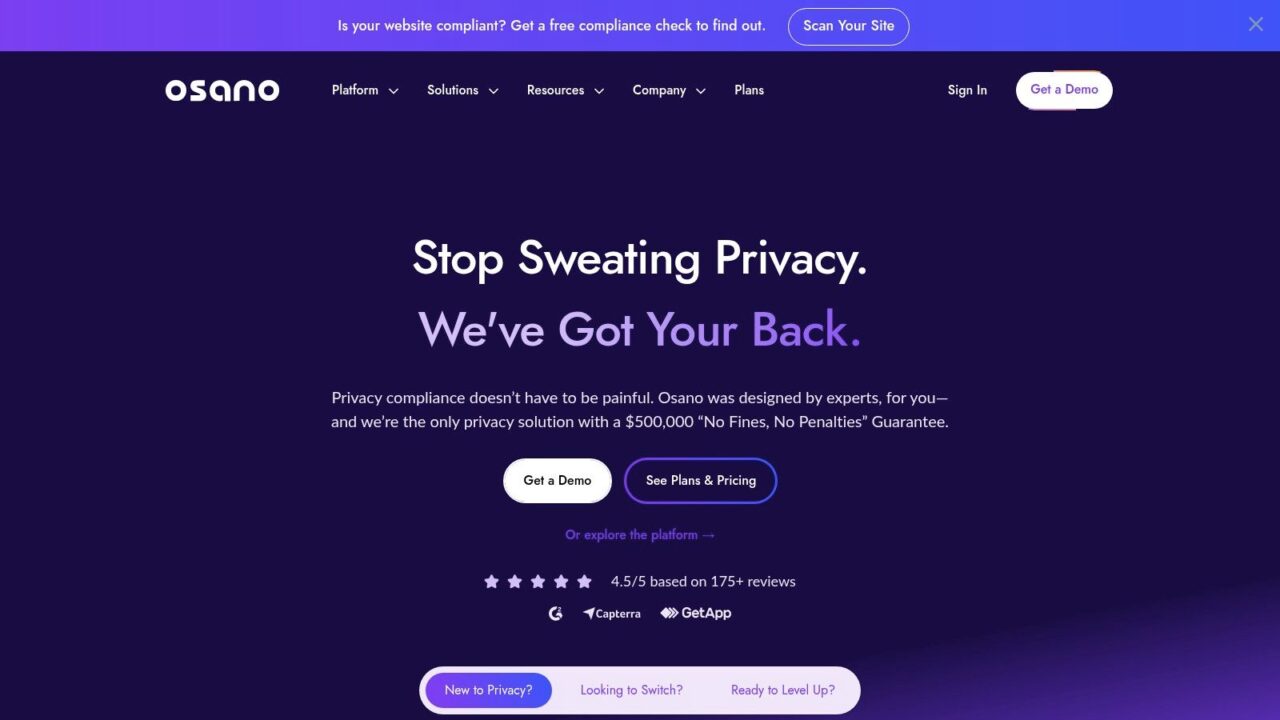
Osano can serve as a stepping stone from cookie consent into broader privacy operations. Alongside banners, consent records, and tracker controls, its modules cover subject-rights requests, data mapping, privacy assessments, vendor risk, and preference management. It also offers a GDPR representative service. See Osano’s platform and confirm which modules are included in the plan you’re considering.
GDPR Compliance Tools Osano Homepage
When a banner is no longer enough
A team may start by managing cookies, then find that it also needs to answer access or deletion requests and document where customer information is stored. In that situation, adding modules within one privacy platform may be easier to manage than piecing together separate tools. Osano describes support for multiple regulations, regions, and languages, as well as privacy guidance services.
Osano says cookie consent can be deployed with one JavaScript tag. That can simplify installation, but it doesn’t remove the need to check which scripts run before a visitor’s choice or how the choice affects other connected services.
Check the scope and the cost
Osano lists self-serve plans and a free trial lasting 30 days. Buyers should still confirm which capabilities require paid plans or a sales conversation. The complete platform may exceed what a small business needs, and its full pricing isn’t consistently presented as one simple standard rate.
A practical test is to take a real request from intake to completion. Can the team identify which systems hold the person’s data, assign responsibility, track the response, and document what happened? If you’re only solving cookie consent, a focused CMP may be less work. If you need request handling and data mapping too, Osano may be worth evaluating as a broader operational platform.
7. OneTrust
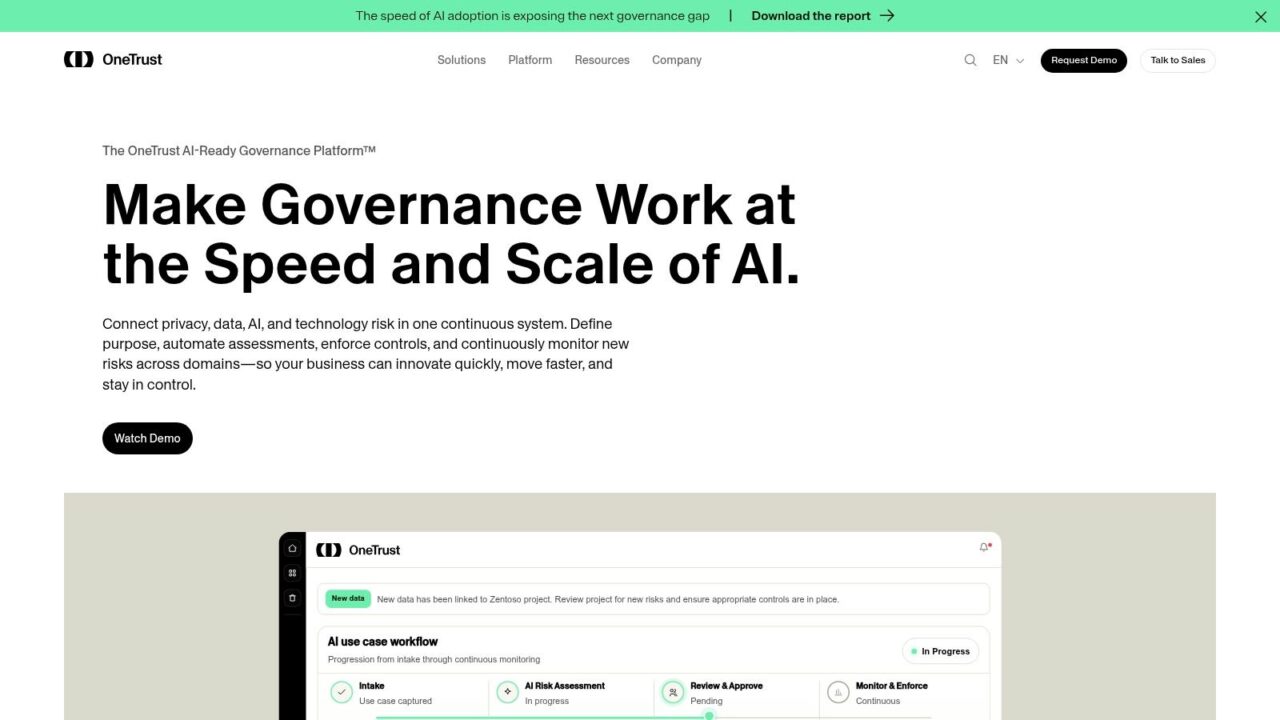
OneTrust is designed for organizations coordinating privacy and risk-management work across teams. Its product range includes consent and preference management, cookie and tracker scanning, data-subject-request workflows, and broader governance functions. That breadth is valuable when the organization needs connected workflows, but it can be excessive for a small business looking only for a cookie banner.
GDPR Compliance Tools Governance Platform
Built for a formal program
OneTrust supports GDPR and U.S. privacy-law use cases. A privacy team can use the wider platform to coordinate consent records, scan and categorize trackers, route incoming requests, and manage related risk work. That setup can make sense when privacy responsibilities are distributed across legal, marketing, IT, and customer support.
The platform’s range also creates an evaluation challenge. A buyer needs to determine whether the modules connect in the way the organization expects, rather than assuming that purchasing a suite automatically unifies every process. Request a demonstration around an actual workflow, such as a customer asking for access to data collected through a website chatbot.
Get the quote defined
OneTrust pricing is quote-based, not a single published self-serve rate. Ask the vendor to specify which modules, integrations, and implementation services are included. Also clarify what the internal team must configure and maintain after deployment.
For a lean marketing team, setup and ownership may be more consequential than the feature list. If the business has few systems and handles privacy requests occasionally, a smaller toolset plus a documented internal process may be easier to operate. OneTrust is most compelling when the organization can name the workflows it needs to coordinate and has people responsible for running them.
8. TrustArc
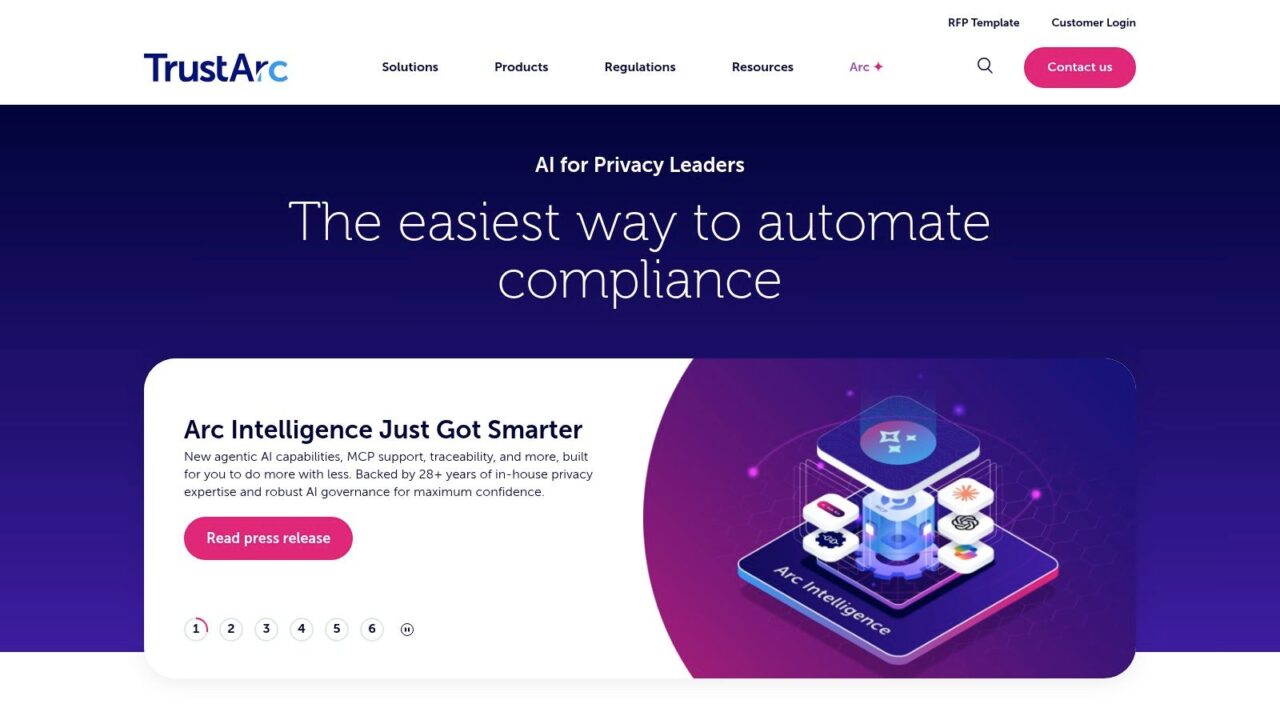
TrustArc is aimed at organizations with dedicated privacy or legal teams, rather than small sites seeking only cookie consent. Its products include privacy-program management, consent and preference tools, and workflows for handling individual-rights requests. The platform supports GDPR and other global privacy regimes. Contact TrustArc to discuss product scope and pricing.
GDPR Compliance Tools AI Automation
Organize requests and internal work
TrustArc’s request workflows cover intake, identity verification, routing, and fulfillment. That can help a privacy team track a request across departments instead of relying on one person to coordinate emails and follow-ups. Activity history also gives the team a way to see how the request progressed and what actions were taken.
The broader privacy-program tools can support organizations working across jurisdictions, where consent, internal documentation, and requests need coordinated oversight. For example, an ecommerce team could route a chatbot-related access request to the people who can search its messaging records, CRM, and support systems.
Budget for configuration and ownership
Pricing is quote-based, and the platform may take time and internal ownership to configure. A team that lacks a clear request process may not solve the problem by buying workflow software. First identify who receives requests, who verifies identity, which systems are searched, and who approves completion.
TrustArc may fit a formal program that needs software alongside privacy-program support. For a small business with straightforward cookie needs, its scope is likely more involved than necessary. Ask for a walkthrough using your own request paths, and confirm whether the proposed product includes the workflows and support your team expects.
9. DataGrail
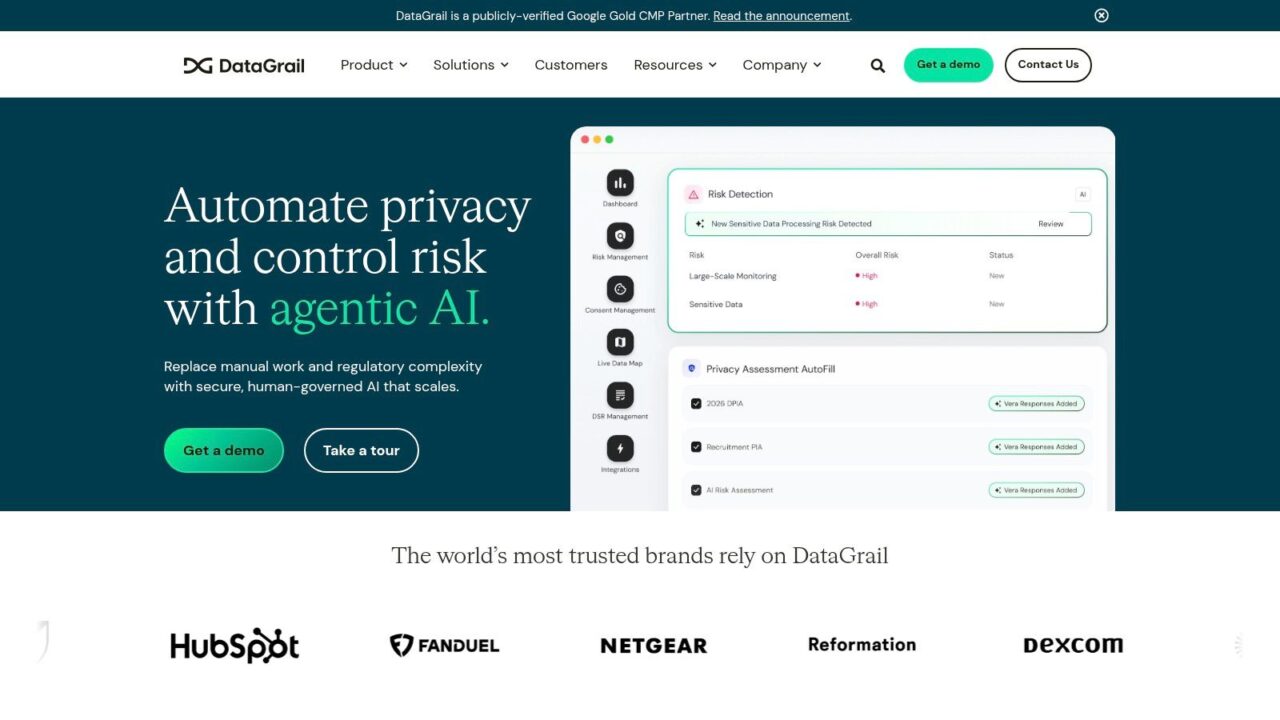
DataGrail focuses on privacy operations, including data mapping, privacy requests, consent, and assessments. Its integrations connect privacy workflows to business systems, helping teams find data and coordinate requests across a larger technology stack. That makes it a better fit for an organization whose privacy work extends beyond its website banner.
GDPR Compliance Tools AI Dashboard
Follow customer data across systems
A request to access or delete data can involve more than one database. For example, a person may have contacted a brand through a chatbot, then entered an email platform, CRM, analytics tool, or other connected service. To address this, DataGrail’s live data mapping and system discovery are intended to help teams understand where information sits and connect request workflows to those systems.
In addition, the company describes privacy-assessment capabilities, managed services, and product packages for different organizational needs. This can help a team that wants support beyond the software itself, particularly when there isn’t enough internal capacity to maintain every privacy workflow alone.
Validate integrations before buying
Pricing is quote-based, with end-to-end and à la carte options described by the company. Because of this, don’t assume that a quoted package includes every integration you need. Instead, ask which systems are covered, what the connection enables, and whether a request triggers an action or only identifies a place the team needs to check.
On the other hand, DataGrail may be excessive for a small site with few systems and occasional requests. Ultimately, its value depends on the complexity of the organization’s data environment and how much manual coordination the team needs to replace. To test this during evaluation, map a real customer journey from chatbot submission through CRM and messaging tools. Then confirm that the proposed configuration can support the required search and fulfillment process. Explore DataGrail.
10. Transcend
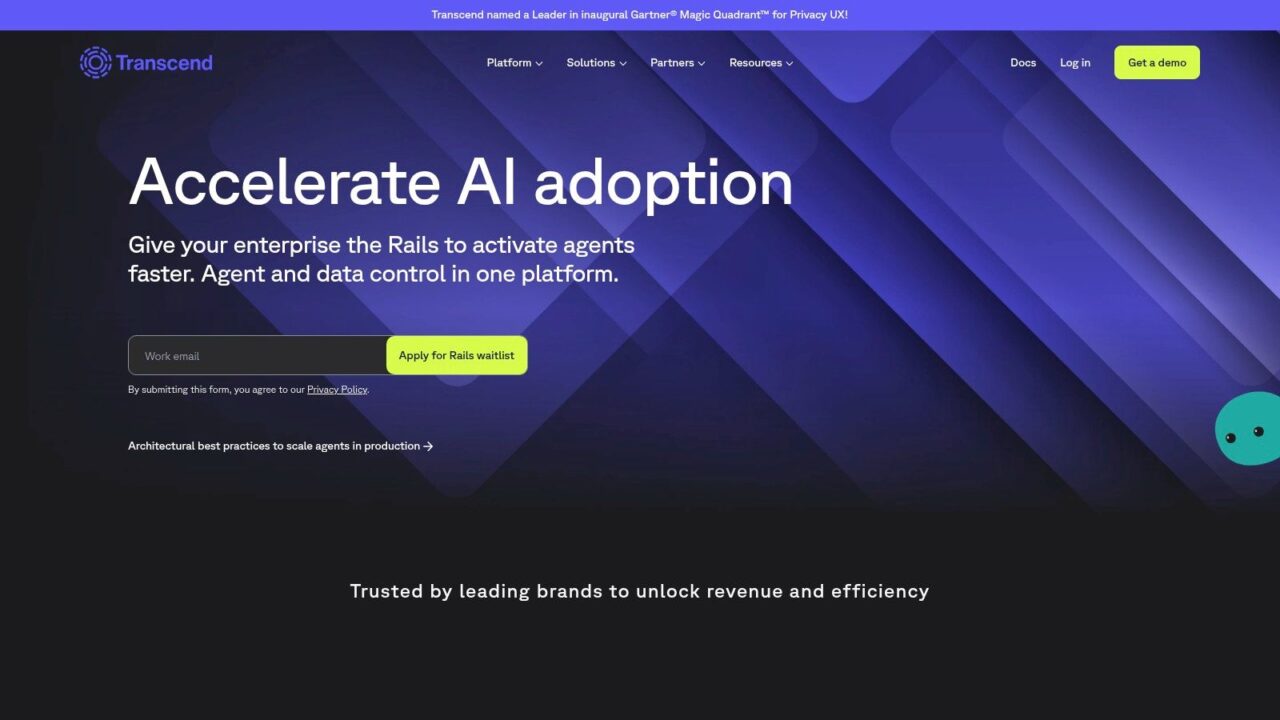
Transcend combines a branded privacy center for individuals with automation intended to carry requests through connected systems. Its tools include workflows for access, deletion, and correction, consent management, and enforcement across an organization’s data environment. It’s relevant when privacy operations need to reach beyond the website.
GDPR Compliance Tools AI Platform
The difference between intake and fulfillment
A privacy form that accepts a request is only the front door. The operational challenge is finding the person’s data across connected systems, assigning the right actions, and recording what the team did. Transcend’s focus is on that journey, using a self-service privacy center for intake and automation to help carry the request through the organization’s systems.
This is a meaningful distinction for a business that collects information through chatbots and then moves it into other tools. A customer’s request may need to reach several systems, not just the platform where they first shared their details.
Fit depends on your stack
Transcend is likely more than a small business needs for basic website compliance. The reviewed material doesn’t present standard self-serve pricing, and evaluation is mainly through a demo or sales contact. Implementation fit depends on the systems involved and the integrations required.
Ask the vendor to show how a request would move through your actual environment, including any chatbot, CRM, email, and analytics tools that store personal data. Confirm which steps run automatically and where a staff member needs to review or act. Review Transcend’s privacy platform if your core problem is fulfillment across multiple systems, not request collection.
Top 10 GDPR Compliance Tools: Feature Comparison
| Tool | Core Capabilities | Best Suited For | Standout Point | Key Trade-Off | Pricing |
|---|---|---|---|---|---|
| Termly | Cookie consent, scanning, and policy generators | 👥 Small businesses, ecommerce sites, and agencies | ✨ Consent and policy tools in one dashboard | Free-plan features are limited; documents need business-specific review | 💰 Free plan; paid tiers |
| iubenda | Privacy and cookie policies, scanning, consent records | 👥 Websites, apps, and multi-site businesses | ✨ Large clause library and multi-property options | Per-site or per-app costs can add up | 💰 Limited free option; paid tiers |
| Cookiebot CMP | Cookie scanning, banners, and consent reporting | 👥 Organizations focused on website and app cookie consent | 🏆 Regional banners and support for 47+ languages | Plan eligibility and cost depend on domain and subpage counts | 💰 Free tier; paid plans by site size |
| CookieYes | Cookie scanning, banners, consent logs, policy generators | 👥 Small sites and agencies | ✨ Automatic blocking and agency program | Per-domain pricing; limits may affect high-traffic sites | 💰 Free plan; paid tiers and 14-day trial |
| Usercentrics | Web and app consent management with analytics | 👥 Growing businesses managing digital consent | ✨ Separate offerings for web and app use cases | Features and session limits vary by plan | 💰 Public web plans; 14-day trial |
| Osano | Cookie consent, privacy requests, data mapping, vendor risk | 👥 Teams expanding into broader privacy operations | 🏆 Covers consent and wider privacy-management workflows | Full platform may be more than small businesses need | 💰 Self-serve plans; 30-day trial; some sales-led options |
| OneTrust | Consent, scanning, privacy requests, and risk management | 👥 Organizations with formal compliance programs | 🏆 Broad connected privacy and risk-management suite | Configuration and product range may be complex for basic needs | 💰 Quote-based |
| TrustArc | Privacy requests, consent, and program governance | 👥 Dedicated privacy or legal teams | ✨ Combines request workflows with governance tools | May require time and internal ownership to configure | 💰 Quote-based |
| DataGrail | Data mapping, privacy requests, consent, and assessments | 👥 Organizations with operational privacy needs across systems | ✨ Integrations connect privacy workflows to business systems | Likely excessive for small sites with few systems | 💰 Quote-based; package options |
| Transcend | Privacy request automation, consent, and data governance | 👥 Companies managing privacy workflows at scale | 🏆 Automates requests across connected systems | Fit depends on integrations; likely more than basic sites need | 💰 Contact sales; no standard self-serve pricing listed |
Final Thoughts on Choosing GDPR Compliance Tools
The right GDPR compliance tools depend on the work your team needs to make reliable. A cookie CMP can help control website tracking and record visitors’ choices. A policy generator can provide a useful draft. Neither automatically tells you where chatbot data travels, whether a marketing message has an appropriate basis, or how to complete a deletion request across connected platforms.
For a lean ecommerce brand or agency, start with the operational gaps that are hardest to manage manually. If the immediate issue is website cookies, compare Termly, iubenda, Cookiebot CMP, CookieYes, and Usercentrics on scanning, consent behavior, domains, regional needs, integrations, and plan limits. Don’t pay for request-management or enterprise-governance features unless they solve a real problem in your workflow.
When You Need More Than a Cookie Banner
If customer data moves through several systems, move the evaluation beyond the banner. Osano, OneTrust, TrustArc, DataGrail, and Transcend offer broader privacy-operation capabilities, but they differ in scope, configuration, and pricing transparency. Ask each vendor to demonstrate the same practical task: a person requests access to, correction of, or deletion of data collected in a chatbot, and the team must identify every relevant system, assign the work, and preserve a record of the response.
Document the Lawful Basis, Not Just the Checkbox
Keep lawful basis and purpose visible in your implementation. GDPR provides several possible lawful bases, and consent isn’t the right basis for every processing activity. For example, a business may assess contract performance for an order update differently from the basis it uses for promotional messaging. A compliance tool should help the team document its choices, not encourage it to treat one checkbox as permission for every future use.
The Buying Test: Can You Execute and Prove the Process?
The most useful buying test is straightforward: Does the tool make a specific process easier to execute and prove? Check whether the data flow is covered, who owns follow-up, how a withdrawal or deletion request reaches connected systems, and what evidence the team can export. Then buy only the coverage you’ll maintain. A smaller, well-connected setup is more useful than an impressive platform that nobody owns.
Clepher helps businesses build no-code chatbot Flows for Facebook Messenger and Instagram, with built-in GDPR tools for privacy and data checkups. If your team wants to connect customer conversations with a more deliberate privacy process, visit Clepher to explore the platform.